The housing plight of hotel employees
ChowringheeThe housing plight of Hotel Shahjahan employees exposes the divide between the hotel’s polished public face and the precarious lives of the people who keep it running. When even the lobby and portico are unavailable as places to sleep, workers are pushed out into the city: some find shelter in Curzon Park beneath monuments, using dry leaves to shield their eyes from the streetlights. The hotel’s standards of dignity protect its image, not its staff.
Space and the Hotel’s Public Image
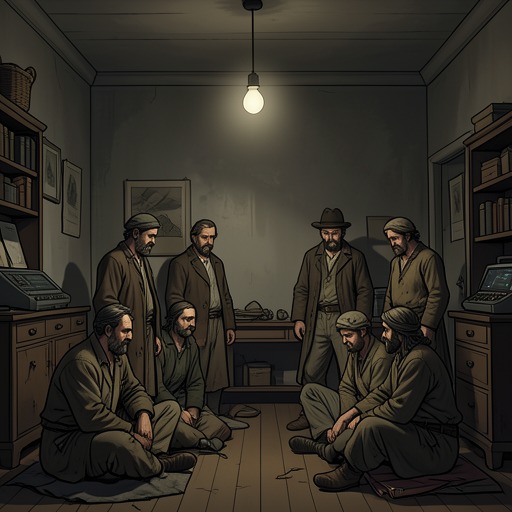
The constraints appear starkly when the narrator encounters two hotel waiters sleeping outside. They explain that there is no room for them in the kitchen because the cooks’ assistants will not let anyone enter. The hotel lobby has ample floor space, enough for people to sleep on its carpet, but allowing workers to use it would, in the hotel’s view, compromise the establishment’s dignity. The portico is also forbidden: a sleeper there might diminish the hotel’s prestige. The employees are left with no permitted refuge inside the building.
This exclusion makes the hotel’s priorities visible in its architecture and rules. Space exists, but its use is governed by the image the hotel presents to guests. A carpet that might shelter a worker instead serves as part of the public decorum that excludes him; the portico, too, is protected from the sight of the people whose labor supports the business. The evidence does not establish that every employee lacks accommodation, but it shows that some workers cannot rely on even the hotel’s common spaces for a night’s rest.
Makeshift Shelter in the City
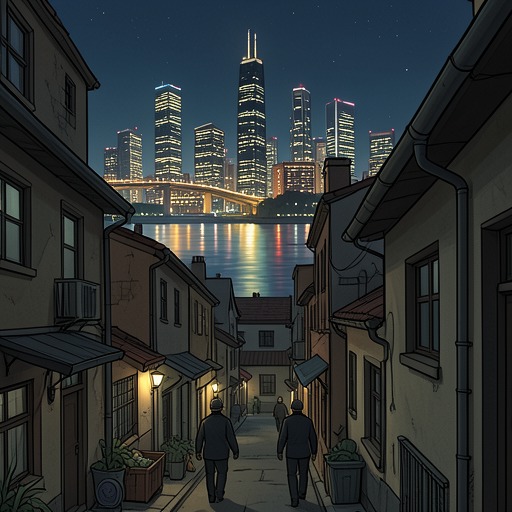
With the hotel unavailable, workers seek shelter at the feet of public monuments. The narrator learns that some waiters sleep near Sir Ashutosh and Victoria House. Later, wandering through Curzon Park, he sees that the paved area at the feet of Sir Hariram Goenka has already been claimed by a few fortunate sleepers. Streetlight passes through the railings on the park’s western side and falls across them; the people sheltering there have placed dry leaves over their eyes to block the light. Their makeshift hostel depends on an improvised screen against a streetlamp, rather than a room or bed.
The scene widens the employees’ hardship beyond the hotel grounds. The narrator recognizes the sleepers in the park as people from the India to which he belongs. Hotel workers’ search for somewhere to lie down thus becomes part of a larger cityscape of exposed poverty: public ground offers a possible refuge, but only if a patch of it remains unoccupied, and even then it cannot provide the privacy or comfort of proper housing.
Work, Meals, and the Cost of Illness
The employees’ circumstances include not only the lack of sleeping space but also the narrow margins of daily survival. One waiter says he has a standing arrangement with Little Shahjahan for meals at three and a half rupees each. Another, Mayadhar, has not eaten and lies on the grass clutching his legs in pain. His coworker explains that Sata Bose has given him a recommendation to a doctor, but Mayadhar has not gone because treatment is expensive and he is trying to save money. He fears that his legs will develop sores, burst and bleed, leaving him unable to stand, unable to keep his job, and unable to feed his children.
That feared sequence gives the housing problem its material stakes. A worker’s ability to earn depends on the body remaining fit for service; an untreated condition could remove that income and place his family’s subsistence at risk. The recommendation from Sata Bose offers a possible route to care, but it does not remove the financial obstacle. Mayadhar’s situation shows how the absence of security can make even seeking medical help feel like a threat to the household budget.
The burden of service also appears in the work itself. During the breakfast period, the reception desk grows busy as guests come down from their rooms, and the greetings exchanged between staff and customers become mechanical. Elsewhere, when a guest summons the manager over the color of the bed linen, Marco Polo responds with elaborate apologies and offers replacement sets. Such scenes place workers inside an institution organized around guest comfort and the hotel’s reputation. Against that attentive service, the waiters’ search for somewhere to sleep—and Mayadhar’s decision to postpone a doctor—marks how unevenly comfort is distributed.
Labor Behind the Hotel’s Ceremony
The contrast sharpens during a banquet hosted by Sociedad Filantrópica. The event is presented as service to humanity, and its organizers welcome guests in formal dress; the preparations include three hundred and fifty boar’s heads made by Nityahari Bhattacharya. Yet the hotel employees’ need for shelter belongs to a less visible side of the same world. A night of elaborate hospitality can coexist with staff sleeping outdoors, while public attention centers on the banquet and its benefactors rather than on the conditions of the workers who make the event possible.
The hotel’s working day also follows its own sequence of meals and service hours, continuing even as the calendar date changes. That unusual division of time helps frame the employees’ lives as bound to the institution’s rhythms, but the evidence of their nights makes clear that continuous service does not guarantee continuous care for those providing it. Their exclusion from guest-facing spaces persists after the day’s work is done.
The housing plight is therefore not simply a matter of having to sleep outside. It is a contradiction built into the hotel’s order: the establishment protects its dignity by keeping workers out of sight, while those workers find rest wherever the city leaves a narrow space open. Curzon Park’s leaf-covered eyes make that contradiction concrete. The hotel’s image remains intact; the employees’ need for shelter remains unresolved.