Wilhelm Mandorff
ConclaveWilhelm Mandorff is a German archbishop who serves as Master of Papal Liturgical Celebrations during the conclave. Tall, sixty years old, and known for a scholarly treatise on clerical celibacy, he oversees key ceremonial moments while also helping determine whether Vincent Benítez, whose appointment had been kept secret, can lawfully join the election. His role links the conclave’s visible rituals to the rules governing who may take part.
Identity and Office
Mandorff is a Rhinelander and a former academic at the University of Eichstätt-Ingolstadt, where he made his reputation with a treatise on the origins and theological foundations of clerical celibacy. He is described as tall, sixty, and bald. His scholarly background sits alongside a practical office: as Master of Papal Liturgical Celebrations, he is responsible for carrying out the formal rites surrounding the conclave.
On Sunday, 7 November, the feast of St Herculanus the Martyr, Mandorff stands at the threshold of the Sistine Chapel with Dean Jacopo Baldassare Lomeli and the Secretary of the College of Cardinals, Raymond O’Malley. Preparations are still under way: a temporary wooden floor is being completed, carpet is being nailed down, and desks and chairs are being installed. The ceremonial setting is not yet sealed off from ordinary work; it is a busy construction site in the chapel where the electors will soon assemble.
Preparing the Conclave
Mandorff’s responsibilities include overseeing the physical and ceremonial preparations for the election. Inside the Sistine Chapel, rows of plain wooden tables face one another across the aisle. The table nearest the screen is dressed for Lomeli’s inspection with layered crimson and beige cloth, a Bible, prayer book, name card, writing materials, ballot paper, and a list of the 117 eligible cardinal-electors. The work of ritual depends on this careful arrangement of objects and places.
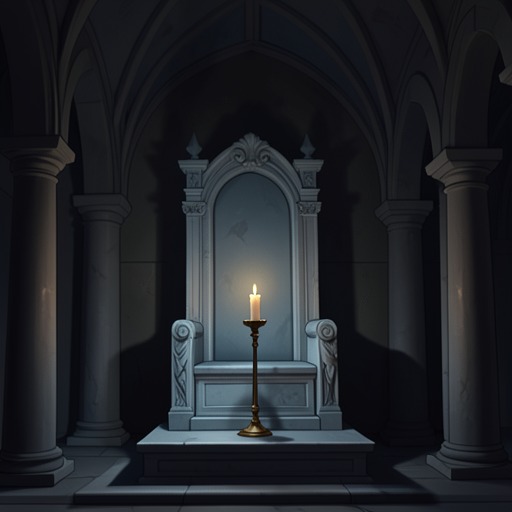
The preparations also prompt Lomeli to recall earlier conclaves. He remembers the canopied thrones once used during voting, abandoned in 1965 after the Second Vatican Council as the College of Cardinals became larger and more multinational. Lomeli privately regrets some of the older ceremonial forms and thinks the late Pope’s insistence on simplicity could itself become a kind of ostentation. Mandorff is present as the chapel’s contemporary ceremony takes shape, in a setting where the old pageantry has been replaced by functional tables and a television-ready arrangement.
The Arrival of Vincent Benítez
Mandorff becomes a key witness when Vincent Benítez arrives unexpectedly in Rome. Benítez’s name was not on the list of electors; he says he was created a cardinal in pectore, a secret appointment made by the late Pope. Lomeli initially suspects that the newcomer may be an impostor, but O’Malley reports that Mandorff has spoken to him and believes his claim.
Mandorff supports that judgment with documentary evidence. Benítez has a letter of appointment from the late Pope addressed to the archdiocese of Baghdad, where the appointment had been kept secret at the Pope’s request, as well as a seal of office. Mandorff points to Benítez’s position as an archbishop serving in a dangerous place as further reason to doubt that he would fabricate his credentials. The documents appear authentic to Lomeli, though he wants to consult Cardinal Aldo Bellini before accepting the implications of the appointment.
The dispute is not merely about personal credibility. Lomeli tells Bellini that the matter concerns canon law and invokes paragraph thirty-nine of the Apostolic Constitution: a cardinal-elector arriving re integra, before a new pope has been elected, is permitted to participate at the stage the election has reached. The argument makes Mandorff’s verification consequential: his judgment helps bring a previously unlisted elector within the conclave’s process, while Lomeli grounds the decision in a specific rule.
Ritual Closure and Significance
After the cardinal-electors have taken their oaths, Mandorff steps to the microphone beneath Michelangelo’s The Last Judgement and intones the official formula, “Extra omnes.” The television lights go out, and the masters of ceremonies, priests, officials, choristers, security personnel, camera crew, photographer, a nun, and the commandant of the Swiss Guard leave the chapel. Mandorff waits until the last of them is gone, then walks down the carpeted aisle to the double doors.
At 4:46 p.m. precisely, the doors close from the inside and the television transmission ends. The outside world’s final image of the conclave is Mandorff’s solemn bald head as he completes the closing procedure. The moment defines his function in the story: he does not choose the pope, but he helps establish the boundaries within which the choice can be made, both by verifying the unexpected claim of a secret elector and by formally sealing the assembly away from the world.