Methadone Mile
DopesickMethadone Mile is a derisive name for a neighborhood at the edge of Boston’s South End where people using heroin converged on a shelter clinic to be medically monitored. The location brings the book’s account of harm reduction into sharp focus: care begins not with a demand for immediate abstinence, but with keeping people alive and creating a route toward treatment. That approach, the narrative shows, could provoke serious opposition even in a liberal city.
Setting and the shelter clinic
In Methadone Mile, users gathered in a former conference room inside a homeless shelter, where they could be monitored as they rode out heroin highs. Some arrived staggering, propped up between friends. The scene presents drug use not as a distant statistic but as a recurring emergency unfolding inside an ordinary shelter, among people who needed supervision before they could take any further step toward care.
The clinic, Supportive Place for Observation and Treatment, was the project of medical director Jessie Gaeta. She had sometimes encountered bodies on her way to work, including people fatally struck by cars. In the shelter’s public restrooms, a maintenance worker had rigged reverse-motion detectors: if someone had not moved for four minutes, visual and audible alarms summoned help. The system translated a simple observation—that an overdose or medical crisis can become fatal when a person is alone and unnoticed—into an immediate means of intervention.
Purpose and method
Supportive Place for Observation and Treatment had two linked aims: to keep people alive until they were ready to enter treatment, and to separate them from shelter residents already in recovery. The distinction mattered in a facility where almost a third of clients had opioid-use disorder. The clinic did not treat monitoring as an endpoint; it made survival the necessary first stage of a possible transition to treatment.
The room was small, with ten recliners. That scale gave community members and officials a concrete view of what the project would actually do when Gaeta invited them to the shelter. The clinic’s approach was a local response to a wider shift in attitudes toward people with addiction, which the book describes as moving faster in urban settings than in rural ones. Its work nevertheless depended on persuading neighbors that supervised care was not simply an invitation to more drug use.
Opposition and neighborhood negotiations
The surrounding brownstone neighborhood was rapidly gentrifying, and residents feared that the clinic would attract more heroin users, discarded needles, and crime. Some accused Gaeta and her staff of enabling continued drug use. These objections set the project’s immediate stakes: the clinic sought to manage danger and preserve a path to treatment, while opponents saw the presence of the service itself as a threat to neighborhood order.
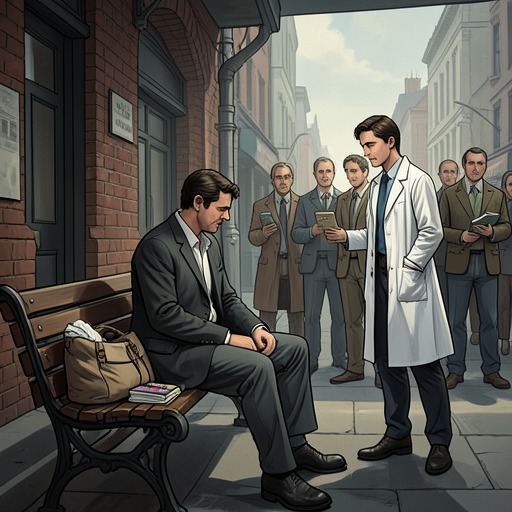
The neighbors gave the project their blessing only reluctantly, after Gaeta brought community leaders and officials into the shelter and showed them the ten-recliner room. The approval followed more than fifty neighborhood meetings, which Gaeta described as a bruising process. Methadone Mile thus marks not an uncomplicated triumph for harm reduction, but the work required to establish it: the people providing care had to make its modest, practical purpose visible before the community would accept its presence.
Significance in the wider account
The clinic’s method stands in contrast to the fragmented treatment pathways described elsewhere in the book. In Roanoke, Hope Initiative coordinators trying to arrange a smooth transfer from overdose care to medication-assisted treatment encountered bureaucratic, financial, and legal obstacles, along with too few providers and treatment beds. In its first month, the initiative’s volunteers made contact with twenty-two people, but none entered residential treatment and only a handful accessed outpatient medication-assisted treatment. These are separate local efforts, not parts of the Methadone Mile clinic; together, however, they show how keeping someone alive and getting that person into sustained care are distinct challenges.
Methadone Mile gives the urban harm-reduction model a specific setting and a visible mechanism: a monitored room, recliners, and alarms that call for help when someone stops moving. Its significance lies in the tension between that immediate work and the controversy surrounding it. Survival-oriented care could be denounced as enabling drug use even when its stated purpose was to keep people alive long enough for treatment to become possible.