Roanoke County, Virginia
DopesickRoanoke County, Virginia, is presented as part of a region where the opioid crisis became increasingly visible in daily life and local death records. The county’s most sharply defined moment in the account is the 2017 death of twenty-seven-year-old Joey Gilbert after an overdose inside a Roanoke County home. Her death, the nineteenth lethal overdose in the county’s suburbs that year, gives a precise place and human consequence to a crisis otherwise described through regional trends and structural causes.
A County Within a Worsening Regional Crisis
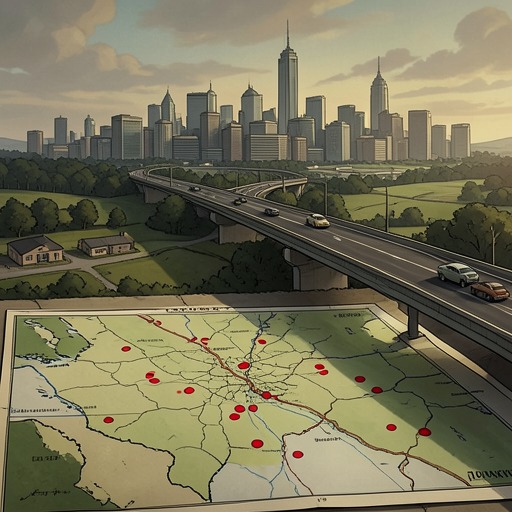
The book distinguishes the county-specific account from the broader picture of rural distress. In 2017, nonfatal overdoses in the Roanoke area had more than doubled over the preceding year, while fatal overdoses had nearly tripled; the reported figures were likely undercounts. Those totals describe the wider area, not Roanoke County alone, but they frame Joey’s death as part of a rapidly escalating regional emergency rather than an isolated event.
The narrative also sets the crisis against the collapse of work, rising disability, and the spread of painkillers. Its account of Martinsville and Henry County offers a separate example of the economic damage affecting rural Virginia: unemployment exceeded 20 percent, food-stamp claims more than tripled, and disability rates rose by 60.4 percent. These are not statistics for Roanoke County, but their explicit placement alongside the regional opioid story shows how the book connects the crisis to wider economic dislocation without treating the counties as interchangeable.
The County Home Where Joey Died
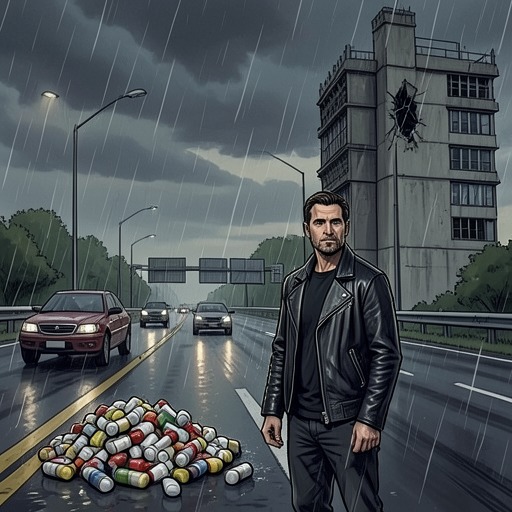
Joey had lain inside a house in Roanoke County for almost eight hours before anyone called 911. The people with her had cleaned up the scene after she passed out, fearing prosecution. Police were investigating when her mother, Cheri Hartman, learned what had happened. Joey died on March 26, 2017, after taking illicit methadone.
Her death was the nineteenth lethal overdose recorded in the Roanoke County suburbs so far that year. The count makes the location part of the account’s evidence of an accelerating emergency; the delay before the call also shows how fear of legal consequences could shape what happened after an overdose. Joey’s mother’s obituary remembered her as having struggled against addiction and described her as beyond pain. The book thus moves from the circumstances of a death in one house to the grief left with a family, while keeping the county’s rising toll in view.
Regional Treatment Gaps and State Policy
The account places the Roanoke area’s crisis within Virginia’s limited treatment infrastructure. Carilion Clinic, the region’s largest employer, had hospitals and an addiction-research center, but comparable local inpatient treatment was not available. The options described included short-term detoxification and a privately owned facility that accepted insurance or cash, charged about $20,000 for a twenty-eight-day stay, and did not permit maintenance medications. These constraints help explain why the region’s rising overdose numbers were not matched by easy access to sustained care.
Virginia’s legislature had repeatedly rejected Medicaid expansion after the Affordable Care Act. The book describes the consequence at the state level: the loss of $6.6 million in federal funds each day and insurance coverage for 400,000 low-income Virginians. Other states’ expanded Medicaid programs paid for treatment, counseling, and addiction medications, but Virginia did not have that same coverage mechanism. These statewide decisions form part of the backdrop to the county’s local losses, rather than a policy enacted by the county itself.
Community and the Meaning of Place
The book’s account of rural recovery emphasizes that treatment alone cannot replace the ordinary sources of stability that damaged communities have lost. Historian Nancy D. Campbell argues for meaningful alternatives to drug use: work, recreation, and relationships around which people can build their lives. Her point widens the significance of Roanoke County beyond the site of an overdose. The county belongs to a regional story in which economic security, access to care, and community life affect the conditions in which addiction and recovery unfold.
That framing resists reducing the place to a death count. The county’s recorded toll gives the crisis a concrete local measure, while the surrounding discussion traces the larger failures and missing resources against which individual tragedies occurred.