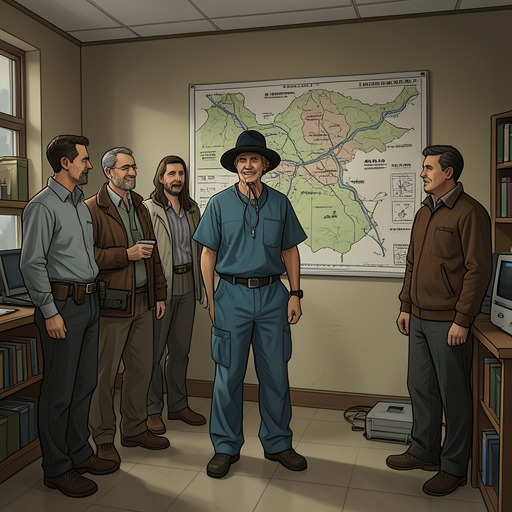
Virginia coalfields
DopesickVirginia coalfields is a rural setting in which the book connects the opioid crisis to the erosion of work and the thinning of the health-care safety net. Its communities are not treated as a backdrop to individual addiction: local accounts show how changing economic conditions, limited insurance, and scarce treatment options shaped both exposure to risk and the chance of getting help.
Setting and Economic Change
The region enters the narrative through places including Lee County, Virginia, and Wise County, Virginia, where coal communities faced a decline in the work that had sustained them. The book places that decline within a wider pattern of rural economic distress, rather than presenting addiction as an isolated failure of individual choices. In Martinsville and surrounding Henry County, for example, unemployment rose above 20 percent, food-stamp claims more than tripled, and disability rates increased by 60.4 percent. Those figures describe a separate Virginia locality, but they help establish the larger setting of job loss and diminishing security against which the coalfields’ crisis is understood.
The account links the collapse of work with increased disability and the expansion of painkiller use. It describes these forces as interacting: economic disruption weakened people’s prospects, while opioid pills brought a new and dangerous source of harm into communities. This framing does not make lost employment a sufficient explanation for addiction; it shows how structural vulnerability and the growth of opioid supply could reinforce one another. The contrast is between a region expected to adapt to sweeping economic change and the limited practical support available to people living through it.
The Opioid Crisis in Local Lives
In the late 1990s, physician Art Van Zee was among the first U.S. doctors warning of OxyContin’s dangers. The overdose patients arriving in his emergency room were not distant cases: many were his friends and descendants of coal miners whose photographs hung in his examination room. That connection gives the crisis a local and intergenerational dimension. The danger appeared in clinical encounters, but it also reached into families and communities Van Zee knew personally.
The book presents the coalfields’ opioid emergency as part of a broader chain of causes, including painkillers promoted by pharmaceutical companies and approved by regulators. It resists reducing the story to the later appearance of heroin or to the decisions of people who became addicted. Instead, it places medical exposure alongside economic loss and asks why communities already under pressure had so few durable resources with which to respond.
Mobile Care and the Coverage Gap
Teresa Gardner Tyson and the grant-funded staff of twenty working through the Health Wagon provide much of the care available to uninsured residents in Virginia’s coalfields. The service is mobile, bringing care to communities whose residents cannot depend on ordinary insurance coverage. The Health Wagon began in 1980, founded by Sister Bernie Kenny, a Catholic nun and medical missionary who had served as a midwife in Africa. She first provided care from the back of a red Volkswagen Beetle; later, Tyson and her staff continued the work through a mobile unit. Remote Area Medical events also offered a source of free care for people without insurance.
A 54-year-old teacher profiled in the book had been uninsured for decades, apart from a period when pregnancy made her eligible for Medicaid. Her husband, a former Walmart worker disabled by a series of strokes, received Medicare. Because Virginia had not expanded Medicaid under the Affordable Care Act, she relied on free coverage at Remote Area Medical events and occasional visits to Tyson’s mobile unit. She delayed seeing her family doctor until she was nearly dying; even then, the discounted cash price was $63 per visit. The example makes the coverage gap concrete: access depended on intermittent services, personal resources, and how long a patient could wait.
The Health Wagon’s work unfolded amid broader signs of strain. School closures in the town of Appalachia included one building that had become a food bank. In St. Paul, limited funds left a middle-school roof unrepaired. These details connect health needs to the everyday weakening of local institutions, without suggesting that any single school or clinic could reverse the region’s economic decline.
Policy and the Limits of Local Response
Virginia’s repeated refusal to expand Medicaid left the state without the coverage and treatment resources available in states that had adopted expansion. The book estimates that the decision meant foregoing $6.6 million a day in federal funds and insurance for 400,000 low-income Virginians. Across the states that expanded Medicaid, the program paid for treatment, counseling, and addiction medications and covered people too poor for private insurance but not previously eligible for Medicaid. For opioid-affected families and health-care advocates in Virginia, the state’s choice was therefore not an abstract budget dispute: it narrowed the means of responding to addiction.
Tyson’s work illustrates how local caregivers tried to fill that gap while depending on grants and mobile services. The book also points beyond clinical treatment, drawing on the principle that recovery requires meaningful alternatives and sustaining relationships, including work and recreation. In this account, the coalfields’ health crisis cannot be separated from the conditions in which people must rebuild their lives. The region’s significance lies in that convergence: economic dislocation, opioid exposure, and constrained care are shown together, while the labor of local providers makes visible both the value of community response and the limits imposed on it.