Woodstock, Virginia
DopesickWoodstock, Virginia, is the quiet rural town where a small number of recreational pill users became the starting point of a heroin network that expanded to hundreds of people. The book presents that transformation not as the work of one dealer alone, but as the convergence of an outside supply, a market built through addicted customers recruiting other customers, and weak support for people returning from prison. The covered bridges and preserved log homes of the surrounding agricultural landscape stand in sharp contrast to the rapid growth of the trade and the slow work of addressing its consequences.
Rural setting and sudden change
The crisis reached Woodstock in 2012, when Ronnie Jones arrived in a Virginia Department of Corrections van. A twice-convicted dealer from the Washington suburbs, Jones entered a community where, police later said, a handful of football players, tree trimmers, and farmers’ children had been using pills recreationally. In a few months, that small circle had become hundreds of heroin users. The scale and speed of the change made Woodstock a concentrated example of a much wider epidemic.
Jones later recalled that the town initially felt welcoming. Country-road drivers waved to one another, and his minimum-wage earnings at George’s Chicken went further than they had in the city. He found the small number of Black residents striking and thought he would be able to stay out of trouble. He kept the poultry-processing job after completing a twenty-one-week diversion sentence, but lost it after becoming ill and spending a week in hospital. He hoped to open a ten-chair diner, drawing on cooking skills learned from his mother, and also tried to rent space for a computer-repair shop. He said both plans were blocked by landlords; in one instance, a white woman calling on his behalf was offered the space. At the time, he owed $5,000 in medical bills and $20,000 in court fines and restitution.
How the market spread
The local pattern depended on a self-replicating exchange. Many users first took prescription pills, then turned to heroin dealers and resold part of what they bought to finance their next purchase. Withdrawal—the crushing physical and psychological pain the book describes as dopesickness—made continued access urgent. Some users recruited new customers, who in turn recruited others. The chain could end in prison or in death; Jesse Bolstridge’s grave, marked with teddy bears and R2-D2 figures and his mother Kristi Fernandez’s words, gives that expansion a personal cost beyond the arrest statistics.
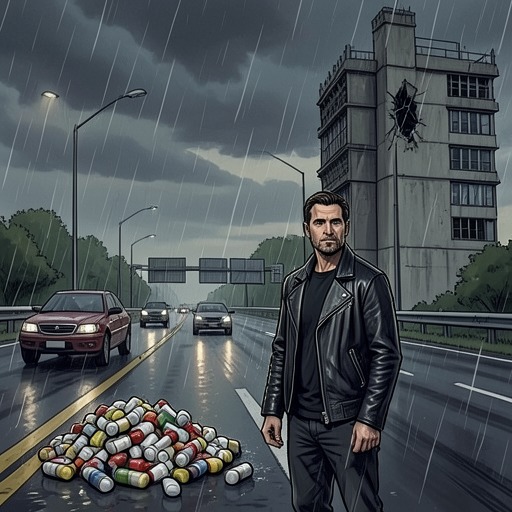
Woodstock was also linked to a wider supply route. By spring 2013, Brent Lutz had assembled details about an unidentified supplier known as D.C., whose heroin was said to travel along I-81 in plastic Walmart bags, hidden in snack containers carried by young women on buses from New York City. In Harlem, the heroin was pressed into four-ounce disks and concealed in Pringles cans; other food packages carried powder cocaine. D.C. initially feared handling the heroin and hired others to divide it into smaller retail portions. The contrast between the discreet containers and the volume inside them was stark: his shipments routinely held 200 grams, compared with the 20 grams or less brought in by dealers making runs to Baltimore.
Local networks and exposed youth
The Woodstock market belonged to a regional pattern in which heroin crossed racial and suburban boundaries. Clifton “Lite” Lee, a dealer with Philadelphia roots, had reached Roanoke in 2006 and built connections among Black and white users. After police stopped two suburban teenagers who were selling heroin to friends and using some themselves, their phones pointed to fifty other young people, most of them students at Hidden Valley High School in wealthy Roanoke County. The investigation exposed how a distribution network could reach communities that might not recognize themselves as vulnerable to the drug.
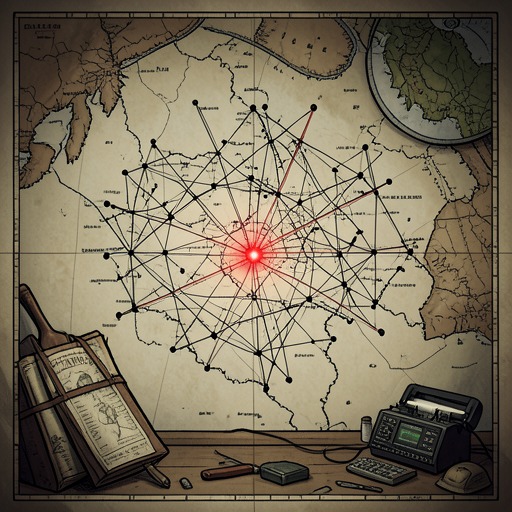
By 2014, federal investigators had recovered 15,000 text messages from Ashlyn Keikilani Kessler’s phone. The messages helped map a pyramid extending from her New Jersey source to dozens of young people in Cave Spring and Hidden Valley. The exchanges recorded the practical mechanics of the trade—meetings, quantities, debts—as well as the desperation of people trying to secure more. In this way Woodstock appears not as an isolated pocket of use but as one point in a shifting regional network of suppliers, intermediaries, and customers.
Reentry, treatment, and the limits of enforcement
The book sets the drug court established in nearby Winchester against the thin resources available to people returning to Woodstock. Winchester’s court aimed to connect offenders with treatment, including Medication-assisted treatment, and with free housing and taxi vouchers for getting to work; grants from the local Rotary Club paid for the vouchers. Halfway houses and newly announced jobs also made Winchester a destination for people in recovery. The comparison raises a concrete question about Jones’s return: whether community support of that kind might have changed his prospects, rather than leaving him with one probation officer responsible for 104 people.
The constraints were not merely personal. A probation officer described how wages that failed to cover rent, utilities, food, fines, and child-support arrears could precede new crimes. In 2016, two officers in the Woodstock office were responsible for monthly check-ins, field visits, and drug screening for 204 people, with another officer expected to join. Many people leaving prison lacked a driver’s license and could not regain one until they repaid fines and arrears, making work and treatment harder to reach. Woodstock’s story therefore links the heroin trade to the conditions surrounding reentry: supply and addiction moved quickly, while the systems meant to support recovery were understaffed and burdened by debt. The town’s transformation becomes both a local account of networked drug distribution and a measure of how little separates a rural community’s ordinary rhythms from an epidemic.