Russell County, Virginia
DopesickRussell County, Virginia, is portrayed as a place where the opioid crisis tests the boundaries between treatment and punishment. Its drug court earns unusual trust from families seeking help for addicted relatives, yet local concern about buprenorphine misuse has made medication-assisted treatment contested. The county’s gradual acceptance of alternatives, including a first Vivitrol participant in drug court, shows a justice system beginning to adapt to addiction as it confronts the limits of its established approach.
Setting and Treatment Tensions
The book situates Russell County within rural Appalachia, where access to treatment and the implementation of medication-assisted treatment are shaped by local institutions and frontline decisions. Missy Carter, the county drug-court coordinator, dealt with Suboxone misuse among people on probation and within her own family. She described a troubling model of care in which patients received medication while a treatment video played in a lobby, with little meaningful attention to their individual needs. Her account gives local form to a broader concern about treatment quality and the diversion of prescribed buprenorphine.
The tension was not simply between medication and abstinence. In Lebanon, a police chief objected to the number of Suboxone clinics serving a town of roughly 3,400 people, while law-enforcement officials and drug-court judges elsewhere in Virginia often opposed Suboxone use. The book presents such criticism alongside the risks of poor prescribing and the possibility that medication-based care can help people recover; the dispute is over how treatment is delivered, who can access it, and whether courts permit it.
The Drug Court and Community Trust
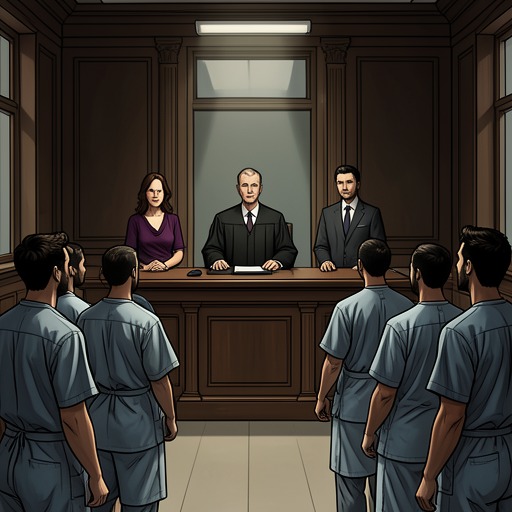
Russell County’s drug court stands out for its reported success in an area deeply affected by opioids. Judge Michael Moore said that strangers approached him at Food City to ask him to place their addicted children in the program, including young people who had not been arrested. The requests suggest that families saw the court not only as a response to criminal charges but also as one of the few institutions they could approach for help.
That confidence existed beside significant limits. Although drug courts could connect participants with treatment, only a small number of rural Virginia judges allowed medication-assisted treatment. Russell County’s experience therefore reflects a central contradiction: a court may be viewed by families as a route to recovery while its treatment options remain constrained by suspicion of medication and concern about diversion.
A Shift in Practice
A change came when the top Russell County prosecutor approved the drug court’s first participant receiving Vivitrol. She had a thirty-year history of pill addiction and acknowledged that she could not stop abusing buprenorphine. Moore welcomed the decision as a sign that the criminal-justice system was becoming more responsive to the realities of addiction. He also reported that half the probationers on his regular circuit-court docket were taking Suboxone, and that the court saw positive results with it.
Moore’s position had shifted from earlier resistance toward recognizing medication as an option he would want available if his own children became addicted. His assessment remained grounded in the county’s continuing experience: he pointed to a participant who had been born dependent on drugs and to parents confronting addiction in their own families. Russell County’s story is thus not a simple conversion to one treatment model. It records a contested, incremental change in which local experience presses legal institutions to make room for more than one path to care.