Faust’s Easter suicide crisis
FaustFaust’s Easter suicide crisis is a decisive interruption in his movement toward death: the sound of Easter hymns draws him back into life through memory and attachment, even though he says that he has not been granted faith. The moment makes music, religious observance, and remembered childhood powerful without presenting them as proof of belief; later, Mephistopheles recalls that Faust did not drink the liquid prepared for his death.
Despair and the interruption of the hymns
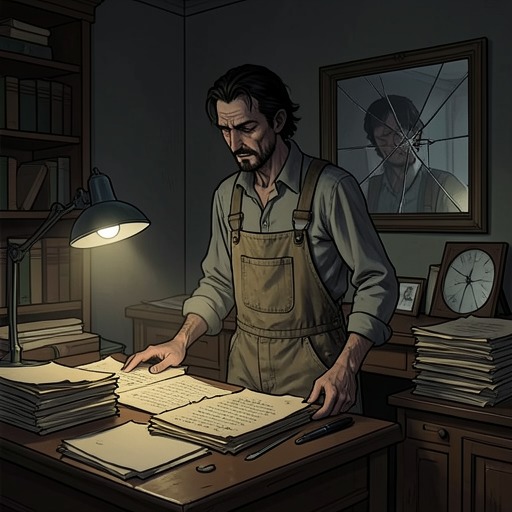
At the sound of the Easter singing, Faust contrasts his present despair with the promise of victory and human companionship. He imagines the victor binding bloody laurels to his brow and finding a maiden’s arms after a headlong dance, then wishes that he had sunk out of life before the spirit’s power carried him away. The contrast gives his crisis a double edge: he can still picture worldly triumph and intimacy, yet experiences them as things from which he has been excluded. The hymns interrupt this inward comparison, not with an argument, but with a sound connected to his earliest memories.
Memory without restored faith
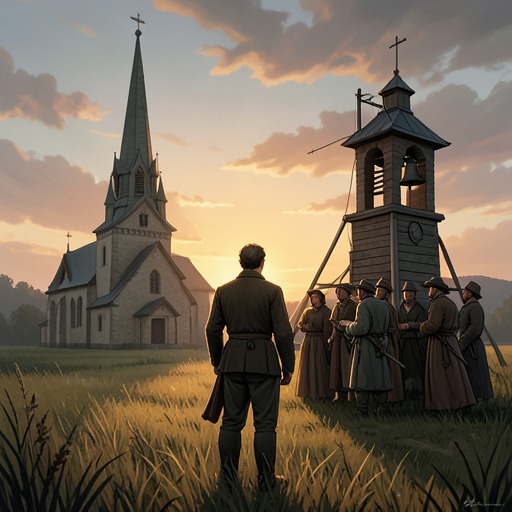
The Resurrection chorus recalls the women preparing Christ with spices and balm, binding him in linen, and discovering that he is no longer in the tomb; another song declares his ascension and the end of his trials. Faust asks why heavenly sounds should entice him in the dust. He hears their message, but says that faith has not been given to him and that he cannot venture to the regions from which the glad tidings come. Religious belief remains out of reach even as the service reaches him emotionally.
His response turns instead to a remembered childhood. He recalls heavenly love, a church bell sounding slowly in Sabbath silence, prayer dissolving him in fervent feeling, and an incomprehensible yearning that once carried him through woods and meadows as tears rose in him. The Easter chants return him to that earlier sense of life opening around him. He describes memory as holding him back from the solemn way toward death, and his tears mark the change: the earth takes back its child. The scene’s rescue is therefore neither a conversion nor a rejection of religious feeling. Faust remains doubtful, but the remembered experience of worship renews his allegiance to life.
The chorus and the meaning of return
The chants frame Faust’s change within competing responses to the Resurrection. The women’s chorus tells of Christ’s empty grave and triumphant ascent, while the disciples ask whether he has risen and confess that they remain native to earthly sorrow, missing and longing for their master. Their uncertainty and grief place Faust’s own divided response beside the communal ritual: the sacred story is proclaimed, but its promise does not erase human loss or make belief automatic. The music nevertheless reaches him where doctrine does not, by calling up an intimate history of Sabbath, prayer, childhood, and renewed feeling.
This structure makes the crisis a movement from imagined death toward renewed participation in life without a settled theological resolution. The Easter observance supplies a recurring sacred occasion, while Faust’s personal memory gives its sounds their force. The episode’s turn is accomplished through recollection: what he cannot affirm as doctrine he can still experience as an old allegiance awakened by song.
The crisis recalled and contrasted
Later, Mephistopheles recalls the crisis in a pointed exchange. Faust praises those who win bloody laurels and find intimate companionship after their dances, then again wishes that he had died before the spirit’s power overwhelmed him. Mephistopheles answers that, in that earlier night, Faust did not drink a certain liquid. The remark confirms the immediate circumstance behind the crisis: a drink associated with his intended death had been available, but Faust left it undrunk. His earlier interruption by the Easter music becomes a concrete counterpoint to his later wish that he had perished; the life renewed by memory remains something he can subsequently regret.
The episode within the larger tragedy
The later scenes of the tragedy sharpen the contrast between Faust’s crisis and Margaret’s fate without making them the same kind of event. At the cathedral, an evil spirit confronts Margaret with the death of her mother, blood on her threshold, and the presence stirring beneath her heart; she cries out against the thoughts that pursue her. In the dungeon, she gives herself to God’s judgment, and a voice from above declares her saved, while Mephistopheles tells Faust that she is judged. These scenes place religious accusation and salvation in Margaret’s story, whereas Faust’s Easter crisis turns on memory that restores his attachment to life without restoring faith. The distinction keeps the episode’s meaning precise: the hymns save Faust from an immediate resolve to die, but do not settle his spiritual conflict or spare him the tragedy that follows.