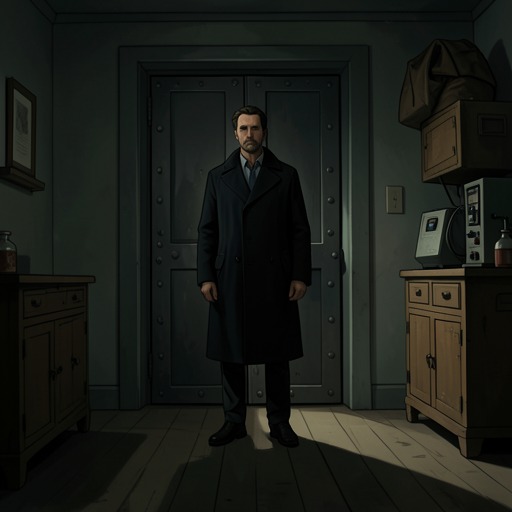
Margaret’s refusal to escape
FaustMargaret’s refusal to escape is the decisive reversal in the final Dungeon scene: although Faust has come with keys and a lamp to free her, she will not leave with him. Faced with the consequences of her actions and the prospect of a life in flight, she entrusts herself to divine judgment instead. The scene ends with two opposed verdicts—Mephistopheles declares her judged, while a voice from above declares her saved—making her spiritual fate distinct from Faust’s attempted rescue.
Setting and Immediate Stakes
The action takes place in the Dungeon, before an iron door. Faust arrives carrying keys and a lamp, and the prospect of escape is made concrete: he tells Margaret that the door stands open and urges her to go before morning. But freedom from confinement would mean entering an uncertain future outside it. The scene therefore sets physical release against the question of whether Margaret can, or should, return to life with Faust.
Her hesitation is not simply a delay in the escape. She asks whether Faust understands whom he is freeing, then names the crimes that have brought her to this moment: she says she killed her mother and drowned the baby born to them. Her recollection makes the rescue inseparable from the past it cannot undo. The keys can open the door, but they cannot remove the guilt and loss that shape her decision.
Recognition and Responsibility
Margaret’s recognition of Faust is accompanied by a sudden return to the events surrounding their relationship. She speaks of the child as having been given to them both, then notices what seems to her to be blood on Faust’s hand and asks what he has done. Faust tells her to let the past be past, but his attempt to close the subject does not dispel it. The past is present in the room as accusation, memory, and the obstacle to their escape.
Her language also brings her mother’s death into the scene. Margaret recalls seeing her mother seated on a stone, her head falling, and connects her death with the time when Margaret and Faust were caressing. The memory interrupts any simple return to their former intimacy: what she remembers as a time of blessing is shadowed by the fatal consequence that followed. Faust offers to carry her out, but Margaret rejects being taken by force and says that she has done everything for love of him. The relationship that once drew her toward him now stands beside her account of the harm she has done.
Why She Refuses to Flee
When Faust urges her to go, Margaret says she dares not escape and sees no hope in flight. She imagines a future marked by pursuit and capture, dependence on begging for a living, and the sharper misery of a bad conscience. She would remain a stranger and an outcast, still pursued even beyond the Dungeon. Her refusal is thus grounded in both the practical danger she anticipates and her inability to treat escape as absolution.
Faust says that he will stay with her, but Margaret does not accept this promise as a reason to leave. As the morning approaches, Mephistopheles appears outside and presses Faust to go, warning that delay will cost them their chance. Margaret sees him at the threshold and recognizes him as a threat within what she calls a holy place. Faust insists that she will live; she answers by giving herself to God’s judgment. The urgent escape plot is thereby displaced by her appeal to a judgment beyond Faust’s plans and Mephistopheles’ command.
Judgment and Salvation
The scene’s final exchange places its spiritual outcome in two sharply contrasting declarations. Mephistopheles says that Margaret is judged; a voice from above answers that she is saved. The different speakers matter: the demonic figure announces condemnation, but the final word comes from above and contradicts him. Margaret’s refusal to flee therefore ends not in physical rescue but in a pronouncement of salvation.
This ending also resonates with the earlier Cathedral scene. There, during the service, an evil spirit recalled Margaret’s former innocence and confronted her with her mother’s death, blood at her threshold, and the hidden consequence growing within her. Margaret then lamented thoughts that pulled her in opposing directions. In the Dungeon, that inward turmoil has become an explicit reckoning: she names her responsibility, refuses to evade the consequences through escape, and submits to divine judgment. The closing verdict resolves the question of her spiritual fate without erasing the crimes and suffering that the scene has made her acknowledge.