Shop blackout
FirestarterThe Shop blackout matters less as a documented technical failure than as a breach in the Shop’s control of Charlie McGee: John Rainbird turned the darkness into an opening for personal trust, while Charlie later feared that even the outage itself might have been part of the trap.
The Blackout as a Turning Point
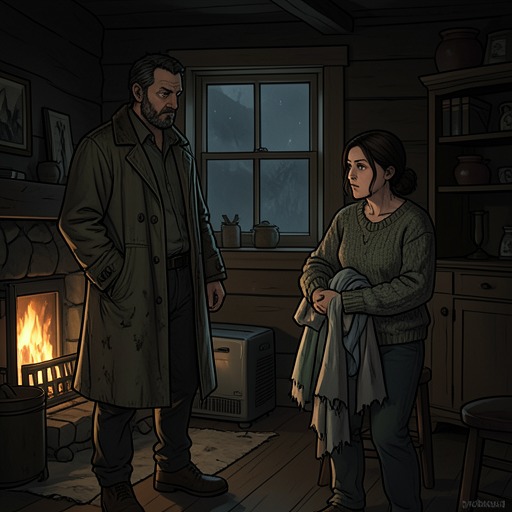
The outage is recalled as an endless night of darkness at the Shop. The available account does not explain what caused it or establish whether anyone deliberately produced it. Its importance lies instead in what Rainbird did with the opportunity. When Cap Hollister later briefed Andy McGee, he described the blackout as the first step in Rainbird’s successful effort to get Charlie to light fires under test conditions.
That account recasts the darkness as more than an interruption to routine. Rainbird’s approach was gradual: the blackout opened a path toward Charlie’s confidence, and that confidence could be converted into cooperation. The event’s consequence was therefore psychological and strategic, not simply a temporary loss of power.
Rainbird’s Use of the Opportunity
Cap’s account gave Andy a compressed history of Rainbird’s campaign. Rainbird was a Shop operative who had been badly wounded in Vietnam and had lost an eye there. He had also led the Shop operation that captured Andy and Charlie at Tashmore Pond. The blackout belonged to the next stage: instead of relying only on confinement and institutional authority, Rainbird began building a personal connection with Charlie.
The wider pattern at the Shop clarifies why that approach mattered. After Charlie’s fire test, staff members discussed fireproofing her quarters, assigning a full-time guard, and restarting her drug regimen. Rainbird opposed disrupting the existing approach. He argued that the scientists had underestimated Charlie’s ability and that suddenly changing how they treated her would upset her again. The contrast is telling: while others reached for tighter physical and chemical control, Rainbird favored preserving the conditions under which her trust could be cultivated.
What Charlie and Andy Understand
Andy learned about the blackout and Rainbird’s role through Cap’s urgent, unemotional briefing. The information transformed his understanding of the relationship developing between Rainbird and Charlie: what might have looked like attention or kindness was part of a deliberate effort to secure her cooperation. Andy’s response was fury and horror, sharpened by the knowledge that Charlie was at the center of a plan whose eventual end Rainbird understood as her death.
Charlie’s later thoughts expose a different uncertainty. She cannot stop considering whether the Shop made the blackout happen, or whether it simply occurred and Rainbird took advantage of it. Her fear does not settle the question; the narrative preserves both possibilities. That unresolved suspicion deepens the event’s significance: Rainbird’s manipulation has made even an apparent accident difficult for Charlie to experience as innocent.
Consequences and Significance
The blackout marks the beginning of a long contest disguised as intimacy. Rainbird used it to advance a plan that brought Charlie closer to performing for the Shop, while Charlie’s later recollection turns the same darkness into evidence she cannot confidently interpret. The event thus links the Shop’s institutional control to Rainbird’s individual deception: coercion need not announce itself as force when trust can be made to serve the same purpose.