Charlie burns her mother’s hands
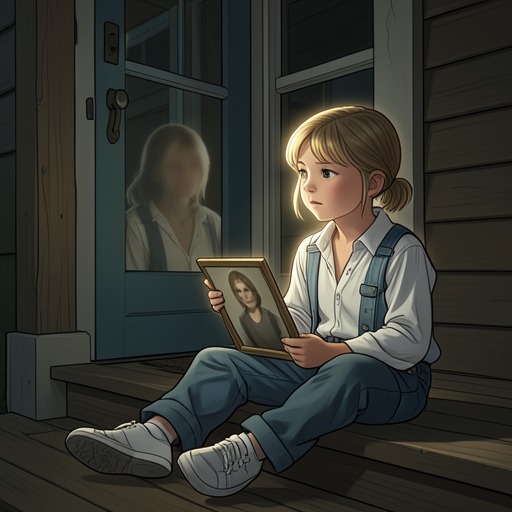
FirestarterThe event known as Charlie burns her mother’s hands is a childhood accident recalled by Charlie McGee, but it becomes more than an explanation for her mother’s bandages: it is the moment the family names Charlie’s ability, confronts its potential danger, and gives her rules meant to keep it from harming anyone again. The memory joins a child’s anger and confusion to the frightening discovery that an involuntary power can still have consequences for another person.
The Memory and Its Immediate Context
The event is presented as Charlie remembers it, rather than as a scene unfolding in the present. As the recollection comes to her, she is under warm water; the passage turns from that immediate comfort toward the earlier family crisis. The contrast places the memory inside an effort to feel safe while showing why safety has become bound up with control of her ability.
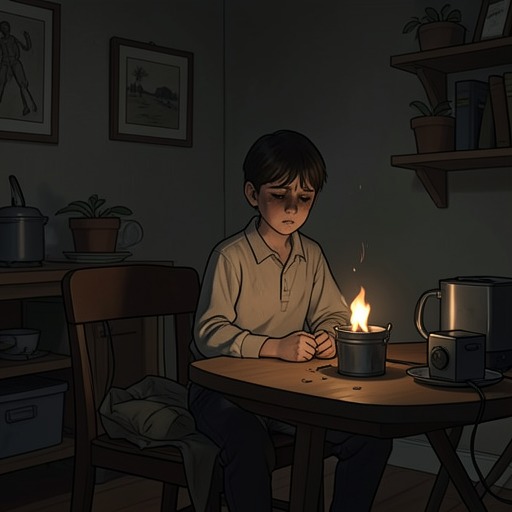
The remembered incident took place the day before. Charlie had been told she could not go to Deenie’s house because she had not picked up her room. She became very angry, and the firestarting ability she did not understand appeared suddenly. Charlie pushed the fire away from herself and toward her mother. The trigger was an ordinary childhood frustration, but its consequence was not ordinary: her mother’s hands were bandaged, and Charlie understood that she was responsible for what had happened.
The household’s circumstances limited the harm. The sink was full of soapy dishwater, and the fire did not become worse. Charlie’s memory holds both sides of that outcome together: the event could have had a more serious consequence, but it did not. The water is therefore not merely part of the setting; it is the concrete circumstance that helped contain an accident Charlie could not yet control.
Naming the Ability and Its Danger
Afterward, Charlie’s parents explain that the ability is called pyrokinesis: she can sometimes start fires by thinking about fire, particularly when upset. Her mother presents this as an explanation rather than a diagnosis of intention. The power may remain unknown to some people who possess it, while in others it can take control briefly. Her mother cannot finish describing that possibility, leaving Charlie’s father to complete the warning.
Her father connects the danger to an earlier childhood incident in which Charlie’s hair caught fire. He also tells her that she can learn to control the ability and that what happened is not her fault. That reassurance matters, but it does not remove the need for caution. His and her mother’s brief exchange of looks suggests that the subject carries weight for both adults; the passage shows the exchange without specifying what they understand or decide through it.
The parents’ explanation therefore holds two claims in tension. Charlie did not choose to possess the power or to have it emerge in a moment of distress, yet she must learn to direct it safely. The account distinguishes blame for having the ability from responsibility for trying to prevent future harm. For Charlie, whose understanding is still that of a child, those ideas arrive together with the evidence of her mother’s bandaged hands.
The Family’s Safety Rules
Her father gives Charlie practical instructions for what to do if the ability emerges again. She is to try not to become upset in the way that starts fires; if she cannot prevent it, she should direct the fire away from herself, toward a wastebasket or ashtray, try to get outside, or direct it toward water if water is nearby. These alternatives turn an overwhelming power into a set of specific actions, each intended to keep the fire away from a person.
Her mother makes the central boundary explicit: Charlie must never direct the fire at someone. She warns that doing so could kill a person. The rule follows directly from the recent accident, in which Charlie’s anger had been redirected toward her mother. It is not an abstract lesson imposed on a distant possibility; the bandages make the danger present within the family.
The instruction to redirect the fire also recognizes that prevention may not always succeed. Her parents ask Charlie to avoid the emotional state that preceded the incident, but they also give her steps to take if she cannot. This distinction keeps the rules practical: they do not assume that a promise alone will make the ability disappear, and they identify water and open air as possible safeguards.
Guilt, Promise, and Significance
Charlie responds by weeping in terror and remorse. She now understands why her parents had looked upset and why her father had read her frightening stories: the bandages are connected to what she did. Her memory emphasizes that she had been angry, that the fire appeared, and that she sent it toward her mother. The event is accidental in the sense that Charlie did not understand or master her power, but the sequence also makes her action and its consequence unmistakable to her.
She promises her parents that she will never let it happen again. The repeated insistence of the promise records the intensity of her fear and her wish to undo the harm; it does not show that she has already gained control. In the present moment of remembering, her father’s reassurance remains important to her. She trusts him as the smartest man in the world, and his certainty that things can be all right provides comfort alongside the memory’s unresolved warning.
The scene establishes the emotional and practical terms through which Charlie understands her ability: it can emerge when she is distressed, it can be directed, and directing it at a person can be deadly. It also binds her power to family care without making that care simple. Her parents comfort her, explain what happened, and set strict limits; Charlie, in turn, carries fear and responsibility for an event she did not know how to prevent. The accident thus supplies the basis for her promise and for the safety rules that govern how she is expected to live with her firestarting ability.