Charlie seeks publicity through Rolling Stone
FirestarterCharlie seeks publicity through Rolling Stone after escaping another Shop raid, turning a plan discussed by Irv and Norma Manders into a solitary journey to New York City. The sequence moves from the danger of being discovered to the possibility of making Charlie visible on her own terms: she does not yet reveal her story in print, but she finds a publication where she can offer both testimony and proof.
The need for a public account
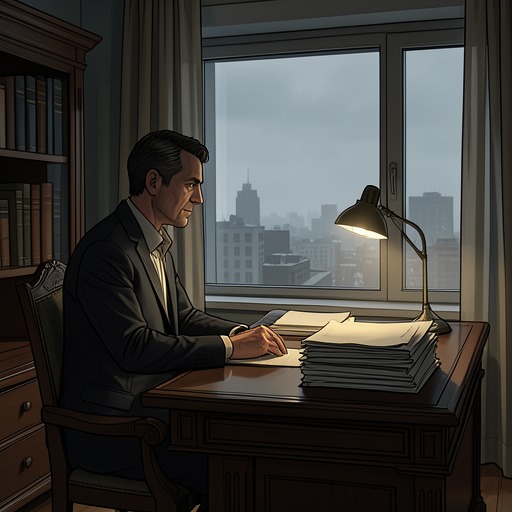
Irv and Norma recognize that sheltering Charlie at the Manders farm cannot keep her safe indefinitely. Irv argues that a small local paper would not be enough: the account must be honest, reach a nationwide audience, and have no ties to the government or its ideas. A country weekly could be silenced if The Shop learned of it before the story spread. For Irv, publicity is therefore not simply a way to tell what happened; it is a practical defense against an organization that can reach the people trying to help Charlie.
The decision carries danger for the Manderses as well. Irv says that he has already been shot once and fears that Charlie’s presence could put their lives at stake. He insists that he loves her like his own, while also pressing Norma to face the risks realistically. Norma shares his concern about what might happen if the news reaches The Shop, and proposes finding a lawyer. But their discussion ends without a plan: they will think further, and for the moment hope that no one knows Charlie is there. The delay is immediately overtaken by events.
The raid and Charlie’s departure
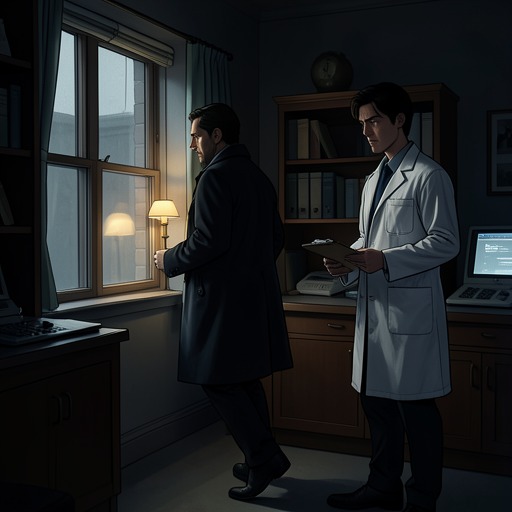
The news reaches The Shop, and a call is made from a scrambler phone. On the last day of April, agents return to the Manders farm at dawn, crossing the fields through spring mist in flame-resistant suits. A National Guard unit accompanies them, though its members do not know why they have been sent to the peaceful town of Hastings Glen, New York. The force’s arrival makes the threat the Manderses had debated concrete: the danger is no longer hypothetical, and the farm cannot protect Charlie simply by remaining hidden.
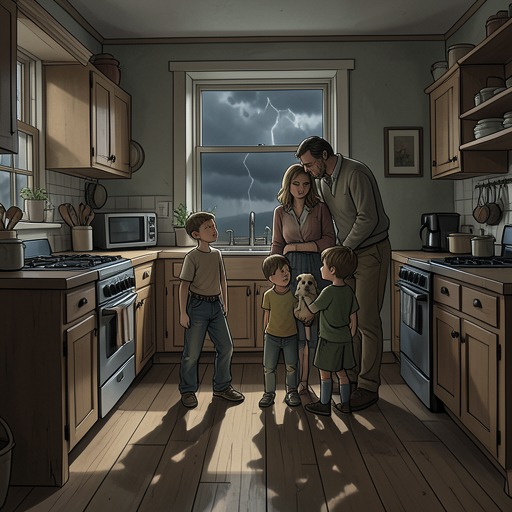
Irv and Norma are found stunned in their kitchen, with a note between them. Irv had discovered it at five that morning, when he got up to milk the cows. Charlie has left a single line: “I think I know what to do now. Love, Charlie.” She has eluded The Shop again, but this escape leaves her alone. The brevity of the note gives no account of her destination or plan; it records only the decision that has carried her away. The immediate consequence is separation from the people who have sheltered her, while the next step remains uncertain.
A librarian’s direction
Charlie reaches the New York Public Library carrying a paper shopping bag. She is described as woefully thin, wearing a green blouse and bluejeans. The young librarian listens carefully and respectfully as she explains that her father had told her a difficult question should be taken to the library, where people know the answers to almost all questions. His remembered advice gives her journey a clear starting point: alone and in need of a next step, she turns to an institution her father had taught her to trust.
The librarian works through what she is looking for and asks why she needs it. Charlie pauses before explaining, “I have to tell them something.” He considers the request for several moments, appears about to speak, then consults another librarian. When he returns, he gives her two words. Charlie asks for an address, and he writes it carefully on a square of yellow paper. The referral is a small but decisive turn: the librarian does not become her spokesperson, but he supplies the destination that lets her act on the plan to make the story public.
At Rolling Stone
Charlie follows the address to the sixteenth floor of a skyscraper. In the elevator she is a conspicuously small child among adults, holding her crumpled bag and a Sunkist orange, but the other passengers mind their own business. She gets off, reads the signs, and turns left toward a reception area behind double glass doors. Beneath the words the librarian gave her is Rolling Stone’s motto, “All the News That Fits.” The setting makes the destination unmistakable, while the motto offers an apt counterpoint to Irv’s hope for an honest account beyond government influence.
Outside the doors, Charlie whispers, “I’m doing it, Daddy. Oh, I hope I’m doing it right.” Her words connect the solitary errand to her father’s guidance, but also register uncertainty: she has found a place to begin, not a guarantee that she will be believed or that her plan will work. She opens a glass door and enters the magazine’s offices. The receptionist notices the bag, the orange, and Charlie’s slightness; Charlie, in turn, speaks in a low but clear and firm voice. She asks to see someone who writes for the magazine and says, “I have a story I want to tell. And something to show.” When the receptionist compares this to school show-and-tell, Charlie smiles and answers, “Yes. I’ve been waiting for a long time.”
The scene ends at the threshold of disclosure, not with publication or a demonstrated power. That distinction matters: Charlie has not yet made The Shop’s secrets public, and the excerpt does not establish what the magazine will do with her appeal. What has changed is her position. She has moved from being hidden by the Manderses, and endangered by the spread of news about her, to choosing a national magazine as the place where she will tell her story and show what she can do.