Erik Hökberg
FirewallErik Hökberg, Sonja Hökberg’s stepfather and Emil Hökberg’s father, is both a witness to the family life that surrounded Sonja and a portrait of how little a household may know about one of its members. He describes a home in which her sudden involvement in a taxi driver’s killing and her own murder seem incomprehensible. At the same time, his work trading in markets around the world places an unexpectedly global, technologically connected life inside the family’s ordinary Ystad townhouse.
Identity and Family Background
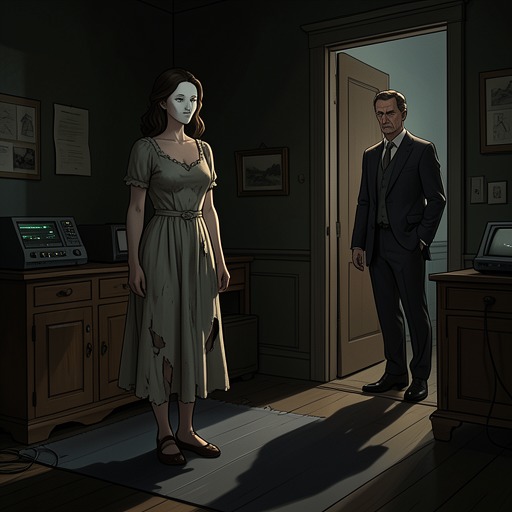
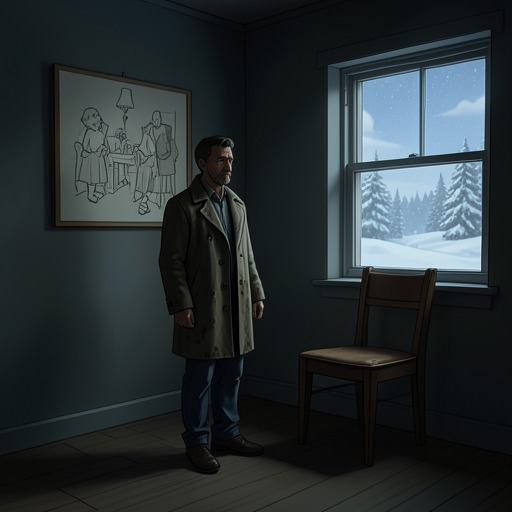
When Kurt Wallander visits the Hökberg home, Erik recognizes him before Wallander can place him. They had known each other through a shared interest in opera; Erik had often listened to Verdi with Wallander, while Sten Widén was the most devoted to the music. Erik explains that he once bore the name Erik Eriksson and took his wife’s surname. Wallander remembers him as thin, a sharp contrast to the substantial man now standing in the doorway.
Erik came into Sonja’s life when she was about two, roughly seventeen years earlier, after he met her mother, Ruth, at a Christmas party. Sonja’s father, Rolf, was never married to Ruth and, Erik says, never cared for the child; he later drank himself to death. Erik and Ruth had a son together, Emil. The distinction between biological and step-parenthood matters to the investigation: Wallander had not known Sonja was Erik’s stepdaughter, and Erik’s assurances about the family’s past apply to the years he knew her, not to her earliest childhood.
Work and the Wider World
The first striking clue to Erik’s private world is an English-language financial magazine on the living-room table. He tells Wallander that he trades stocks, options, and foreign currency, and also places bets on English cricket and American baseball. He does not consider himself a conventional gambler, though he concedes that trading stocks can be called a form of gambling. He works from home, moving between financial markets and betting centres in different countries.
His adjoining workroom makes that reach visible: three television screens carry streams of numbers, and clocks on the wall show times in different parts of the world. Erik describes the room as a place from which he can reach markets across the globe, including options in Hong Kong and currency trading in Jakarta. He qualifies this account by noting that the work requires permits, contacts, and knowledge. From a modest house at the edge of Ystad, he can nonetheless enter a financial world much larger than his immediate surroundings. His remark that strength and vulnerability go hand in hand echoes the investigation’s concern with society’s dependence on interconnected systems, without establishing any connection between his trading and Sonja’s crimes.
What Erik Knows of Sonja
Erik repeatedly presents Sonja’s actions as a shock. He tells Wallander that she had never been violent before and that he knew of no problems between her and Ruth. When Wallander asks him to describe her, he calls her strong-willed and not always easy to deal with, but believes she would have done well in life. He says she was nineteen, had her own telephone line from the age of eighteen, and often received calls, though he did not know who made them. He knew of no boyfriend; she never brought anyone home, and there were no messages on her answering machine.
His account also shows the limits of what the family could see. Erik thinks Sonja used the internet and was adept at it, but considers her less technically advanced than Emil. That recollection becomes relevant when Wallander asks whether she knew how to use a computer, but it does not by itself explain her conduct. Wallander remembers Sonja’s room as seemingly frozen in time, with its pink and flowered cushions, shelf of teddy bears, and otherwise bare desk. Among her clothes, a poster for The Devil’s Advocate is the one object he recalls as evidence of the teenager she was becoming. Erik, for his part, says he sometimes enters the room simply to sit and look around, still unable to understand what happened.
Grief and the Investigation
The press makes the family’s shock harder to bear. Erik tells Wallander that reporters called even in the middle of the night; Ruth cannot remain at home and has gone with Emil to her sister’s house in Höör. Erik says he has told Ruth that the police will come to speak with her. He does not pretend to understand Sonja’s actions, and his insistence that there had been no prior family problems sits uneasily beside the police investigation into what may have happened to her before her death.
Later, Wallander returns to ask about an incident from around 1994 or 1995, when Sonja may have been hurt or distressed. Erik and Ruth struggle to understand why the police are asking. Ruth remembers Sonja as moody, while Erik corrects Wallander’s description of an ankle injury: Sonja had sprained it, not broken it. The questioning raises the possibility of earlier trauma, but the exchange does not establish what happened. Its importance lies in the distance between the family’s recollections and the possibility that Sonja experienced something they did not know about.
As the investigation continues, Erik asks whether the police are any nearer to finding Sonja’s killer and why it is so difficult to solve a murder committed at a power station. Wallander also seeks details about her computer use and telephone calls, trying to reconstruct the life she kept partly private. Erik’s willingness to answer is not the same as possessing an explanation: his account supplies fragments, not certainty.
Change and Significance
When Wallander visits again, Erik is ashen and red-eyed. Ruth is upstairs, resting or crying, and Emil has returned to school, which Erik thinks is best for him. The household has resumed one routine while remaining marked by its loss. Erik says he has always opposed the death penalty, but now cannot be sure of that conviction. He asks Wallander to keep him away from whoever killed Sonja because he does not know what he might do.
That request is a stark change from his earlier bewilderment: grief has not given him knowledge of the crime, but it has made the imagined meeting with the killer a danger he recognizes in himself. Erik’s role is therefore not to solve the mystery, but to embody the family’s painful gap between knowing Sonja intimately and understanding what lay beyond their knowledge. His global workroom suggests the reach of modern connections; his visits to her untouched room show how little that reach can do to bridge the distance left by a death.