Lisa Holgersson
FirewallLisa Holgersson is the chief of the Ystad police station, a leader whose response to two crises reveals the competing demands of investigation, public accountability, and trust within the police force. She supports the effort to find Sonja Hökberg after her escape, but does not treat operational urgency as a reason to ignore failures in custody or allegations against Kurt Wallander. Her position becomes especially difficult when Wallander insists that Eva Persson is lying and that the police must continue to pursue the case on that basis.
Position and Investigative Role
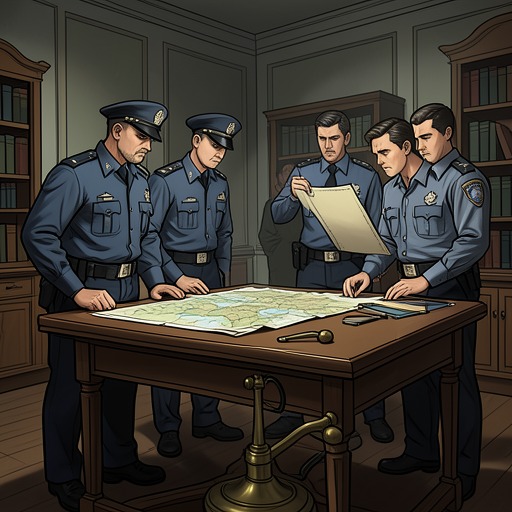
Holgersson joins the morning meeting about the murder of Johan Lundberg after the investigators have gathered in a subdued conference room. Wallander reports that Hökberg and Persson have confessed, that the hammer and Lundberg’s empty wallet and mobile phone have been recovered, and that Nyberg is still searching the Old Cemetery for the knife. Holgersson nods for Wallander to begin, giving him the floor to explain the case and its apparent lack of motive.
When the discussion turns to why the two young women killed Lundberg, Holgersson asks the question the others have left open: why the crime seems so pointless. Wallander says Hökberg’s explanation was simply that they needed money, without specifying what they intended to do with it. Holgersson’s question keeps the investigation’s unresolved human and practical questions in view even as Wallander believes the police role is nearly finished. The exchange establishes her not as the case’s principal investigator, but as the chief who listens to the account and asks what it has not explained.
Response to Hökberg’s Escape
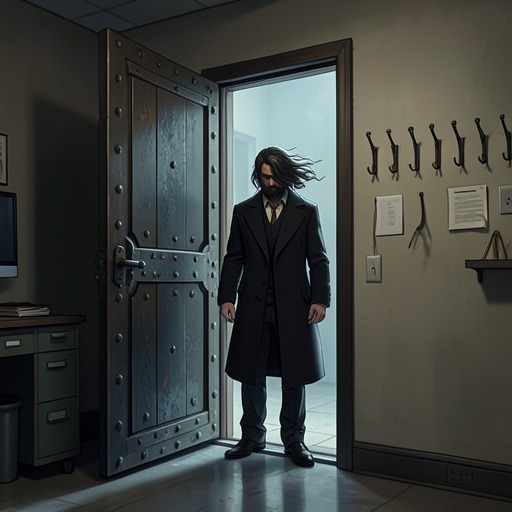
Holgersson learns of Hökberg’s disappearance after the young woman has walked out of the station while being moved between rooms. Wallander reconstructs how Hökberg asked to use the toilet, found the officer on guard distracted, and left through the front hall; the officer discovered her absence only minutes later. Holgersson is furious that this could happen. Her anger is directed at a failure of custody, not at the effort now required to correct it: she asks whether Hökberg might commit further violence, and Wallander acknowledges that the police do not yet know enough to rule that out.
She also asks whether the escape was planned. Martinsson thinks Hökberg merely took advantage of an opportunity, while Wallander believes she had been waiting for the right moment to get away. Holgersson’s questions expose both the uncertainty about Hökberg’s intentions and the station’s uncertainty about its own procedures. Wallander tells her that security must be reviewed and responsibility for the failure assigned after Hökberg is found. Holgersson agrees that the escape is unacceptable, but her immediate priority remains locating Hökberg and understanding the danger she may pose.
Public Communication Under Pressure
Holgersson is still hoping that a patrol will spot Hökberg when the scheduled press conference approaches. Wallander wants to begin on time, partly because he expects delay to irritate reporters and make matters harder. Holgersson asks what she should tell them; Wallander takes responsibility for speaking and asks only that she be present. She accompanies him to the conference, where he discloses that Lundberg died from the assault, that two people have confessed, and that one of them has escaped.
The scene places Holgersson beside Wallander as the police explain a case whose rapid resolution has been overtaken by a new failure. She does not make the announcement herself, but her presence represents the station’s leadership at a moment when the investigation is exposed to public scrutiny. Her hope that the fugitive will be found before the conference also contrasts with Wallander’s more pessimistic assessment of the likelihood of a quick sighting.
Wallander’s Assault and the Internal Investigation
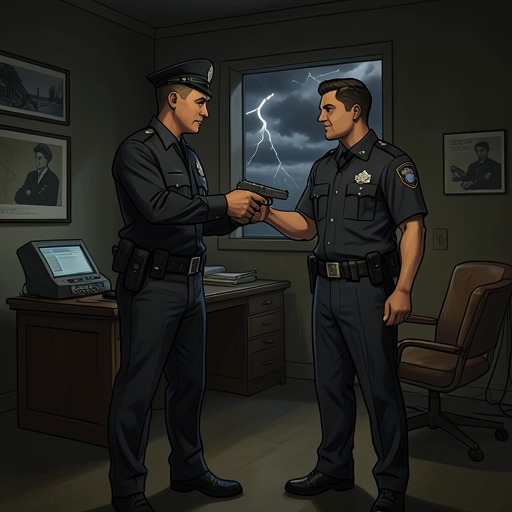
The conflict becomes more personal when a newspaper publishes a photograph of Persson on the interrogation-room floor with a caption accusing Wallander of assaulting a teenage girl. Holgersson tells him that she must order an investigation. Wallander says Persson had been hitting her mother and that he slapped her to stop her; he is angry that Holgersson does not simply accept his account. She explains that Persson has given Ann-Britt Höglund a different version, and that Persson’s mother denies having been struck.
Holgersson’s response leaves Wallander feeling distrusted, but she does not suspend him. The following morning he publicly restates his account to colleagues and accepts that an internal investigation will take place. Holgersson then draws a boundary around the ongoing case: Wallander will not be allowed to question Persson. Her decision separates his disputed conduct from the investigative work while also limiting his direct involvement with a witness whose account is central to the dispute.
At that same meeting, Wallander announces that the pathologist has found fractures consistent with a heavy blow to Hökberg’s head, possibly causing her death or unconsciousness before she was thrown among the power lines. Holgersson’s expression is described as put out when Wallander brings up the case, but the new information surprises the room and shifts attention back to the murder investigation. Her role in these scenes is defined by an uneasy balance: she must address an officer’s alleged use of force without allowing the investigation into Hökberg and Lundberg to disappear behind the controversy. The book gives no final resolution to her relationship with Wallander in these exchanges; it shows instead the strain created when professional trust and institutional accountability are tested at once.