Louhi's Bargain for the Sampo
KalevalaLouhi's Bargain for the Sampo turns Wainamoinen's desire to return from Pohyola into a demand for a wondrous object: Louhi will help him go home, but the price is a Sampo. The exchange also binds that task to marriage, making the journey home dependent on a feat Wainamoinen says he cannot perform.
The wish to return
Louhi, the hostess of Pohyola, has given the stranded Wainamoinen warmth, food, and shelter. Once he recovers, she questions the ancient singer about why he is in this unfamiliar, cold country. His answer centers on home: he asks Ukko to let him visit his people again, and contrasts the pleasures of his own table and home with the rare drink offered in strangers’ golden bowls. The longing is not for a new reward but for return to Wainola and the plains of Kalevala.
Louhi asks what he would give as payment if she took him back. Wainamoinen offers golden treasures and the finest silver, treating wealth as a possible recompense for safe passage. Louhi rejects that scale of payment: gold and silver, she says, are only trinkets. Her counteroffer changes the negotiation from a simple exchange of transport for treasure into a task with consequences beyond the journey itself.
The price of passage
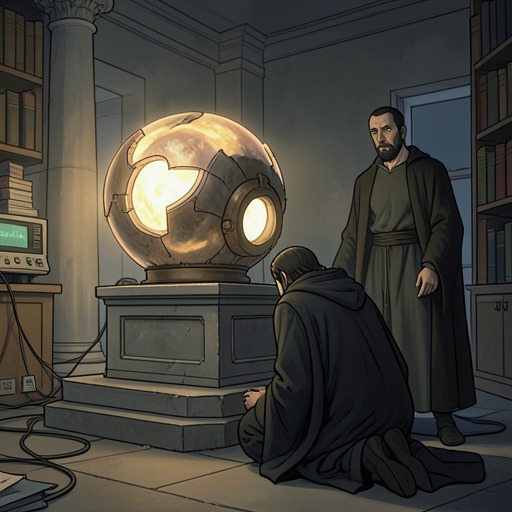
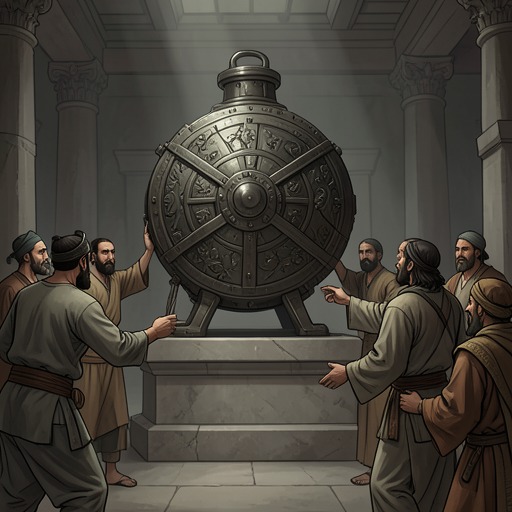
Louhi demands that Wainamoinen forge the Sampo, including its many-colored lid. Her request describes its making through an extraordinary collection of materials: the tips of white-swan feathers, the milk of a barren cow, one grain of barley, and the finest lamb’s wool. The specificity makes the Sampo’s creation the test at the heart of the bargain, rather than a payment that can be settled with ordinary riches.
She offers her daughter as a reward and promises to take Wainamoinen to his beloved homeland. Wainamoinen, however, says he cannot forge the Sampo. His refusal is accompanied by the observation that there are no traces of a hammer or tongs, underscoring the absence of the craftwork that such a task would require. The bargain therefore reaches its central impasse: the return he wants is offered, but its stated price exceeds what he claims he can make.
Marriage made conditional
Louhi answers that she will give her daughter only to the person who can forge the Sampo. The marriage promise is thus not a separate gift available to Wainamoinen regardless of the outcome; it is conditional on completing the same difficult work demanded for the bargain. Louhi links passage home and the prospect of marriage to the Sampo’s creation, while Wainamoinen has already declared himself unable to produce it.
After setting out that condition, Louhi harnesses a dappled horse to her birch-wood sledge. The preparation gives the negotiation a practical next movement, following the exchange of wishes, payment, and terms. The episode establishes the Sampo as the price attached to return from Pohyola and makes Louhi’s daughter part of that price’s promise, even though Wainamoinen has not agreed that he can fulfill the demand.