Louhi's Theft of the Sun, Moon, and Fire
KalevalaLouhi's Theft of the Sun, Moon, and Fire is the sudden collapse of light in Kalevala: Louhi captures the Sun and Moon, then takes the fire from Wainola, leaving homes and the wider world in darkness. The event makes illumination something that can be seized, hidden, and lost, and its consequences reach from the sky to the hearth and even to Ukko’s home.
The Seizure of the Sun and Moon
The episode belongs to Rune XLVII, where Wainamoinen has again touched the strings of his magic harp. Against this musical setting, Louhi, hostess of Pohyola and described as Northland’s old wizard, takes control of the lights above the world. The poem presents the act as a deliberate capture: she calls the Sun down from its station among the bending fir-tree branches and carries the Sun and Moon to upper Northland, to darksome Sariola.
The removal is followed by concealment. The Moon no longer glimmers, and the golden Moon and silver Sun vanish into iron-banded caverns. The contrast between their precious brightness and the enclosing iron makes the theft more than a change in the sky: the lights remain in existence, but are inaccessible, held captive behind barriers. Louhi’s power consists not simply in making night, but in removing the celestial bodies from view and keeping them from their ordinary place.
Darkness in Kalevala and Wainola
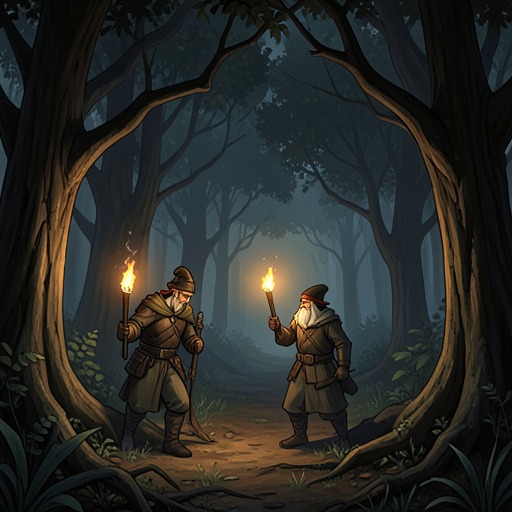
Louhi’s theft extends from the Sun and Moon to fire. The poem places this loss in the regions of Wainola and describes its immediate effect on habitation: the mansions grow cold and cheerless, and the cabins are filled with darkness. Night becomes unbroken; darkness rules in Kalevala and reaches the home of Ukko as well. The movement from the missing lights in the heavens to cold houses gives the supernatural act a material consequence. Without fire, domestic shelter no longer offers warmth or light.
Ukko’s response establishes the scale of the disturbance. As the first of creators, he lives in wonder at the darkness and reflects on it. The loss has unsettled even a creator figure; it is not merely a local inconvenience that can be ignored. The poem thus makes the stolen light a common deprivation, shared by dwellings, the land, and the divine household.
A New Fire and a Further Loss
A little fire is kindled and placed by Ukko in the cloud-space, inside a box of gold and silver. The attempted remedy changes the course of the episode without immediately restoring ordinary light below: the new flame is held aloft and entrusted to the care of the Ether-virgin. Its precious container and heavenly location distinguish this fire from the missing fire of the homes, while its custody makes clear that the recovery of light depends on preserving a vulnerable flame.
That safeguard fails. The fire slips from the hands of the one who nurses it, and the heavens are burst asunder as the vault of Ukko opens; the wayward Fire-child drops downward. The poem therefore follows one theft with a second crisis of loss: even the replacement fire does not remain securely in its appointed place. The fall does not, in the evidence of this episode, itself amount to the restoration of warmth and light in Kalevala; instead it carries the fire’s danger and promise into a new stage.
Significance of the Event
The sequence links three forms of vulnerability. The Sun and Moon can be captured and shut away; the fire that sustains homes can be taken; and a newly kindled flame can escape its keeper. Each loss moves between different scales, from celestial bodies to cold cabins and back to the heavens. The episode’s pattern is not simple darkness followed by a completed cure: Ukko’s response produces another moving, precarious fire, while the original captives remain hidden in the caverns.
The theft also reveals how closely cosmic order and daily life are joined in the poem. The disappearance of the Sun and Moon means more than an altered sky, and the loss of fire means more than a missing object: the mansions are cold, the cabins dark, and Ukko himself is left in darkness. By making the lights captives and the replacement flame a wayward child, the episode gives the crisis both a political shape, through Louhi’s act of possession, and a fragile material one, through fire that must be guarded but cannot be kept still.