Maidenhood and marriage in the Kalevala
KalevalaIn the Kalevala, maidenhood and marriage are not simply successive stages of life: they are also a contested passage between a woman’s wishes, the claims of kin, and the duties attached to a new household. Aino’s distress at being promised to Wainamoinen makes the cost of a marriage arranged through another person’s bargain unmistakable. Elsewhere, a young woman’s comparison of maiden freedom with married life, followed by a bride’s farewell and instruction, presents marriage as a transition whose emotional and domestic demands remain visible even when the wedding is complete.
Aino’s unwanted betrothal
Aino’s proposed marriage begins not with her consent but as the price offered by Youkahainen in exchange for release from torment. He promises his sister as Wainamoinen’s bride, describing her as the fairest daughter of his mother and pledging her as a bride forever. The language makes the arrangement a family transaction: Youkahainen presents a marriageable relative as compensation, while Aino is the person whose life will be altered by the bargain.
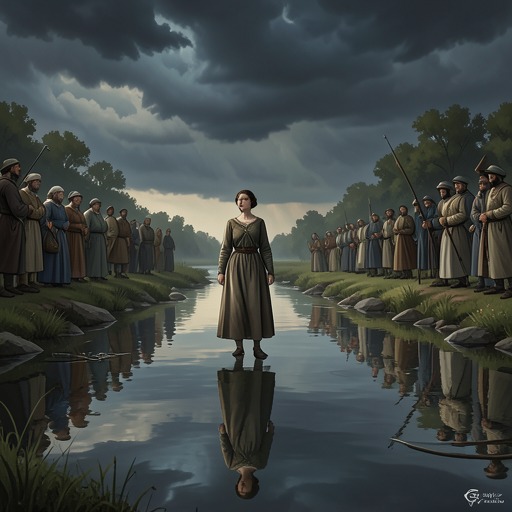
Aino’s response is sorrow rather than acceptance. She tells her mother that she has cause to weep and dwells on the loss of her sunny tresses, which she will no longer adorn with jewels. Her lament gives the betrothal a material and personal dimension: marriage threatens not only a change in status, but the end of a treasured way of presenting herself. The passage makes her grief legible through what she expects to lose, rather than treating the promised match as an uncomplicated happy outcome.
Her despair sharpens into a wish that she had never seen sunlight, or had died in infancy. She imagines that life in the sea among nimble fishes would be preferable to serving as an old man’s solace, prop, and helping hand. The contrast is stark: an imagined existence beyond ordinary human household obligations seems less burdensome than a marriage in which she must sustain a much older husband. Her words do not present the match as a reciprocal choice; they expose the unequal expectations folded into it. The evidence gives her protest emotional force, even as it leaves the consequences of this particular lament outside these passages.
Freedom and the terms of married life
A later discussion gives the tension a more reflective form. The Maiden of the Rainbow considers how to live in the greatest pleasure and happiness, setting life as a maiden with her father beside life as a wife with her husband. The alternatives are both located within family relationships, but they do not carry the same feeling. In the songbird’s account, maiden freedom is warmer, while the lives of married women are likened to cold iron in winter. The comparison turns a domestic transition into a question of what freedom and comfort are lost or retained when a woman marries.
The image does not reduce the discussion to a simple claim that marriage is always misery. Its force comes from the contrast between a maiden’s freedom and married life’s chill, and from the fact that the comparison is spoken in the context of weighing how to live happily. The Maiden of the Rainbow is thus associated with a choice that deserves consideration, rather than with a role whose attractions need no explanation. At the same time, the answer is carried through a songbird’s teaching, so the poem presents it as a voiced perspective within a conversation, not as an uncontested rule for every woman.
Wainamoinen, described as old and truthful, answers the Maiden of the Rainbow by calling the thrush foolish. That reply places an older male voice in direct opposition to the songbird’s defence of maiden freedom. The disagreement matters because the earlier Aino episode has already shown what can happen when a marriage promise is made by someone else: a young woman’s anguish is not answered simply by calling marriage desirable. The later exchange makes the underlying dispute explicit—whether maiden freedom should be valued on its own terms or dismissed in favour of the married state—without resolving it by presenting every voice as equally persuasive.
Marriage as departure and instruction
The wedding material shifts the emphasis from choosing between maidenhood and marriage to the passage that follows the ceremony. The bride’s farewell is identified as a distinct part of the narrative after the marriage has been completed and the guests have feasted. This placement gives departure its own weight: the wedding is not only a public celebration but also a threshold after which the bride must leave one household role for another. The farewell frame keeps that change visible rather than letting the feast stand as the whole meaning of marriage.
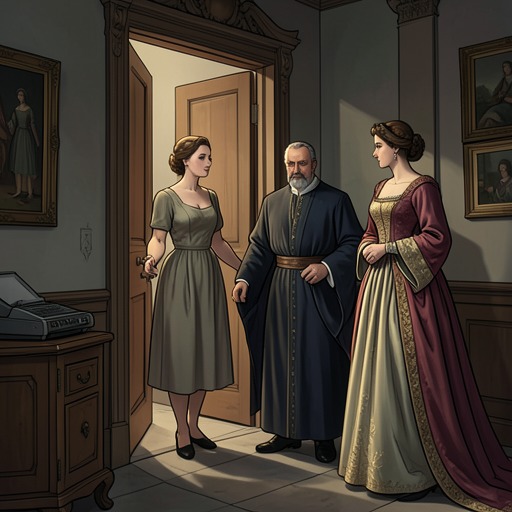
Osmotar addresses the anxious bride with instructions for life in her husband’s dwelling. The bride is urged to win the praises of her second mother and to be joyful in her husband’s home; she also recognizes the counsel as maternal advice. The language maps marriage onto a new set of relationships and expectations. A bride is not entering a household defined solely by her husband: she must also negotiate the place of a second mother and earn approval within the new family. The instruction makes the labour of adjustment part of the literary picture of marriage.
The bride’s anxiety and her acknowledgment of maternal counsel give this passage a different tone from Aino’s despair, but they do not erase the contrast between them. Advice can prepare a bride for the demands of a new home; it cannot by itself make every marriage freely chosen or every transition welcome. Read together, the farewell and instruction present marriage as a socially guided passage, while Aino’s protest reveals the danger of treating that passage as a decision belonging only to her relatives.
Thematic significance
Across these episodes, marriage connects households and redistributes expectations, but the poem also makes women’s responses to that process audible. Youkahainen’s promise places Aino inside a bargain made by her brother; the Maiden of the Rainbow’s deliberation weighs married life against the warmth of maiden freedom; the bride’s farewell and Osmotar’s guidance show how a completed wedding entails departure and adaptation. These are distinct situations, not one uniform account of marriage, and their differences prevent the theme from collapsing into either celebration or condemnation.
The recurring contrast is between a marriage understood from outside—as a bargain, a social transition, or a new household role—and the experience of the woman expected to inhabit it. Aino supplies the sharpest evidence of the gap: the promised bride is not merely a family connection but someone who grieves what she stands to lose. The later debate gives that conflict a more general vocabulary of freedom and comfort, while the bridal counsel describes the practical expectations that follow the ceremony. Together, the episodes make consent, family duty, and domestic adjustment central to the Kalevala’s treatment of maidenhood and marriage.