Myth of the origin of iron and steel
KalevalaThe Myth of the origin of iron and steel gives metal a divine birth and a perilous history: iron comes into being through Ukko’s creation, while steel emerges from a process disrupted by the malice of Hiisi. The smith Ilmarinen can shape and harden the metal, but cannot prevent its transformation into a force that breaks its sworn promise and draws human blood. The account explains material origins while making the violence of iron and steel part of their beginning.
Divine origins and the first metals
Before iron is worked by a smith, Ukko, maker of the heavens, divides air and water. The narrative then introduces iron as something that already exists in the world’s first ordering. Ukko rubs his hands together and presses them against his knee; three daughters arise from this act, and the poem names them as mothers of iron. Metal therefore belongs to a created world, but its birth is mediated through divine bodies and kinship rather than presented as an impersonal discovery.
The daughters’ milk gives iron its different forms. Ukko’s eldest daughter sprinkles black milk over river channels, and dark, ductile iron grows where it falls. White milk produces iron of a lighter color; the youngest daughter’s red milk reaches seas and oceans, where red, brittle iron grows. These variations make the metal’s nature plural from the outset: iron is not a single uniform substance but a family of forms associated with distinct colors, places, and qualities. The contrast between ductility and brittleness also gives the origin account a material specificity: the myth links visible differences in iron to different beginnings in the landscape.
The account thus joins cosmic creation to the ordinary properties of worked matter. Air and water are divided, daughters are born, and milk is scattered over channels and seas; from these actions come substances that can later be shaped and used. The sequence does not separate the natural world from culture. The metal’s varieties arise in the earth before human craft, but their subsequent meaning depends on what a smith does with them.
Ilmarinen and the work of tempering
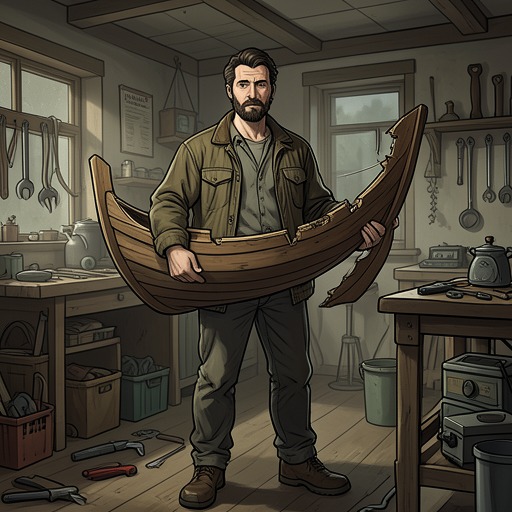
The blacksmith Ilmarinen comes to earth to work metal. The narrative associates the iron with ground marked by animal tracks, including wolf-trampled marshes, before turning to the smith’s deliberate engagement with it. Ilmarinen addresses the sleeping iron as a useful substance and warns of the harm it may do: it could slay heroes and wound a dearest brother. Iron makes a solemn promise in response, swearing by the furnace and the anvil. The tools and places of smithing become witnesses to an agreement between maker and material.
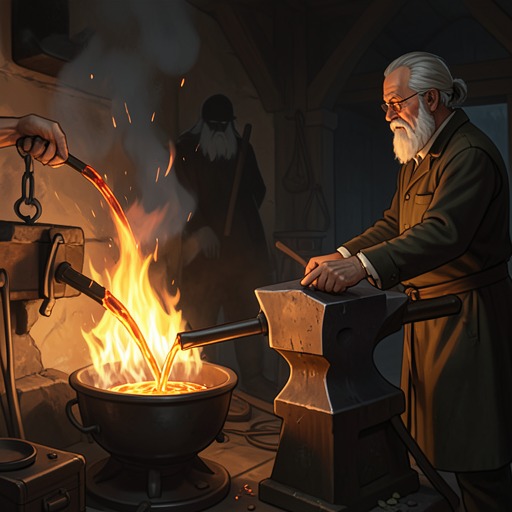
Ilmarinen does not simply accept the iron as it is. He gathers birch ashes, soaks them in water, and makes lye to harden the metal. This detail places practical craft at the center of the myth: the smith prepares a substance and uses it in an intentional process of hardening. But the act also opens the way to steel. Ilmarinen speaks of helping water produce steel from iron, and his skilled work is shown as a transformation with consequences, not as mastery without risk.
Hiisi’s interference and iron’s broken vow
The threat enters through Hiisi’s bird, the Hornet, which hears Ilmarinen’s words. It brings spider poison and the stings of insects, mixing them with the ore and water while the steel is being tempered. The narrative makes the crucial change occur inside the smithing process: the materials Ilmarinen has gathered and prepared are contaminated during their transformation. Steel’s origin is therefore not represented as a wholly controlled achievement. Human skill supplies the method, while Hiisi’s intervention alters what that method produces.
When Ilmarinen dips the iron into water mixed with the poisons, the hardened iron grows angry and breaks its vow. It turns against the promise it had made, and the result is bloodshed: wounds open and blood flows from people and heroes. The metal’s danger is consequently more than a practical property. The story frames violence as a betrayal built into the metal’s passage from iron toward steel, and it ties that betrayal to a specific interference rather than to the smith’s original intention alone. Ilmarinen’s craftsmanship remains powerful, but the tempering does not secure obedience or safety.
Meaning of the origin account
The myth’s causal chain runs from creation through craft to injury: Ukko’s act produces the mothers of iron; their milk gives iron its varieties; Ilmarinen works and hardens the metal; the Hornet contaminates the tempering; and iron breaks its sworn restraint. Each stage changes the meaning of the previous one. Metal begins as part of the ordered world, becomes an object of skilled labor, and ends as a source of wounds. Its usefulness and its capacity to harm are held together rather than resolved into separate stories.
The vow gives that tension a memorable form. Iron is not merely made dangerous by force; it first promises not to turn against those closest to it, then violates the promise once poisoned. The contrast between sworn word and broken word makes the origin of steel an ethical as well as a material explanation. At the same time, the poem identifies steel as arising from the interaction of iron and water under the conditions of tempering, while the Hornet’s poison accounts for the destructive outcome. The closing identification of iron’s origin and light-blue steel gathers divine beginnings, skilled work, and betrayal into one etiological account: the materials that serve human beings also carry a history of how they became perilous.