Revenge
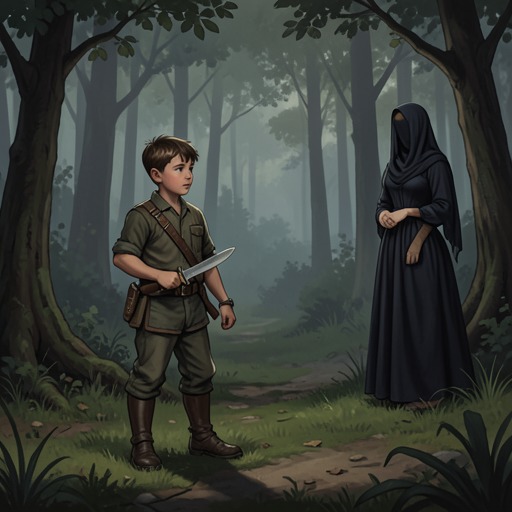
KalevalaRevenge in the Kalevala converts remembered injury into a demand for action, driving characters toward armed conflict and making private wrongs answerable through public devastation. Its clearest arc belongs to Kullervo, who sets out against Untamo for the murder of his father, the torture of his mother, and the suffering of his people, then continues fighting until Untamo’s people are slain and their villages burned. Elsewhere, Lemminkainen’s resolve to avenge an insult and the weapons raised against his life show revenge as both a motive for pursuit and a danger directed back at the avenger.
Injury and the Call to Retaliate
Revenge begins with an injury that is not allowed to recede into the past. Kullervo’s purpose is explicitly cumulative: he means to journey to Untamo’s village to avenge his father’s murder, his mother’s tortures, and the troubles inflicted on his tribe-folk. These are not presented as interchangeable grievances. The list moves from harm to his father, to suffering endured by his mother, to damage reaching beyond the household and affecting the wider people. Retaliation therefore carries a family and communal charge at once.
Kullervo’s resolve also frames the conflict as unfinished so long as its responsible party remains at large. He calls Untamo the destroyer of his people and declares that he cannot leave the fields of battle while Untamo goes unpunished. The wording makes punishment, rather than escape or reconciliation, the condition that would end his pursuit. His journey onward to combat follows that declaration: the desire for retaliation is not merely a feeling described from a distance but the stated reason he keeps moving toward battle.
Lemminkainen as Target and Avenger
The episodes involving Lemminkainen expose the reciprocal danger built into revenge. In one scene, men sharpen broadswords, spears, and lances for his death; the warning identifies their weapons as aimed at his heart and locates the threat in the court-yard of Pohyola. The preparation is collective and concrete. Before any blow is described, sharpened weapons make the intention legible: Lemminkainen is the intended victim of lethal retaliation.
In another passage, Lemminkainen is himself drawn toward hostile territory by revenge. He considers leaving his long-established island home for battle in Pohyola, and the stated force behind that departure is a spirit fired by revenge, determined to answer a shameful insult. The insult is not specified in this evidence, so the passage defines his motive without detailing its origin. Set beside the threat against his life, his decision shows how quickly the roles of avenger and target can converge: a character moved to retaliate may also become the object of another party’s armed response.
Kullervo’s Campaign and Its Cost
Kullervo’s return to battle is marked by refusal. He cannot leave while Untamo remains unpunished; instead, he journeys onward toward combat, still rejoicing. That contrast gives the episode a distinctive force: the language of joy accompanies movement into violence, while the stated cause is a history of murder, torture, and collective suffering. The narrative does not present the expedition as a quiet settling of accounts. It makes the continuing pursuit itself the decisive action.
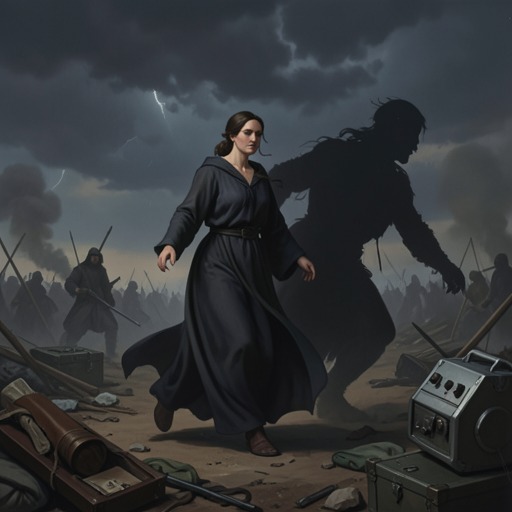
The retaliation culminates in the destruction of Untamo’s people. Kullervo slays them and burns their villages, leaving only stones and ovens. The aftermath is rendered through what remains: ordinary settlements have been reduced to their enduring structural traces. Kullervo’s original grievances concern injuries to his family and tribe, but the reprisal reaches an entire population and its dwellings. The scale of the outcome sharpens the difference between naming an injury and ending it; Untamo’s people are devastated, while the account gives no further reconciliation or restoration to balance the destruction.
The Pattern of Revenge
Across these episodes, revenge is linked to memory, kinship, and movement. Kullervo recalls wrongs done to his father, mother, and people, then travels toward Untamo’s village; Lemminkainen weighs leaving his island for the hostile fields of Pohyola because an insult has fixed his purpose. In each case, injury becomes a route: the remembered wrong points toward a place and a confrontation. The sharp weapons aimed at Lemminkainen make that route perilous, while Kullervo’s campaign shows how retaliation can expand beyond its named target to consume a community and its homes.
The contrast is not between revenge and conflict, but between different positions within its cycle. Lemminkainen appears both as a man who intends to avenge an insult and as a man whose enemies prepare to kill him. Kullervo’s story follows the retaliatory logic through to its material consequence: Untamo’s people are slain, and their villages are burned. The episodes give revenge a double meaning in the poem’s action. It can be a declaration that grievous wrongs will not be left unanswered, yet its fulfilment does not undo those wrongs; it produces a new scene of loss.