The Master's Lost Spell
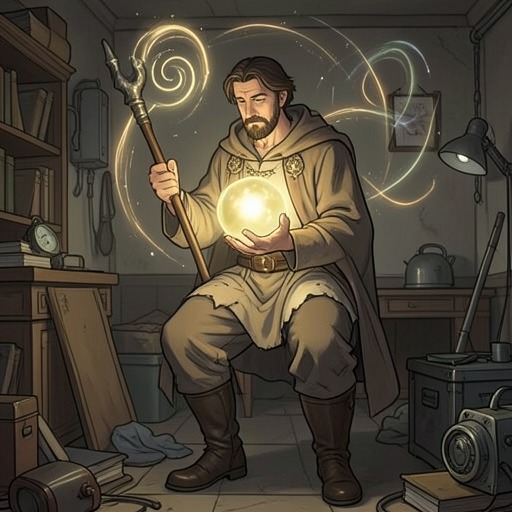
KalevalaThe Master's Lost Spell is a missing piece of practical magic: three words Wainamoinen needs to complete his vessel. Their absence interrupts the construction at its final stages, leaving the ledges, stern, and forecastle unfinished. The search for the words turns a failure of craft into a quest for knowledge, and their recovery allows Wainamoinen to return to the boat and finish it.
What the Spell Contains
The lost knowledge is defined by its number and its purpose. Three words are wanting, and their work is specific: they explain how to fasten the ledges, complete the stern, and finish the forecastle. The spell is therefore not presented simply as a general source of power. It is the missing instruction that makes a particular construction possible.
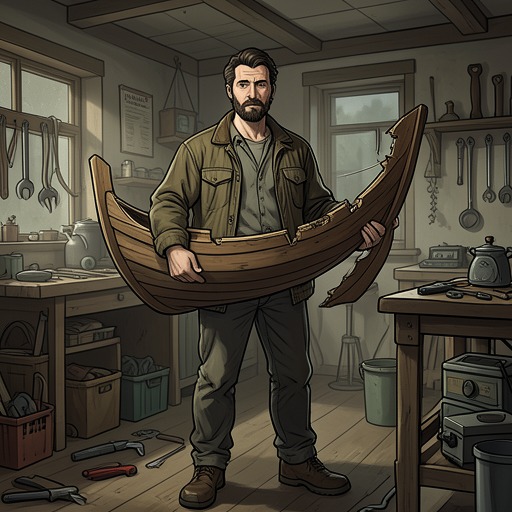
The vessel is already substantially built when the problem becomes clear. Its ribs are firmly fastened and its sides tightly jointed, but the remaining parts cannot be completed without the words. That contrast gives the knowledge a precise limit: considerable labor has brought the boat close to completion, yet the final stages depend on something Wainamoinen does not possess. Physical skill and song are both part of his work, but skill alone cannot supply the missing magic.
The Interruption of the Boatbuilding
Wainamoinen is described as building a vessel while working and singing. Once he discovers that three words are missing, he becomes heavy-hearted. The emotional response registers more than a minor technical delay: a nearly finished undertaking has stopped at the point where its last components must be secured. The spell’s importance is measured by this halt in action.
The missing words also connect separate forms of making. Wainamoinen’s craft involves the boat’s physical construction, while the lost mastery is expressed through words and songs. The narrative does not treat those as competing explanations. Instead, the unfinished boat demonstrates their dependence on each other: the ribs and sides can be assembled, but the structure cannot be brought to completion until the relevant verbal knowledge is restored.
The Search for Master-Knowledge
In the encounter with Antero Wipunen, Wainamoinen gives a practical account of his immediate need at Mana: he has come to borrow a hatchet to mend his magic sledge. He also explains the deeper problem, saying that he had been building a vessel and needed three words of the Master. These circumstances should be distinguished: the hatchet is requested for the sledge, while the lost words are needed for the vessel. Together, however, they place Wainamoinen amid unfinished work and a search for what his own knowledge lacks.
Antero Wipunen is identified as a wise and ancient bard, a wisdom-singer and great magician, whose magic songs are associated with the recovery of the words. The encounter makes the search more than a matter of locating an instruction. The needed knowledge belongs to a figure characterized by song, wisdom, and magical authority; Wainamoinen must reach a source beyond his own mastery. The spell’s designation as the Master’s lost words emphasizes that the gap is one of inherited or prior knowledge, not simply an ordinary oversight in construction.
Recovery and Consequence
After learning the magic sayings, ancient songs, and legends, Wainamoinen declares that he has found the lost words and will leave Antero Wipunen. Antero Wipunen, in turn, acknowledges that Wainamoinen has found the three words of the Master and gives him a blessing as he departs. The exchange marks a clear change in the quest: what began as a lack in Wainamoinen’s knowledge is now something he can carry away and use.
Wainamoinen goes straight back to the vessel and to the place where the magical work was underway. He quickly fastens in the ledges, firmly binds the stern together, and completes the forecastle. The return is significant because it converts recovered knowledge into action: the words do not remain a revelation detached from the plot but resolve the exact obstacle that stopped the building. The sequence gives the spell a defined narrative function—unfinished construction, search for the lost mastery, and renewed completion—while presenting song and verbal knowledge as indispensable parts of Wainamoinen’s craft.