180th meridian
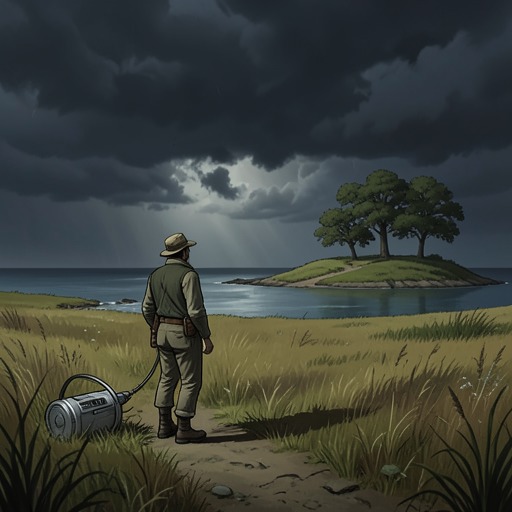
MayaThe 180th meridian is the geographical hinge between the novel’s Pacific ecology and its millennium narrative. It passes through Taveuni and a small number of other Fijian islands, making the region a contested candidate for entering the year 2000 first and the proposed location of a monument designed to carry messages into the fourth millennium.
Geography and the Pacific setting
The meridian’s importance is practical as well as symbolic. During a conversation about Fiji’s millennium plans, José explains that, apart from Antarctica and a narrow strip of Siberia, the Fijian islands are the only place on Earth crossed by the 180th meridian. The line therefore gives the islands an unusual relationship to the calendar: here, passage from one day to another is not an abstract change of date but a feature of local geography.
Taveuni’s position also belongs to the book’s broader account of Pacific island life. The narrator’s two-month expedition ends there, where he studies the ecological effects of introduced plants and animals. The islands’ relative isolation had sustained distinctive ecosystems, but introduced species, deforestation, and plantation exploitation have disrupted habitats and contributed to species endangerment. The meridian places this vulnerable island setting on the same map as the novel’s larger reflections on time and human history.
The dispute over the year 2000
The meridian becomes a focus of competition over which Pacific island will be first to enter the year 2000. The outcome depends not simply on longitude but on the interaction of date-line conventions, daylight-saving time, and sunrise. Fiji advances its clocks by an hour, a change made only weeks before the conversation, in an effort to get ahead of Tonga and the small island of Little Pitt. Although only Taveuni and a couple of other Fijian islands actually lie on the 180th meridian, the line gives Fiji a central claim in the dispute.
The episode makes calendar time feel both measurable and negotiable. A clock change can shift a nation’s official relation to the new year without moving the islands themselves. The meridian thus marks a tension between the physical geography of the Pacific and the human conventions used to divide time.
The Millennium Monument and its time capsules
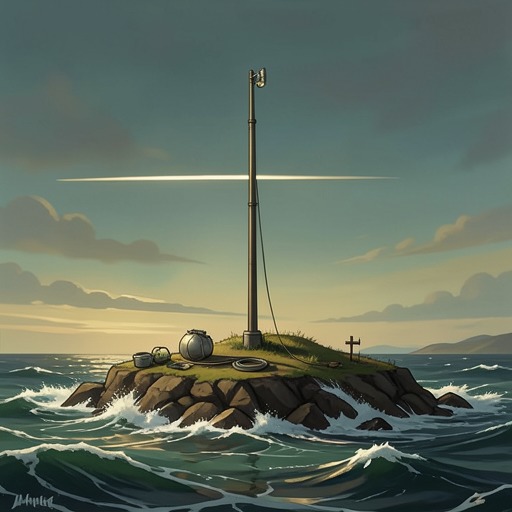
A monument is planned on the 180th meridian at the place where Ana and José interviewed Frank about endangered species in Oceania. Rather than a luxury hotel, as Frank jokingly guesses, the proposal is a public Millennium Monument with space for visitors to leave messages for the fourth millennium.
Each message is to be written as a greeting, sealed in a glass capsule, placed inside the hollow of a brick, and enclosed in the monument with cement. A capsule costs five hundred dollars. A foundation is already established to preserve and maintain the monument for a thousand years, with a formal opening of the capsules promised for January 1, 3000. The plan gives the meridian a future-facing role: a line associated with the change of date becomes the setting for an attempt to communicate across a thousand years.
Ecological and temporal significance
The monument connects the book’s immediate millennium concerns to its recurring questions about deep time, life, and human purpose. The interview at the meridian concerns threatened species in Oceania, while the planned capsules imagine people in the fourth millennium receiving words left by the present. Ecological vulnerability and temporal reach meet in one place: the islands are exposed to lasting consequences of human intervention, even as their inhabitants imagine a future beyond their own lifetimes.
That contrast resonates with the novel’s discussions of cosmic purpose. In a separate debate, John argues that the universe’s apparent purpose may only be visible retrospectively, to observers who exist in the present; Laura challenges the human-centered assumption behind that claim by asking why the observers should be humans rather than toads or pandas. José likewise argues that the universe’s scale and physical conditions made human consciousness possible. Against these immense timescales, the monument’s thousand-year promise is both modest and audacious: a local landmark attempts to make the present legible to people who will live long after its makers are gone.