Croydon, London
MayaCroydon, London is the narrator John Spooke’s home and the book’s retrospective frame: a place where Frank Andersen’s story is preserved, Sheila’s death is gradually faced, and the meaning of a life is measured against periods far longer than any human memory. From a desk in Croydon, Spooke looks back toward Taveuni and Madrid, turning private documents into testimony intended to outlast their writers and subjects.
A home for documents and recollection
The narrative’s return to Croydon begins with a crumpled postcard dated 26 May 1992 and sent from Barcelona. Its image is of Gaudí’s unfinished Sagrada Familia; its message, written by Vera to Frank, speaks of an imminent change, asks him not to call, recalls the “magic drink,” and wonders whether the two of them can accept the brevity of life. The postcard makes a distant relationship present in the narrator’s home, but it reaches him by way of Frank: at Maravu Plantation Resort, Frank had abruptly taken it from his wallet, unfolded it on the table, and translated its Spanish wording for Spooke, seeming to need help absorbing what he had just read.
A later coincidence brings a second document to Croydon. In November 1998, Spooke encounters Frank in Madrid, at the Hotel Palace where Frank had written a long letter to Vera the previous May. Spooke describes obtaining the painstakingly composed letter as a personal victory. Frank’s account concerns episodes on Taveuni, especially Ana María Maya and José, as well as conversations he and Spooke had alone. The place thus joins separate moments in the story: the island where the men met, the hotel where Frank wrote, and the home where Spooke now has both the old postcard and the newer letter before him.
The letter and the narrator’s editorial choice
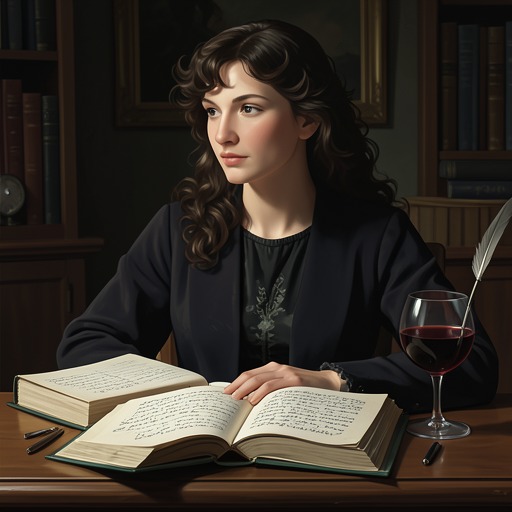
Spooke acknowledges that he could interrupt Frank’s account with further commentary of his own. Instead, he chooses to reproduce the letter in full and place an extensive epilogue after it. Croydon is consequently not just a location mentioned in the frame: it is where the book’s arrangement of evidence is made. The reader encounters Frank’s letter as a complete document, while Spooke’s reflections occupy the framing narrative around it rather than repeatedly breaking into its account.
The letter’s publication is itself treated as a question of time and custodianship. Spooke considers whether the letter, and the manifesto, might remain sealed in a time capsule for a thousand years. He imagines that by then much of the trace left by people alive today will have disappeared, and that the story of Ana María Maya could seem like a saga from the distant past. Yet he is less concerned with controlling the exact moment of publication than with ensuring that what he wants to tell is told at some point; he also allows that it need not be told by him. Croydon is where this decision takes shape, in the interval between preserving a document and releasing it.
Widowhood in everyday life
The same retrospective work reaches into Spooke’s private life. He remembers that, from childhood, he knew he would be sixty-seven if he lived to the turn of the millennium. The prospect had always seemed both fascinating and frightening. He had to say goodbye to Sheila in the twentieth century; she lived to only fifty-nine. After rereading Frank’s letter, Spooke at last feels able to sort through Sheila’s clothes. The Salvation Army is due to collect them the following morning, including old dresses he doubts can be sold. He compares the task to removing a swallow’s nest that has been empty for years: the absence long predates the act of clearing it, but the act still marks a change.
He expects soon to become accustomed to widowhood, which he recognizes as a form of existence in its own right. Even looking at Sheila’s large color photograph no longer makes him shudder as strongly as before. This gradual adjustment does not erase his longing for the possibility Vera’s magic drink represents. Spooke says he would have taken it without hesitation, even without certainty that he could find someone to share its other half. For Sheila it is too late; during her final year, she received little beyond chemotherapy. Croydon holds both movements at once: the concrete work of living after loss and the thought of a reprieve that can no longer be shared with the person he lost.
Library, prefaces, and retrospective time
Spooke’s Croydon life also opens outward through the neighborhood’s new public library. He is one of its most frequent visitors and takes pride in its modern facilities, including escalators between floors. He has arranged to have lunch with Chris Batt, the chief librarian, and plans to ask whether a book’s preface should be written before or after the book itself. Spooke favors writing it at the end, a view he connects to the letter he has just read and to the way understanding follows events rather than preceding them.
His analogy reaches back hundreds of millions of years: only long after the first amphibians came onto land could a living creature on Earth describe what happened. Humanity, in this sense, can write the preface to its own history only after that history has unfolded. Spooke extends the thought to musical composition, imagining that a symphony’s opening measure may be the last part composed. The library conversation he plans with Chris Batt gives this abstract idea an ordinary local setting, linking the long retrospective arc of evolution to a prospective lunch in Croydon.
A point of departure for the book’s frame
The book gives Croydon more than one documentary function. It is the setting of Spooke’s desk and of the letter’s dated heading, “Croydon, June 1999,” followed by his name; it is also the everyday landscape of the library, the impending collection of Sheila’s clothes, and the narrator’s effort to resume life. These details keep the framing voice grounded in particular responsibilities even as it considers a thousand-year capsule and the immense timescales of the manifesto.
The contrast makes Croydon a place of retrospective meaning rather than a mere address. A postcard from Barcelona and a letter shaped by events on Taveuni arrive there as objects that can be reread; the narrator’s personal grief, meanwhile, changes through acts as small as looking at a photograph or giving away clothes. The frame draws these scales together. In Croydon, the private record of love and bereavement becomes part of a larger account whose beginning, like the preface Spooke imagines, can be understood only after the story has already taken place.