Cádiz
MayaCádiz is the recurring point of departure for the novel’s entangled histories: a real port city joined to Ana María Maya’s family tradition, the documented wreck of the Spanish brig Ana, and legends of a mysterious portrait and a bell-wearing figure. The stories make the city less a stable origin than a place where recorded history and oral memory repeatedly meet—and fail to settle into one account.
Port city and family tradition
Cádiz enters the family history through Ana María’s supposed ancestor El Planeta, a legendary cantaor associated with the Triana school of cante jondo. The family says that he was born in Cádiz around 1785, later moved to Seville, and worked at the forges in Triana, an occupation common among Roma people of the period. His nickname may have reflected his belief in the influence of stars and planets, or carried the sense of a wandering star. The connection to Ana is a family claim: José says El Planeta was her great-great-great-grandfather, but admits he has found no confirmation beyond the family’s own esoteric tradition. After seven generations, he reasons, a celebrated forebear could have hundreds or even thousands of descendants; Ana might be one of them, but the possibility does not amount to proof.
The place also anchors a second, more concrete departure. In early 1790, the Spanish brig Ana sailed from Cádiz toward Veracruz and sank on the return voyage to Cádiz with a large cargo of silver. José says he checked old annals and shipping records for the wreck. Those same records, however, report that everyone aboard died and provide no indication of survivors. The documentary record therefore establishes the ship’s loss while leaving no historical basis for the survival of the sailor who features in the legend.
The 1790 quay and the playing-card story
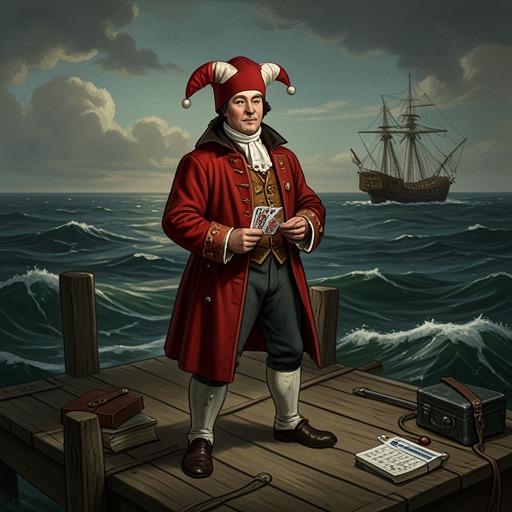
The family tale supplies the sailor with an earlier encounter on the Cádiz waterfront. Before putting to sea in 1790, the ship had come from Sanlúcar de Barrameda and spent a short time at the quay. Roma sellers there offered sailors heading across the oceans goods ranging from oranges and olives to cigars, lighters, and playing cards. According to the legend, the sailor bought an unusual deck from a Roma boy of about six named Antonio, who would later become known as El Planeta. The reported age is at least compatible with the conventional birth date around 1785, but that compatibility supports only a detail of the tale, not the magical history built around the deck.
The account places a small person at the same quay. The figure wore ordinary clothes, but tradition says that bells were hidden underneath, like those of a jester. In another part of the story, this bell-wearing figure—identified with Comodín—stands watching the schooner Ana sail away from Cádiz while carrying something strange in a jacket pocket. The story gives that object a role in the figure’s escapes from drunken men who mocked him for being a dwarf. The ship, the boy, the deck, the bells, and the pocketed object form a cluster of linked motifs, but their appearance together belongs to the family’s narrative rather than to the surviving ship records.
A tradition that resists a single version
José introduces the material as an old story that he considers largely a fabrication, and stresses that the account is not fixed. He had heard it soon after meeting Ana and her family; later, cousins of different degrees told him versions that never matched exactly. He had found no written record of the Andalusian tradition, even from more recent times. He also reports a supposedly independent Swiss tradition said to be as old as the Andalusian one. Rather than present any one telling as authoritative, he combines versions and restricts his reconstruction to points on which they agree.
That method matters to the status of Cádiz in the story. The city is presented through a mixture of checkable dates and places, inherited claims, and openly acknowledged gaps. The brig’s voyage and wreck are said to be documented; the family descent from El Planeta is unverified; and the legendary encounter on the quay is carried by oral transmission. José’s framing does not erase the uncertainty. It makes the instability of the account part of what the reader is asked to assess.
What the legends can and cannot establish
The stories’ later consequences sharpen the distinction between oral legend and corroborated fact. José says the origin story of the bell-wearing dwarf helped trigger the fatal fight in Triana. Police confirmed to him that a man called Manuel had been beaten to death there around the relevant period, giving that portion of the tale a historical foothold in the killing, though not automatically validating the legend around it. He also says Ana knew the stories about El Planeta, Manuel el Solitario, and her great-uncle, but did not necessarily believe them; at times she was irritated by the “gypsy stories” she had grown up with, given the wider association of Roma people with deception and lies.
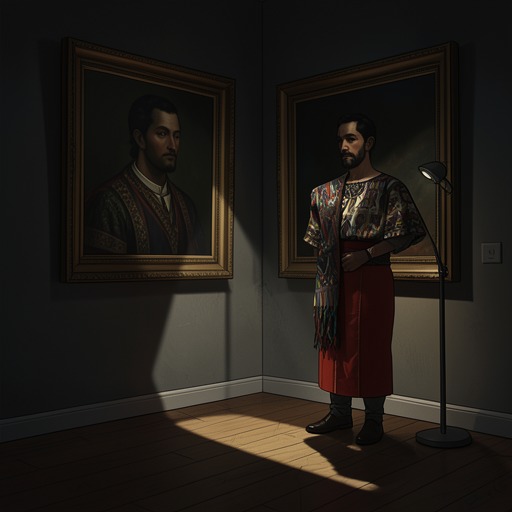
Ana nevertheless treated one detail as decisive in her own experience: she was sure that the bell-wearing dwarf was the figure she pursued through the gardens of the Alcázar, because she heard the bells. José sees this as if it had restored credibility to the family tradition. The tale about Goya and the mysterious portrait likewise turns on a claimed encounter at Cádiz: the stories say that the dwarf showed a lifelike portrait of a woman there as the Ana departed, astonishing those present, including the child Antonio. José’s narrower conclusion is that the portrait was said to have been in Seville by 1790, years before Goya painted his Roma woman or naked maja. He regards that chronology as significant, while presenting it as what the tradition and its limited corroboration can establish—not as proof that the portrait or its supernatural associations were real.
Across these accounts, Cádiz functions as the hinge between family ancestry, maritime records, and a legend that reaches forward into Ana’s life and the stories of Goya. Its narrative importance lies in the uneven evidence: the city gives the legends a specific historical geography, while the contrast between archives and changing oral versions keeps their claims unresolved.