South Pacific
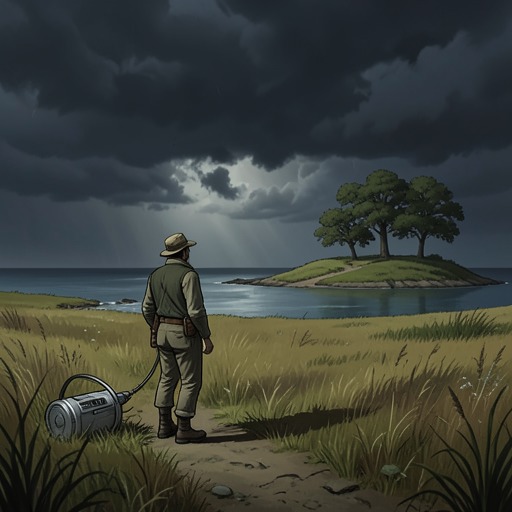
MayaThe South Pacific in the novel is not simply a tropical backdrop: it is a living ecological region whose isolated islands preserve distinctive species and habitats while bearing the consequences of colonization, imported organisms, and commercial exploitation. The narrator’s fieldwork in Fiji and Taveuni makes the region a test case for how fragile local balances can be—and how difficult they are to recover once human intervention sets destructive chains in motion.
Islands, Isolation, and Ecological Research
The narrator’s two-month expedition across the Pacific ends in Taveuni, one of the Fiji Islands. His assignment is to study the ecological effects of imported plants and animals. The examples range from accidental stowaways—rats, mice, insects, and lizards—to deliberate introductions such as opossums and mongooses, brought in to control other species, especially pests associated with new forms of agriculture. Domestic animals that have strayed, including cats, goats, and pigs, add another kind of pressure; herbivores such as rabbits and roe deer can also become readily available prey. The imported plants, whether ornamental or cultivated for food, vary so widely from island to island that he declines to list them individually.
The region’s isolation is central to the narrator’s ecological account. Until relatively recently, many islands maintained ancient balances among their own distinctive plant and animal species. Their separation allowed habitats and endemic life to persist, but also made them vulnerable to organisms arriving with ships and to changes in land use. The narrator says that Oceania has the world’s highest proportion of endangered animal species relative to its area and population. Introduced species are not the only cause: deforestation and careless plantation exploitation have eroded the soil and ultimately destroyed traditional habitats.
The narrator’s interest is not confined to fossils or to descriptions supplied by other researchers. For living species, he prefers to conduct field studies before using scientific monographs to pursue systematic analysis. In the case of the tuatara and other ancient endemic species, the remarkable survival of the habitat itself is part of the subject: the biotope has remained astonishingly intact for millions of years. Flying from island to island above turquoise coral reefs, he feels like a modern Darwin, joining direct observation to questions about origin, evolution, and classification.
Imported Species and Ecological Cascades
The narrator describes a recurring pattern of attempted ecological repair that compounds the original harm. Rats, mice, and insects arrive with early ships and become an ecological plague. People then import another species—such as toads to control insects in sugar plantations, or cats to combat rats. The newcomers may become a worse pest than the species they were meant to suppress, prompting the introduction of predators in turn. Those predators can devastate birds and native reptiles, creating pressure for still larger predators. The sequence is not a stable food web assembled at will, but a cascading chain of interventions whose later consequences exceed the problem each new introduction was supposed to solve.
The narrator contrasts this slow, intricate ecological history with the speed at which people can disrupt it. Today, he observes, confidence has shifted toward poisons, viruses, and methods of sterilization—in effect, chemical and biological warfare. Yet a new food chain cannot be put together in an instant, and he questions whether such reconstruction is even feasible. The contrast gives the region’s ecological crisis its force: nature’s balances take millions of years to form, while human actions can unravel them with startling ease.
Taveuni’s Habitats and Living Traditions
Taveuni is presented as one of the South Pacific’s comparatively intact environments. More than a hundred bird species occur there, many native to the island, including the celebrated orange-breasted pigeon. The mongoose was never introduced, a significant protection for this avifauna. Other introductions have still left marks: magpies occupy ecological space, while toads displaced the original frogs toward the forest interior. Even so, the island’s rich birdlife remains remarkably intact. Its bats include a large fruit bat with a wingspan reaching up to five feet, also called a flying fox or beka; older islanders regard cooked beka as a delicacy.
The island’s plant life is similarly varied. More than a thousand species have been identified, many endemic. Mangrove marshes and coconut palms line the coast, while fern-rich tropical forest and numerous native trees cover the interior. Orchids and hibiscuses are among the tropical plants also found there. The Tagimaucia, Fiji’s national flower, grows only on Taveuni and neighboring Vanua Levu. Beneath the water, the narrator encounters a profusion of fish, echinoderms, mollusks, fungi, and corals; even without a snorkel, the sea offers a spectacle of marine life.
Taveuni’s relatively preserved character is linked to the practical limits imposed by its volcanic terrain. The rugged landscape constrains both tourism and plantation development. Black lava beaches also restrict tourism, despite white coral-sand beaches in the northeast, where frequent rain presents another obstacle. Volcanic soil and abundant rainfall nevertheless encouraged European settlers to establish plantations in the middle of the nineteenth century. Quality cotton was prominent at first; when prices fell, sugar plantations in the south gained importance. Coconut is now the leading crop, alongside steadily growing tourism, especially ecotourism. The island has no shopping centers, nightlife, or modern four-story hotel complexes; television is absent and electricity scarce.
Those absences have helped sustain a culture of oral storytelling. At night, around six o’clock, conversation and the spoken word take center stage: a fishing trip, an experience deep in the forest, or an encounter with a lost American at a river mouth can become a story. Myths and legends persist because the island offers little entertainment that people do not make for themselves. Divers arrive for the vivid coral and fish, while visitors also come for birds, rare bats, forest and mountain walks, beaches, and waterfalls. The landscape is therefore not merely scenery for the narrator’s research: it supports livelihoods, shared traditions, and a distinctive sense of place.
Colonization, Conservation, and Commerce
Several islands in the narrator’s account had little contact with European culture until slightly more than a century earlier, during what he calls the last great wave of European colonization. Each island, settlement, and small port has its own history, but he identifies a common ecological pattern: stowaway rodents and insects arrived with the first ships, followed by further introductions intended to control them. In this account, colonial arrival is not an abstract historical marker; it begins a sequence of biological interventions whose costs fall on native species and habitats.
The narrator connects ecological damage to economic decisions as well as to species introductions. Deforestation and imprudent plantation exploitation produce erosion and habitat loss, while modern commercial arrangements redirect land and agriculture toward the demands of wealthy markets. He objects to the euphemisms of globalization and trade agreements when food ceases to be treated as sustenance and becomes a commodity. Where people once ate what they grew in their own fields, he says, increasing areas are devoted to products of little use to them, accessible chiefly to the world’s richest countries. His conclusion that people no longer live from nature turns ecological loss into a question of power and subsistence: the damage is not shared equally, and those with the least money can be pressed to exchange enduring resources for immediate cash.
Bouma, a village on eastern Taveuni, offers a counterexample. Its residents understood the rainforest as a gift and debated an offer of substantial foreign currency for clearing land for timber. Although cash was scarce in Bouma and across Fiji, they rejected logging and chose instead to make the forest a national park, judging that ecotourism could support the village for longer than the one-time payment for its trees. The resulting protected park covers 5,000 hectares. Villagers maintain the trails, including railings on steeper sections, and provide toilets, picnic areas, and campsites. Similar projects are being planned elsewhere on the island.
The narrator visits the protected area by crossing the village and the lively Bouma River, paying five Fijian dollars at a small booth for entry. He receives advice about the seven kilometers of prepared trails, buys biscuits and a bottle of water, and warns that lighting a fire could have catastrophic consequences. About a kilometer along the river, the path becomes a continuous leafy avenue of palms and flowering shrubs. His description of this as a cultural landscape links conservation to human stewardship rather than to an imagined wilderness without people: the village’s decision, labor, and services help keep the forest standing.
A Vulnerable Paradise
The South Pacific’s islands hold an apparent contradiction: extraordinary persistence of endemic life alongside acute vulnerability to imported species, habitat destruction, and market pressure. Taveuni’s birds remain abundant in part because the mongoose never arrived, while the magpies and toads that did arrive have already altered local ecological relations. The same island that preserves old habitats also carries the history of cotton and sugar plantations, and its present growth in tourism raises the question of how to benefit from natural beauty without exhausting it.
That tension gives the region significance beyond its role in the narrator’s expedition. Its reefs, forests, rivers, and species are not interchangeable tropical attractions but particular systems shaped by isolation, long ecological histories, and local choices. The account places the slow formation of those systems beside the rapid effects of introduced organisms and extractive development, and sets commercial offers against Bouma’s collective refusal to sell its forest. The South Pacific thus becomes both a place of scientific discovery and a measure of human responsibility: a paradise is not secure merely because it is beautiful, and once its balances are broken, neither money nor a quick technical fix can readily restore what has been lost.