ImpSec Evidence Rooms
MemoryImpSec Evidence Rooms are both a repository for sensitive physical evidence and the setting where a discrepancy in its inventory becomes central to exposing an attempted frame. Their shelves, records, and security procedures matter not as background alone: the order in which investigators consult them can change what the same evidence appears to prove.
Storage and Investigative Significance
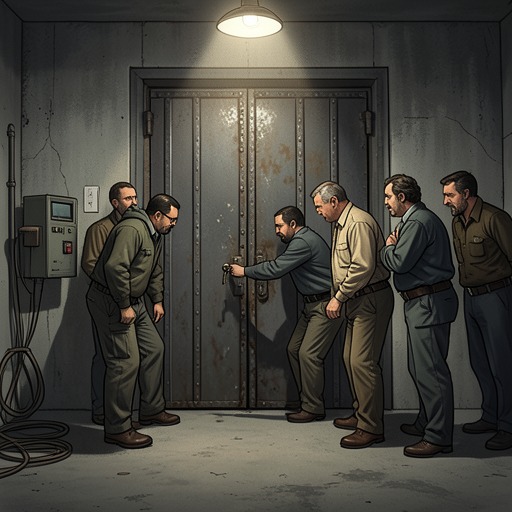
The Evidence Rooms lie in ImpSec’s sub-sub-basement. Miles explains that the planted record of his visit was meant to be discovered, but only after investigators had begun with Bin Twenty-Seven and checked the access records. In that order, his presence as a recently cashiered officer with no business in the room would have seemed to support the case against him. Starting instead with the comconsole records and then checking the inventory would direct attention to the stored evidence first, making the attempted frame less convincing.
The contrast makes the room part of the investigation’s reasoning, not merely its location. An inventory entry, a security record, and a physical object can point toward different conclusions depending on which is examined first. Miles’s reconstruction turns that sequence into a practical explanation of how the frame was designed to work.
The Biocontainer and Its Contents
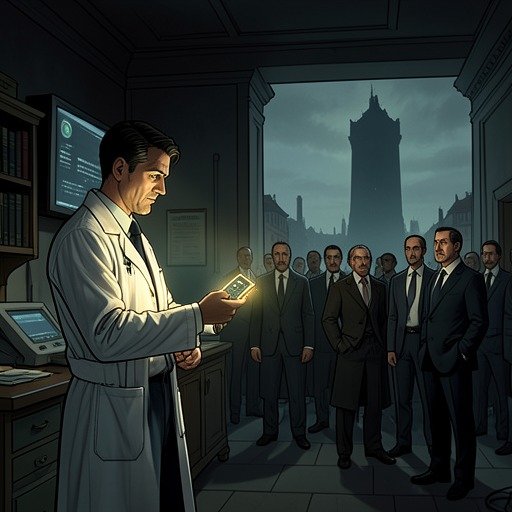
In Weapons Room IV, Ivan takes a small biocontainer from its shelf and places it on a lighted examination board. Its numeric lock is rudimentary, and the access code is listed in the inventory description. Inside, shockproof gel is scored with six parallel slots. The inventory says that six vector-delivery units were originally present, one was removed for examination five years earlier and recorded as destroyed, and five therefore remained. But only three tiny brown capsules occupy the box; the other three slots are empty.
The discrepancy is concrete enough to redirect the inquiry. Forensics examines the container and its interior seal, while the previous removal complicates the count and leaves Miles hoping that laboratory records will clarify it. Vaughn Weddell, who had spent a week reconstructing the relevant material, reacts to the intact sample having been stored downstairs all along. The discovery links the room’s cataloguing system to the physical evidence it was supposed to account for.
Demonstration in Weapons Room IV
Later, Miles returns to Aisle 5 of Weapons Room IV with witnesses assembled, including Ivan, Weddell, and a Forensics technician. He retrieves the familiar box from Shelf 9; its Auditor’s seal is unbroken, and two brittle brown capsules remain. The ordered setting and assembled witnesses make the room an evidentiary stage: Miles is not simply describing the contents but showing what happens to one of the capsules.
He presses a capsule until it snaps and waves it overhead. Fine tan powder briefly hangs in the air before dissipating, with a smudge left on his fingers. The demonstration gives the stored sample a visible, physical consequence and places the disputed evidence before witnesses. In the same room where an inventory count first raised suspicion, the contents themselves become part of Miles’s case.