Silvy Vale
MemorySilvy Vale is a mountain community in Barrayar where Miles Vorkosigan once investigated a murder and later returned to seek out the people and places bound to that case. Its cemetery, homes, and school give the location a double significance: it preserves the memory of a child killed because of her mutation, while also showing a community continuing its life and education.
Setting and Landscape
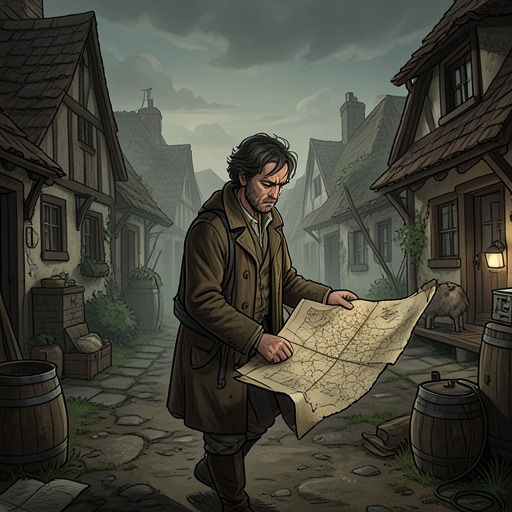
Miles describes Silvy Vale as a small mountain community. A cemetery lies in a little valley beside a brook, near a narrow fork and beneath trees that leave just enough room for a lightflyer to land. He recalls sunlight reaching the ground through the branches and considers, briefly, how different the visit might feel as a picnic. The quiet landscape is not merely a scenic destination: it is the place where he intends to confront the memory of the child whose case first brought him there.
The journey gives the place a distinct measure of distance. Miles tells Martin Kosti that the trip would take about four days on foot or two and a half days on horseback, but less than an hour by lightflyer. On the way, they take a leisurely detour through Dendarii Gorge before turning east toward the valley. Their arrival reveals a settled landscape: a familiar cabin stands above a valley and a new lake, with a couple of additional outbuildings downslope.
The Murder Case and the Cemetery
Silvy Vale entered Miles’s life shortly after he graduated from the Imperial Service Academy. Count Vorkosigan assigned him as his Voice in a case before the Count’s Court, sending him to investigate and judge the killing of a four-day-old girl. The child, Raina Csurik, had been killed because she was born with a facial mutation described as a cat’s mouth. Miles recalls that she would have been close to ten years old by the time of his return.
The case had proved more complex than Miles initially expected, even after he identified the right suspect. His return is prompted by a desire to speak to Raina, though she is dead and the cemetery is the place he has in mind. The contrast between the small grave and the older Miles’s journey back makes the location a marker of unfinished moral attention: the investigation identified a suspect, but the child’s absence remains central to how he understands the case.
Homes and Community Life
On reaching the valley, Miles lands outside a weathered, silvery-wood cabin whose full-length porch looks over the valley and the new lake. He recognizes the porch and the view from his earlier visit, although the person waiting there is not the man he remembers and new outbuildings have appeared. The familiar structure and altered household register the passage of time without making Silvy Vale unrecognizable to him.
A short flight brings Miles to the Raina Csurik School, a long, traditional cabin with two doors and fieldstone fireplaces at both ends. Inside, about twenty teenagers sit at handmade wooden desks equipped with comconsole lap-links. Harra Csurik, Raina’s mother, teaches at the front of the room. Her presence connects the school directly to the loss that first brought Miles to the valley, while the students and their working classroom show the community’s life extending beyond the old murder case.
Narrative Significance
Silvy Vale is presented through the difference between Miles’s remembered visit and his return. The cemetery and Raina’s story recall a judgment made under the authority of the Count’s Court; the school, students, and changed homes show the people of the valley in the present. The landscape holds those times together without resolving the grief of the earlier crime. For Miles, returning to Silvy Vale means approaching both a specific child’s memory and the living community that grew around it.