ImpSec headquarters
MemoryImpSec headquarters is the massive, forbidding seat of Barrayaran Imperial Security, a place whose layered checkpoints, restricted offices, clinics, and evidence records make the institution’s power tangible. For Miles Vorkosigan, it shifts from the center of his life as an agent under Simon Illyan to the site of his resignation and, later, his return with authority to investigate the very organization that once commanded him.
Setting and Architecture
The headquarters stands in Vorbarr Sultana as a vast gray building that Miles regards as one of the city’s ugliest. Its reputation reaches beyond its work: tourists from the backcountry sometimes drive past to see the architecture, and local legend says the architect went insane after his patron, Emperor Yuri, was abruptly eclipsed. The building’s grim appearance is therefore not merely a reflection of Miles’s anxious mood when he returns from a mission; it is part of the place’s public identity.
The main approach leads through a security checkpoint and gates, past the daunting facade, and around to a discreet side entrance. That entrance serves the people with business inside, from couriers, spies, and informers to analysts, secretaries, and janitors. The contrast between the monumental exterior and the less conspicuous working entrance captures the headquarters’ double character: an intimidating symbol of state power and a practical workplace organized around confidential traffic.
Access and Internal Layout
Entry begins with routine identity checks, but access beyond the entrance depends on clearance. On one return, Miles is allowed to navigate to Illyan’s office without an escort, a privilege consistent with his standing in the service. Reaching the office requires a circuitous route: two different lift tubes up and a third down. The physical arrangement makes authority feel both guarded and deliberately remote.
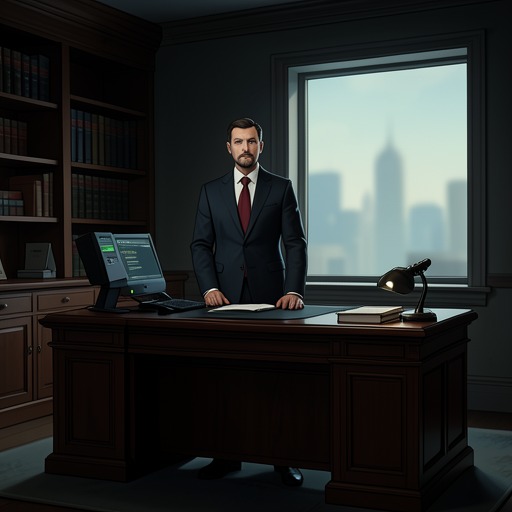
Illyan’s office has an outer office and an inner chamber. The inner door can be secured from within, and when Illyan closes and locks it during a meeting, Miles recognizes the gesture as unusual. The office is also a place of formal procedure: after Miles decides to resign, Illyan has him provide a palm-print, undergo a retinal scan, and record the resignation. The headquarters’ private rooms thus join personal confrontations to the institution’s mechanisms of authentication and recordkeeping.
The headquarters also contains a clinic and forensic laboratories on an entire floor. Miles knows the clinic from years of treatment and examinations, including his first visit with incipient pneumonia after hypothermia and the physical exam that returned him to duty before the mission to rescue Lieutenant Vorberg. When he later enters the clinic as an Auditor, its familiar medical odors stir his unease. The rooms are cleared for the inquiry except for one occupied private room, guarded outside by an ImpSec officer; Dr. Ruibal meets Miles there to report to him.
A Workplace and Its Chain of Command
The building’s offices reflect the reach and divisions of the service. When Miles arrives with urgent information, he finds General Lucas Haroche, Head of Domestic Affairs, speaking with Illyan’s secretary. Haroche’s branch tracks treason plots and antigovernment groups on the Barrayaran side, while Guy Allegre handles comparable work concerning restive Komarr. Miles ordinarily deals either with Illyan or with the Head of Galactic Affairs, whose posting on Komarr helps explain why the returning agent has been routed straight to Barrayar.
For Miles, Illyan’s office has been the center from which his working life radiated: a place where he received orders and delivered results, and where he had been challenged, triumphant, exhausted, defeated, and sometimes in pain. When he returns as an Auditor, the room and his position across from Illyan’s desk remain physically familiar, but the authority between them has reversed. Haroche now sits in Illyan’s chair while Miles sets the order of business: first a meeting with Illyan, then a briefing from the full medical staff, followed by whatever the evidence requires. The room’s established hierarchy persists in its furnishings even as the investigation changes who gives the instructions.
Records, Evidence, and the Audit
The headquarters is also an archive of its own operations. During a systematic tour, Miles visits departments he had never needed to enter, from upper floors down through Physical Plant and Food Service. His unexpected inspections unsettle department heads, who begin explaining budgets or defending unrelated conduct. The episode reveals how thoroughly the building’s staff understand the Auditor’s presence as a possible scrutiny of their decisions, even before Miles has formulated the question he is seeking to ask.
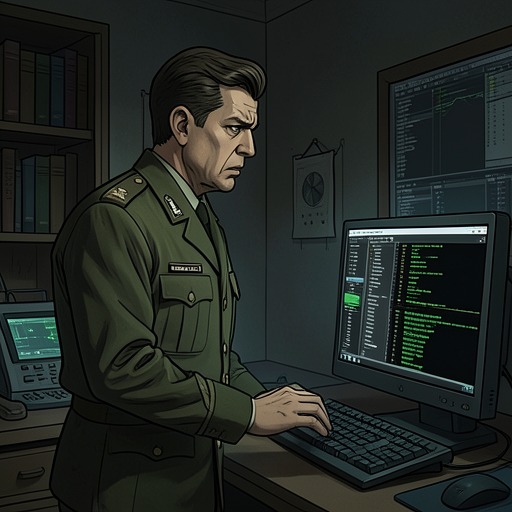
A later access check brings him to the evidence-room records. The console displays nearly a decade of visits, with dates, times, and codes for items carried in and out. Miles recognizes entries concerning a safely lobotomized zvegan smart bomb and Cetagandan genetic samples under further investigation by Dr. Weddell. Then he spots a visit attributed to himself twelve weeks earlier, on the day he returned from his last Dendarii mission. The time falls after his report to Illyan, when Miles believes he was walking home. The discrepancy turns an administrative log into a clue: the headquarters’ own records may have been manipulated to place him at the evidence room, making the building both the scene of the inquiry and part of the evidence under investigation.
Changing Relationship to the Institution
Miles’s arrivals mark a sharp change in his standing. At first, he hesitates outside the discreet entrance, burdened by the decision to disclose his medical condition and report honestly to Illyan. Later, after formally resigning, he leaves the headquarters still shaking. When he returns as Imperial Auditor, he approaches through the front gates with Imperial Armsmen and Ivan Vorpatril beside him and requires Haroche to meet him in person. The same site that once received him as a subordinate now has to admit him as an investigator.
That reversal does not make the headquarters transparent or easy to master. Miles knows the official routes and still discovers parts of the building he has never entered; he can command a review yet must search for the right question among departments, medical files, and access logs. Its significance lies in this tension between institutional confidence and concealed vulnerability: the headquarters concentrates authority, but its rooms and records can also expose the failures, rivalries, and tampering hidden inside that authority.