Alan Manikova
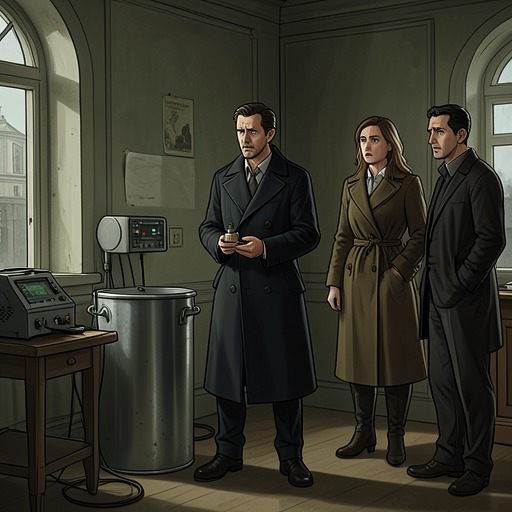
Mickey7Alan Manikova is the scientific pioneer whose breakthrough in mind replication became inseparable from the atrocities he committed on Gault. He transformed the Bio-printer from a device associated with empty replicas into a means of reproducing a person’s mind, then turned that discovery into a force for planetary conquest. The destruction of Gault, and the revulsion his methods provoked across the Union, made Manikova the historical source of the stigma attached to multiples.
Identity and Background
Born the sole heir to a fabulously wealthy political dynasty on Eden, Manikova had the means to lead a life of comfort and influence. Instead, he displayed an extraordinary appetite for intellectual work, earning doctorates in three apparently unrelated fields before the age of twenty-five. The account also characterizes him as a sociopath, a detail that gives the later use of people as raw material a chilling context without making his crimes any less deliberate.
His parents died suddenly within days of each other, from unexplained causes. Local authorities tried and failed to connect Manikova to their deaths; six months later, he inherited their wealth and became one of the Union’s ten richest people. The deaths remained suspicious rather than proven to be his doing. Within a year, he had committed the entire inheritance to Universal Eternity, Inc., a company he established to pursue the replication of human minds.
The Replication Breakthrough
The technology Manikova inherited was not new. The Bio-printer had existed long before the Expendable system, and earlier machines could scan a body and reproduce it down to the cellular level. Researchers eventually learned to recreate synaptic connections, but experiments showed that bodily and neural duplication did not reproduce a functioning person. The results were essentially blank bodies, with less awareness and physical competence than a newborn. Even attempts to reproduce babies who had died in childbirth or shortly afterward usually ended with the infants dying again despite intensive care. The old machines could make bodies; they could not restore a life or provide a route to immortality.
Manikova treated that failure as a problem to solve. He spent his inherited fortune building a large, isolated research facility two hundred kilometers from the nearest town and hired extensive teams of scientists and engineers. For years, the company’s work remained secret, inviting speculation about aging research or cryogenic storage but producing no public evidence. Five years after the project began, Manikova announced that he had found a way to record and replicate a human mind.
His demonstration made the breakthrough undeniable and exposed its terrible implications. He produced a duplicate of Universal Eternity, Inc.’s human-resources director, had her speak briefly before assembled dignitaries, then tranquilized her and reduced her body to slurry. The stock price surged, and Manikova’s public image shifted from that of a suspected parent-killer to a celebrated, if unsettling, genius. He did not use his new wealth and fame to settle into a life of luxury. Instead, he liquidated his assets, including the company itself. The scale of the transactions, routed through numerous shell companies, was so great that they caused a planetary recession.
Gault and the Multiplication of Manikova
A year after liquidating his holdings, Manikova left orbit alone in a custom-built interstellar transport packed with equipment, supplies, and the prototype replication unit used in his demonstration. People speculated that he meant to cross the galactic plane by repeatedly reproducing himself. In fact, he was headed for Gault, a recently established colony about seven light-years anti-spinward from Eden.
Gault had been founded by private investors opposed to the taxes levied on automated production systems in places such as Eden and Midgard. Its stated ideal was Radical Liberty and Self Reliance, but its social practice was isolation: the original 120 colonists divided into more than twenty family groups, each trying to manage on its own, and offered little help to neighbors in need. The colony grew to roughly ten thousand people, most of them established but not thriving. Manikova first made himself useful. He brought goods the groups could not yet produce, supplied one small clan with food, seeds, and newer technology, and received a home and a base of operations in return.
Once established, Manikova devoted himself to making more copies of himself. Replication demanded substantial resources, especially calcium and protein; growing a body from basic elements consumed great quantities of crops and livestock and produced waste. An existing human body was a much more direct source of the necessary materials. Manikova used the feedstock he had brought for about nine months, by which time he had nearly a hundred copies and had built two additional replication units. He began by seizing indigent people and loners, whose disappearances attracted less immediate notice, then moved on to victims with families and friends who would miss them.
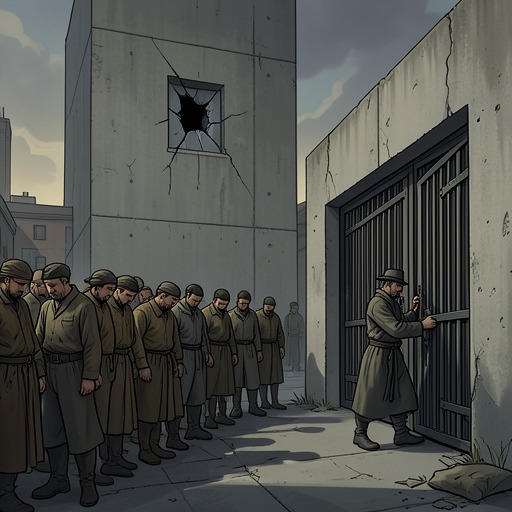
Suspicion fell on the newcomer. When the clan that hosted him sent Security forces to question him, they discovered that he had not shared the advanced military technology he had brought to Gault. Manikova put the entire host clan into the Bio-printer’s hopper, reproduced its members as copies of himself, armed them, and attacked a neighboring group. Gault’s fragmented communities took nearly a year even to consider a united response. By then, Manikova’s copies made up an absolute majority of the planet’s human population. The clans eventually joined forces too late to reverse his ascendancy; their principal remaining achievement was sending a desperate warning to Eden.
The Battle of Gault and the Planet’s Destruction
Eden sent the warship Eden’s Justice to answer the warning, but the ship could not approach Gault in secret: a starship’s deceleration torch could be seen from a light-year away. Manikova was also not inclined to wait for the confrontation to reach him. The Battle of Gault lasted about twelve seconds. While Eden’s Justice was still decelerating and blinded by the light of its own torch, roughly a dozen nuclear-tipped missiles struck from a base Manikova had built on Gault’s second moon. The ship’s commander never managed to fire back.
Gault’s last messages had also reached Farhome, a younger and poorer neighboring colony. Its government lacked the ambition and resources for an expedition like Eden’s, and chose a cheaper and more direct response: The Bullet. The resulting impact turned the habitable planet into molten slag, an act widely regarded across the Union as the greatest crime in its history. The account does not give Manikova a separate death scene; his fate is bound to the destruction of the world where he had made himself the dominant human presence.
Historical Consequences
The fear of multiples in Union society is rooted not simply in abstract anxieties about identity, but in the example of Manikova’s conquest. Replication let him replace victims with copies, expand his forces, and exploit Gault’s failure to cooperate before the danger became overwhelming. The same technology that had promised a way to preserve a mind became, in his hands, a method of turning a population into material for an army.
Farhome’s destruction of Gault remains an appalling consequence of Manikova’s actions, but the prevailing judgment is that the blame belongs to him. Since Gault, the account observes, people in most parts of the Union would rather be thought a child stealer or a collector of human heads than a multiple. Manikova’s legacy therefore extends beyond the planet he conquered: his crimes helped make the existence of multiple copies a social taboo, and made the prospect of replication carry the memory of Gault’s dead.