Berto Gomez
Mickey7Berto Gomez is Mickey Barnes’s friend, fellow colonist, and daring flitter pilot. His role in Mickey’s story turns on a painful contrast: he will risk his life and the colony’s only functional flitter for a wager, yet when Mickey falls into a tunnel among the creepers, fear keeps him from trying to bring his friend back. He hides that fear in his reports, and the resulting deception helps create the conditions for Mickey’s unexpected return to a colony where another instance, Mickey8, has already been created.
Identity and Place in the Colony
Berto is a conspicuous physical presence in a settlement where compactness matters. He stands almost two meters tall, while Mickey is barely 1.6 meters and considers himself close to average. With rationing limiting food and little room to sit comfortably, Berto has to slouch and scrunch himself into furniture; Mickey compares his pale, red-haired appearance to a stick insect. This description makes his size a practical mismatch for beachhead life rather than simply a marker of strength.
His work and reputation place him in the colony’s small, resource-strained community. He flies a flitter, a valuable piece of equipment when both personnel and material are scarce. He is also known for exceptional nerve in the cockpit. That reputation is not just Mickey’s impression: the later account of the stunt records Berto steering through a narrow gap between rocks, while Mickey describes the maneuver as a flight through a three-meter opening at two hundred meters per second. The story’s portrait of him therefore contains an immediate tension between an audacious public image and the fear he eventually admits.
Friendship with Mickey and the Concealed Reports
When Mickey returns from the tunnels, he tries to contact Berto and gets a faint signal. Their brief exchange establishes that Berto is close enough to reach by text: Mickey checks whether he is receiving the message, Berto confirms that Mickey is still alive, and Mickey tells him that he is stuck. Later, when Berto visits Mickey’s room, he closes the door and asks how he is feeling. Their familiar address and easy physical presence in one another’s rooms place their friendship within the ordinary routines of colony life.
Berto’s account of Mickey’s previous instances initially reinforces the danger of the creepers. He tells Mickey that Six and Seven both died after being swarmed. He also recalls that Marshall had been sending Mickey on repeated walks to map the crevasses around the dome and scout for creepers. Berto says Mickey used to complain about the assignments, but that after Seven came out of the tank he stopped protesting and went when ordered. The change in Mickey’s behavior had registered with Berto, even though he could not explain it.
After Mickey’s fall, however, Berto’s reports change. He first tells Command that creepers killed Mickey, then revises the account to say Mickey died in a fall. In a later amendment, he says Mickey fell through the ice into a tunnel or cave system and was still alive and conscious when Berto left him there; Berto believed he had died afterward. By the time Mickey makes it back to the dome, Mickey8 is already out of the tank. Mickey identifies Berto’s report of him as lost, and the delay before his return, as the reason the duplicate crisis has taken shape.
The Flitter Stunt and Its Cost
Berto’s appetite for risk is clearest in the stunt he undertakes for a wager. He takes the flitter toward a snowy ridgeline where two slabs of rock form a narrow triangular opening. Seen from a distance, the gap appears too tight for the aircraft. Berto levels out about a hundred meters away, adjusts his altitude, and rolls at the last instant, passing through without scratching the paint. The maneuver wins him three thousand kilocalories.
The reward matters in a colony governed by scarcity. At a meal, Berto tells Mickey to choose what he wants, then qualifies the offer because he is not made of calories. Mickey’s eyes settle on a rabbit; their total reaches 2,400 kilocalories, and Berto confirms that the flitter trip is the reason he can pay. Mickey reacts not as if Berto has won a harmless game, but as if he has gambled with his life for two days’ rations. Berto’s response is blunt: the risk could have killed him, but it did not.
The stunt also endangers more than its pilot. Darren rebukes Berto for risking himself and the colony’s only functional flitter. Berto points out that Nasha will not fly it without a gravitic grid, and argues that the aircraft is no use without him. He also admits the wager helped motivate him, but says he would have done it anyway: the place is boring, and the flight was exhilarating. His explanation leaves both sides of his character intact—the stunt is an impulsive thrill, but also a real hazard to scarce equipment and personnel.
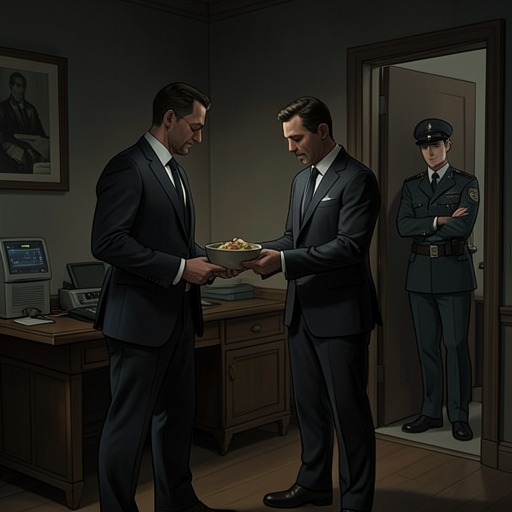
Marshall later confronts Berto with a grainy recording of the flight. He notes that the colony is on heightened alert, has been losing people, and cannot afford to lose either Berto or the flitter. Berto sits silent while Marshall lists the regulations he has violated. Unable to ground him because the colony needs him, Marshall assigns him Nasha’s aerial shifts as well as his own for five days, cuts his rations by a further ten percent, and blocks transfers from other personnel. Mickey is asked whether he has a disciplinary suggestion, but offers none. Berto’s daring has won calories and admiration, yet it brings a concrete burden under a command already preoccupied with limited resources.
Fear Behind the Daring
The truth about Berto’s earlier reports emerges when Marshall questions Mickey about the tunnels. Berto’s versions of the incident have shifted from a creeper attack, to a fatal fall, to a fall into a system of tunnels where Mickey was still alive when Berto left him. Marshall is less interested in the duplicate crisis than in the unexplained underground passages, which contradict the colony’s orbital surveys and their picture of the area as geologically stable.
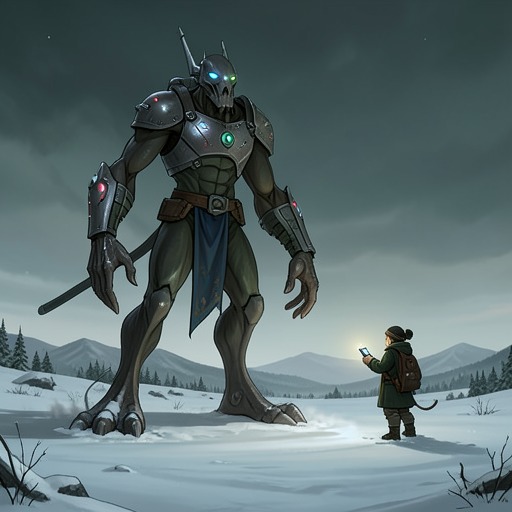
Later, Berto and Mickey return to the crevasse. As the winch cable comes into view, Mickey asks Berto what really happened to Six. Berto repeats that the creepers took him, then faces Mickey’s accusation that he lied both to Mickey and to Command. Mickey observes that the false reports could have got Berto cycled. Berto does not answer immediately. After a long silence, he says he was afraid.
He clarifies that he was not afraid of Command. He was afraid of the creepers. He believes he might have pulled Mickey out of the hole and might even have saved Six if he had reached the ground quickly enough and brought a linear accelerator. But he did not go back. His admission reframes the earlier deception: Berto did not merely give an inaccurate account of events; he concealed the fact that he had left friends in danger because he could not make himself face the threat. Mickey tells him that the admission is difficult to reconcile with the pilot who flies through a narrow gap at extreme speed. Berto sighs and nods, accepting the contradiction rather than denying it.
Aftermath and Narrative Significance
Berto’s relationship with Mickey continues through the consequences of the duplication crisis. When Mickey8 appears in a chat window, Berto reacts with alarm and asks what Mickey is doing; Mickey8 answers him directly. The exchange places Berto among the people confronted with Mickey’s simultaneous existence in two instances, though the brief messages do not resolve what Berto makes of the situation.
Later, Berto and Mickey eat together in silence. Berto finally says that he is glad Mickey made it back. Mickey answers by pointing out that Berto had not thought to invent a story about what happened for Nine; Berto winces and says he had already apologized. The exchange does not erase the earlier betrayal, but it shows the friendship continuing in the presence of its cost: Berto’s relief, Mickey’s hurt, and an apology that has not made the memory disappear.
Berto’s arc is built from the gap between what he can do and what he cannot bring himself to do. The flitter stunt makes courage look like nerve, speed, and control; the tunnel confession reveals that such daring does not guarantee courage in every situation. His lies preserve his own account of what happened, but they also delay the truth and contribute to the circumstances in which Mickey returns to find Mickey8 already created. By admitting that fear was the reason he left, Berto gives Mickey a painful explanation rather than an excuse. Their friendship survives not because the decision was harmless, but because the truth can finally be spoken between them.