Mickey8
Mickey7Mickey8 is a newly printed copy of Mickey Barnes whose unexpected presence beside the still-living Mickey7 makes the abstract problem of duplicated identity a matter of immediate survival. He shares Mickey7’s age, memories, and experience up to the last backup, yet the colony’s prohibition on multiples makes their coexistence dangerous. His brief return to life is marked by recognition, argument, and a final act of solidarity: he accepts the tunnel mission that ends with his death, leaving Mickey7 to return alone.
Identity and Unexpected Arrival
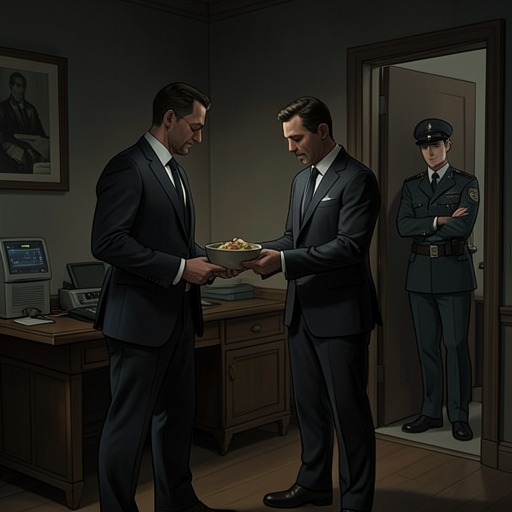
Mickey8 enters the story not through a planned transfer of authority but in the intimate space of Mickey7’s room. After crossing the dome and climbing four floors of spiral stairs to the low-status racks, Mickey7 finds the door already unlocked and a man asleep in his bed beneath his blanket. The cramped room is one of dozens of small compartments near the dome roof; Mickey7 has a double to himself because he is an Expendable. The discovery abruptly makes that solitary space shared.
The newcomer wakes, sees the other man, and realizes that he is Mickey8. His first response is not a claim to be a different person but recognition of the duplication: he understands that he has emerged from the tank while Mickey7 remains alive. The circumstances are physically disorienting, too. Mickey8 is sitting up shortly after revival, with dried tank fluid still on him, and Mickey7 describes the experience of waking from the tank as a punishing, illness-like hangover. The body’s return is immediate; the question of which copy has the right to continue is not.
Two Copies, One Claim to Survival
Mickey7 tells Mickey8 that one of them has to go, because Command cannot discover that they are a multiple. Mickey8 challenges the apparent fairness of letting the older, already-living copy decide. He has been alive for only about twenty minutes, while Mickey7 has had at least a couple of months since the previous backup. Mickey7 counters that this difference does not make Mickey8 a younger person: both are thirty-nine, and Mickey8 possesses every second of Mickey7’s memory and experience except for the six weeks since the backup. Their disagreement exposes the mismatch between biological chronology and remembered life. One body has just awakened, but its past is not correspondingly brief.
That argument gives Mickey8 more than a duplicate’s role in Mickey7’s crisis. He presses the question of whether recent time lived can outweigh a shared history, while Mickey7 insists that the backup has made them equal in age and experience up to a precise point. The gap of six weeks matters because it marks both their common past and their divergence: each now has a life the other has not lived. Neither can settle the conflict by claiming to be the only authentic Mickey.
Service, Authority, and the Ultimatum
When the two copies later face Hieronymus Marshall, Mickey8 speaks from a long history of service. He says he has been getting himself killed for Marshall for nine years and describes Marshall as generally decent despite his habits of command. This judgment sharpens his criticism: Marshall, in Mickey8’s view, is now acting in a way that contradicts the person he has known. Mickey8 does not deny the colony’s opposition to a multiple; he demands that Marshall either kill one copy or kill both, instead of prolonging the crisis.
Marshall makes clear that the threat is not a temporary death followed by regeneration. If both copies go down the hole, their personality will be erased from the server and their body template destroyed. Mickey8 initially rejects that prospect, arguing that the colony has only 176 people left, is moving to a war footing, and cannot afford to discard its only Expendable. The exchange sets his accumulated service against the institution’s power to erase him altogether. His status makes him useful to the colony, but it does not protect his identity from being treated as expendable in a more absolute sense.
The Tunnel Mission and Death
After Mickey8 concludes that the ultimatum means they will be destroyed if they refuse, he commits to the mission. He braces himself at the opening, lowers himself into the hole, and tells Mickey7 to meet him at the bottom. Their plan is to separate and trigger their devices simultaneously, maximizing the spread while keeping one blast from disrupting the other’s dispersal pattern. Mickey8 insists on the plan when Mickey7 begins to object. Before they part, he asks Mickey7 to keep a voice channel open and says that, if he encounters the friend they met earlier, he should tell him they are sorry.
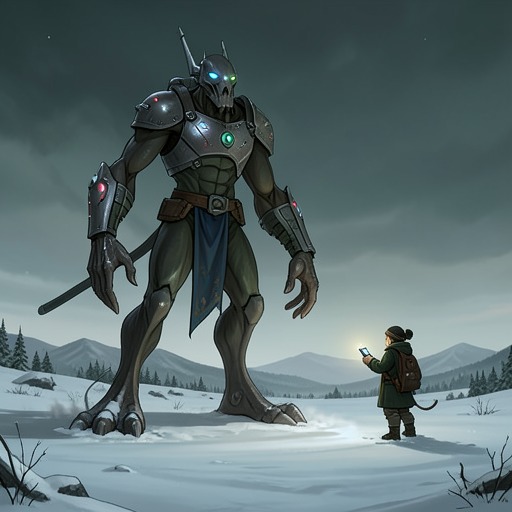
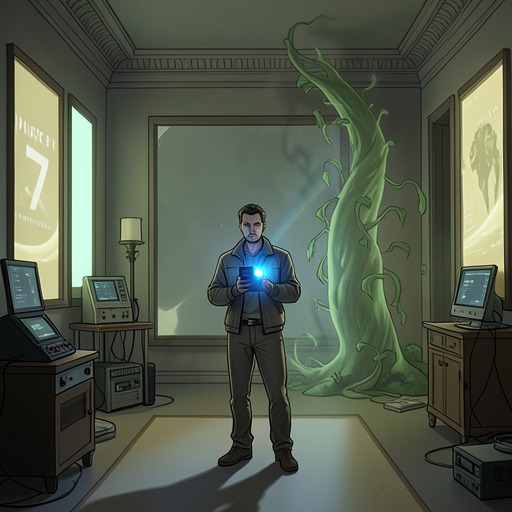
The separation turns their earlier argument about which copy should survive into coordinated action. Mickey8 does not demand that Mickey7 take his place or abandon the mission; he gives him practical instructions and proceeds with him into the tunnels. When Mickey7 calls and receives no answer, a final image arrives in his cache, blurred almost beyond interpretation. He recognizes the maw and feeding arms of a giant creeper only a few meters away and realizes that Mickey8 is dead. The image is both the last trace of Mickey8 and the concrete confirmation of what has happened to him.
Aftermath and Narrative Significance
When Mickey7 later speaks with Marshall, Marshall asks whether Mickey8 triggered his device. Mickey7 says he did not: Mickey8 was killed before he could. The exchange confirms that the intended simultaneous detonation never occurred for Mickey8 and leaves the device itself as an unresolved practical concern in that conversation. Mickey8’s death is therefore not simply the completion of the colony’s proposed execution. It results from the tunnel encounter, before he can carry out the action planned with Mickey7.
Mickey8’s short arc gives the duplication crisis a distinct human cost. His shared memories make him neither an empty replacement nor a stranger, while his six-week divergence prevents the copies from being wholly interchangeable in the present. He first confronts Mickey7 over the unequal weight assigned to their separate stretches of life, then accepts a plan that depends on cooperation rather than a definitive answer to which one deserves to continue. His final image makes that unresolved question stark: the person who was, by memory and history, Mickey Barnes is reduced to a trace arriving in another copy’s cache.