Park-Café
MunichPark-Café is the Munich bar where Hugh Legat and Paul von Hartmann meet again after Hartmann leads Legat out of the Führerbau and into a watched, politically saturated city. The modern building resembles a railway-station entrance, but its sign identifies it as a café; inside, a crowded bar offers the two old friends a place to speak, though not a safe one. The meeting’s movement from public room to garden turns the location into a temporary space for concealment and a request that could not be made openly.
Setting and Approach
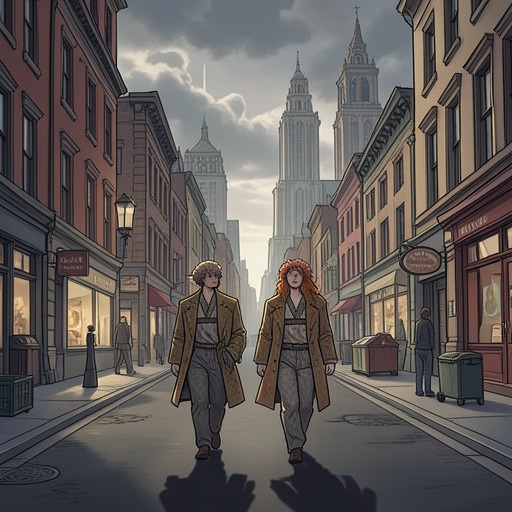
Hartmann guides Legat from Königsplatz along a broad street lined with large office blocks festooned with swastikas. Their nameplates identify the Office of the Deputy Führer and the Reich Central Office for the Implementation of the Four-Year Plan. After checking behind him for pursuers, Legat sees Hartmann enter an ugly modern building that resembles a railway station. It advertises itself as Park-Café; Legat waits a minute before following him inside.
The approach makes the café less an escape from the surrounding regime than a refuge embedded within it. Legat has just passed monumental Nazi buildings and offices, and the nearby government workers who fill the bar bring that political world indoors. Hartmann stays about a hundred yards ahead on the route, while Legat remains alert to whether anyone is following. The café’s ordinary name and public entrance do not erase the danger of the streets around it.
The Bar and the Cover Story
It is the end of the working day. The bar is crowded, apparently with workers from nearby government offices, and brown Party uniforms are conspicuous among them. Through cigarette smoke, Legat finds Hartmann seated in a corner with his back to the room and his face toward a mirror, which lets him watch what is happening behind him. The arrangement makes the mirror a practical instrument of vigilance, not merely part of the room’s furnishings.
A man at the next table wears an SA uniform and reads Der Stürmer, whose front page displays a grotesque antisemitic caricature. Against that visible sign of the surrounding hostility, Legat asks whether the place is safe. Hartmann says it is not, only safer than where they had been. He proposes that they order two beers and take them into the garden, speaking entirely in German and presenting themselves as old friends meeting after a long interval. Their explanation is credible because it is mostly true: they are old friends with much to catch up on. The café allows them to turn genuine history into cover.
The Meeting’s Purpose
The move to the garden does not dissolve the tension, but it gives Hartmann room to reach his point. He pulls out a chair; its steel legs scrape on the gravel. Legat refuses another cigarette while Hartmann lights one for himself. Hartmann then asks Legat to arrange a meeting with Neville Chamberlain. The request brings the political purpose of the reunion into focus: the café is where a private approach to the British prime minister is made, not where the matter is resolved.
Legat replies that he has already been told in London what Hartmann wants and that it is not possible. Hartmann counters that, as Chamberlain’s secretary, Legat can arrange meetings. The scene thus ends with the location serving as a threshold between old friendship and present political urgency: a crowded bar, a cautious move into its garden, and a direct request whose consequences lie beyond the café.