Gael
NeverthelessGael is Amyntas’s exiled son and Mabel’s older brother, a figure whose absence shapes his sister’s choices long before she learns what became of him. Banished under Navon’s unforgiving law against deserters, he is first imagined through the small fragments Mabel possesses, then sought across the kingdom’s borders, and finally declared dead by the King’s Winner. That last claim, that Shai killed him, threatens both Mabel’s hope of reunion and her trust in the man who has helped her.
Identity and Background
Gael is the son of Amyntas, once a commander who saved the king’s life more than once, and the older brother Mabel was too young to remember clearly. When the king explains why he chose Mabel for Navi’s betrothal, he connects that choice to Amyntas’s service and to the family’s changed circumstances: Amyntas had mentioned his son, but by the time of the king’s decision, only a daughter remained, while Gael had become a deserter. The king’s account links Mabel’s place at court to a family history marked by absence and obligation.
In Navon, desertion brings more than military disgrace. A deserter is condemned to permanent exile beyond the kingdom, cut off from its society and left to survive outside its borders. Exiles are branded on the back of the neck with a hot-iron D, a mark that makes them identifiable and bars them from blending back into Navonian life. If guards find them on Navon’s soil, they face death. Gael’s banishment is therefore not a temporary separation or a punishment with a clear path home; the law makes return both forbidden and potentially fatal.
The narrative places this system within Navon’s military history. Before Tzara threatens the kingdom directly, Navon’s wars have largely been fought on behalf of other kingdoms, and men have deserted rather than fight battles they did not consider their own. The kingdom has consequently lost soldiers. The text does not say why Gael deserted, so his personal motive remains unknown; his fate nevertheless belongs to a wider system that turns military refusal into irrevocable exclusion.
Mabel’s Search and Promise
Mabel grows up without a living memory of Gael. She has not seen him since she was so young that she could hardly recognize him, and the time that has passed has left her with little to guide a search. When Darice urges Mabel to find her brother and help save Navon, she ties the search to the kingdom’s survival as well as to the family’s loss. Mabel’s own reason for leaving is more intimate: she cannot ignore a promise made to her father, and finding Gael may be the only way she will ever see him again.
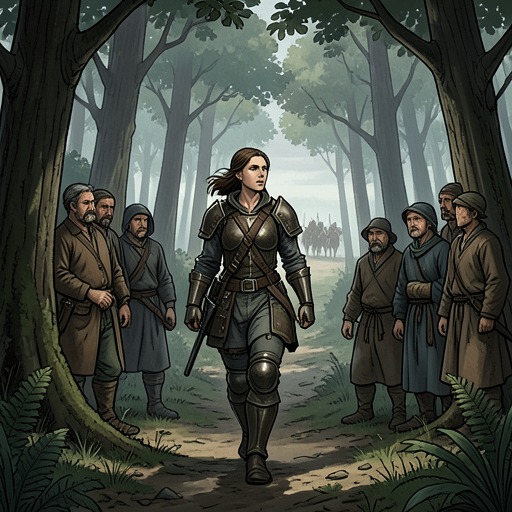
The difficulty becomes concrete when Mabel asks a tavern keeper for help. She describes Gael by comparison rather than by reliable identifying knowledge: he should be a little younger than the man behind the counter, taller and thinner, with more hair, and perhaps resemble her. She adds that he was exiled long ago and that she knows little more than that he is good with knives and must fight well. These are Mabel’s assumptions and search clues, not an account of a reunion or confirmed firsthand knowledge of his present life. Her questions expose how thoroughly exile has separated siblings: even family resemblance and a few supposed skills are all she can offer to someone who might recognize him.
The search also changes the meaning of Mabel’s journey. She tells Aury that she wants to be part of something and that she intends to teach the general a lesson, but the narrative makes clear that these are not the full explanation for leaving. Beneath the practical plan is the hope that crossing Navon’s boundaries will make a meeting possible where ordinary life and the kingdom’s laws would prevent one. Her pursuit of Gael is thus inseparable from the risk of entering a world beyond the protection and knowledge she has had at home.
The Report of Gael’s Death
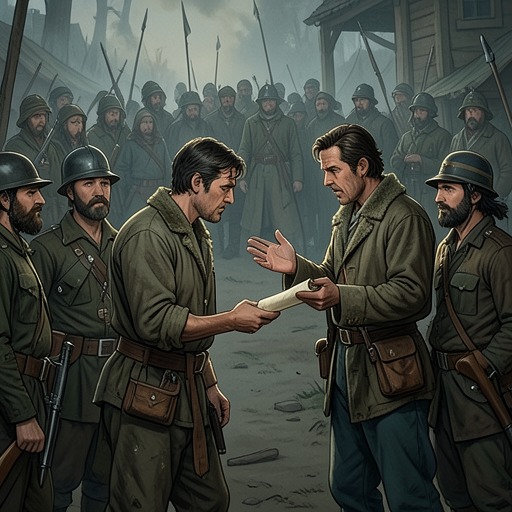
The search reaches its cruelest turn after Mabel is captured and taken toward Tzara. The King’s Winner tells her that Balthasar has plans for her and reveals that his people have been watching her search for her brother. He then claims that Gael is dead and that Golnar killed him. When Mabel demands to know how he can be certain, he says he was present when Gael was stabbed and calls the killing a betrayal.
The revelation is delivered by a captor who is physically violent toward Mabel and openly relishes her distress. Its immediate force is therefore certain, but its full reliability is not independently established in the supplied events: the King’s Winner asserts that he witnessed the killing, while Mabel has no other confirmation before her. The distinction matters. The report overturns her expectation of finding Gael, but it arrives as part of an enemy’s attempt to unsettle and hurt her, rather than through a reunion or an impartial account.
For Mabel, the accusation implicates Shai, whom the King’s Winner identifies by the name Golnar. She does not want to accept that the man she knows as Shai could have killed her brother. If the claim is true, it would also make her judgment of Shai dangerously mistaken and undermine what she believed he had shown her. The news therefore does not merely end a search: it converts a hoped-for family meeting into a possible betrayal at the center of another important relationship.
Family, Guilt, and Narrative Significance
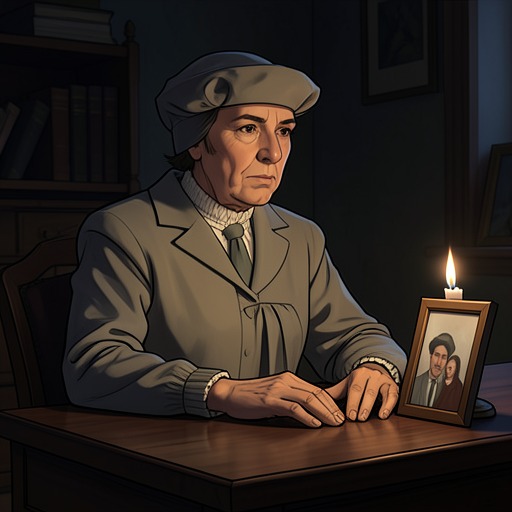
Mabel’s grief is complicated by the guilt she attaches to her imagined reunion. She recognizes that she had not truly hated Gael; even her curses and punishments, in her private understanding, were ways of keeping him present. She wonders whether, if they had met, her first words might not have been accusations at all. Now she fears that all the anger and guilt she had expected to address with him must remain unresolved because she may never see him again.
Gael’s absence consequently operates as an active force in Mabel’s story. It helps drive her beyond Navon, gives personal weight to the promise she made to her father, and makes the search for a lost brother collide with the dangers of exile and war. His apparent death then reverses the quest’s direction: instead of bringing the siblings together, the search leaves Mabel facing a claim she cannot easily verify and a possible betrayal she does not want to believe. Gael remains largely unseen, but the law that banished him, the hope that sustains Mabel’s pursuit, and the accusation that destroys that hope all give his absence lasting consequence.