Gaspar
NeverthelessGaspar is a member of Shai’s band and one of the people who helps Mabel move from an isolated newcomer to a possible link between the exiles and Navon. His importance lies less in a disclosed personal history than in what he does at moments of tension: he offers Mabel belonging, restrains Shai from escalating a confrontation, and recognizes the political use of her presence after her first killing. The evidence presents him as a steady, practical participant in a group trying to reach a kingdom from which its members are barred.
Identity and Place in the Band
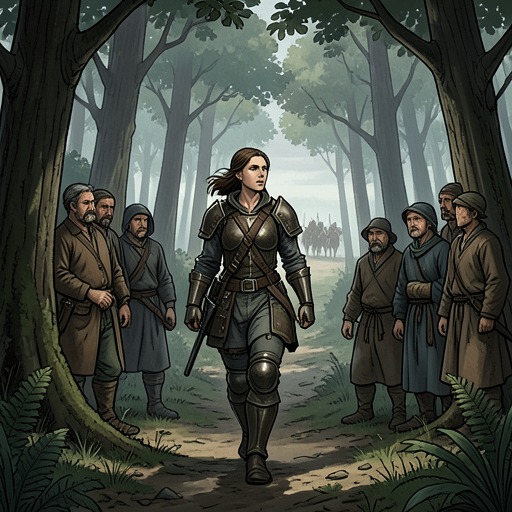
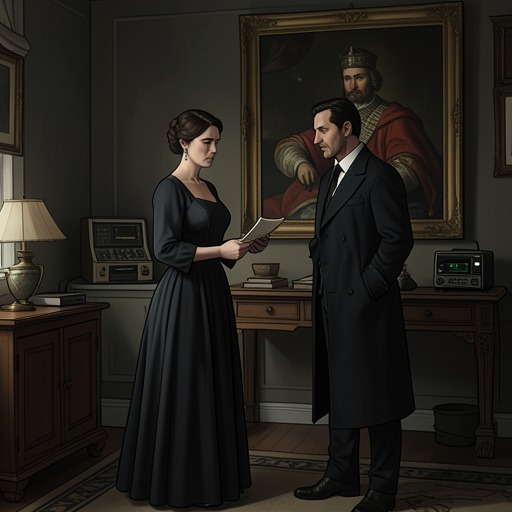
Gaspar introduces himself courteously to Mabel as one of the men who has saved her. He is taller and larger than Shai, with a stocky build and broad shoulders; the account distinguishes this size from physical strength. Wrinkles around his eyes and the contrast between his frown and smile give his appearance different impressions: sternness when he tries to intimidate, and a more naïve look when he smiles. These details make him individually recognizable within a company whose members Mabel initially struggles to understand as a family or a gang. Their appearances and states of sobriety vary, and she doubts that they could all be brothers. Gaspar’s later actions, rather than any explanation of their kinship, establish the practical solidarity of the group.
The group’s position is shaped by its exclusion from Navon. When its members discuss approaching the prince, Alastair points out that the mark on their necks identifies them as outcasts and prevents them from entering the kingdom. Gaspar answers this obstacle in concrete terms: Mabel can enter where they cannot, so she can carry their message. His contribution is not simply loyalty to the band but an ability to translate its political aim into a feasible next step, even though the plan’s precise implementation is not provided here.
Mabel’s Arrival and the Offer of Belonging
Gaspar’s first conversations with Mabel show both curiosity about her circumstances and an instinct to offer practical support. He asks where the commander she has invoked is now and observes that the commander may not know she is there, just as her friends did not. Mabel refuses to explain that she is an orphan and alone. She wants the men to see an independent young woman rather than someone isolated in a small home and valley. Gaspar’s question therefore touches the vulnerability she is trying to keep private, although the evidence does not show him pressing her for an answer.
He later offers her a place in the band if the people she is seeking do not want her, presenting the group as a family she could stay with. The offer gives Mabel a possible refuge without requiring her to disclose her past. It also sets up a revealing contrast: she is looking for her brother, Gael, while Gaspar is offering companionship from people who could become a substitute community. When Mabel asks whether the band can help her find Gael, Shai answers no. Gaspar begins to object, but Shai strikes him in the ribs before he can finish. The interruption leaves Mabel with reason to suspect that the group is withholding something, but it does not establish that Gaspar knows Gael or what he intended to say. His unfinished response preserves uncertainty rather than resolving it.
Mediating Conflict
Gaspar acts as a mediator when Shai reacts violently to Alastair’s insinuation about Mabel’s brother. Shai grabs Alastair by the shirt and threatens him; Gaspar steps in to separate them and urges Shai to consider whether they want Alastair’s help. He acknowledges that Alastair was about to say something provocative, but argues that striking him is not the solution in this situation. Shai releases Alastair. Gaspar’s intervention is both immediate and instrumental: he reduces the threat of further conflict while keeping the group’s larger purpose in view.
That practical restraint recurs after Mabel has killed someone and is visibly shaken. Shai tries to speak with her about what has happened, while Alastair questions whether she needs time. Gaspar responds that she has endured a terrible experience and is frightened, but insists that they need to talk. The exchange shows him balancing recognition of Mabel’s distress with urgency about what her experience might mean for the group. His approach is direct, and the scene does not suggest that he treats her fear lightly; rather, he takes part in the difficult effort to connect the immediate shock to the choices ahead.
Turning Mabel’s Experience into a Proposal
Shai proposes that Mabel could help Navon and become a symbol: a woman on the battlefield might make men question why they themselves could not do what she has done. Gaspar listens closely and moves his chair nearer as he asks what Shai is thinking. The proposal grows from the respect the gathered exiles show Mabel after her fight and killing. Shai contrasts their response with that of the king’s soldiers, while Alastair objects to describing the group as criminals and calls them expatriates. Gaspar’s interest helps shift the conversation from Mabel’s personal ordeal to the possibility that her actions could challenge assumptions about women’s place in war.
The political plan then returns to the problem of access. The exiles cannot enter Navon because of the mark identifying them, whereas Mabel can. Gaspar explicitly identifies her as the person who can take their message. When Alastair doubts that she can help, Gaspar maintains that her ability to enter the kingdom is precisely what makes her useful. Shai then says he has thought of a way to solve the problem, but the evidence does not disclose the details. Gaspar’s part in the proposal is therefore clear even where its outcome is not: he recognizes Mabel as a potential emissary and supports a route from the band’s exclusion toward communication with the prince.
Character and Narrative Significance
Across these episodes, Gaspar is characterized by attentiveness to practical constraints and an ability to intervene without taking over the group’s decisions. He offers Mabel a place, notices the importance of her position, and repeatedly steers others away from actions that could obstruct their aims. His care is not presented as uncomplicated or purely private: after Mabel’s killing, he urges conversation, and later her battlefield experience becomes part of a political strategy. The narrative thus associates his support with both personal inclusion and collective purpose.
The available scenes leave several matters open. They do not reveal whether Gaspar knows anything about Gael, what Shai’s unfinished plan entails, or what becomes of the message intended for the prince. Nor do they establish a later resolution of Gaspar’s relationship with Mabel. What they do establish is his function at the threshold between the exiles and Navon: unable to cross into the kingdom himself, he helps recognize and support the person who can.