Event 1
Marvin Schwarz and Rick Dalton’s career meeting
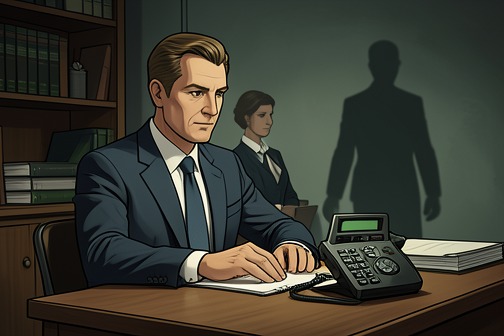
[Marvin Schwarz and Rick Dalton’s career meeting](entity:event-recall-event-marvin-schwarz-and-rick-ad50182ad73b) makes professional advice feel like a verdict: Schwarz offers Rick a possible route back into work, but also forces him to see how the industry now regards him. Rick arrives at Schwarz’s office as a former television star facing a shrinking career; he leaves with a painful diagnosis and a prescription for reinvention. The meeting’s consequences continue beyond the office, shaping how Rick understands his performance and appearance on the set of Lancer, and eventually how he values the career he has had.
## The appointment and the story of the missed role
The meeting begins with the buzzer on Schwarz’s desk Dictaphone. His secretary, [Janet Himmelsteen](entity:character-recall-character-janet-himmelsteen-7745bfde7ace), tells him that [Rick Dalton](entity:character-recall-character-rick-dalton-b598d73dca1d) is waiting outside, and Schwarz signals that he is ready. The small exchange establishes the encounter as a scheduled piece of business, but the conversation soon shifts from representation to Rick’s place in a changing profession.
Schwarz raises a story he has heard from at least four people: that Rick almost played the role associated with [Steve McQueen](entity:character-recall-character-steve-mcqueen-1b8690cbabfc) in The Great Escape. None of his sources, Schwarz says, knows the whole story, so he asks Rick to tell it himself. Rick would rather not revisit the tale. He laughs it off as a story for the Sportsmen’s Lodge crowd and calls the part the one he almost got—the fish that got away. Schwarz, who says those are his favorite stories, presses him to continue. The exchange makes Rick’s old near-miss newly relevant: Schwarz is not merely trading industry gossip but testing the difference between Rick’s remembered potential and his current prospects.
## A career assessed without consolation
Schwarz’s assessment is that Italian filmmakers may want Rick, but partly because they cannot get McQueen. Once they accept that McQueen is unavailable, they may turn to a substitute they can hire: Rick. Schwarz illustrates the casting logic by comparing other stars who stand in for preferred choices, and Rick endures the explanation with tears beginning to build behind his eyes. The possibility of work is real, but the terms expose the distance between being wanted for oneself and being hired as the available alternative.
That bluntness brings Rick to a broader confession. After more than ten years in the business, he says, he finds it hard to face what he considers his failure and the way he has run his career into the ground. Schwarz asks what he means by failure. Rick answers by measuring his former promise against particular performances and co-stars: he remembers the strength of his work on Bounty Law with actors including Bronson, Coburn, Meeker, and Vic Morrow, and imagines how different his prospects might have been beside Chuck Heston, Richard Widmark, Robert Mitchum, or Henry Fonda. He points to Tanner, McCluskey, and Hellfire, Texas as films in which something of that promise remained visible, then blames Universal executive Jennings Lang for wasting it. His account is not simply a lament over lost status; it is an attempt to identify where his opportunities went and what kind of actor he might have become.
## From humiliation to reinvention
The meeting makes Rick’s professional vulnerability bodily as well as verbal: the stinging tears rise while Schwarz explains his market value. After Rick wipes his face and puts on a false smile, Schwarz tells him not to apologize. Actors, he says, need access to their emotions, even when that capacity comes at a cost. Rick then admits how deeply the conversation has struck him. His distress is not just about a single lost part or an unkind comparison; he is confronting a career history he believes he has mismanaged.
Schwarz does not respond by denying Rick’s account. He calls the past forgivable, then says that moving forward requires reinvention. When Rick asks what he should reinvent himself as, Schwarz answers: somebody humble. The advice is pointed because Rick’s difficulty is not only that [Hollywood](entity:location-recall-location-hollywood-3ce8b1af5069) has changed; his established image and his expectations of his own standing may also obstruct his adjustment to it. Schwarz offers neither a promised comeback nor a restoration of Rick’s former prestige. He identifies a disposition Rick would need if he is to accept the work available to him.
## The advice carried onto the Lancer set
The meeting’s diagnosis acquires a visual form when Rick later plays [Caleb DeCoteau](entity:character-recall-character-caleb-decoteau-960d69955c5b) on Lancer. Walking through the western back-lot streets of [Royo del Oro](entity:location-recall-location-royo-del-oro-eae19cdfb7fd), Rick studies his reflection in a shop window, dressed in Caleb’s costume: a hat, boots, and a brown fringed jacket. The look initially feels unfamiliar, but as Rick watches the fringe move with his gestures, he begins to see the character rather than only himself. The shift connects directly to Schwarz’s earlier description of Rick as an Eisenhower-era actor in a Dennis Hopper Hollywood. Without his familiar pompadour, Rick can imagine that he looks like a different, more contemporary actor—and that the difference may be useful.
Rick also recognizes that the role’s image changes the meaning of his casting. Caleb is the hard-edged antagonist whom [Johnny Lancer](entity:character-recall-character-johnny-lancer-229e794b7c70) defeats; Rick thinks that when Johnny kills Caleb, he will not simply be killing Jake Cahill. On the same production, [Jim Stacy](entity:character-recall-character-jim-stacy-a3b08e77ad78) is initially pleased that Rick, identified with Jake Cahill, will play the heavy opposite his hero. He sees the casting of a well-known television cowboy as a way to make Johnny’s eventual victory carry extra force. The production thus turns Rick’s older screen identity into both an asset and a constraint: it gives the new series a recognizable opponent, even as Rick must accept the villain’s place in its story.
The meeting’s final consequence is not a sudden reversal of Rick’s career but a change in what he can recognize. Near the end of the narrative, a reminder from his young scene partner [Trudi Frazer](entity:character-recall-character-trudi-frazer-becaef89d02f) leads him to count what the years have given him: work with admired actors, travel, relationships, stories, a home, and the chance to earn a living by pretending to be a cowboy. He tells Trudi that they are lucky. This later gratitude does not erase the painful appraisal Schwarz forced on him; it reframes it. The meeting first makes Rick see the gap between former promise and present market value, while the later realization lets him see a career as more than that gap.
Event 2
Rick Dalton's Bounty Law set fire accident
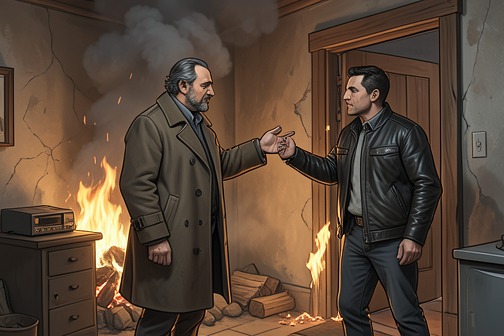
[Rick Dalton](entity:character-recall-character-rick-dalton-b598d73dca1d)’s Bounty Law set fire accident transforms a routine stunt into a genuine emergency and becomes the decisive beginning of Rick Dalton and [Cliff Booth](entity:character-recall-character-cliff-booth-49f52393c9a7)’s partnership. A winter coat, chosen as a practical prop for a staged fire, ignites with unexpected force; while Rick Dalton panics, Cliff Booth’s clear instruction gives him a way to survive without making the danger worse. The blaze is brief, but it changes the meaning of their time together: the stuntman who had seemed like a rival becomes the man Rick Dalton trusts in a crisis.
## Production choice and hidden hazard
The accident takes place during the third season of Bounty Law, in the 1961–62 season. Cliff Booth had been brought in to double the series lead, but Rick Dalton did not immediately welcome him. Cliff Booth was unusually handsome for a stuntman, and Rick Dalton resented the prospect of a better-looking double wearing his costume and drawing attention on his show. Their early working relationship therefore carried a streak of professional jealousy, even as Rick Dalton admired Cliff Booth’s military service.
Cliff Booth’s wartime record was exceptional: he had twice received the Medal of Valor and was described as one of [World War II](entity:time-recall-time-world-war-ii-d4353dde1684)’s great heroes. Rick Dalton, who would have taken considerable steps to avoid military service, nevertheless respected men who had served with distinction. That contrast matters to the accident’s setup. Cliff Booth was already known as a capable stuntman and a decorated veteran, while Rick Dalton was the actor whose performance the stunt was meant to serve.
About a month after Cliff Booth joined the show, director Virgil Vogel proposed a striking look for Jake Cahill, the series lead: a large winter jacket dyed a white resembling nurse’s shoe polish. The color was expected to read effectively in black-and-white photography, although it would have looked absurd in ordinary life. Wardrobe could not prepare the jacket in time for Vogel’s episode, so the production held it for the following one. In that later episode, Jake Cahill was to be set on fire. The coat that had missed its original assignment now seemed an obvious prop for the gag.
## How the stunt became an emergency
Cliff Booth was prepared to perform the fire gag himself. Once the production explained what the stunt involved, however, Rick Dalton decided to attempt it. The crew applied fire accelerant to the back of the large white coat, well away from Rick Dalton’s face and hair. That precaution addressed the planned stunt, but it did not account for the coat’s dye.
The wardrobe department had sent the jacket out to be dyed, and nobody on the crew knew that the white dye was 65 percent alcohol-based. The garment had not originally been intended for a fire scene, so its flammability had not been recognized in connection with the gag. When a flame touched the coat’s back with Rick Dalton inside it, the jacket erupted like a blazing Roman candle. A costume selected for its appearance in black-and-white film had become the source of a real, fast-moving fire.
Rick Dalton heard the rush of the coat catching and felt the flames pass his shoulders, licking and popping around his head. His panic intensified with the blaze. He was on the verge of doing the worst thing available to him in that moment: running blindly while on fire. The production’s controlled illusion had given way to a physical emergency, and the next action mattered more than the planned performance.
## Cliff Booth’s intervention
Cliff Booth did not answer Rick Dalton’s panic with confusion or a hurried attempt to pull him away. He gave him one concrete instruction: “Rick, you’re standing in a puddle of water. Just fall down.” The line identifies what Rick Dalton can do, rather than asking him to improvise while frightened and surrounded by flame. Rick Dalton followed the instruction. The fire was put out before it could cause any real damage.
The contrast between the two men’s responses gives the incident its force. Rick Dalton’s instinct was to flee; Cliff Booth, already accustomed to dangerous work, recognized the safer immediate action and spoke calmly enough for Rick Dalton to follow it. The evidence does not portray the episode as a planned test of their friendship. Its significance lies precisely in the opposite: a concealed production hazard suddenly made their professional roles consequential, and Cliff Booth’s composure proved dependable when Rick Dalton’s own judgment was overwhelmed.
## Consequence and significance
The narration marks the extinguishing of the flames as the moment Rick Dalton and Cliff Booth became the team of Rick and Cliff. Their relationship had begun with resentment over appearance and status, but the emergency supplied a different basis for closeness: trust earned through action. Cliff Booth had been hired to double the star; in the crisis, he instead became the person whose judgment protected him.
The incident also sharpens the difference between fictional violence and practical danger on a working television set. Rick Dalton had played a character in a world of staged gunfights and had killed scores of people on screen. Here, though, the danger did not come from a scripted opponent or a simulated weapon. It came from a real property of the costume, unknown to the crew, and from the brief interval in which Rick Dalton had to choose whether to run or fall. Cliff Booth’s intervention turned that interval into the origin story of their enduring partnership.
Event 3
Rick Dalton loses Bounty Law's fourth season
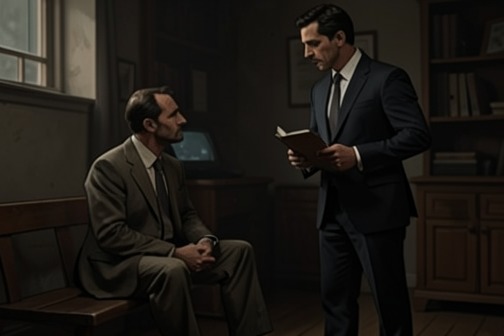
[Rick Dalton](entity:character-recall-character-rick-dalton-b598d73dca1d) loses Bounty Law’s fourth season through the very ambition he once thought would make him a movie star. Years later, as [Marvin Schwarz](entity:character-recall-character-marvin-schwarz-15b7d6036d85) lays out the logic of Rick’s declining career, Rick acknowledges that his impatience with television and his conduct during the show’s third season helped end the series—and that he had mistaken opportunity for an obstacle.
## The admission and its causes
During Marvin Schwarz’s career postmortem, Rick feels tears building as the agent explains that Italian producers will want him as a substitute for [Steve McQueen](entity:character-recall-character-steve-mcqueen-1b8690cbabfc). The comparison lands as a brutal account of Rick’s diminished standing: he may be wanted, but as the available version of someone else. The news turns the conversation toward what Rick believes he once could have been.
Rick recalls that Bounty Law had shown his potential, particularly in episodes with strong guest stars. He also names films in which he thought he and his co-stars worked well together, and blames [Universal Pictures](entity:organization-recall-organization-universal-pictur-c643b7612d8b) executive Jennings Lang for squandering some of that promise. But he does not leave the failure with the studio. After conceding that he, too, wasted his potential, he identifies a specific choice: he wanted to leave television and catch up with Steve McQueen. In his view, if he had not been difficult during the entire third season, the show could have continued into a fourth season, its cast and crew could have done well, and they could have parted on friendly terms.
Instead, Rick says, [Screen Gems](entity:organization-recall-organization-screen-gems-5bffe19f53a1) hates him and the Bounty Law producers will hold a grudge. He accepts that he earned their resentment. He had made sure everyone knew that he believed he had better places to be than a small television show. The lost season is therefore not presented as a simple misfortune imposed on him; in Rick’s own account, it is the consequence of treating his current work as beneath the future he wanted.
## Regret, self-recognition, and punishment
Rick’s confession is emotional as well as professional. He exhales in defeat, looks down, and becomes teary again as he describes how he behaved. His comparison is with Scott Brown, an actor on the show Rick hated working with because of his own ingratitude. Rick admits that Brown’s conduct affected him because it showed him a version of himself. The lost season thus becomes more than a missed job: it is the point at which Rick recognizes that he had become the kind of ungrateful actor he resented.
He also interprets his present difficulty on set as deserved punishment, imagining that being outperformed by the new leading man is what he has coming. Marvin does not interrupt the confession. After listening, he tells Rick that young actors commonly become arrogant after landing a series. That response places Rick’s failure within a recurring industry pattern without erasing his responsibility for his particular choices.
## The lost season in a changing western
Rick’s work on Lancer gives the career loss a new context. He initially sees the series as a strong premise: [Murdock Lancer](entity:character-recall-character-murdock-lancer-3672da39bfae) offers his estranged sons equal partnership in his ranching empire if they help defend it from [Caleb DeCoteau](entity:character-recall-character-caleb-decoteau-960d69955c5b) and his gang. Rick thinks the story has good characters, but is darker, more violent, and more cynical than Bonanza or The High Chaparral. [Johnny Lancer](entity:character-recall-character-johnny-lancer-229e794b7c70), also known as [Johnny Madrid](entity:character-recall-character-johnny-madrid-ad2f58e21cfa), strikes him as an unusually dangerous central character—more extreme than the antihero roles Rick had played as Jake Cahill.
The changing genre also changes what Rick’s career can mean. [Sam Wanamaker](entity:character-recall-character-sam-wanamaker-c9b7192e0073) wants the pilot to unsettle the familiar television-western image, using its costumes and Johnny’s antihero qualities to draw on the grittier westerns emerging in [1969](entity:time-recall-time-1969-711fcc62f578). A network television series cannot reproduce the violence of films such as Sam Peckinpah’s, but Wanamaker can pursue a different atmosphere and a different kind of western lead. The role that makes Rick the heavy rather than the hero is part of that shift.
On the set, Rick begins to see himself differently in Caleb’s costume. At first he doubts that viewers will recognize him beneath the changed appearance. Later, looking at his reflection in a western-styled window, he finds that the hat, boots, fringed brown jacket, and hair without his familiar pompadour make him look less like an aging cowboy actor and more like a contemporary performer. He understands more clearly Marvin Schwarz’s description of him as an Eisenhower actor in a Dennis Hopper [Hollywood](entity:location-recall-location-hollywood-3ce8b1af5069). The transformation does not restore Bounty Law or undo Rick’s conduct, but it makes the possibility of reinvention visible to him.
## Consequences and retrospective meaning
The casting also makes Rick’s changed status tangible. [Jim Stacy](entity:character-recall-character-jim-stacy-a3b08e77ad78), who plays Johnny Lancer, had been pleased to learn that Rick would play Caleb. For Stacy, putting a recognized television cowboy in the villain’s role would make Johnny’s victory over Caleb—and over the image of Jake Cahill—an effective way to introduce the new lead. Wanamaker had considered Joe Don Baker as another possibility, but preferred the opportunity to subvert Rick’s established western-hero persona. Rick’s former prominence still has value, though now it can serve another actor’s rise and a new genre’s ambitions.
By the end of the book, Rick’s understanding of his career has shifted beyond the lost season. After [Trudi Frazer](entity:character-recall-character-trudi-frazer-becaef89d02f) reminds him that acting is a wonderful job and that they are lucky to have it, he recognizes, for the first time in ten years, how fortunate he has been: to work with celebrated performers, visit different places, live interesting stories, and own a house paid for by pretending to be a cowboy, as he had done as a boy. His answer to Trudi is gratitude. The fourth-season failure remains a real consequence of his ambition, but it no longer defines the whole of his working life; his eventual recognition of what the career gave him supplies a counterweight to the regret with which he first explains its loss.
Event 4
Cliff Booth adopts Brandy
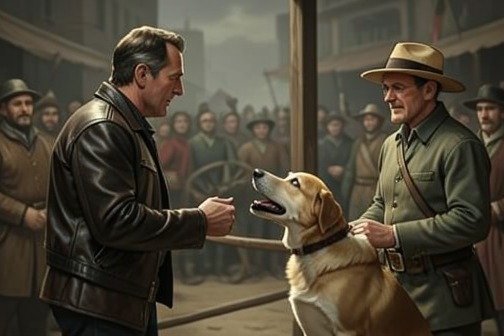
[Cliff Booth](entity:character-recall-character-cliff-booth-49f52393c9a7)’s acquisition of [Brandy](entity:character-recall-character-brandy-72ef761c440e) began as an attempt to settle an old debt and became an unexpected partnership. [Buster Cooley](entity:character-recall-character-buster-cooley-a0453d4d543f) could not pay the $3,200 he owed Cliff, so he proposed giving him a half interest in a fighting dog. Cliff was wary of dogfighting and its risks, but agreed to attend one bout. Brandy’s victory returned $2,400 to the men and, to Cliff’s surprise, made the spectacle thrilling enough to draw him in.
## Debt and an unlikely settlement
A little over two years before the later scene in which Cliff offers Brandy a steak bone, he was living in a trailer behind the [Van Nuys](entity:location-recall-location-van-nuys-79f13ede7b33) Drive-In when Cooley called. Cooley’s debt had accumulated over five or six years in separate loans, beginning when Cliff’s partnership with [Rick Dalton](entity:character-recall-character-rick-dalton-b598d73dca1d) gave him unusually good work: he doubled the leading man in studio action movies. Cliff remembered that period as his own prosperous days. For a man accustomed to living hand to mouth, having money was disorienting; he bought a boat, lived aboard it, and kept it docked in Marina del Rey. Much of what he lent Cooley came from that temporary abundance.
Cliff did not regard Cooley as a scammer, even though his friend was a habitual borrower. Cooley had needed money for immediate problems: his car and television were at risk of repossession, he faced eviction, and he had bills and rent to cover. Cliff believed that Cooley would repay him if he could, but also understood that he was unlikely ever to have the money. Pressing him would not make repayment faster, could drive him into avoidance, and might turn a chance encounter in [Los Angeles](entity:location-recall-location-los-angeles-11eff639bdf5) into a confrontation. Cliff had therefore mentally written off the loan. He was glad he had been able to help an old friend, even if $3,200 was more than he might ideally have lent.
When the two men discussed the debt, Cooley confirmed that he did not have the money. Cliff answered with silence and a sip of beer. Cooley then insisted that he had something better than cash. The next offer was not a straightforward repayment but a wager on future earnings: an interest in Brandy and the chance to profit from her fights.
## Brandy in the cage
Cooley led Cliff outside, the two still carrying cans of Old Chattanooga, and showed him Brandy standing on all fours in a wire-mesh cage in the flatbed of Cooley’s Datsun. Cliff liked dogs, particularly female dogs, and recognized that Brandy was attractive, but the sight did not immediately convince him that she could make up for thousands of dollars. He needed to hear the proposal before he took the animal’s value seriously.
Cooley offered Cliff a half interest in what he considered an exceptional fighting dog. His plan was to take $1,200 to a dogfight in Lomita, bet it on Brandy, and use the winnings to enter the circuit together. He projected that by their sixth fight they might each have $15,000. Cliff recognized that Cooley believed his own pitch; he did not think his friend was knowingly deceiving him. But confidence was not proof. Cliff disliked the idea of dogfighting, which he considered both illegal and distasteful, and saw too many ways the supposedly certain profit could fail.
Cliff tried to turn the proposal back into an ordinary debt payment: if Cooley had $1,200 to bet, why not give it to him? Cooley argued that this would leave Cliff with only a fraction of what he was owed. He wanted to make Cliff a profit rather than repay him a reduced sum, and asked him at least to attend the first fight. If Brandy won, their stake would become $2,400; Cliff could then take that money and decline to continue. Cooley’s offer thus put a limit on Cliff’s initial exposure while asking him to reconsider the value of the dog through experience rather than assurances.
## The test of the first fight
Before agreeing, Cliff lowered himself until his face was level with Brandy’s on the other side of the mesh. He and the dog stared at each other. When Brandy could no longer hold his gaze, she growled and snapped; the wire stopped her teeth from reaching his face. Cliff then turned to Cooley and asked her name. The moment did not erase his reservations, but it marked a shift from evaluating an abstract investment to meeting the animal whose performance would decide the matter.
Cliff, Cooley, and Brandy went to the first fight in Lomita. Cooley’s prediction proved right: Brandy killed the opposing dog in less than a minute, and the men won $2,400. Cliff had expected to watch a risky business transaction play out; instead, he found the fight exhilarating. The gap between his stated reluctance and his reaction was decisive. After that first bout, Cliff was hooked.
## From debt repayment to partnership
For the next six months, Cliff and Cooley took Brandy around the dogfighting circuit, traveling through Los Angeles County, Kern County, and the Inland Empire. They entered her in Compton, Alhambra, Taft, and Chino. Brandy won every fight, most of them easily. On the few occasions she was hurt, the men let her recover before putting her back into competition.
After her first five fights, Brandy seemed nearly indestructible, and the stakes rose. Later bouts in Montebello, Inglewood, Los Gatos, and Bellflower brought tougher opponents and larger potential winnings. They also lasted longer and became more violent: Brandy suffered more serious injuries and needed more time to recover. The bargain that began as a way to convert an uncollectible loan into possible profit had therefore changed Cliff’s relationship to risk. He had rejected Cooley’s plan as a dangerous sure thing, yet the first victory drew him into a circuit where the rewards grew alongside the physical cost to Brandy.
The later steak-bone scene gives the origin story an intimate counterpoint. Brandy bounds up for the gift and retreats to her corner to chew it, while Cliff treats her delight as proof of a loyalty he doubts he would receive from a human date. That affection is not the basis on which she first entered his life: their connection began inside a cage, a debt negotiation, and a dogfight. But the memory explains how the animal who eagerly accepts a bone became both Cliff’s companion and the center of a partnership that began with Cooley’s offer.
Event 5
Cliff Booth kills Buster Cooley
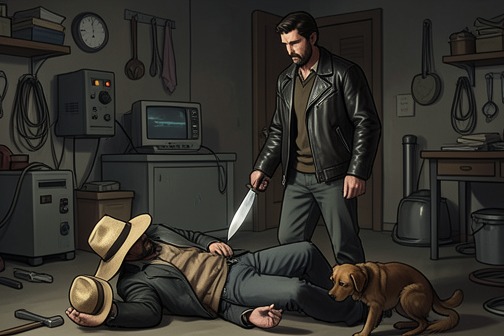
[Cliff Booth kills Buster Cooley](entity:event-recall-event-cliff-booth-buster-cool-f5baf375b4b4) when their lucrative dogfighting partnership reaches a breaking point over [Brandy](entity:character-recall-character-brandy-72ef761c440e)’s safety. Buster’s plan to exploit the injured dog’s undefeated record turns a shared business into a violent conflict, and Cliff kills him rather than allow Brandy to fight again.
## The Dogfighting Partnership and Its Breaking Point
For six months, Cliff and Buster took Brandy around the dogfight circuit, entering her in contests in Compton, Alhambra, Taft, and Chino. She won her first five fights so decisively that she seemed indestructible. The larger bets that followed brought tougher opponents: Brandy continued to win, but the bouts grew longer and bloodier, her injuries worsened, and her recovery took more time. The danger rose alongside the money.
## The Injuries That Changed the Stakes
After nine fights, Cliff and Buster had made about fourteen thousand dollars each. Buster set a target of twenty thousand apiece, after which Brandy could retire. But in her tenth fight, in San Diego, Brandy faced a pit bull named Caesar and was badly hurt. The bout was stopped without a winner. Cliff believed the stoppage had saved her: had the fight continued for another twenty minutes, Caesar would have killed her. He had seen loved ones cut down in wartime and peacetime, but watching Brandy endure Caesar’s attack caused an agony he could not bear.
Cliff was therefore shocked when Buster booked Brandy for another contest in Watts, against a male dog called Augie Doggie, before she had recovered from the beating. Buster insisted that the final fight would secure their promised twenty thousand dollars each, but his plan no longer depended on Brandy winning. He intended to preserve her undefeated reputation by entering her and betting on the opposing dog. To Cliff, the scheme meant sending an injured dog into a contest she could not survive; the prospect turned their money-making partnership into an immediate confrontation.
## The Fight in Cliff’s Trailer
Buster answered Cliff’s objection by explaining that Brandy did not need to win. Her undefeated reputation, he reasoned, was the asset: they could enter her against Augie Doggie and bet on the other dog. He insisted that he and Cliff were close to the twenty thousand dollars each that he had promised. Cliff rejected the scheme outright, shouting that Brandy could not beat the “beast Augie Doggie” in her condition. Their disagreement was no longer about how much money the dog could earn; it was about whether Buster would use her reputation to make one more bet even when she was too injured to face the fight.
Cliff attacked Buster inside his trailer. They grappled in savage combat for about four minutes, until Cliff broke [Buster Cooley](entity:character-recall-character-buster-cooley-a0453d4d543f)’s neck. The fight ended in Buster’s death, making Cliff’s refusal to send Brandy back into competition an act of murder rather than merely a break with their partnership.
## Disposal and Aftermath
Cliff watched television beside Buster’s body until about two in the morning. After the drive-in closed, he put the body in the trunk of Buster’s used white 1965 Impala Sport Coupe, a car Buster had bought with his winnings from Brandy’s fights. With Brandy in the passenger seat, Cliff drove to Compton, left the car there with its keys in the sun visor, and walked with her through the night. At daybreak, the two boarded a bus back to [Van Nuys](entity:location-recall-location-van-nuys-79f13ede7b33).
The killing was the third murder Cliff committed without being caught. The first had taken place in [Cleveland](entity:location-recall-location-cleveland-dc87747d7e07) in the [1950s](entity:time-recall-time-1950s-9d888ed1c4fe); the second was the killing of his wife two years earlier. He never learned what became of Buster or the abandoned Impala, and nobody in his circle ever mentioned Buster again. The silence leaves the killing without public consequence, while placing it in a pattern of violence Cliff has already escaped twice.
After Buster’s death, Cliff entered Brandy in fights only twice more, and only when he was desperate for cash. After the last one, he promised her he would never make her fight again, a promise he intended to keep. On Friday night, [February 7, 1969](entity:time-recall-time-1969-2-7-01d5963d97cc), Brandy waits on a small dog pillow atop a wooden chair while Cliff prepares her dinner in his trailer. The quiet ritual marks the lasting change wrought by the killing: the former source of their earnings is now a companion Cliff feeds and protects, not a fighter he sends back into danger.
Event 6
Pussycat's Kreepy Krawl
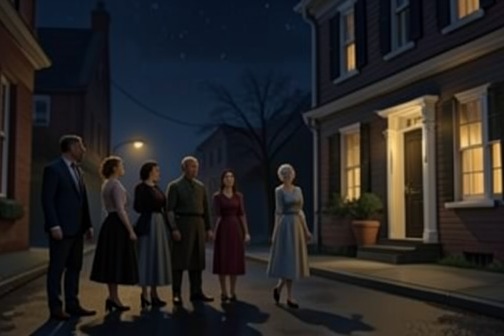
[Pussycat's Kreepy Krawl](entity:event-recall-event-pussycat-kreepy-krawl-58bf6dd98e1b) is an initiation in which [Charlie Manson](entity:character-recall-character-f84a721a741f) turns a familiar group dare into a solitary test of nerve. On a quiet [Pasadena](entity:location-recall-location-pasadena-ad36b3df9c7d) street, he sends sixteen-year-old [Debra Jo Hillhouse](entity:character-recall-character-debra-jo-hillhouse-7558f3d8a74b) into a stranger’s home alone, framing the trespass as a passage through fear. She completes the challenge by entering the Hirshberg house, disturbing its sleeping occupants, and escaping to the sidewalk crowd—transforming a lesson in obedience into a spectacle of audacity.
## The Test Begins
It is two o’clock in the morning on [Greenbriar Lane](entity:location-recall-location-greenbriar-lane-c9624e50de5f), in an affluent Pasadena housing tract. The suburban street is still, its residents asleep behind locked doors. Outside the dark Hirshberg house, five members of Charlie Manson’s Family wait on the sidewalk: Clem, Sadie, Froggy, [Debra Jo](entity:character-recall-character-debra-jo-6637d67c35ab), and Charlie himself. The setting makes the dare’s boundary plain: a private home, secure and quiet, set against the group gathered in the night.
Charlie stands behind Debra Jo with both hands resting on her shoulders and speaks softly into her ear. She reminds him that this is not her first [Kreepy krawl](entity:concept-recall-concept-kreepy-krawl-37b5934630f1). He agrees, but distinguishes this attempt from the others: she has never done it alone. The distinction turns the event from a group trespass into a test of individual nerve. Charlie invokes the Family’s strength in numbers, then argues that individual achievement also matters and that fear can only be faced alone. His affectionate language and physical closeness make the challenge both an order and an expression of the attachment he claims to offer.
He tells her that the girl who emerges from the house will be far more powerful than the girl who enters. Then he releases her, steps back, and slaps the seat of her blue-jean cutoffs to send her forward. The gesture ends the intimate coaching and begins the test: Debra Jo must cross from the Family’s protective cluster into the dark property by herself.
## Crossing the Threshold
Debra Jo Hillhouse approaches the Hirshberg house with visibly shaking knees, crossing the dew-covered lawn barefoot. The wet grass chills her feet, and the prints she leaves behind mark a route from the public sidewalk toward the backyard gate. She lifts the rusty hinge quietly, slips through, and loses sight of [Charles Manson](entity:character-recall-character-charles-manson-c680c7fb9863) and the others as she enters the private yard alone. A kidney-shaped pool, a large tree, picnic tables, and children’s Big Wheels make the property look orderly and ordinary; its neatness heightens the trespass rather than disguising it.
From the yard, she sees a sliding-glass door. Charles Manson encourages her to try it, suggesting that occupants who feel secure may forget to bolt such a door. Debra Jo hopes it will be locked so she can return home, but after listening in the dark and pulling at it, she gets inside. She leaves the door open behind her as a possible escape route, then crawls on hands and knees over the kitchen linoleum and into the shag-carpeted living room. The open door offers a way back, but the test has already carried her across the house’s boundary and away from the watching group.
Once inside, she follows Charles Manson’s imagined prompts as she assesses whether anyone is awake. When she rises, the room seems different from her low vantage point. She removes her clothes, retrieves a red light bulb from a pocket in her cutoffs, and holds it in her mouth as she crawls up the carpeted stairs. At the top, she looks toward the bedrooms and finds the master bedroom door partly open. Charles Manson is no longer in her head; from there, the decision and movement are entirely hers.
She enters the bedroom where an older couple sleeps, tests whether the man will wake, and then crosses to the window, through which she can see Charles Manson and the others on the sidewalk. They wave up at her, and she waves back. She quietly brings a wooden chair to the window, removes the shade and bulb from a bedside lamp, and replaces the ordinary bulb with the red one she carried inside. When she turns it on, its low light changes the room’s color without waking the couple. The careful substitution is the concrete task at the center of the dare: she must act inside the bedroom, close to its sleeping occupants, without alerting them.
## The Intrusion Becomes a Spectacle
From the chair by the window, Debra Jo Hillhouse turns the stealth test into a performance for the people waiting outside. Framed in the window by the red light, she smiles down at Charlie Manson and the others, who jump up and down as she begins a go-go dance. Their applause and whistles accompany her increasingly wild movements. The act is no longer merely an effort to enter and leave unnoticed: she makes herself visible to her companions while the sleeping couple remains unaware of the display.
Then Debra Jo leaps from the chair, runs across the bedroom, and jumps into bed with the sleeping couple, laughing. The old woman wakes with a scream; the old man sputters in alarm. Debra throws her arms around his neck and kisses his toothless mouth. When he tries to scream, she pushes her tongue into his mouth, then lets go and springs from the bed.
She escapes through the bedroom and down the stairs, snatching up her clothes as she passes through the living room. She leaves by the still-open sliding-glass door, crosses the backyard and lawn, and runs down Greenbriar Lane with the Family, laughing. The route returns her to the group that sent her in, but the quiet trespass has ended in a loud, intimate shock to the household. Her successful return completes Charlie’s solitary test on its own terms: she crossed the threshold alone, confronted the sleeping occupants, and came back to the waiting group.
## Ritual, Control, and Performance
The Kreepy krawl makes fear both the lesson and the instrument of belonging. Charlie Manson presents solitary action as a route to personal strength, even though the challenge is designed by him, initiated by his command, and watched by the Family. Debra Jo Hillhouse is told to prove herself apart from the group, yet the group remains her audience and the measure of her achievement. The ritual therefore holds two impulses together: it celebrates individual nerve while binding that nerve to Charlie’s authority and the Family’s approval.
The red bulb gives the test a visual turning point. A small, portable object carried into the dark becomes the means by which Debra Jo changes the bedroom’s atmosphere and turns its window into a stage. Her companions can see her, cheer her, and witness her success, while the sleeping couple inside the room remains unaware until she chooses to break the silence. The sequence shifts from covert trespass to deliberate spectacle, then to bodily shock; its escalating reveal makes the dare more than a quiet test of stealth.
At the end, Debra Jo returns laughing with the same group from which she was separated. Her actions exceed the initial demand to enter the house and face fear: she directs a performance for the sidewalk crowd and makes the sleeping household part of it. The event’s tension rests in that gap between Charlie’s language of empowerment and his control of the test, and in the way the imposed ritual becomes, for a moment, Debra Jo’s own audacious performance.
Event 7
Sharon Tate hitchhikes to California with Ace Woody
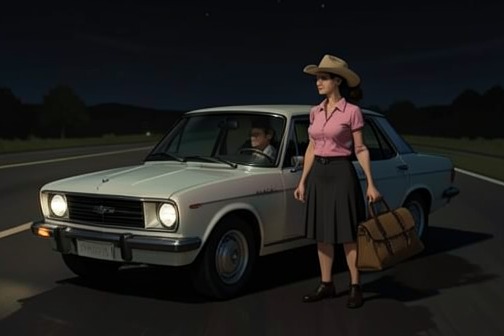
[Sharon Tate](entity:character-recall-character-sharon-tate-11589427decf)’s hitchhiking ride with Ace Woody begins as a roadside encounter outside Dallas and becomes a brief, consequential exchange about the possibility of a career in movies. Four years before the main events, the Texas beauty-pageant winner is traveling toward [Los Angeles](entity:location-recall-location-los-angeles-11eff639bdf5) with a duffel bag and an ambition she is reluctant to disclose. Ace gives her the ride, takes that ambition seriously, and sends her on her way with words of encouragement that return when she makes her motion-picture debut opposite Tony Curtis.
## The roadside meeting
The episode opens outside Dallas, Texas, four years earlier. Ace Woody, a rodeo cowboy, is driving a dirty white ’59 Cadillac Coupe de Ville and pulling a horse trailer containing a dusty brown horse. He spots Sharon on the highway about a quarter of a mile before he reaches her. Her thumb is out; she carries a canvas duffel bag and wears a tight pink T-shirt, a banana-colored miniskirt, a large white sun hat, and no shoes. The description lingers on her long bare legs and golden-blond hair, making the striking impression she makes on Ace part of the encounter from its first moments.
When Ace pulls over, Sharon bends to look through the passenger-side window. He sees that she is about twenty-two and considers her exceptionally good-looking. His offer of a lift is presented as rhetorical, but Sharon accepts. The scene’s practical details—the open road, her bag, the horse trailer, the dusty car—establish how provisional the journey is: she is moving west without a settled plan beyond getting to California, and her next step depends on a stranger stopping for her.
## A destination and an ambition
As they talk, the distinction between Sharon’s immediate destination and her larger purpose gradually comes into focus. When asked where she is going, she answers Los Angeles. Their conversation touches on the possibility of becoming a surfer, including Annette Funicello and Frankie, but Sharon points out that the screen surfers did not even have tans. The exchange lets her speak with humor and confidence while the journey is still framed as a hitchhike west.
The ride lasts about six hours. Once she feels comfortable with Ace, Sharon explains that she wants to become an actress and work in movies, or at least television. She had not said so earlier because the aspiration seemed like a cliché and sounded like a pie-in-the-sky daydream from a Texas beauty-pageant winner. She also knows that her father considers it foolish. Her hesitation is not evidence that the ambition is absent; it reflects how exposed it feels to name it aloud, especially when the people closest to her doubt it.
Ace answers with encouragement rather than ridicule. After spitting snuff juice into a small paper cup, he tells her that someone as good-looking as she is would be foolish not to try for a career in pictures, and says he likes her chances. He contrasts Sharon’s prospects with those of his cousin Sherry, who, he suggests, would be unlikely to become the next Sophia Loren, then imagines Sharon acting opposite Tony Curtis. His confidence rests on her appearance and what he sees as her plausibility in the movies, but in the moment it gives her a supportive answer to the skepticism she has described.
## The farewell
When they reach the end of their time together, Sharon does not give Ace the opportunity to offer her the back seat of his car for the night. Before he can make that offer, she retrieves her duffel bag and hugs him goodbye. Ace watches her bare feet walk off into the dark. The parting is brief and practical, but it closes a conversation in which the dream she had guarded has been spoken and met with approval.
Just before Sharon gets out of earshot, Ace calls after her with one last piece of encouragement: when she is acting opposite Tony Curtis, she should tell him hello from Ace. Sharon turns back and shouts, “Sure thing, Ace, see ya in the movies.” She waves and continues on. Their exchange ends not with a promise that success is certain, but with a particular imagined future—Sharon in a film with Tony Curtis—made vivid enough to become their shared farewell.
## The greeting reaches the screen
The narration connects the roadside conversation to Sharon’s eventual motion-picture debut opposite Tony Curtis in the comedy *Don’t Make Waves*. When she meets Curtis, she tells him, “Ace Woody says hello.” The greeting supplies the episode’s consequence: the man who offered a ride and encouraged her in the dark is remembered when the possibility he imagined becomes real. The book turns a chance meeting into a small bridge between a Texas highway and a film set, linking a private exchange of confidence to Sharon’s public arrival in motion pictures. Her later greeting also completes Ace’s playful request exactly; what began as an unlikely road-side prediction returns as a concrete message delivered to the actor he had named.
Event 8
Rick Dalton’s Italian film trip
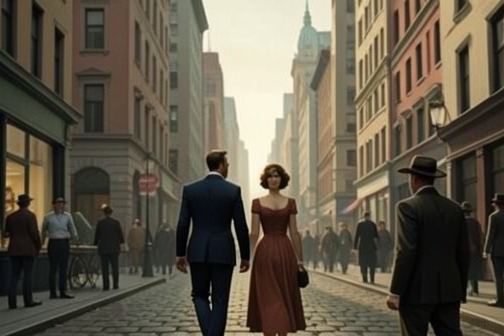
[Rick Dalton’s Italian film trip](entity:event-recall-event-rick-dalton-bffa1b8bae13), arranged by [Marvin Schwarz](entity:character-recall-character-marvin-schwarz-15b7d6036d85), gave a television actor facing a painful career reckoning a route back into feature films. It brought Rick home with a new Italian wife and, in the account of his subsequent career, preceded [Paul Wendkos](entity:character-recall-character-paul-wendkos-a9e50cd818fc)’s call offering him the lead in Hell Boats—a production that took Rick and [Cliff Booth](entity:character-recall-character-cliff-booth-49f52393c9a7) to London and Malta for five weeks.
## A Career Reframed
The prospect of Italian work emerged from Marvin Schwarz’s unsparing assessment of Rick’s place in the market. Marvin explained that Italian producers wanted the kind of star represented by [Steve McQueen](entity:character-recall-character-steve-mcqueen-1b8690cbabfc), but, unable to get McQueen, would look for an available substitute. Rick could feel tears beginning to build as he listened; the bluntness of the comparison struck him like a slap. The trip therefore arose not simply as a change of location, but from an uncomfortable recognition that his appeal might depend on being a substitute for someone else.
Seven months after Rick returned from the trip, he had a new Italian wife. The book does not detail the films he made in [Italy](entity:location-recall-location-italy-85c2492cd54b) here, but the return marks a hinge in his working life: he had taken the overseas opportunity Marvin identified, and another feature-film role soon followed.
## Wendkos’s Call
The next opening came from Paul Wendkos, a director and mentor Rick had not spoken with in three years. Wendkos was preparing Hell Boats, a [World War II](entity:time-recall-time-world-war-ii-d4353dde1684) adventure set around England and scheduled to be filmed in Malta. His call was a practical one: he wanted to know whether Rick was available. The increased attention surrounding Rick after the flamethrower episode had also raised the profile of The Fourteen Fists of McCluskey, giving Wendkos an added reason to think of him.
Hell Boats was being made by [Oakmont Productions](entity:organization-recall-organization-oakmont-producti-2a96df34a7d0), a small British company with an international distribution deal through MGM. Oakmont specialized in modestly budgeted World War II action-adventures, usually built around British casts and an American television actor in the lead. The production’s choice of a TV-famous American was thus part of its established model, not an exceptional leap into a different kind of filmmaking.
## A Familiar Replacement, a New Opportunity
Rick’s casting followed a pattern in Wendkos’s career. When James Franciscus’s starring commitment to [Twentieth Century Fox](entity:organization-recall-organization-twentieth-centur-ec9e0bcf5c19)’s Beneath the Planet of the Apes ran over schedule, Wendkos needed another American actor known from television. He remembered Rick, just as he had turned to him for The Fourteen Fists of McCluskey after Fabian broke his shoulder. Rick and Cliff then flew first to London and onward to Malta for the five-week shoot.
The recurrence gives the opportunity a particular shape: Rick was again selected after another actor became unavailable, but the substitution put him back in a studio feature and renewed his professional connection with Wendkos. The Italian trip had not erased the industry’s habit of valuing Rick through comparison or circumstance; it had helped carry him into the next job.
## Aftermath and Significance
When Hell Boats reached American theaters in 1970, it appeared on the lower half of a double bill with Hornets’ Nest, an Italian-made World War II action film whose plot closely echoed The Fourteen Fists of McCluskey. The pairing placed Rick’s new feature within the same cycle of compact, commercially oriented war adventures that had helped make him useful to Oakmont in the first place.
The trip’s significance lies in this modest but consequential return to work. Rick did not become an entirely new kind of star; rather, overseas production offered a feature-film lead to an actor whose television identity could travel across markets. His return with an Italian wife and Wendkos’s renewed call register the personal and professional changes associated with the trip, while the casting circumstances preserve the tension Marvin had exposed: Rick’s value was real, but often measured against the star someone else wanted.
Event 9
Bruce Lee Incident
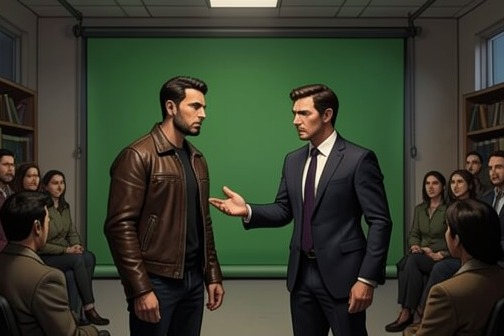
The [Bruce Lee Incident](entity:event-recall-event-bruce-lee-incident-309c673e14df) begins as a public dispute about whether [Bruce Lee](entity:character-recall-character-bruce-lee-e452f4126247) could defeat heavyweight boxer Muhammad Ali and becomes a fight that exposes both [Cliff Booth](entity:character-recall-character-cliff-booth-49f52393c9a7)’s calculated misdirection and the limits of his [Hollywood](entity:location-recall-location-hollywood-3ce8b1af5069) career. On the set of The Green Hornet, Cliff was there to double for [Rick Dalton](entity:character-recall-character-rick-dalton-b598d73dca1d), not to challenge the show’s star. Yet after he mocked Lee’s boast, their proposed friendly contest ended with Lee hurt, Cliff dismissed, and the stunt work on which Cliff depended growing scarcer still.
## Setting and Provocation
Lee was holding court with the crew about his fighting ability when someone asked the familiar question of how he would fare against Ali. Lee had studied 16mm films of Ali’s fights and noticed that Ali dropped his left. He understood that in a boxing ring Ali would beat him, but believed that an unrestricted fight, with kicking allowed and no boxing gloves, would favor him. Asked the question on the set, he answered, “If put in a room and told anything goes? I’d beat him senseless.”
Cliff, then a day-player stuntman assigned to double for Dalton, laughed at the claim. When Lee challenged him to explain himself, Cliff answered with a deliberately insulting comparison: “I think you ought to be embarrassed to suggest you’d be anything but a stain on the seat of Muhammad Ali’s trunks.” With the crew watching, he continued to ridicule Lee’s size and his status as an actor, invoking Jerry Quarry and asking whether Lee had ever taken a serious punch. Lee responded that his hands were registered as lethal weapons and that an accidental death in a fight could send him to jail. Cliff retorted that this was no special excuse and accused martial artists of avoiding real fights.
## The Contest and Its Reversal
The exchange became an actual challenge in front of Lee’s colleagues. Lee proposed a “friendly contest,” two out of three falls, with neither man trying to hurt the other; the point was simply to put an opponent on his butt. Cliff accepted. The crew gathered to watch, and the terms made the encounter appear controlled, even though Cliff’s taunts had already made retreat difficult for either man.
Cliff’s customary tactic in these contests was to appear less capable than he was and induce a trained opponent to underestimate him. Lee’s first leap carried considerable height but little forward thrust. He tapped a foot against Cliff’s chest, knocked him down, and won the first fall to the crew’s applause. From the ground, Cliff smiled and said, “Nice leap, Twinkle Toes.” As he stood, he added, “Do it again.”
Lee repeated the approach with less height and more forward force. At the last moment Cliff pivoted, caught Lee as he came forward, and, holding his leg and belt, swung him hard into a parked car on the set. Lee struck the car with his lower back, and his shoulder blade caught the passenger-door handle; he was genuinely hurt. The reversal was not simply a matter of Cliff overpowering Lee through greater martial skill. Cliff had encouraged Lee to repeat the same move, then used the forward motion against him.
## What the Fight Reveals
As Lee got up, Cliff took a stance Lee recognized as military hand-to-hand combat. The recognition changed Lee’s understanding of the man he had treated as an untrained cowboy stuntman: Cliff knew what he was doing, had concealed that competence, and had maneuvered Lee into taking him lightly. Lee could see that he had more options than Cliff could block, but also that Cliff’s deception had led him into a careless repetition. The contest thus exposed a difference between technical range and tactical cunning without making Cliff the more accomplished martial artist.
The friendly terms had also failed to contain the violence. Lee had wanted to show Cliff up, not seriously injure him; Cliff, by contrast, would have accepted lasting harm to Lee’s back and neck. Cliff was fighting an instinct to kill, while Lee, confronted with a potentially serious opponent, recognized that he was facing a situation in which he might have to fight for his life. The stunt gaffer’s wife broke up the third round just as it began. There was no deciding fall: the interruption stopped the contest before either man could finish it.
## Dismissal and Career Consequences
Cliff was quickly fired from The Green Hornet. The circumstances made the dismissal especially damaging. He had not been hired to give Kato a public beating; his job was to double for Dalton during the actor’s guest appearance. The stunt gaffer, Randy Lloyd, had opposed hiring Cliff because he believed Cliff had killed his wife, a suspicion shared by Lloyd’s wife, Janet. In their view, the combination of that existing reputation and Cliff’s violent attack on the show’s lead in front of the crew crossed a line they would not accept.
After the incident, Cliff effectively stopped being Dalton’s stunt double and became his gofer. Dalton was angry enough that Cliff expected to be fired from that job too, but keeping him was more convenient than finding someone else to drive him to work. Dalton paid him a modest salary to drive, handle odd jobs, and remain available, with stunt work supposed to supplement the income. Instead, the already meager work Cliff received dried up further as suspicion that he was a murderer circulated in Hollywood. The fight therefore did more than end one television engagement: it reinforced the reputation that had been limiting his employment and converted his place beside Dalton from stunt partner to practical assistant. Cliff anticipated that he would meet Lee again someday, but the incident itself ends not with a rematch, but with the consequences of the one that never reached its third round.
Event 10
Terry Melcher’s no-show at Spahn Ranch
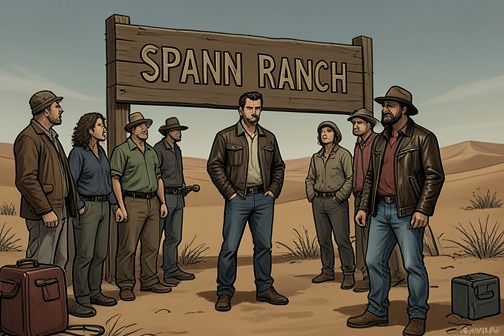
[Terry Melcher’s no-show at Spahn Ranch](entity:event-recall-event-ea0885476327) transformed a long-awaited music audition into a test of [Charles Manson](entity:character-recall-character-charles-manson-c680c7fb9863)’s authority. [The Family](entity:organization-recall-organization-9bffb64ffd84) had prepared for Melcher’s visit as though it might open the door to a musical future; when he failed to arrive, the empty appointment exposed both Manson’s hunger for recognition and the gap between that hunger and the ideals he preached.
## The opportunity and its preparation
By [February 8, 1969](entity:time-recall-time-1969-2-8-b31043acab06), most of Manson’s musical connections had faded. A possible meeting with Melcher remained: Melcher had previously said he would listen to Manson’s songs, although the two had lost contact. Their paths had once crossed through [Dennis Wilson](entity:character-recall-character-dennis-wilson-a607ff02619a), but Manson had become unwelcome at Wilson’s home. One thread still seemed to link them: Manson’s song *[Cease to Exist](entity:expression-recall-expression-cease-to-exist-151077f86972)* had appeared on a new Beach Boys album without credit, and Melcher was among the few people who knew where the song originated. Manson could imagine that Melcher might now regard him as a composer worth recording.
Melcher agreed to come to [Spahn Ranch](entity:location-recall-location-bc8861556ac3) and listen. A date and time were set, the appointment was confirmed, and the people at the ranch organized a celebration around it. The Family decorated the place, practiced with background instruments, and arranged for half-naked women to harmonize and dance. Their preparations made the audition more than a private business meeting: the whole ranch was waiting for the promised visitor, and Manson had spent the week anticipating his chance to perform.
The surrounding soundscape was saturated with popular music. On the previous Friday, [Brandy](entity:character-recall-character-brandy-72ef761c440e) waited for [Cliff Booth](entity:character-recall-character-cliff-booth-49f52393c9a7) at his trailer while Robert Goulet sang *MacArthur Park* on *The [Hollywood](entity:location-recall-location-hollywood-3ce8b1af5069) Palace*. The following morning, Cliff Booth drove along the Sunset Strip as [KHJ](entity:organization-recall-organization-khj-35c69cba13ec) disc jockey Robert W. Morgan greeted early listeners. These details locate Manson’s ambition in a city where songs traveled through television and radio into ordinary routines. Yet the music Manson hoped would carry him to an audience was not merely background: he wanted Melcher to hear him.
## The missed appointment
Manson had reason to remember his earlier professional recording session as a failure of nerve. He had been unable to perform as he wished, and he did not forgive himself for it. This audition seemed to promise a reversal. On the day Melcher was expected, Manson felt calm and ready, confident in his music and his ability to perform it. The contrast sharpened the disappointment: the opportunity arrived, in Manson’s mind, at the very moment he was finally prepared to meet it.
The appointment was set for three-thirty. As that time passed, the minutes accumulated: three-forty, three-fifty, four o’clock, then four-ten, four-twenty, and four-thirty. Melcher did not come. The ranch’s elaborate preparations could not turn the absence into a performance or explain it away. Manson received word that Melcher had been busy and that the failure to appear was not meant as an insult. But no new date followed, and the two men no longer moved in the same circles. A postponement without a rescheduled meeting left Manson with no clear route back to the opportunity.
## What the absence revealed
The missed audition hurt Manson personally and interrupted a performance he believed he was ready to give. It also compromised him in front of The Family. The others wanted the visit to go well, but they had not treated it as though their future depended on it. Manson’s visible anxiety disclosed how much he wanted the approval of a record producer—and how much he wanted fame, money, and recognition, desires he had taught the group to regard as shallow.
The difference between Manson’s investment and the group’s apparent detachment made the failure consequential. He had presented himself as a spiritual guide whose music would serve a purpose beyond personal celebrity. Now some members had their first reason to wonder whether he might instead be another aspiring musician with a guitar, trying to get on the radio. They had not previously understood how much rode on Melcher liking the music or enjoying the occasion. An uncertain business prospect had become a visible weakness in the leader’s carefully maintained image.
The episode also gives shape to a lesson Manson had taught his followers: plans might fail, and what was meant to happen would happen. At the ranch, however, his own distress sat uneasily beside that doctrine. The contradiction is not resolved by the no-show. Rather, the failed appointment lets the group see the private stakes behind the public teaching, while showing how fragile an authority can look when its bearer cannot absorb a disappointment without revealing how much he wanted the outcome.
## From the ranch to [Cielo Drive](entity:location-recall-location-cielo-drive-8763205a8c3b)
With the promised meeting gone and no rescheduling in sight, Manson turned to the last possibility he could think of: going to Melcher’s home on Cielo Drive. He knew the house from earlier visits and parties. Appearing at the gate without an invitation would be poor form, but he could imagine that catching Melcher at home might revive the promise. The move was desperate, and Manson understood that it could be read as desperate. He hoped for a small act of persuasion, enough to make Melcher feel obliged to hear him; without such an attempt, he believed the connection might be lost altogether.
When Manson arrived, the gate stood open, as it did when deliveries were expected. He had anticipated being turned away at the call box beside the driveway; instead, he saw an open entrance. At the house, [Sharon Tate](entity:character-recall-character-sharon-tate-11589427decf) put on a Paul Revere and the Raiders album, *The Spirit of ’67*, found among records left from Melcher’s time there with the band’s lead singer, Mark Lindsay. That later glimpse of the house’s musical residue joins the failed audition to the place where Manson tried to renew the connection, without changing the fact at the center of the episode: the opportunity at Spahn Ranch had already passed without Melcher hearing him.
Event 11
Charles Manson’s visit to Cielo Drive
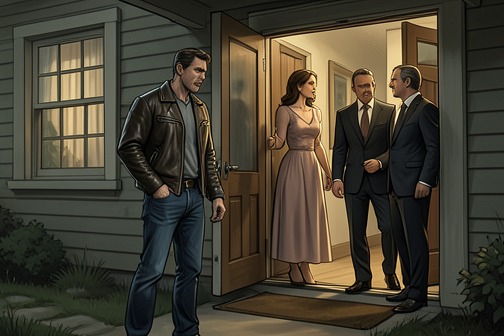
[Charles Manson’s visit to Cielo Drive](entity:event-recall-event-47fcd0b02e5c) is a desperate bid to recover a musical opportunity, not a planned confrontation with the people living there. He arrives looking for [Terry Melcher](entity:character-recall-character-terry-melcher-c6aa95bf594d), only to discover that [Sharon Tate](entity:character-recall-character-sharon-tate-11589427decf) and [Roman Polanski](entity:character-recall-character-roman-polanski-c9827e1a2460) have taken over the house. The visit ends with Manson being told to stay away from the tenants and [Cliff Booth](entity:character-recall-character-cliff-booth-49f52393c9a7) silently watching him leave. Its significance lies in the collision of ordinary domestic routines with Manson’s increasingly frustrated pursuit of access, and in the unease created when an apparently minor encounter is seen from more than one vantage point.
## Causes and Background
Manson has learned that entertainment-industry promises can evaporate: yesterday’s social connection may become today’s passing wave, and an opportunity that once seemed possible may never materialize. Melcher had said he would listen to Manson’s music and owed him after previously standing him up. But Manson can no longer rely on encountering him at [Dennis Wilson](entity:character-recall-character-dennis-wilson-a607ff02619a)’s home. The visit to [Cielo Drive](entity:location-recall-location-cielo-drive-8763205a8c3b) is the remaining chance he can imagine to make contact, and he knows that appearing at Melcher’s house may look desperate. He nevertheless hopes that a personal appeal, softened by a show of humility, will make Melcher feel too guilty to refuse him.
Manson remembers the property from earlier visits and parties there. When he reaches the front of the house, its gate is open, as it often is when deliveries are expected. He had anticipated having to speak through the call box, but the open entrance gives him a choice: drive up the long, winding driveway in the bakery truck or approach the house on foot. He rejects the bolder option. His effort to look unthreatening is deliberate; he wants to arrive with open hands and a smile, leaving as little impression of pressure as possible.
## The House and Its Occupants
The house Manson remembers is no longer Melcher’s. Sharon and Roman now rent it from [Rudi Altobelli](entity:character-recall-character-rudi-altobelli-c9b872e6902f), who lives in the guesthouse. The former occupants and their history remain visible in the setting: Melcher had lived there with Candice Bergen and earlier shared the house with Mark Lindsay of Paul Revere and the Raiders. Sharon has found copies of the band’s album The Spirit of ’67 in a closet and plays it while preparing to leave. The old records make the property’s musical past tangible even as the person Manson seeks has moved on.
Inside, the day is organized around Sharon and [Jay Sebring](entity:character-recall-character-jay-sebring-34254e982f6d)’s plans. Jay, Sharon’s former fiancé, is making himself a sandwich in the kitchen before taking her to his salon, where he will do her hair for a television appearance. After attending a party at Hugh Hefner’s Playboy Mansion the previous night, Sharon and Roman are expected to appear on Playboy After Dark that evening. Sharon is packing and would rather stay home reading Gore Vidal’s Myra Breckinridge than dress up for another public engagement. This routine continues while Manson enters the property, creating a sharp contrast between the household’s private preparations and the visitor’s urgent mission.
## Encounter and Rebuff
Jay notices Manson through the kitchen window as he walks from the driveway toward the front of the house. Sharon, at the far end of the property, does not see him approach. She hears Jay ask if he can help, followed by Manson’s explanation that he is looking for Melcher and is a friend of Melcher and Dennis Wilson. Jay answers that Melcher and Bergen have moved and that the house is now the [Polanski residence](entity:location-recall-location-6691cf8a86e6). Sharon puts down what she is holding and comes to investigate. When Jay identifies Manson as a friend of Melcher’s, he directs him to Altobelli in the guesthouse, who might know where Melcher went.
Manson thanks Jay and turns toward Sharon, greeting her with a wave before following the path to the guesthouse. The exchange is courteous, but it does not bring him closer to the person he wants. Altobelli recognizes Manson without warmth and asks what he wants. Manson explains that he came to see Melcher and has just learned that he moved. When Altobelli confirms that the move happened about a month earlier, Manson kicks at the grass and curses in frustration. He asks for Melcher’s new address or phone number, stressing that he needs to reach him urgently. From Manson’s perspective, the urgency is genuine; Altobelli nevertheless says he cannot help.
Altobelli then makes the boundary explicit: he does not want his tenants disturbed and expects Manson not to bother them again. Manson smiles, claims to understand, and says he does not want to cause trouble. He tries to recover some dignity by suggesting that he will track Melcher down—or that Melcher will find him—and by asking whether he might play Altobelli some songs another time. Altobelli agrees, but the exchange has not reopened the opportunity. Manson leaves with a cheerful farewell after being denied the information he came to obtain.
## Cliff Booth’s View and the Departure
While Manson walks back down the driveway, Cliff Booth is on the roof of [Rick Dalton](entity:character-recall-character-rick-dalton-b598d73dca1d)’s house across the street, repairing Rick’s television antenna with pliers and wire. Cliff had noticed the bakery truck arrive and now watches its driver leave. Manson feels someone looking at him, turns, and sees the shirtless blond man working above the street. The distance prevents either man from getting a clear view of the other, but Cliff does not smile or wave. His fixed stare makes Manson’s own expression disappear.
Manson abruptly answers the silent scrutiny with one of his spasmodic dances and shouted gibberish, then gives Cliff the finger and calls him Jack. He climbs into the [Hostess Twinkies delivery truck](entity:object-recall-object-hostess-twinkies-67b0dc8e8cee), starts it, and drives down the hill from Cielo Drive. Cliff follows him with his eyes and says aloud that he cannot make sense of what he has just seen. The visit thus ends not in violence or a recovered connection, but in an unexplained performance and a wary witness. The ordinary mechanics of the departure—the truck, the antenna repair, the stare across the street—leave the encounter suspended between awkwardness and threat.
Event 12
Recording and release of “Never Learn Not to Love”
[The Beach Boys](entity:organization-recall-organization-the-beach-boys-f45b7096336e)’ recording of [Charles Manson](entity:character-recall-character-charles-manson-c680c7fb9863)’s “[Cease to Exist](entity:expression-recall-expression-cease-to-exist-151077f86972),” retitled “Never Learn Not to Love,” briefly turned Manson’s musical promise into a commercial release. [Dennis Wilson](entity:character-recall-character-dennis-wilson-a607ff02619a) had encouraged his songwriting and helped bring the song to the band, but [The Family](entity:organization-recall-organization-9bffb64ffd84)’s damaging presence at Wilson’s home strained that connection. The song appeared on the Beach Boys’ 20/20 album without Manson’s name on the publishing credit, making the recording both a genuine achievement and an incomplete, compromised entry into the music business.
## Musical Promise and Access
Manson’s prospects rested less on a conventional professional path than on personal access and his ability to hold people’s attention. Wilson, whom the book describes as the Beach Boys’ only genuine rock star, spent late-night sessions with Manson and witnessed his gift for improvising behind a guitar. Wilson was, for a time, sincerely taken with Manson’s musical potential. Their association gave Manson something more substantial than a producer’s vague interest: access to a successful band and, eventually, a place for one of his songs on its album.
The account distinguishes that improvisational ability from the demands of recording. Manson was untrained and undisciplined, and the book doubts that he would have handled the pressure and sterility of a professional studio well. It compares the limits of recordings by Woody Guthrie and Leadbelly as representations of their musical abilities, suggesting that a recording can preserve music without fully conveying the talent that animated it. Manson’s studio prospects therefore remain uncertain even in the counterfactual version of events in which he pursued the Greenwich Village coffeehouse and hootenanny circuit: his guitar skill and prison background might have served him there, but the book does not claim that a sustained recording career was assured.
## The Song’s Recording and Release
Wilson’s support produced a specific result. He recorded Manson’s signature Family song, “Cease to Exist,” after rewriting it under the title “Never Learn Not to Love,” then placed it on the Beach Boys’ 20/20 album. The account establishes the song’s transformation and album appearance, but does not detail a recording-session date, the technical process, or the musicians’ work in the studio. Its emphasis is on the chain of access that carried Manson’s composition into a commercial release—and on the fact that the release did not publicly identify him as its writer.
The possibility of an album of Manson’s own was not limited, in the book’s account, to a deal with [Terry Melcher](entity:character-recall-character-terry-melcher-c6aa95bf594d) at [Columbia Records](entity:organization-recall-organization-columbia-records-b96319e448fb), which it regards as far-fetched. The Beach Boys had their own label, Brother Records, and a Manson album there was conceivable. That possibility is presented as speculation, not as a planned or promised project; the book also doubts whether Manson would have been capable of completing a full album. The single recorded song is consequently the firm achievement, while the larger career that might have followed remains an unrealized possibility.
## The Cost of The Family’s Association
The route to the recording ran through Wilson’s personal association with Manson and The Family. The women first drew Wilson into their orbit; later, genuine fellowship with Manson helped keep him connected. But the arrangement deteriorated as The Family’s members freeloaded at Wilson’s home, damaged it, and cost him thousands of dollars in venereal-disease medication and lost, stolen, or damaged property. Wilson eventually moved out and left his business manager to evict the squatters. The other Beach Boys grew concerned and lost respect for him as the house became, in the book’s pointed description, a zoo.
That breakdown foreclosed the more generous possibilities the recording had seemed to open. The book reasons that, without the disruption at Wilson’s home, Manson might have had a chance to benefit from the band’s new label, while remaining doubtful about what he could have made of it. Instead, the antics of his followers became inseparable from the band’s experience of him. Even when the Beach Boys recorded his composition, they kept Manson off the publishing credit, treating the costly conduct of his acolytes as payment enough. A rumor held that Wilson gave him a motorcycle instead of naming him on the copyright, but the book marks this only as a rumor, not an established exchange.
## A Brief Opening, Then Closure
By [February 8, 1969](entity:time-recall-time-1969-2-8-b31043acab06), the recording had not revived Manson’s wider musical prospects. His connections had dried up, leaving only the vague commitment Melcher had once made to hear him play. Manson had lost contact with Melcher after becoming unwelcome at Wilson’s home, and he understood that this history gave Melcher reason to reject a deal. Yet the album credit offered a slender basis for hope: Melcher was among the few who knew that “Never Learn Not to Love” originated as Manson’s “Cease to Exist,” and could regard him as a composer of commercial music rather than only as the man who had supplied him with young women.
That remaining possibility also failed to materialize. Melcher had agreed to visit [Spahn Movie Ranch](entity:location-recall-location-spahn-movie-ranch-974479b16371), where Manson’s songs were to be played for him; a date and time had been set, the appointment confirmed, and an event arranged at the ranch. Melcher did not show. The recording therefore stands as a real but isolated success: Manson’s work reached a major band’s album through Wilson, while the withheld credit, the collapse of their association, and the failed prospect of a meeting with Melcher left him without a clear next step.
Event 13
Scott and Johnny Lancer arrive in Royo del Oro
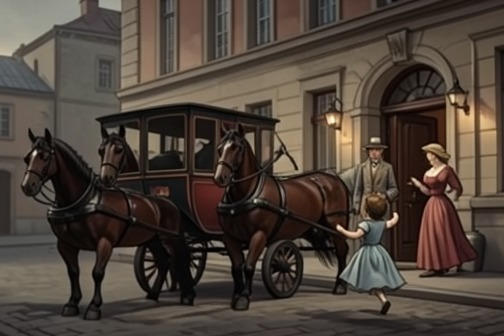
[Scott and Johnny Lancer arrive in Royo del Oro](entity:event-recall-event-d87c4d762b5d) expecting to meet their father, [Murdock Lancer](entity:character-recall-character-murdock-lancer-3672da39bfae), but neither expects to discover that the other has answered the same invitation. Their arrival turns a journey to the ranch into an unexpected family reunion: eight-year-old [Mirabella Lancer](entity:character-recall-character-mirabella-lancer-c5f100cb42e0) recognizes both as her brothers, embraces them before they can agree on what their shared identity means, and leads them toward home. The scene’s comedy rests on a serious divide—Scott and Johnny have different histories, appearances, and reasons for coming, while [Mirabella](entity:character-recall-character-mirabella-9c4fb54c5ccb) treats their presence together as an uncomplicated reason to rejoice.
## The Journey and Its Uncertainty
A Butterfield Wells Fargo stagecoach pulled by six horses rounds the adobe-walled mission and stops outside the Hotel Lancaster, on the dusty main street of [Royo del Oro](entity:location-recall-location-royo-del-oro-eae19cdfb7fd). The town lies sixty miles north of the Mexican border in California. The veteran driver, Monty Armbruster, calls out the last stop as Mirabella and Ernesto, Murdock Lancer’s vaquero, wait to see which of her father’s long-absent sons will emerge. A wire had said that a son had boarded in Tucson two days earlier, but did not identify which one. The coach arrives three hours behind schedule, a delay the narration treats as practically on time for stage travel.
The uncertainty is meaningful because the brothers have never met, although both were born at [Lancer Ranch](entity:location-recall-location-lancer-ranch-69585f57c745). Each had been separated from Murdock since childhood, and each had a different deceased mother. [Scott Foster Lancer](entity:character-recall-character-scott-foster-lancer-f55c2e24d543) was raised by his mother’s wealthy family in [Boston](entity:location-recall-location-ccccb9ca0ba9), graduated from Harvard, and served with the British Cavalry in India. [Johnny Lancer](entity:character-recall-character-johnny-lancer-229e794b7c70)’s journey comes from a far more hostile expectation: he has imagined confronting the father he blames for throwing him and his mother out into the rain. In his thoughts, revenge remains a future possibility, not an action he is ready to take immediately. The stagecoach thus carries two sons toward the same father without making their purposes or expectations the same.
## Two Arrivals, One Recognition
Scott is the first to step down. His bright blue three-piece suit, gold-threaded vest, matching top hat, and careful brushing of dust from his clothes set him apart from the working men Mirabella knows. He walks with a limp and leans on a silver dog-headed cane, yet carries himself with deliberate grace. Mirabella is delighted: the well-dressed stranger looks to her like the brother she expected to greet.
Then Johnny steps out, and the certainty disappears. He is a different kind of striking figure: a handsome, dark-haired cowboy in a sangria-red ruffled shirt, short brown leather coat, studded black jeans, and a short brown hat. He asks Monty for the saddle riding atop the coach and catches it when it is tossed down. Scott, meanwhile, retrieves his embroidered garment bag from the shotgun rider. The contrast is presented through Mirabella’s eyes as she and Ernesto try to decide which passenger to approach. One brother looks like a Bostonian dandy; the other like a roguish cowboy. Both appear to fit the idea of a long-lost brother, and neither is the only son who has come.
Mirabella calls out to Mr. Lancer. Scott and Johnny answer together, then turn toward one another with matching annoyance. Her confusion lasts only until she realizes that both men have arrived. Scott asks what she means by both of them; she explains that the family knew a son was coming, but did not know the brothers would travel together. The coincidence makes their first meeting public and immediate: before either can control the terms of the encounter, the little sister has named the situation for them.
## [The Family](entity:organization-recall-organization-9bffb64ffd84) Revealed in the Street
When Johnny asks who she is, Mirabella identifies herself as Mirabella Lancer and declares that the two men are her brothers. She charges at Johnny and wraps her arms around his waist, knocking him back onto his heels. His reaction is not the welcome she imagines: the reunion he had considered was a confrontation with Murdock, and an ecstatic eight-year-old half-sister was not among the possibilities he had prepared for. Mirabella releases him and embraces Scott in turn, gripping him around the waist as he tries to preserve some decorum and begin a response.
Scott says that his mother never had any other children. Johnny points out that their father evidently did. Scott’s question—whether Johnny means their father—makes the family connection explicit between the brothers as well as for the reader. Neither the shared name nor the journey has made them intimate; they begin by establishing the fact of their relationship in conversation, with Mirabella’s physical affection forcing the revelation into a scene of welcome neither man arranged.
The invitation also gives the reunion a practical edge. Murdock sent Johnny a telegram offering one thousand dollars upon arrival, with fifty dollars wired for his passage. Johnny accepted the journey in part because it offered a chance to face his father, and he tells Scott that he wants the thousand dollars before giving Murdock a belly full of something he leaves unspoken. Scott confirms that he received the same offer. The brothers have therefore been drawn to the ranch by identical terms, though the scene does not make their reasons identical: Johnny openly connects the money to a long-standing grievance, while Scott’s response here is limited to confirming the offer.
## From the Street Toward the Ranch
The reunion does not resolve that grievance or turn the brothers into allies. Mirabella simply tells them that the ranch is where they are going and begins to lead the way, with Ernesto beside her. Scott lifts his valise by hooking its handle over his silver dog-headed cane; Johnny throws his saddle over his shoulder. The different burdens make the brothers’ contrasting entrances visible even as they fall into the same route behind their sister.
Mirabella warns them that Murdock may not act pleased at first and can be stubborn, but insists that he is happy they have both come. Johnny answers with sarcasm, and Scott agrees that he shares his brother’s doubts. When Mirabella gestures toward the wagon and asks whether they can go, the men exchange a look that leaves their disagreement unresolved. For her sake, they drop their fighting stance; Johnny gestures toward the wagon and tells her to lead the way. The scene ends not with reconciliation between father and sons, but with all three siblings moving toward the ranch together. Mirabella’s uncomplicated welcome has not erased the brothers’ mistrust, but it has given them a reason, however provisional, to travel side by side.
Event 14
Marta Lancer’s murder
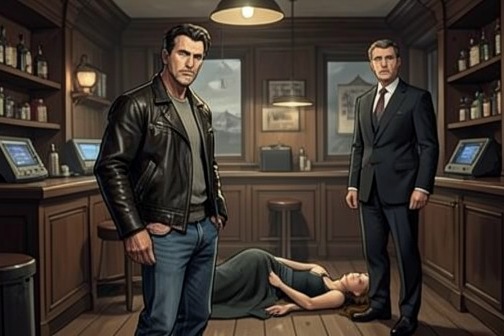
[Marta Lancer’s murder](entity:event-recall-event-14f6b4b9981e) in [Ensenada](entity:location-recall-location-4724e2feff2e) transformed her flight from the [Lancer Ranch](entity:location-recall-location-lancer-ranch-69585f57c745) into a lasting family catastrophe: her son Johnny buried her at twelve, and her killer’s acquittal set him on a course of revenge. The account joins the violence of her death to the social and economic descent that followed her departure from her husband, [Murdock Lancer](entity:character-recall-character-murdock-lancer-3672da39bfae).
## Flight, Exile, and Murder
Marta left the Lancer Ranch with Johnny when he was ten, taking him across the border to [Mexico](entity:location-recall-location-mexico-6f79111cb935). The boy had grown up as the son of a wealthy rancher, with a private tutor, meals prepared by a French chef, and a feather bed. In exile, the two lived in poverty, and Marta earned money dancing and having sex in cantinas. Johnny’s childhood narrowed to the precarious life of the border towns, where he slept in cantina back rooms and learned to protect himself from nighttime dangers.
Two years after their flight, a dissatisfied customer slit Marta’s throat in the back room of an Ensenada cantina. Johnny was twelve. He dug her grave in the hard-packed ground and marked it with a wooden cross bearing her name. The murder thus left him not only without his mother but also responsible, as a child, for the act of burying her.
## Acquittal, Revenge, and Murdock’s Search
The killer was a wealthy man from Mexico City, and his trial offered no justice for Marta: a biased jury acquitted him. Two years after her murder, Johnny killed the man himself. Revenge continued beyond that act; over the following decade, Johnny hunted down and killed every member of the jury as well, turning a verdict that had protected his mother’s killer into a list of targets.
Meanwhile, Murdock Lancer searched for his missing son. After five years, a Pinkerton detective found Marta’s grave in an Ensenada boot-hill cemetery. The wooden cross, with her name carved into it, showed Murdock that Johnny had survived long enough to bury her. Murdock traveled to Ensenada, where the last record of his son was Johnny’s appearance at the murder trial. He kept searching, but never found him; when Murdock finally paid the detective agency its last check, he had reached the bitter conclusion that Johnny was dead.
## A Death Framed as Release
The account gives Marta’s death a meaning distinct from the vengeance it sets in motion for Johnny. In its portrayal of her last years, she had come to see life in cantina back rooms and whorehouses as a form of self-degradation, bound up with remorse over the transgression that had preceded her flight. Her death is presented as an end to that shame and as a possible passage toward the forgiveness she hoped to find through Jesus Christ. The imagined peace offers no earthly justice: it belongs to Marta’s private hope, while the murder trial leaves her killer acquitted.
That release is sharply contrasted with Murdock Lancer’s aftermath. He never found peace with his sons lost to him; Scott was at least known to be safe and well cared for, while Johnny’s fate remained uncertain. Marta’s murder therefore closes her own story in the narrator’s religiously inflected account but deepens the rupture within the Lancer family, leaving Murdock to live with a loss he could neither repair nor resolve.
## From Private Loss to Public Legend
The murder’s afterlife extended beyond the revenge already carried out: about fifteen years later, Californians heard of [Johnny Madrid](entity:character-recall-character-johnny-madrid-ad2f58e21cfa) as a feared gunfighter on the Mexican side of the border. Known in the pueblos he passed through as El Asesino de Rojo for the fancy red ruffled shirt he always wore, he acquired a public identity built around lethal speed and accuracy. Yet his mother’s death did not resolve his family grievance. Johnny still contemplated killing Murdock Lancer for driving him and Marta away, but knew that killing his father could bring a hanging; he let that target wait while he pursued other work and pleasures. The murder thus persists as both the origin of Johnny’s reputation and an unfinished private reckoning.
Event 15
Johnny Lancer’s revenge for his mother
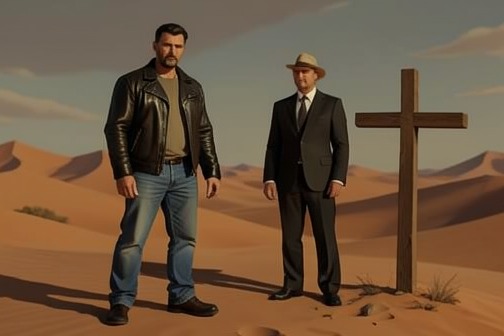
[Johnny Lancer’s revenge for his mother](entity:event-recall-event-c484d6a82860) is the formative chain of killings that turns a bereaved boy into the feared gunfighter [Johnny Madrid](entity:character-recall-character-johnny-madrid-ad2f58e21cfa). After [Marta Lancer](entity:character-recall-character-marta-lancer-2c8d861bb130)’s wealthy killer escaped conviction, Johnny pursued a private reckoning: he killed the man two years after the murder, then spent a decade killing every juror who had acquitted him. The revenge answers a failure of justice with violence, while shaping the identity by which Johnny becomes known far beyond his family’s ranch.
## The murder and the failed trial
Johnny was twelve when he buried his mother in hard-packed earth. Marta had taken him away from [Lancer Ranch](entity:location-recall-location-lancer-ranch-69585f57c745) when he was ten, and they had lived precariously on the Mexican side of the border. A wealthy customer from [Mexico](entity:location-recall-location-mexico-6f79111cb935) City slit her throat. He stood trial, but a biased jury acquitted him, leaving Johnny with the loss of his mother and no legal redress.
The sequence makes the trial more than an unsuccessful prosecution: the account presents the verdict as an injustice Johnny will answer himself. His revenge is directed not only at the man who killed Marta but also at the jurors whose decision let that man go free. The target list thus grows from a single murder into a prolonged reckoning with the people who, in Johnny’s view, enabled impunity.
## The revenge killings
Two years after the acquittal, Johnny killed his mother’s murderer. That act began, rather than completed, his retribution. Over the next decade he killed every member of the jury that had found the wealthy defendant not guilty. The long interval distinguishes the revenge from a single impulsive attack: the narrative describes a sustained course of retaliation, carried out over years and directed at each juror in turn.
The account does not give the individual circumstances of those later killings. Its emphasis instead falls on their cumulative completion: none of the acquitting jurors remained outside Johnny’s revenge. The progression from the killer to the jury makes the original verdict the continuing cause of violence, even after the immediate perpetrator has been killed.
## Johnny Madrid and the consequences
About fifteen years later, the reputation of a half-white, half-Mexican gunfighter named Johnny Madrid reached California. He was feared for his speed and skill with a pistol, and people in the pueblos he passed through called him El Asesino de Rojo, the Murderer in Red, after his elaborate red ruffled shirt. The text places this public identity in the wake of the boy’s loss and revenge, showing how a private family tragedy has become part of the stories told about a notorious gunman.
Johnny’s history also remained unknown to his father for years. A former Pinkerton detective eventually sent [Murdock Lancer](entity:character-recall-character-murdock-lancer-3672da39bfae) word that his long-lost son was alive and living under the name Johnny Madrid. Murdock wept for three days, though no one at the ranch understood why. The revelation reconnects Johnny’s life as a feared gunfighter to the family from which he had been separated, while the revenge itself remains the defining history that precedes his return to his father’s orbit.
## Narrative significance
The episode sets formal justice against personal vengeance. The killer’s acquittal does not end the matter; instead, the verdict expands Johnny’s grievance from the murderer to the jury and gives the violence a decade-long afterlife. The revenge also supplies the history behind Johnny Madrid’s reputation, so that his name reaches California before his father can know that the missing child has survived. His later identification as Murdock’s son therefore arrives with a past already marked by bereavement, retaliation, and a public legend of violence.
Event 16
Caleb’s kidnapping of Mirabella
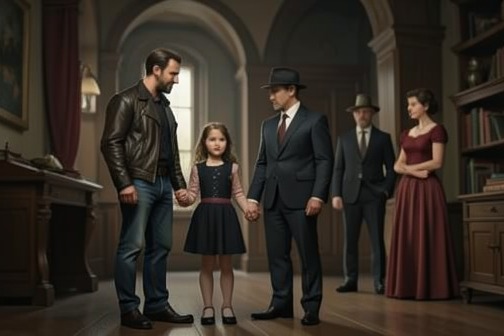
[Caleb DeCoteau](entity:character-recall-character-caleb-decoteau-960d69955c5b)’s kidnapping of [Mirabella Lancer](entity:character-recall-character-mirabella-lancer-c5f100cb42e0) is the decisive crisis in the Lancer pilot’s story-within-the-story: he takes the eight-year-old and holds her for a $10,000 ransom, turning a ranch conflict into a test of family allegiance and identity. The abduction forces [Johnny Lancer](entity:character-recall-character-johnny-lancer-229e794b7c70), who has been drawn into the struggle against Caleb, to choose between a man he knows and likes and the father and family he has reason to hate.
## Background and Stakes
[Mirabella](entity:character-recall-character-mirabella-9c4fb54c5ccb) is [Murdock Lancer](entity:character-recall-character-murdock-lancer-3672da39bfae)’s eight-year-old daughter. Her place in the family carries a history of loss: her mother died after being thrown from a strawberry roan horse, and Murdock shot the horse after returning from the funeral. The kidnapping therefore threatens not an abstract hostage but a child whose family already bears the consequences of an earlier death.
The pilot initially sets up a familiar Western conflict: Murdock brings his estranged son Johnny to town to defend the ranch against Caleb and his men. The abduction makes that conflict personal and sharply raises its stakes. Caleb holds Mirabella for $10,000, while her brother Scott Lancer becomes the person with whom [Rick Dalton](entity:character-recall-character-rick-dalton-b598d73dca1d)’s character negotiates the ransom.
## The Abduction as a Turning Point
Caleb’s seizure of Mirabella is identified as the story’s emotional turning point. Before it, the conflict can be understood as a defense of the ranch against an outside threat; with the child held for ransom, the danger presses directly on the Lancer family and demands a choice from Johnny.
The kidnapping changes the direction of the pilot rather than merely adding another threat. It supplies the catalyst that ultimately pushes Johnny toward the Lancers’ side, making the rescue crisis the hinge between his old loyalties and his possible place in a newly found family.
## Johnny’s Divided Loyalties
Johnny’s choice is complicated by the concealed relationship between him and Caleb: the two men already know and like each other, though nobody at the ranch is aware of their connection. Johnny likes Caleb far more than he likes his father, Murdock, whom he blames for his mother’s death. He has carried the desire to kill Murdock since burying his mother in the soil of [Ensenada](entity:location-recall-location-4724e2feff2e) eighteen years earlier.
Caleb is already carrying out the revenge Johnny once imagined for himself. Mirabella’s kidnapping consequently places Johnny between an ally whose actions advance that old grievance and the family he has reason to oppose. His dilemma is both practical—whose side to take—and fundamental: whether he is Johnny Lancer, tied to the family, or [Johnny Madrid](entity:character-recall-character-johnny-madrid-ad2f58e21cfa), defined by the identity and revenge he has carried apart from it.
## Resolution and Narrative Function
The account identifies the kidnapping as the emotional catalyst that eventually moves Johnny to the Lancers’ side and sets him on course to appear in a weekly Western television series alongside his newfound family. It establishes the pilot’s central reversal: the son brought in to defend his father’s ranch does not begin as a loyal family member, and his bond with the antagonist makes choosing the family a consequential change rather than an automatic duty.
The event belongs to the Lancer plot being discussed within the book’s account of a television production. Rick Dalton is due to perform a scene negotiating the ransom with Scott while Mirabella sits on his lap, a pistol barrel pressed against her temple. That staged encounter gives the kidnapping a concrete dramatic image, while the larger plot assigns it a structural purpose: the child’s peril turns Johnny’s divided past into a choice that can bring him into the family.
Event 17
Rick Dalton’s on-set emotional breakdown
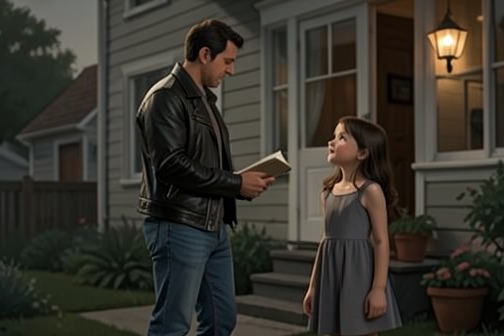
[Rick Dalton’s on-set emotional breakdown](entity:event-recall-event-915daa16d306) begins when he tries to explain a paperback western to [Mirabella Lancer](entity:character-recall-character-mirabella-lancer-c5f100cb42e0) and discovers that the story’s aging hero has become an unwitting stand-in for his own fears. The scene turns an ordinary conversation between takes into a moment of involuntary self-recognition: Rick cannot say that the fictional cowboy is becoming useless without sobbing, while [Mirabella](entity:character-recall-character-mirabella-9c4fb54c5ccb), still thinking about the book and his costume, tries to comfort him.
## The book and the conversation
Rick tells Mirabella about *Ride a Wild Bronc*, a novel by Marvin H. Albert, whose *Apache Rising* Rick had liked. He recalls that the earlier book was adapted into *Duel at Diablo*, a film he considered mediocre, but his account here is less a literary review than an attempt to put a story in order for a listener. The novel follows Tom Breezy, known as Easy Breezy, a bronco buster who in his youth could break any horse. Rick explains that Easy’s old mastery no longer defines him and that he is now confronting what it means to become less capable.
That explanation takes Rick outside a familiar private habit. He has read western paperbacks since he was twelve, often between takes or in his trailer while waiting to be called to set. He returns to westerns even when he varies his reading with detective stories, mysteries, or [World War II](entity:time-recall-time-world-war-ii-d4353dde1684) adventures. He can recall favored authors, including Albert, Elmore Leonard, T. V. Olsen, and Ralph Hayes, more readily than the generic titles of the books themselves. Reading has been solitary; although people may have asked what he was reading, he has not been accustomed to retelling a book’s plot. Mirabella’s question therefore asks him to make public what has usually stayed with him alone.
## The word he cannot say
As Rick searches for a description of Easy Breezy’s predicament, he begins to call the character increasingly useless. The word catches in his throat. On another attempt, he manages to say that Easy is becoming useless with each passing day, and then tears run down his face as he folds over. The break is abrupt: a simple description of a fictional man’s decline opens directly onto Rick’s own distress.
Rick is startled and embarrassed to be crying in front of a child. He wipes his eyes roughly with his fist and tries to laugh off the moment, attributing his choking up to age and to being moved by things. His self-conscious joke does not erase the force of the episode. The book’s premise has supplied him with a phrase for a fear he cannot keep at a safe distance: the possibility that the abilities and professional usefulness on which a life has rested are fading.
## Mirabella’s comfort
Mirabella leaves her director’s chair, gets down on her knees beside Rick, and pats his right kneecap to comfort him. She understands his tears through the story he has just described, sympathizing with Easy Breezy and saying, in effect, that the book sounds sad even before she has read it. Her response is tender but also distinctly childlike: she treats Rick’s distress as a reaction to the cowboy’s misfortune, not as a confession about his own life.
Rick answers that she will understand when she is fifteen. The remark turns their difference in age into a quiet contrast: he has recognized his future in the worn-out bronco buster, while she is still meeting that sadness as a story. Her reassurance gives the scene a temporary gentleness, but it cannot make the identification disappear. Rick has not deliberately set out to discuss his career; the emotion arrives while he is simply trying to explain what happens in a book.
## The [Caleb DeCoteau](entity:character-recall-character-caleb-decoteau-960d69955c5b) look
The conversation returns to Rick’s appearance as Caleb DeCoteau, the heavy in the Lancer pilot. Mirabella takes in his hairy face and brown, fringed rawhide jacket and approves of the look. She explains that although she had not initially thought it would work, the more she considers it, the more she likes it: to her, the hippie quality is simultaneously sexy, creepy, and frightening, a combination that makes sense for Caleb. Her response gives Rick a child’s unusually direct reading of the character’s visual design, following immediately on the emotional scene in which she has comforted the actor beneath it.
The casting gives the exchange a wider professional context. [Sam Wanamaker](entity:character-recall-character-sam-wanamaker-c9b7192e0073) chose a recognizable television cowboy for Caleb rather than the younger Joe Don Baker, finding the idea of subverting Rick’s familiar image too compelling to pass up. The pilot’s [Johnny Lancer](entity:character-recall-character-johnny-lancer-229e794b7c70), played by [Jim Stacy](entity:character-recall-character-jim-stacy-a3b08e77ad78), is positioned as a darker, more dubious kind of western lead, and Caleb’s defeat by Johnny would set that contrast in motion. Rick is thus playing the heavy in a series trying to depart from the reassuring conventions of shows such as *Bonanza* and *The Big Valley*. His breakdown does not arise from that dramatic premise alone, but the role’s emphasis on aging, image, and changing western conventions gives the moment an added resonance: the actor explaining a declining cowboy is himself confronting what it might mean to become less useful in the profession he inhabits.
Event 18
Sharon Tate watches The Wrecking Crew
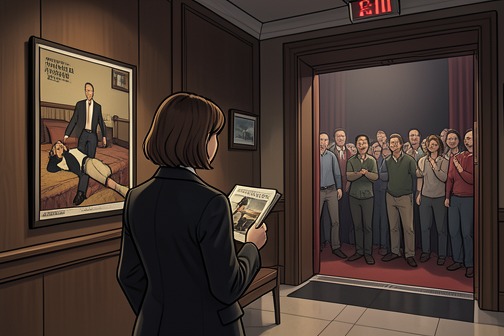
[Sharon Tate](entity:character-recall-character-sharon-tate-11589427decf)’s afternoon screening of The Wrecking Crew at the [Bruin Cinema](entity:location-recall-location-7d662eaaa954) makes the movie theater both a place of work and a place of judgment: she watches a performance she remembers making, then discovers what it does to an audience. The decisive moment is not simply seeing herself on screen, but hearing the matinee crowd laugh at the pratfall she had feared she might fail to land.
## A detour on Westwood Boulevard
After leaving Arthur’s store with a rare first edition in her hand, Sharon walks along Westwood Boulevard toward the cinema where her movie is playing. She reaches the corner but misses the green light, waiting with her back to the theater and the book still in her hand. When the light changes, she does not cross. Instead, something draws her back into the Bruin’s courtyard, where she examines the lobby cards: one pairs Dean Martin with Elke Sommer; others show Sharon with Martin, first peering over a wall and then in her comic entrance, sprawled on a hotel-lobby floor as he bends to help her.
The cards return her to the circumstances of the performance. She remembers how nervous she was to attempt slapstick, a kind of acting none of her earlier jobs had required. Her character’s clumsy, bumbling manner was not an incidental gag but the part’s defining idea. She had accepted the role for that reason, yet the first fall still troubles her in retrospect: Martin had spent twenty years watching Jerry Lewis fall, and she worried that he would know if she got the business wrong. Director Phil Karlson and Martin had praised the pratfall, but their gentleness left room for doubt. Sharon wonders whether she is genuinely funny or merely the familiar screen image of a beautiful woman trying to be funny. Her own answer is practical: the audience will decide by laughing or not.
## Choosing to see herself
The decision to enter the theater comes with a clock attached. The box-office window lists a 3:30 show, while Sharon’s thin gold watch reads 3:55. She calculates that this is approximately when she appears in the film and asks herself whether she can still watch it and get ready for Playboy After Dark that evening. The question also exposes a conflict between the spontaneous person she has just told herself she is and the person who stalls on the sidewalk, debating whether to see her own movie. She recalls that, without [Roman Polanski](entity:character-recall-character-roman-polanski-c9827e1a2460), she would be driving to Big Sur with [Cheyenne](entity:character-recall-character-cheyenne-a49d3da68804), dancing barefoot in the mud to Crosby, Stills and Nash. Now she recognizes the irony of standing still to argue herself out of an opportunity to act spontaneously.
She buys a ticket for seventy-five cents. As she enters the dark auditorium, the projector’s rotating reels and the small, regular ticks of the 35mm print passing through the film gate give her immediate pleasure. That mechanical sound connects the public screening to a longer history of watching movies. As a girl in Texas, she had gone to the theater on her father’s Army base, to the Azteca with friends, and to the Starlight Drive-In with a boy. Then movies had meant entertainment, not art. Living with Roman Polanski has changed her understanding: she now believes film can be art, and that a director can work with a force comparable to a great author. She regards Roman Polanski’s Rosemary’s Baby as a different kind of art from Thomas Hardy’s Tess of the d’Urbervilles, not as a lesser one.
## The entrance and the audience’s verdict
Before the screening, Sharon hopes she has not missed her entrance while dealing with the box-office girl. On screen, Freya Carlson comes running into the scene carrying champagne and calling for Mr. Helm. When Martin turns, she trips over his camera case and lands flat on her backside. It is the pratfall that had seemed so exposed in memory: the first entrance of a character whose comedy depends on physical awkwardness, performed under the gaze of a star associated with slapstick.
The Bruin audience responds with a collective belly laugh. Sharon turns around in her seat to look at the smiling faces, wishing she could thank each person individually. Their laughter answers the question the lobby cards and her recollection could not settle. It does not erase the anxiety she felt while making the scene; instead, the screening gives that uncertainty a public measure. The moment she had privately replayed as a possible failure becomes, in the theater, a successful gag shared with strangers.
## A changed relation to the performance
Once she has seen the response, Sharon turns back to the screen grinning. She unzips her white go-go boots, slips out of them, stretches her long legs over the back of the chair in front, and settles in to enjoy the rest of the movie. The small change in posture marks a release from the tension of waiting for the verdict: she is no longer watching only for the moment she might have got wrong, but allowing herself to watch the film.
The scene brings together several versions of Sharon’s relation to movies. She is the actress whose comic work is on display, the former casual moviegoer who learned to think of film as art, and the spectator who tests her own performance against an audience’s response. Her visit is unplanned, but its result is concrete: the laughter confirms that the awkward fall works, and she leaves the anxious question of whether she can be funny behind long enough to enjoy The Wrecking Crew.
Event 19
Cliff Booth’s Escape from the Japanese POW Camp
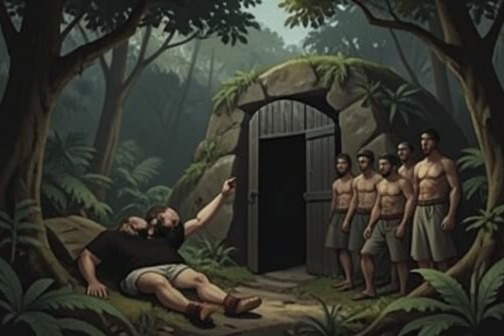
[Cliff Booth](entity:character-recall-character-cliff-booth-49f52393c9a7)’s escape from a Japanese POW camp is both a wartime feat and a story repeatedly altered by survival and cinema. Captured in the Filipino jungle after serving in [Sicily](entity:location-recall-location-6dbf0db69dc8) and then fighting alongside [Filipino guerrillas](entity:organization-recall-organization-63bc6661ced2), Cliff believed he was a walking dead man. Instead, he led the prisoners in overthrowing their captors and escaping into the jungle—a reversal that left him alive, decorated, and unsure what to do with the life he had expected to lose.
## Capture and the stakes
Before the escape, Cliff had already spent years expecting death. During [World War II](entity:time-recall-time-world-war-ii-d4353dde1684), he served in Sicily, where he thought it likely he would die. His transfer to [the Philippines](entity:location-recall-location-8b86fdcbfca5) to fight alongside Filipino guerrillas against the occupying Japanese military did not reassure him; he became convinced he would never see home again. Capture and confinement in a makeshift POW camp in the jungle deepened that expectation until he considered himself effectively dead.
That sense of finality shaped the risk of escape. The account presents Cliff’s willingness to attempt it as bound up with his belief that he had little life left to protect. The outcome was not simply release from captivity: the prisoners had to overturn the camp’s control, survive the escape into the jungle, and find their way back to the resistance. Their escape changed Cliff’s position from a man who had already given up on returning home to a survivor facing the unfamiliar problem of what came next.
## The escape and its outcome
Cliff led the Filipino prisoners in overthrowing their Japanese captors. The prisoners executed the camp personnel, escaped into the jungle, and rejoined their fellow resistance fighters. The account makes the violence of the reversal explicit: the captives who had been subject to the camp’s power turned that power against the people holding them. Their escape was daring and successful, but it was not presented as bloodless or as a solitary feat by Cliff; the Filipino prisoners acted with him and made the collective escape possible.
The episode became part of Cliff’s distinguished military career. After the war, he was discharged with money and two Medals of Valor. Yet survival brought an unforeseen consequence: he had to make choices about a future he had not expected to have. He was not in a hurry to return to the United States, and after discharge he decided to visit [Paris](entity:location-recall-location-657453741ed3). The escape thus sits at a hinge in his life: it ends the immediate threat of the camp but does not supply a purpose for what follows.
## A wartime event remade as a film
The escape was adapted by [Columbia Pictures](entity:organization-recall-organization-columbia-picture-c6ed2b2a0657) into Battle of the Coral Sea, directed by [Paul Wendkos](entity:character-recall-character-paul-wendkos-a9e50cd818fc). The film turned the incident into an action story about an American submarine crew led by its captain, played by Cliff Robertson. [Rick Dalton](entity:character-recall-character-rick-dalton-b598d73dca1d), before he knew Cliff Booth, played one of Robertson’s men. The cinematic version therefore preserved the shape of a heroic escape while replacing the people who carried it out: Cliff and the Filipino prisoners were absent from the movie’s account.
The differences extended beyond casting. The film omitted the Japanese practice of decapitating most of the prisoners and did not show the survivors decapitating the camp personnel after the tables turned. It also portrayed the Japanese commander as sophisticated, debonair, intellectual, and honorable, unlike the brutal figure in the real events. Cliff thought the movie’s portrayal made its enemy so appealing that it nearly invited sympathy for the Japanese captors. The film was entertaining, but its dramatic polish came at the cost of the escape’s actual participants and much of its brutality.
The adaptation was not wholly detached from what happened. The account says the details of the escape itself were more or less accurate, even as the film substituted an American crew and reshaped the people and violence around it. That distinction gives the movie a double relation to the event: it carried the escape into popular cinema, but credited its heroism to fictionalized American protagonists rather than Cliff and the Filipinos who had achieved it.
## Survival and its afterlife
The escape’s aftermath begins with an irony: Cliff’s survival, once improbable, became inconvenient because he now had to decide how to live. His military service made him a celebrated war hero within [Hollywood](entity:location-recall-location-hollywood-3ce8b1af5069)’s stunt community, but the escape did not settle his postwar direction. The narrative moves from captivity and resistance to discharge and uncertainty, emphasizing the gap between surviving an ordeal and knowing what to do with survival.
Its cinematic afterlife also complicates the meaning of recognition. A film based on the escape made the story visible while removing Cliff and the Filipino prisoners from its central heroic roles. Cliff later discussed the movie with Rick, who loved it, and objected to the way it represented the enemy and displaced the real people involved. The event therefore functions in the book as both a formative episode in Cliff’s biography and a contrast between lived history and the version entertainment preserves: the escape was collective and violent, while its screen legend recast it as an American submarine adventure.
Event 20
Cliff Booth’s Cleveland pizza-shop double killing
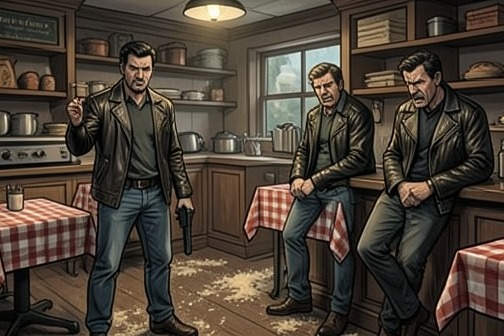
[Cliff Booth’s Cleveland pizza-shop double killing](entity:event-recall-event-e147f6505893) turns an ordinary meal into a blunt demonstration of how easily violence can pass for justice when the killer’s reputation serves him better than evidence. After two mob enforcers threaten Abigail Pendergast, Cliff shoots them in public and persuades police that he acted in self-defense; the episode becomes, as the narration puts it, the first time he gets away with murder.
## Background and Confrontation
After deciding he was not suited to being a pimp, Cliff returned to the United States, drifted around the country for several years, and eventually reached [Cleveland](entity:location-recall-location-cleveland-dc87747d7e07). There he sought out Abigail Pendergast, an old high-school acquaintance who was one of the mistresses of Rudolfo “Patsyface” Genovese, a Mafia-connected hoodlum. They met in a Gay Nineties pizza joint, where sawdust covered the floor, checkered tablecloths covered the tables, a player piano supplied the music, and a Charlie Chaplin film played on the wall. The casual, almost theatrical setting would soon become the scene of a double killing.
As Abigail reached for a napkin, she noticed Pat Cardella and Mike Zitto at the bar, drinking beer and making faces toward their table. She told Cliff that the men worked for Rudy and would eventually come over to chase him away. Cliff turned to look at them despite her protest; they answered with an unmistakable hostile stare. Rather than leave, he went on eating. When the two men approached, Cliff told Abigail to go into the ladies’ room and lock the door, removing her from the confrontation before it began.
## The Warning and the Medal
With Abigail safely out of the dining room, Mike took her empty chair while Pat dragged over another; Cliff kept eating as they settled in across from him. Pat ordered him to leave and warned that if either man saw him around Abigail again, he would spend a long time in the hospital. Mike reinforced the threat by asking whether Cliff understood. Cliff pointed between them to confirm that the warning came from both men. When Mike identified them as Italian, Cliff answered with a question about how many Italians he had killed.
Cliff drew out his Medal of Valor and dropped it on the table with a bang. He said that on the day he earned it he had killed at least seven Italians, possibly nine, and that he had killed Italians every day during his long service in [Sicily](entity:location-recall-location-6dbf0db69dc8). The medal made his wartime record an object lesson for the two men: Cliff presented his killing as the very thing that had made him a hero. He then linked that status to his license to carry a gun, laying a snub-nose .38 beside the medal. His warning was no longer merely a boast about the past; the weapon made clear that he was prepared to use lethal force in the restaurant.
## The Shooting and Its Aftermath
Cliff made the threat explicit: he said his wartime record had earned him the standing of a hero and the right to carry a gun, and that he could shoot both men in the restaurant and get away with it. Pat and Mike reddened, but when Mike began to answer, Cliff snatched the snub-nose .38 from the table and fired once into each man’s skull. Customers screamed and dropped to the floor; the two men toppled from their chairs onto the sawdust. Cliff then shot each of them twice more. The killing followed his boast almost literally, converting the Medal of Valor and the pistol beside it from props in a warning into the instruments of a public double homicide.
When the Cleveland Police Department questioned him, Cliff supplied a self-defense account: he said the men had tried to kidnap him and Abigail, and that the heavier one had threatened to shoot him and throw acid in her face. He presented himself as frightened and unsure what to do. The account was his version of events, not an independently established explanation of the shooting; the narrative makes clear that his story needed to be plausible, not necessarily convincing.
The police knew who Pat Cardella and Mike Zitto were. In the book’s account, that knowledge and Cliff’s status as a World War Two hero tilted the encounter with the law in his favor: the officers accepted a plausible justification for killing the two gangsters. The chapter names this his first escape from murder charges, a distinction that places the Cleveland shooting within a larger pattern. In the [Hollywood](entity:location-recall-location-hollywood-3ce8b1af5069) stunt community, people likewise suspected that Cliff had deliberately killed Billie Booth, although the authorities had labeled her death a misadventure because his account of a diving accident could not be disproved. In both cases, suspicion and responsibility remained distinct from what officials could establish; the outcome depended on a story that the evidence could not readily defeat.
The two episodes are not identical: in Cleveland, Cliff killed openly and immediately invoked the protection he believed his war-hero status afforded him, while Billie’s death had been ruled an accident after the fact. But together they sharpen the episode’s central irony. Cliff’s reputation for military service, admired by some and feared by others, does not merely accompany his violence; it helps him survive its legal consequences. The restaurant killing therefore marks not just a confrontation settled by gunfire, but the first demonstrated instance of a method that his plausible stories and the authorities’ limited knowledge could make effective.
## The Earlier Case and the Meaning of Plausibility
The Cleveland shooting also casts light on why Cliff’s earlier account of Billie Booth’s death could survive official scrutiny. The Hollywood stunt community admired his military service but widely suspected that he had murdered his wife. Many of its members had seen Billie drunkenly berate him in public, and Cliff himself told authorities that she had been drinking when she died. Investigators who did not know her lacked the context that stuntmen and their wives believed made that detail significant; suspicion among acquaintances, however, was not proof of what had happened on the boat.
Cliff’s own account of his responsibility was as compromised as his public defense. He treated the shooting as an impulsive act rather than a planned murder, dwelling on whether his finger had pulled the trigger by conscious choice or by instinct, and on whether the movement was closer to a twitch. He felt regret, yet still tried to avoid prison, reasoning that remorse and self-punishment could stand in for legal accountability. The authorities, less aware than the stunt community of his violent tendencies, faced an event with no surviving witness besides Cliff: they could not readily disprove his explanation of a mishandled diving accident. The Cleveland case makes that earlier evasion newly legible—not as proof of what happened to Billie, but as a second instance in which a plausible story and a favorable public identity separated suspicion from legal consequence.
Event 21
Johnny Madrid’s revenge killings for his mother
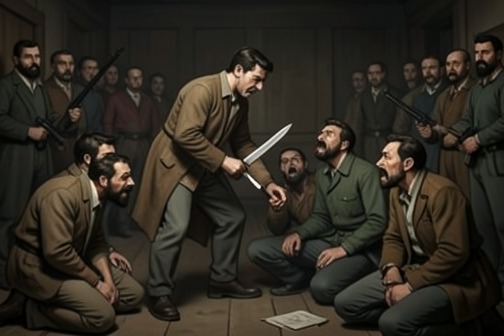
[Johnny Madrid’s revenge killings](entity:action-recall-action-12fc3e418a79) turn his mother’s murder and the legal acquittal that followed into a decade-long campaign of retribution. The killings avenge [Marta Lancer](entity:character-recall-character-marta-lancer-2c8d861bb130), but they do not settle Johnny’s grievance: when the thirteen jurors are dead, his father remains the last person he believes must pay.
## The verdict and the first killings
Johnny’s hatred of [Murdock Lancer](entity:character-recall-character-murdock-lancer-3672da39bfae) is rooted in what he sees as his father’s responsibility for Marta’s degradation and death. Murdock had thrown Johnny and his mother out into the rain; Johnny also held him responsible for putting Marta in the circumstances that led to another wealthy man slitting her throat. When Johnny was twelve, that man stood trial for Marta’s killing and was acquitted. Two years later, Johnny killed him. He then turned his vengeance on the jurors who had freed the man, making their deaths a prolonged answer to the verdict.
## A decade of retribution
Johnny made the jurors’ deaths answer the manner of his mother’s killing. He slit their throats so they would experience her terror: blood filling their mouths, speech failing, and death arriving slowly as they looked up at him. He smiled at their agony and told each that Marta was greeting them. The violence was not simply a tally of revenge; Johnny made each killing a staged reenactment of the death for which the jury had refused to impose punishment.
The campaign took ten years and claimed all thirteen jurors. Its duration turned the original acquittal into a continuing project, each death extending the sentence Johnny believed the court had evaded. When the last juror was killed, he considered Marta avenged—but the campaign had not erased the grievance that began with his father’s role in her life and death.
## The unfinished reckoning
The jurors’ deaths left Murdock Lancer as the final person Johnny believed responsible for his mother’s suffering, but the revenge campaign converged with a new and incompatible prospect. Murdock offered to divide his cattle, land, ranch house, and bank accounts among his two sons and himself, provided they helped drive [Caleb DeCoteau](entity:character-recall-character-caleb-decoteau-960d69955c5b)’s men from the area and worked the ranch for ten years. For Johnny, accepting meant entering a bargain with the father he still wanted to punish; refusing meant walking away from a fortune he could not make in ten lifetimes.
The offer also placed the old grievance inside an active conflict: Caleb’s land pirates were taxing [Royo del Oro](entity:location-recall-location-royo-del-oro-eae19cdfb7fd)’s businesses, and the killing of Murdock’s trusted ramrod, George Gomez, had pushed Murdock to seek his sons’ help. Johnny carried an additional secret into this arrangement: he and Caleb were friends. Thus the years of vengeance had settled one account but left Johnny poised between another, his father’s wealth, and an alliance hidden from the people whose side he had ostensibly joined.
## Justice outside the courtroom
The killings belong to a wider pattern in which formal judgment and actual accountability come apart. The man who killed Marta was acquitted, leaving Johnny to make the jurors—not a court—answer for the verdict. Elsewhere, [Cliff Booth](entity:character-recall-character-cliff-booth-49f52393c9a7)’s account of Billie Booth’s death as a diving accident survived because investigators could not disprove it, while his later killing of Pat Cardella and Mike Zitto was accepted after he presented the two gangsters as a threat. These episodes differ in their circumstances, but each turns on the gap between what happened and what authorities could or would establish. Johnny’s campaign makes that gap brutally literal: the verdict ends the trial, but not the violence it leaves unresolved.
Event 22
Johnny Madrid kills Bob Gilbert and offers to join Caleb
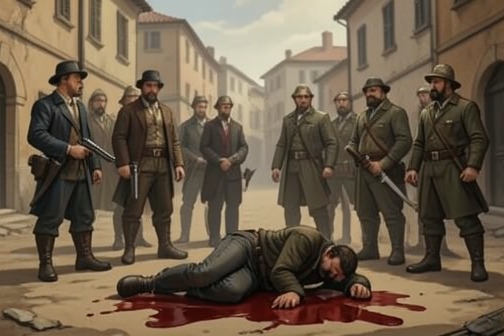
[Johnny Madrid kills Business Bob Gilbert](entity:action-recall-action-johnny-madrid-kills-bu-58877ad58487) and offers to join [Caleb DeCoteau](entity:character-recall-character-caleb-decoteau-960d69955c5b) in [Royo del Oro](entity:location-recall-location-royo-del-oro-eae19cdfb7fd), turning a deadly street confrontation into a test of allegiance. Johnny enters the town with a secret: he and Caleb are old friends, though Johnny has been drawn into the Lancer family’s conflict with Caleb’s gang. After killing a gunman Caleb hired, Johnny does not leave or announce himself as [Murdock Lancer](entity:character-recall-character-murdock-lancer-3672da39bfae)’s defender. Instead, he asks Caleb for work and names Murdock as his intended target, leaving the meaning of his offer unsettled.
## Causes and Background
Johnny’s arrival in Royo del Oro follows Murdock Lancer’s account of the danger facing the ranch. The town initially seemed familiar to him, but he now reads its saloon and the men gathered outside as signs of a place living in fear. Those men are not merely local troublemakers: they are land pirates working for Caleb, the men responsible for Murdock’s misery. Johnny has been drawn into a conflict in which the Lancer land and wealth are at stake, and his immediate problem is whether to confront the gang or survive it.
His private connection to Caleb changes the terms of that danger. Neither Murdock nor Scott Lancer, nor anyone else at the [Lancer Ranch](entity:location-recall-location-lancer-ranch-69585f57c745), knows that Johnny and Caleb were friends. The friendship is the secret beneath the public encounter: Johnny is not meeting a stranger who happens to command the opposition, but an old companion whose present power places him on the other side of the Lancer conflict.
Among the men outside the [Gilded Lily](entity:location-recall-location-gilded-lily-68223557b686), Johnny notices a conspicuous newcomer. Three appear to be henchmen, dressed in the style of bandits; the fourth is an older white man in a tailored black Western suit, polished black boots, a large hat, and a waxed mustache. Seated in a rocking chair, he carves a small wooden horse with a pocketknife. His careful dress and solitary work set him apart from the hired gang around him. Johnny understands that the man is a professional with a substantial reputation, paid directly by Caleb in gold before beginning his work. The narration frames him as a once-heroic figure now selling his gun to the highest bidder.
## The Street Showdown
Johnny ties his horse at the Hotel Lancaster and crosses the main street toward the saloon. The man in black puts away his knife, sets the unfinished wooden horse on a small barrel, rises from his rocking chair, and challenges Johnny before he reaches the porch. Johnny corrects the nickname the gunman uses for him, then says that he has come because he is thirsty. Their exchange keeps the confrontation outwardly casual while both men measure the threat.
The standoff becomes physical when Johnny lowers a hand to the pistol at his hip and releases the small leather loop around its hammer. The gunman answers by lowering his hand toward the weapon tucked into his waistband. The porch, street, town, and state seem to go quiet as the two settle into their killing stances. Caleb abruptly steps through the saloon’s batwing doors, interrupting the draw. Dressed in a fringed brown rawhide jacket, he is eating a fried-chicken drumstick.
Caleb addresses the gunman as Mr. Gilbert and pointedly tells him not to let the interruption stop him from earning the money Caleb pays him. He then advises Gilbert to learn the name of the man he has challenged. Caleb introduces the older gunman as Bob Gilbert; Johnny recognizes the name Business Bob, and Gilbert identifies himself by that title. Before Johnny can reply to Gilbert’s question, Caleb names him as [Johnny Madrid](entity:character-recall-character-johnny-madrid-ad2f58e21cfa). Gilbert repeats the name mockingly, and the other men on the porch laugh until Caleb silences them with a look.
Gilbert is confused and irritated: Caleb hired him to drive off or kill men like Johnny, and paid him handsomely in gold, yet now seems to be treating the encounter as a personal introduction. Gilbert presses Caleb for an explanation. Caleb tosses the remaining chicken bone into the street and tells his hired gun that he is about to find out who Johnny is.
## Gilbert’s Death
Caleb disappears behind the saloon doors, leaving Johnny and Gilbert to face each other. Johnny turns sideways into his showdown stance, making plain that he is ready to fight. Gilbert’s throat goes dry as Johnny stands still and waits. Gilbert inches his hand toward his holster; Johnny blinks, and fires. The bullet strikes Gilbert in the heart as he draws.
Gilbert’s pistol falls from his hand and bounces off the porch into the dirt. He staggers on his polished bootheels, falls down the steps, and tips over a pickle barrel, scattering pickles and pickle water into the street. Johnny stands among them with his gun still smoking. He points it toward the three men on the porch and challenges them in Spanish to try him next. The sudden death ends Gilbert’s career in Caleb’s service, but it does not produce an immediate counterattack.
Inside the saloon, seven more of Caleb’s land pirates—some playing poker, smoking cigars, or drinking at the bar—look up at Johnny. The narration notes that none seems especially angry about Gilbert’s death, suggesting that the dead gunman had not made himself popular. From the second-floor landing, Caleb calls down to Johnny by name, smiling over the banister. The killing has cleared the immediate obstacle between Johnny and his old friend, but it has also made Johnny’s place among Caleb’s men a public question.
## The Offer and Its Uncertainty
Caleb and Johnny drink mescal together and toast Caleb’s wife and sweethearts. Caleb invites Johnny to his table, where he asks what has brought him to Royo del Oro. Johnny answers that he is there for money. When Caleb asks who is paying him, Johnny makes clear that he wants a job: the same kind of work Gilbert had been doing, and he would like to fill the opening left by Gilbert’s death.
Asked what the job would be, Johnny says he wants to kill Murdock Lancer. He explains that Caleb is pressing the old man hard, but Murdock has money, and Lancer wealth makes the conflict dangerous for Caleb. Sooner or later, Johnny warns, Murdock could hire gunmen and push back; the result would not simply be a contest between rival crews, but a campaign aimed at killing Caleb. The offer is therefore framed as both a request for employment and a warning about the consequences of Caleb’s pressure on the ranch.
Caleb asks Johnny’s price. Johnny says he is worth more than Caleb paid Gilbert. Caleb tells him to stable his horse, offers him a room for the night, and says they will hit the Lancer Ranch the next morning; he pays quality men in fourteen-karat gold. When Caleb indicates a medium-sized sack, Johnny counters by pantomiming a larger one and says that killing Murdock will cost that much. The two clink their clay cups and drink, but the toast does not settle what Johnny intends.
The scene ends on the distinction between a successful infiltration and a genuine return to an old friendship. Johnny may have placed himself inside the ranks of his father’s enemies, or he may be preparing to work with Caleb against a bitter rival; the passage does not decide between those possibilities. Nor does it resolve whether Johnny now belongs more fully to the identity of Johnny Madrid or [Johnny Lancer](entity:character-recall-character-johnny-lancer-229e794b7c70). Caleb’s plan to ride against the ranch is set for morning, leaving Johnny only the night to choose what his offer means.
Event 23
Cliff’s visit to Spahn Ranch
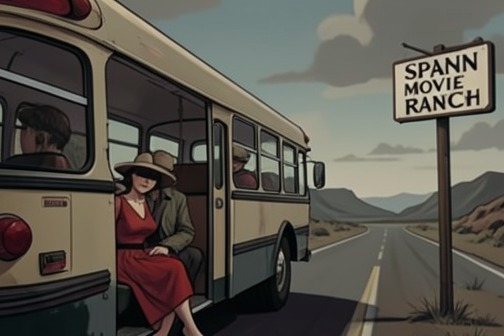
[Cliff Booth](entity:character-recall-character-cliff-booth-49f52393c9a7)’s visit to [Spahn Ranch](entity:location-recall-location-bc8861556ac3) turns a chance encounter with Pussycat into a test of what friendship and care mean when an old acquaintance can no longer reliably recognize the people around him. Cliff arrives worried that [George Spahn](entity:character-recall-character-george-spahn-8ab762e634da) is being taken advantage of by the Family living on his property. But George’s own words, and [Squeaky](entity:character-recall-character-squeaky-e07165d29196)’s uncompromising defense of their bond, complicate that suspicion and send Cliff back down the hill without intervening.
## The Hitchhiker and the Ride
Cliff encounters Pussycat for the third time that day, now standing at a bus stop on the corner of Riverside Drive and [Hollywood](entity:location-recall-location-hollywood-3ce8b1af5069) Way beneath an advertisement for Channel 9 newscaster George Putnam. He recognizes the same hitchhiker he had seen by the Aquarius Theater and elsewhere in [Los Angeles](entity:location-recall-location-los-angeles-11eff639bdf5). The coincidence strikes him as improbable, though he allows that hitchhiking is common among young people. This time, she is going in his direction.
At first Cliff imagines the ride in sexual terms, anticipating that a quick lift might lead to kissing or other intimacy. He asks whether she is headed to [Spahn Movie Ranch](entity:location-recall-location-spahn-movie-ranch-974479b16371). Pussycat says that is where she lives, and Cliff opens the passenger door and offers to take her. His willingness to help is therefore mixed with private expectations; the practical destination also draws him toward a place he knows through his past association with George.
The sexual advance does not happen as Cliff anticipates. With that possibility off the table, Pussycat pulls her pants back on, and the two talk during the drive to Chatsworth. Cliff does not tell her that he knows George personally or disclose his real reason for giving her a ride. The journey thus carries two different purposes: Pussycat is returning home, while Cliff is approaching the ranch with an unspoken concern about its elderly owner.
## Pussycat’s Account of Charlie
During the drive, Pussycat tells Cliff that she first met Charlie when she was fourteen and living in Los Gatos, California. Her father had picked Charlie up while he was hitchhiking. The story she recounts is not a simple account of recruitment into the Family: she describes Charlie as turning her father’s hostility into affection during a night together, after which the two men parted as friends.
Pussycat also distinguishes her father’s friendship with Charlie from membership in the Family. Charlie considered it too strange for her father to join, because he was Pussycat’s father; as she explains it, he remained a friend of the Family, not one of its members. The detail presents the group’s connections as personal and improvised as well as hierarchical, and gives Cliff a glimpse of the history Pussycat carries with her to the ranch. It does not, however, settle the separate question that concerns him: whether George is being exploited.
## Cliff’s Concern at the Ranch
By the time Cliff reaches the ranch, Charlie and a large group of the young people are away in Santa Barbara. Their absence changes the immediate balance of the visit. From the house on the hill, Snake can see the remains of the old Western set and the main drag where visitors park. She spots Cliff’s vintage yellow-and-cream Cadillac, then watches the ranch’s atmosphere shift after Tex and Lulu drive away: the girls stop laughing and become stiff and defensive as Cliff gestures toward the house.
Snake warns the others that the older man is coming. Cliff climbs the stairs and stands outside the filthy screen door, face to face with Squeaky. She asks when he last saw George. Cliff says he intends to go inside and look at him for himself, refusing to let the screen door keep him out. The exchange establishes the tension behind his visit: he approaches as a former friend concerned about George, while Squeaky meets him as someone challenging the household’s right to govern its own affairs.
Inside, Cliff wakes George, who starts in confusion and asks who he is and what he wants. George does not remember Cliff, despite their having worked together. Even so, he thanks him for visiting. Cliff tries to explain that he is a stuntman and that they used to work together, then voices his worry that the hippies may be taking advantage of George. His concern is sincere, but it rests on an old connection George cannot confirm in the moment and on Cliff’s judgment of the people now around him.
## George and Squeaky’s Answer
Cliff asks whether George has given the hippies permission to stay. When George asks about Squeaky, he answers that she loves him. That response does not erase his blindness or confusion, but it supplies a direct expression of trust from the person Cliff came to protect. About six minutes later, Cliff comes back out of the bedroom. Squeaky asks whether he is satisfied, forcing his inspection into the open rather than allowing him to remain an unseen judge of the household.
Squeaky insists that her love for George is complete and that Cliff’s belief or disbelief in her capacity to love him means nothing to her. She then challenges the assumptions beneath his intervention: Cliff had not seen George since the [1950s](entity:time-recall-time-1950s-9d888ed1c4fe), yet has arrived intending to save him from marriage and from sex, which Squeaky says they have frequently. She asks whether Cliff was truly George’s friend when he knew him, and whether he makes a habit of rescuing people from marriage or has singled George out.
Cliff listens from the loveseat and concedes that Squeaky has a point. He stands, walks through the house, exits by the screen door, and descends the staircase. Squeaky crosses her ankles and returns her attention to the Dick Clark-produced music show. The ending gives neither Cliff’s suspicion nor Squeaky’s defense a simple victory: George’s affection and his inability to remember Cliff coexist, while Cliff’s concern yields to the limits of what he can claim to know about the life George now leads.
## Significance of the Visit
The visit reverses the expected roles of protector and threat. Cliff comes believing the residents may be exploiting George, but his decision to enter and inspect the house makes him the outsider whose authority Squeaky challenges. George’s recognition fails, yet his declaration of love for her gives Cliff evidence that cannot be dismissed as mere appearance. Squeaky, meanwhile, does not answer concern with passivity; she argues that Cliff’s old friendship does not grant him the right to define George’s present relationship.
The encounter also turns on what the characters cannot know. Cliff has history with George but has been absent for years; George cannot place him; Snake watches the arrival from above; and Squeaky must defend a bond that Cliff initially interprets through the possibility of exploitation. Cliff’s departure is therefore not proof that every concern has been resolved. It is a change in his judgment: confronted with George’s expressed affection and Squeaky’s challenge, he accepts that his past connection alone does not authorize him to take control of the present.
Event 24
Aldo Ray’s relapse on the Spain set
[Aldo Ray’s relapse on the Spain set](entity:event-recall-event-203e400ea66f) begins with a plea for a bottle and ends with his removal from the production. [Cliff Booth](entity:character-recall-character-cliff-booth-49f52393c9a7) knows the crew has been told not to give Ray alcohol, but, faced with his desperate appeal, returns to his room for gin and hands it over. Ray drinks the bottle, misses work the next day, and is put on the first plane home. Cliff keeps his role in the incident secret from [Rick Dalton](entity:character-recall-character-rick-dalton-b598d73dca1d) for two years, then admits that, given the choice again, he would do the same thing.
## Production in Spain and the enforced ban
The episode takes place during a five-month European film trip shared by Cliff and Rick, who had traveled together through four productions. After two Italian westerns, Nebraska Jim and Kill Me Quick, Ringo, Said the Gringo, and a secret-agent film shot in [Athens](entity:location-recall-location-90681f7b48c3), they were in Spain making Red Blood, Red Skin, co-starring Telly Savalas and Carroll Baker. Cliff was stunt-doubling Rick again, a return to work that mattered to him after his stunt opportunities had diminished. When the Spanish production wrapped, both men were due to return to [Los Angeles](entity:location-recall-location-los-angeles-11eff639bdf5).
Ray’s drinking had become a production concern serious enough to prompt explicit controls. A memo instructed everyone working on the film never to give him alcohol, regardless of what he asked. He had no money to carry, the hotel had been told not to serve him, and a man was watching the door. Ray described the arrangement to Cliff as being under house arrest. The restrictions set the scene’s terms: the production had tried to block access to alcohol, but Ray’s request reached someone who could choose whether to enforce the rule.
## Cliff gives Ray the bottle
In their stuffy Spanish hotel, Ray abruptly drops the joking tone and tells Cliff, “Hey, pal, I’m in a bad way. Can you get me a bottle?” Cliff knows the instruction and says so, explaining that nobody on the production is supposed to give Ray alcohol. Ray answers by describing the measures that have isolated him from money, service, and the outside of his room. Then he pleads directly, asking Cliff to be a pal and saying he will beg if he has to.
Cliff leaves and returns with his own bottle of gin. He carries it down the hotel’s filthy hallway and hands it to Ray in Room 104. The narration slows the exchange around the bottle: Ray takes it, stares at it, looks up at Cliff, and looks back down. The object is at once the thing the production has tried to keep from him and the immediate answer to his appeal. Cliff’s action is not an accidental breach; he has heard the rule and chooses to break it.
Before Cliff leaves, Ray notices his wig. Cliff remembers that he still has on the hairpiece used while doubling Rick, removes it, and reveals his own blond hair. The brief exchange shifts the scene from Ray’s urgent request to an ordinary goodbye: Cliff tells him to have a good night, and Ray turns back to the bottle. The small gesture does not undo what Cliff has done; it marks the moment just before Ray drinks.
## The cost of the relapse
Ray drinks the entire bottle. The next day he is unfit to work, and the Spanish producers put him on the first plane home. They try hard to discover who supplied the alcohol but do not find out. The sequence makes the consequences concrete: the breach has immediate production costs, and Ray’s absence is answered not with another accommodation but with his departure from the film.
The episode also places Cliff’s choice against the conditions of his own work. On the same night, he tends an injury from that day’s stunt work: a cut above his right eyebrow has started bleeding again, and the swelling threatens his ability to work the following day. His attention turns to ice for his face and, at the same time, to cooling his gin. The parallel does not make the two men’s circumstances identical, but it sets Ray’s dependence beside the bodily risks and practical demands of film labor. Cliff is himself drinking; when Ray asks, he has a bottle to give.
## Confession and the choice repeated
Cliff does not tell Rick what happened at the time. He waits until two years later, when the admission startles Rick into asking, “You did what?” Rick responds by reciting three rules attached to receiving a [Screen Actors Guild](entity:organization-recall-organization-ba6fa203db77) card, the last of them a warning: “if you ever do a film with [Aldo Ray](entity:character-recall-character-aldo-ray-c2e3551d250e), under no circumstances give him a bottle.” Cliff’s story has turned a private act of assistance into a violation of a rule Rick treats as unmistakable.
Yet the episode does not end with Cliff claiming that the prohibition was mistaken or that the outcome was harmless. Ray was sent home; the producers searched for the person responsible; and Cliff concealed what he had done from his closest friend for two years. Asked, in effect, whether he would make the same choice again, Cliff’s answer is plain: “If Cliff had to do it again . . . he’d do the same damn thing.” That ending preserves the conflict rather than resolving it. The production’s ban and the consequences of ignoring it remain in force, while Cliff’s retrospective answer makes clear that, in the moment of Ray’s pleading, he chose personal loyalty over the production’s rule.
Event 25
Rick Dalton and Trudi Frazer’s late-night Lancer rehearsal
[Rick Dalton and Trudi Frazer’s late-night Lancer rehearsal](entity:event-recall-event-rick-dalton-and-trudi-f-16c499a6e15b) transforms an awkward midnight phone call into a focused collaboration, and then into a moment of renewed gratitude for Rick. Working through the scene in character, the two actors find its emotional force together; the next day, their performance succeeds. For Rick, the exchange also breaks through years of career anxiety, making the pleasures and privileges of acting visible again.
## Background and Stakes
The rehearsal comes as Rick is confronting a painful change in his professional standing. During a career assessment by his agent [Marvin Schwarz](entity:character-recall-character-marvin-schwarz-15b7d6036d85), Rick feels tears building as he absorbs the blunt implication that the Italians may want him chiefly as an obtainable substitute for [Steve McQueen](entity:character-recall-character-steve-mcqueen-1b8690cbabfc). The appraisal hurts because it reduces a long career to a market calculation: Rick is not simply being considered for a role, but measured against the newer kind of star the industry wants.
His work on Lancer brings that insecurity onto the set. Rick is playing [Caleb DeCoteau](entity:character-recall-character-caleb-decoteau-960d69955c5b), a substantial antagonist rather than the familiar heroic cowboy Jake Cahill. As he walks across the western back lot, his reflection in a shop window gives him a different view of the costume and character. The fringe on his brown jacket makes his gestures newly expressive; without his usual pompadour, he can imagine himself as a more modern actor. He begins to understand what Marvin meant by calling him an Eisenhower actor in a Dennis Hopper [Hollywood](entity:location-recall-location-hollywood-3ce8b1af5069). That shift in self-perception does not erase his doubts, but it gives him a new way to approach the part.
The scene he and Trudi rehearse is the story’s kidnapping confrontation between Caleb and [Mirabella Lancer](entity:character-recall-character-mirabella-lancer-c5f100cb42e0). Its demands are both practical and emotional: the actors must make the exchange compelling, and Rick must find a convincing response to the threat against the child playing his scene partner. The rehearsal therefore tests more than whether he knows his lines. It asks him to listen and react rather than rely only on the habits of his established screen persona.
## The Midnight Call Becomes a Rehearsal
Rick initially resists Trudi’s suggestion that they run the scene together. He objects that it is late and that her mother does not know she is on the phone. Trudi answers that they are both working on the scene for the next morning, and that preparing together will let them arrive ready to give a strong performance. Her reasoning is calm and professional: they are colleagues with the same task, and doing it well matters.
Rick accepts the logic. He asks whether she has learned her lines, she says she thinks she has, and he tells her to begin. Trudi takes on [Mirabella](entity:character-recall-character-mirabella-9c4fb54c5ccb)’s overdramatic intensity, opening the scene with the kidnapped girl’s question to Caleb. Rick paces around his kitchen in a red silk kimono, holding a whiskey sour in a beer stein, and answers in Caleb’s cowboy dialect. The contrast between the domestic setting and the western performance makes the rehearsal an improvised working scene: the back lot is absent, but the actors supply its roles and stakes through voice, timing, and response.
The exchange gathers force as Trudi prompts Rick to complete Caleb’s thought about what he would do if Mirabella’s father failed to meet his demands. Rick answers that he would cut off his own arm to get her back. The line gives the scene a sudden emotional charge, and Trudi lets the pause play before returning as Mirabella. Their rehearsal is not simply a recitation of dialogue; each actor’s response changes what the other can do next, and the imagined threat becomes a dramatic encounter.
## Performance and Recognition
As they continue, Rick acts out being shot in the face and ends up on the kitchen floor. When Trudi asks what happened, he explains the acting choice. Her enthusiastic response turns the moment into a shared discovery: she recognizes that the scene is working, and Rick agrees. Their confidence comes not from a general promise of success but from the evidence they have just made together. Trudi says they will do the scene brilliantly the next day.
The rehearsal’s emotional consequence arrives in the quiet that follows. Trudi reminds Rick that their job is wonderful and that they are lucky to have it. For the first time in ten years, he takes in what that means. He recalls the actors he has worked with, the actresses he has kissed, the interesting people and places his career brought him, and the stories he has lived. He remembers seeing his name in newspapers and magazines, staying in good hotels, receiving attention, and driving through Hollywood as a respected professional. His house, too, is part of that history: he owns it because he was paid to do what he loved as a boy, pretending to be a cowboy.
Rick’s response marks a change in perspective rather than a sudden solution to his career worries. The professional world that made him feel replaceable has not changed overnight; what changes is his attention. Acting is no longer only a contest with younger stars or a reminder of roles he may lose. Trudi’s commitment brings him back to the work itself, and he recognizes the accumulated good fortune contained in a life built around it.
## Aftermath and Significance
The next day, on the [Twentieth Century Fox](entity:organization-recall-organization-twentieth-centur-ec9e0bcf5c19) back lot, Rick and Trudi perform the Lancer scene to strong effect. Their success completes the rehearsal’s immediate purpose, while the experience also establishes a new measure of success for Rick: preparation, responsiveness, and shared craft matter alongside status. The late-night exchange links a concrete improvement in performance to an inward change, without pretending that one successful scene resolves his wider uncertainty.
Trudi’s role in the episode is active and specific. She does not merely reassure Rick or defer to his greater experience; she argues for working together, sustains the scene as Mirabella, and helps create the moment that allows him to see his own career differently. Rick, in turn, meets her as a scene partner. The rehearsal makes their professional trust visible through the work they do: she challenges him to take the scene seriously, and he responds with an emotionally forceful performance.
The event also reframes Rick’s changing screen identity. Earlier, seeing himself as Caleb had allowed him to consider that he might look like a contemporary actor rather than an aging western star. In the telephone rehearsal, that altered identity becomes action: Rick uses Caleb’s voice and circumstances to reach an unguarded line, then recognizes that the pleasure of performing remains available to him. The scene’s achievement is thus both public and private—an effective performance the following day, and Rick’s renewed appreciation of the life that made it possible.