six years into their marriage
A Restless Marriage
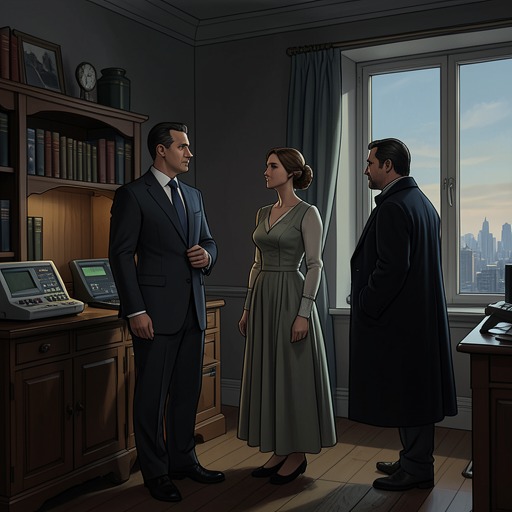
Tapehense complained that her comfortable and easy life had eroded the life she and Tommy once dreamed of. She longed for danger, romance, and a big adventure, while Tommy teased her enthusiasm for thrilling adventures
later that afternoon
The Fairy Photograph
Tommy showed Tappens a photo with a faint mark, which could be imagined as a small winged fairy. They were chatting enthusiastically when [Albert](entity:character-recall-character-albert-6190c3a74040) interrupted them, announcing a visitor and briefly adopting a proud butler posture
shortly afterward
Carter’s Proposal
[Mr. Carter](entity:character-recall-character-mr-carter-5f8950b831c4) came to visit, proposing a secret mission for the couple: to revive the nearly bankrupt [International Detective Agency](entity:organization-recall-organization-international-de-b64fea427df6) under the name of the detained manager Theodor Brant. Tommy would have to take a leave from his official post, and the detective agency would serve as a cover to monitor Russian contacts
a few days later
A New Detective Office
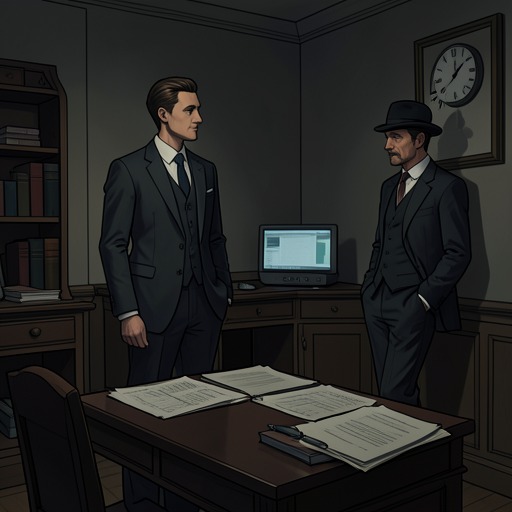
A few days later, Tommy and Tappense took over the small office of the detective agency in Bloomsbury and appointed [Albert](entity:character-recall-character-albert-6190c3a74040) as the office helper. They decorated the office to look like a thriving detective agency, but in the first week of opening, they received only some boring cases of following spouses
about a week after opening the agency
A Vanishing Shopgirl
Lawrence Saint Vincent rushed in anxiously, saying that Janet had gone missing while working at Madame Violet's shop. Tappen's realized that this gave her friend [Janet Cowley](entity:character-recall-character-janet-cowley-ebab2ca98f61) an opportunity to make the romantic young man show his feelings, so she promised to have results within twenty-four hours
that afternoon
The Tea-Room Reunion
Tommy went to the hospital to look for Janet. Tappen's plan was so smooth that there was no real danger: Janet was waiting in the adjacent office, and the water kettle and tea reminded her of her past as a nurse. Tappen admitted that he arranged the fake disappearance to encourage Saint
about a week after the tea-room reunion
The Pink Pearl Complaint
A week after the tea room reunion, the young woman [Beatrice Kingston Bruce](entity:character-recall-character-beatrice-kingston-b-7f9ee26956a7) asked the detective agency to investigate a valuable pink pearl that had been stolen from a pendant. The pendant was originally kept at her family's laurel estate. The family had always been unwilling to report the incident, and Tappen
the same day
Suspicion at The Laurels
That day, [Colonel Kingston Bruce](entity:character-recall-character-colonel-kingston-br-287f9d6d4819) told that at a party, Mrs. Hamilton Bates had carelessly placed a pendant aside, and then the pearl disappeared. The colonel suspected the socialist visitor Renny, while his wife firmly insisted it was he who did it; Beatrice insisted she had been watching R
during the initial investigation
A Trail of Earlier Thefts
During the initial investigation, Tapper found out from French housemaid Alice that Lady Barton had lived in the house where the crimes occurred several times before. This experience made Lady Barton a natural suspect, but Tommy noticed that the door to her bathroom had mysteriously jammed, and Alice's hands, which
later that day
The Arrest of Elise
That afternoon, Tommy took photos of the room, secretly obtained Alice's fingerprint on the glass plate, and then rushed to [Scotland Yard](entity:location-recall-location-scotland-yard-a9f32f21c1df). When he returned, the police had arrested Alice. She was a professional thief who used the identity of a housemaid to hide her crimes, taking advantage of the employer
at the arrest
The Pearl in the Soap
When arresting Alice, Tommy pointed out that a bar of soap was the place to hide the pearl: thieves could hollow out the soap, hide the gem inside, and then smooth the seams with hot water. The detective found a pink pearl inside, proving Mrs. Laura's innocence and revealing how the seemingly
a few days later
A Russian Letter Arrives
A few days later, the detective agency had a quiet afternoon when a blue letter with a Russian stamp was delivered. The sender claimed to be a ham merchant and wanted to find his missing wife. Tommy recognized this as the type of letter that [Mr. Carter](entity:character-recall-character-mr-carter-5f8950b831c4) had warned them to be cautious of. T
later that afternoon
The Suspicious Doctor
That afternoon, Dr. Charles Bauer claimed that someone had climbed over his desk in search of his secret notes on rare poisons and invited Tommy to meet at the Lodge of Larch. Tappen immediately suspected it was a trap, pointing out that the visitor walked with a limp and had been watching the
that afternoon
Dymchurch’s Warning
That afternoon, Detective Daimachich came to the detective agency and said he knew someone was watching here and warned Tommy not to go to Hampstead. He thought the supposed meeting was meant to divert Tommy so that the gang could search the office and find the Russian letter
that evening
The Office Ambush
That night, Tommy and Dameshige pretended to leave the office, and later returned after dark to set up a ambush. When Tommy opened the door, the attackers grabbed him and knocked him out with chloroform. He awoke to find his hands and feet tied and his mouth stuffed
later that night
The False Inspector’s Demand
Dymchurch reveals himself as a foreign criminal and demands the letter, threatening Tommy with torture. Tommy pretends to cooperate and sends a note signed “Francis,” exploiting a cigarette case inscription to make the gang believe that Tuppence will bring the document.
minutes later
Tuppence’s Countermove
Tuppence arrives carrying an empty blue envelope, having already forwarded the actual letter according to instructions. She had alerted [Inspector Marriot](entity:character-recall-character-inspector-marriot-a8aba22c1716) and arranged for police to hide nearby; they rush in as the criminals seize the decoy and arrest the gang.
some time after the gang’s capture
A Coded Newspaper Advertisement
Tuppence notices a newspaper advertisement that reads like a bridge instruction but may be a rendezvous signal: “I should go three hearts. 12 tricks. Ace of Spades. [Necessary to finesse the King](entity:expression-recall-expression-necessary-to-fines-0596b94e6b35).” She persuades Tommy to investigate it at the fashionable Three Arts Ball and its late-night gathering place, [The Ace of Spades](entity:location-recall-location-the-ace-of-spades-a8ca61c4646e).
the following evening
The Fireman and the Cowboy
For the ball, Tuppence dresses as an American detective and casts Tommy as his cowboy sidekick, turning their outing into a playful experiment in detective fiction. They find the crowded, masked revelry at [The Ace of Spades](entity:location-recall-location-the-ace-of-spades-a8ca61c4646e), where Tuppence watches the neighboring booths for the people named in the coded notice.
around midnight
A Murder in the Next Booth
When the newspaper-costumed man leaves his companion alone, Tuppence senses danger and enters the adjoining booth with Tommy. The Queen of Hearts costume is soaked with blood, and the woman inside has been stabbed with a jeweled dagger; before dying, she whispers that Bingo did it.
the next morning
Hale Is Accused
[Inspector Marriot](entity:character-recall-character-inspector-marriot-a8aba22c1716) identifies the victim as [Lady Merivale](entity:character-recall-character-lady-merivale-3dafb28f1bca) and reports that [Captain Bingo Hale](entity:character-recall-character-captain-bingo-hale-35582b674fa9) has been arrested. Her husband, [Sir Arthur Merivale](entity:character-recall-character-sir-arthur-merivale-9589a0dee753), refuses to believe his friend could have killed her, but the Inspector points to Hale’s possible motive: Lady Merivale could obstruct his plans to marry a wealthy American.
later that day
A Case Too Clear
Marriot reports that letters establish a concealed affair between [Lady Merivale](entity:character-recall-character-lady-merivale-3dafb28f1bca) and Hale, while a torn fragment of the [Daily Leader](entity:organization-recall-organization-daily-leader-b778a2a1d525) appears to match Hale’s newspaper costume. Tuppence doubts the apparently airtight case, especially because Marriot keeps emphasizing its clarity and professional instinct tells him Hale is not a murderer.
that evening
The Newspaper Dots
Tuppence compares the fragment with the paper’s changing printed dots and realizes it came from a different day’s edition than the exhibit supposedly matching it. The discrepancy suggests that someone deliberately manufactured the link to Hale’s costume rather than simply tearing it during the murder.
later that evening
The Wrong King
Tuppence deduces that Sir Arthur, not Hale, wore a newspaper costume over his executioner’s outfit and killed his wife to protect his inheritance. He had arranged the false meeting and planted evidence to frame Hale, but his distinctive laugh confirms his identity; when [Inspector Marriot](entity:character-recall-character-inspector-marriot-a8aba22c1716) appears, Sir Arthur leaps from the window and dies.
some time later
The Missing Explorer’s Fiancée
[Gabriel Stavansson](entity:character-recall-character-gabriel-stavansson-ac98c5d89ca2) asks the agency to find his fiancée, [Hermione Leigh Gordon](entity:character-recall-character-hermione-leigh-gord-ec1d609b6b0a), who has vanished while he was away on an Arctic expedition. Her aunt, [Lady Susan Clonray](entity:character-recall-character-lady-susan-clonray-4cb0fd6ee08a), says Hermione is visiting friends, but the telegram announcing a trip to Monte Carlo was sent from Maldon, an unexplained detail that heightens his concern.
the next day
Two Maldons
Tommy and Tuppence investigate the Surrey town named in the telegram but find no trace of Hermione. Tuppence realizes that the county may distinguish it from another Maldon, and their inquiries uncover a small Sussex hamlet with its own telegraph office.
the following day
The Grange’s Secret
In [Maldon, Sussex](entity:location-recall-location-maldon-sussex-27ac11418b68), Tuppence learns that [Dr. Horriston](entity:character-recall-character-dr-horriston-ab501afaa723) runs a secluded nursing home at [The Grange](entity:location-recall-location-the-grange-7196d3ad2894). The doctor and his servant deny that Hermione is there, but the couple overhear Horriston admit that he is worried by visitors asking for her and intends to take steps.
that night
The Vanishing Patient
After hearing a woman moan from an upstairs room, Tuppence climbs a ladder and sees a nurse inject a suffering patient she believes is Hermione. She enters the room, then returns with the explanation that the patient is simply undergoing a secret weight-reduction treatment because Stavansson dislikes fat women; the apparent peril proves to be an embarrassing misunderstanding.
some time later
Tommy’s False Blindness
With business slack, Tommy practices a blind detective’s methods, wearing an eyeshade and testing his supposed “keyboard of silence” on Tuppence and [Albert](entity:character-recall-character-albert-6190c3a74040). His experiments are mostly comic failures, but he decides to continue the performance over lunch at [The Blitz](entity:location-recall-location-the-blitz-57331134481d).
the same afternoon
The Duke’s Abduction
A man claiming to be the Duke of Blairgowrie says his sixteen-year-old daughter has been abducted and insists that Tommy come at once. In the car he reveals himself as a ham merchant and threatens Tommy with a pistol, then takes him to a room fitted with an electrified floor and challenges the supposedly blind detective to cross it.
that afternoon
Light Against the Trap
Fake Duke of Blairgore orders Tommy to walk blind over the deadly floor. Tommy uses the flash of the camera to blind the kidnapper, threatens him with a sword, and reveals that the eye mask is fake; when the criminal rushes toward Tommy, he falls on the electrified floor
shortly afterward
Albert’s Pursuit
Tommy called Tappen after escaping. She explained that [Albert](entity:character-recall-character-albert-6190c3a74040) has been following the kidnappers since Tommy was taken. The police have been notified, and Tommy is determined to donate to the Saint Dunstan Association to honor those who truly suffer from blindness
later, at Adlington
A Failed Pearl Investigation
The detective agency was hired to investigate a pearl necklace theft at Arlington estate, but Tommy tracked a gambling-addicted countess, and Tappensey charmed a male guest, but both failed to find anything. Local police arrested the second male servant, who confessed, which dealt a blow to the amateur
that evening
Gilda’s Cryptic Request
At the Arlington Hotel, Tommy and Tappense met the famous actress [Gilda Glen](entity:character-recall-character-gilda-glen-a16d0a411c7f), as well as Tommy's old friend Merwin Estocott. When Estocott mentioned the ghost police on Morgan Avenue, Gilda became uneasy; subsequently, she handed Tommy a note asking him to meet her
shortly afterward
Reilly’s Threat
Angry poet James Riley claimed that Gilda had loved him; rather than see her marry Lord Lakenbill, he would rather have killed her. His violent words made him a obvious suspect, and the thick fog also made the journey along Morgan Drive to the meeting place tense
about 6:10 p.m.
The Body at The White House
A police officer directed the couple to White House. When they arrived, a man had just run in and then fled in fear. Tommy noticed the doorpost was painted red. He and Tappense found Gilda dead on the floor, killed by a heavy blow to the head
the following day
The Policeman’s Disguise
James Riley was arrested, and the surface evidence made him look like the murderer. Tommy re-examined the passage of time and realized that the sound of someone entering the house might also have been someone leaving; perhaps Gilda's husband had disguised himself as the police they met in the fog and slipped
after the Gilda Glen murder
Marriot’s Counterfeit Case
After the murder of Gerald Gren, Detective Chief Inspector Mariotte requested the detective agency to assist in tracing the circulation of a large number of forged treasury notes. He suspected a fashionable group of gamblers centered around Major Lauder; Lauder's wealth, connections in the horse racing world, and his French
during the investigation
The Laidlaw Circle
Tommie and Tappense managed to blend into the social circle of Major Lodore and Margaret Lodore, forging treasury notes that circulated among gamblers and horse enthusiasts. Tappense exchanged a real ten-pound note for the counterfeit money that Jimmy Fulkner had received, while Tommie discovered
one evening during the case
Ryder’s Drunken Confession
One night, after Hank P. Reed was drunk, he told Tommy that Margaret had taken him to [Whitechapel](entity:location-recall-location-whitechapel-298bf1702897) to search for treasure, then left him outside a house, and she found five hundred pounds inside. Tommy recognized this as an important clue and drove Reed to the location to identify it
later that night
The Counterfeit Den
Tomy followed Rye into a house in [Whitechapel](entity:location-recall-location-whitechapel-298bf1702897), and was caught by a gang operating a counterfeit money factory. Rye admitted that he had long suspected Tomy's investigation and intentionally led him into a trap; however, [Albert](entity:character-recall-character-albert-6190c3a74040) followed them, and Chief Inspector Marlowe and the police
during the raid
Cats Mark the Door
Rai doesn't take the chalk cross drawn by Tommy seriously, because he marked the same symbol on the door of every alley. Tommy revealed that he had used valerian to attract nearby cats to gather at the correct entrance; the police controlled the hideout, and Tommy announced they had caught the
some time later
The Sunningdale Murder Puzzle
After some time, Tommy imitated the old man in the corner in a chain bookstore in the United States, United Kingdom, and Canada, retelling the case in which Major Anthony Cessler was killed at the Sandringham golf course. The focus of the case was a woman in brown clothes
during the case discussion
The Hatpin Clue
Tapegin pointed out that [Doris Evans](entity:character-recall-character-doris-evans-8f9144728591) could not have used a hairpin because she had short hair and there was no reason for her to carry a hairpin with her. She also refuted the assumption that a hairpin must belong to a woman, suggesting it might have been a man who
later in the same discussion
A Golfer’s Reconstruction
Tomi deduced how a disguised man could wait near the sixth hole's tee by relying on his knowledge of the course and the time needed for a round of golf. The killer could change from female attire to Sessel's blue golf shirt, return to the group, and pretend to be S
at the close of the investigation
The Hollaby Conspiracy
Tommy concludes that the Hollabys had embezzled money from the [Porcupine Assurance Co.](entity:organization-recall-organization-porcupine-assura-437e41144681) and that the younger Hollaby, who knew Sessle’s habits and house, murdered him and framed Doris. [Inspector Marriot](entity:character-recall-character-inspector-marriot-a8aba22c1716) overhears the deduction and agrees to confront the son with Doris, promising the agency credit for solving the case.
some time later
Poisoned Chocolates
[Lois Hargreaves](entity:character-recall-character-lois-hargreaves-365a860f70ef) asks the agency to investigate arsenic-laced chocolates sent anonymously to her country home, [Thurnly Grange](entity:location-recall-location-thurnly-grange-ed463390373a). She has traced the wrapping to a label bearing her own doodle, which suggests that the sender lives in the household, and fears the matter may involve someone close to her.
during Lois’s first interview
The Inheritance Motive
Lois explains that her aunt left her a large fortune and that she recently made a will leaving it to [Dennis Radclyffe](entity:character-recall-character-dennis-radclyffe-27f9d9768c18). Tommy and Tuppence suspect someone may be trying to kill her, though the earlier chocolate incidents could have been staged to make a genuine attack look like the work of a local maniac.
the following morning
Death at Thurnly Grange
Before Tommy and Tuppence can travel to the country, news reports that Lois and the parlormaid Esther Quant have died after eating fig sandwiches. [Dennis Radclyffe](entity:character-recall-character-dennis-radclyffe-27f9d9768c18) and [Miss Logan](entity:character-recall-character-miss-logan-3ad8e305e8fd) are gravely ill, and the suspected food poisoning turns the private inquiry into an urgent poisoning case.
around midday that day
The Cocktail Glass
At [Thurnly Grange](entity:location-recall-location-thurnly-grange-ed463390373a), Dr. Burton says the victims’ symptoms suggest a powerful toxin rather than ordinary ptomaine poisoning. Tuppence learns that Dennis had a cocktail after returning home, although he missed the tea sandwiches; the remaining drink glass gives the investigators a way to test how he was poisoned.
later that afternoon
Hannah’s Prophecy
Tommy finds [Hannah](entity:character-recall-character-hannah-fb0714f3cb68) reading scripture in a feverish, vengeful state and initially suspects religious mania. A technical book on poisons lies in her room, but [Miss Logan](entity:character-recall-character-miss-logan-3ad8e305e8fd) says it belongs to her and that she had lent it to Mary Chilcott, who was interested in herbs.
later that day
Ricin Identified
Dr. Burton reports that the poison was ricin, a potent toxin derived from castor-oil seeds. Tuppence connects the doctor’s finding to the open page of [Miss Logan](entity:character-recall-character-miss-logan-3ad8e305e8fd)’s book and notices numerous injection marks on the old woman’s arm, suggesting that she had been making herself immune to small doses.
that evening
Logan’s Confession and Death
Tuppence confronts [Miss Logan](entity:character-recall-character-miss-logan-3ad8e305e8fd) with the method and motive: Logan had given herself small hypodermic doses of ricin to build immunity, then poisoned the household so Dennis would inherit Lois’s fortune before the money passed to Logan. [Hannah](entity:character-recall-character-hannah-fb0714f3cb68) interrupts with a burning torch and sets the bed curtains alight; Tommy and Tuppence subdue her, but Miss Logan dies, and Dr. Burton confirms ricin was also in Dennis’s cocktail.
some time later
The Unbreakable Alibi
[Montgomery Jones](entity:character-recall-character-montgomery-jones-404273e41b69) asks the agency to test a wager made with [Una Drake](entity:character-recall-character-una-drake-913d45040010), who claims to have been in [London](entity:location-recall-location-london-420923d4a60a) and Torquay at the same time. Tommy and Tuppence check restaurant, theatre, hotel, train, and witness accounts, finding that each informant appears truthful and the evidence supports both locations.
the next morning
The Twin Solution
After a night of frustration, Tuppence realizes that the alibi belongs to twins rather than one woman performing impossible travel. She cables Australia and confirms that [Vera Drake](entity:character-recall-character-vera-drake-8c72d936494b) arrived in England shortly before the wager; Vera stayed in Torquay while Una remained in [London](entity:location-recall-location-london-420923d4a60a).
some time later
The Clergyman’s Daughter
[Monica Deane](entity:character-recall-character-monica-deane-7c6b28812291) seeks help after strange disturbances at the [Red House](entity:location-recall-location-red-house-20c5d6fa07bf) frighten away paying guests and an apparent researcher, Dr. O’Neill, makes a purchase offer. Monica recognizes him as the same man who had previously tried to buy the property under another appearance, and Tuppence learns that Monica faces poverty despite inheriting the house.
the day after Monica’s visit
The Hidden Fortune
Tommy’s inquiry at the bank reveals that Monica’s aunt withdrew her savings in gold and securities before her death, leading him to suspect that the fortune is hidden in the [Red House](entity:location-recall-location-red-house-20c5d6fa07bf). He suspects [Crockett](entity:character-recall-character-crockett-4d78c92164f7), the old servant, and her gentlemanly nephew, who appears to be posing as the buyer and using staged disturbances to force a sale.
that evening
The Clue in the Charade
While sorting the dead woman’s papers, Tommy and Tuppence find a charade accompanied by a biblical citation: “Seek, and ye shall find.” Tuppence solves the riddle as “potatoes,” and a recipe for preserving new potatoes in buried tins turns the household’s ordinary gardening practice into a map to the hidden wealth.
Christmas Eve
The Treasure in the Garden
The gardener confirms that Monica’s aunt used to bury tins of potatoes beside a fir tree. Tommy and Tuppence dig up three tins; the first two contain only potatoes, but the third conceals gold, banknotes, and a valuable string of pearls, restoring Monica’s fortune and her chance to marry the man she loves.
midnight on Christmas Eve
A Christmas Confession
The discovery lets Monica escape financial dependence and gives her a future with her poor but beloved suitor. In the intimacy of the moment, Tuppence admits that she is happy with Tommy, explaining that she had recognized Monica from an old family connection rather than through any detective method.
some time later
The Ambassador’s Missing Boots
The American Ambassador, [Randolph Wilmott](entity:character-recall-character-randolph-wilmott-5e60c9fb9ce1), asks Tommy to explain why his kitbag was supposedly exchanged with Senator Westerham’s and then returned, even though Westerham denies the story. The bag contained boots rather than secret papers, and the odd substitution leaves both Tommy and Tuppence searching for a motive.
during the investigation
A Passenger’s Strange Faint
Wilmott’s valet recalls that a dark-haired passenger, Eileen O’Hara, fainted outside the Ambassador’s cabin and asked him to fetch a doctor. Tommy advertises for her; the move brings [Cicely March](entity:character-recall-character-cicely-march-23d042b22747) to the office, where she describes seeing O’Hara slit the lining of a boot and hide a folded paper inside.
two days after the advertisement
A Harbor Plan in Paper
Cicely explains that she later removed the paper and discovered, when it was wetted, a concealed tracing that looked like a harbor plan. A foreign gunman arrives to silence her, but [Albert](entity:character-recall-character-albert-6190c3a74040)’s improvised lasso knocks him down and Tommy protects the shaken witness rather than immediately summoning the police.
later that afternoon
The Beauty-Shop Raid
Tommy pretends to believe Cicely’s story and walks with her toward her Bond Street business, delaying their arrival while leaving Tuppence a warning. Tuppence contacts Inspector Grace and arranges a trap; at the shop she helps arrest the gunman and reveals that the supposed passenger is actually the criminal [Cicely March](entity:character-recall-character-cicely-march-23d042b22747)’s accomplice, operating under the name Eileen O’Hara.
during the raid
Cocaine in the Bath Salts
Tommy interprets the kitbag exchange as a way to place a criminal bag briefly among diplomatic luggage, beyond ordinary customs examination. A hidden recess behind a shop safe contains elegant bath-salt tins whose pink crystals conceal cocaine, exposing the beauty business as a distribution point for an international smuggling operation.
after the smuggling arrests
Warning of No. 16
[Mr. Carter](entity:character-recall-character-mr-carter-5f8950b831c4) congratulates the couple for helping capture several agents but warns that Moscow has sent a dangerous, multilingual master of disguise to investigate the compromised network. He gives them two identity passwords and installs a dictaphone in the office so the [Secret Service](entity:organization-recall-organization-secret-service-ca13e08bb595) can monitor any approach.
the next morning
The Calendar’s False Date
At the office, Tommy and Tuppence discover that the calendar has been advanced to the sixteenth, though [Albert](entity:character-recall-character-albert-6190c3a74040) says he tore off only one day. The arrangement appears deliberate, and Albert reports that a motherly hospital nurse had waited in the office earlier, a possible warning that someone has already been inside.
later that morning
The Russian Agent Arrives
A fair-bearded man calling himself Prince Vladiroffsky comes to the agency with a fabricated missing-girl case. Tommy answers the two passwords correctly, but the visitor recognizes that the calendar exposed the warning and abandons the pretense, admitting that he has come to investigate the network.
shortly afterward
Tuppence Leaves with the Prince
The agent asks Tuppence, under her secretary’s identity, to accompany him to the Blitz Hotel for a meeting at headquarters. Tommy allows her to go while the [Secret Service](entity:organization-recall-organization-secret-service-ca13e08bb595) follows them, believing that the surveillance will keep her safe and preserve the chance to capture the spy.
around 2:15 p.m.
The Suite Is Empty
Carter’s men watch the hotel, but the Russian takes Tuppence to a third-floor suite rather than the expected room. They enter to find Mrs. Cortlandt Van Snyder bound and gagged, while both Tuppence and the agent have vanished through a communicating door whose bolt has been secretly filed through.
minutes after the suite search
The Nurse-and-Invalid Disguise
The hotel staff report that a nurse and an invalid boy left shortly before the raid, and a hidden bundle contains Tuppence’s clothes and the Russian’s beard. Tommy realizes that [No. 16](entity:character-recall-character-no-16-7f2ddcf59c05) escaped disguised as a nurse with Tuppence drugged as the boy, using the watchers’ attention to the expected pair against them.
shortly afterward
Albert’s Critical Observation
In [Green Park](entity:location-recall-location-green-park-4bb3d4c9236f), [Albert](entity:character-recall-character-albert-6190c3a74040) urges the devastated Tommy to use his reasoning rather than surrender to panic. Their timeline exposes the flaw in the decoy story: the elaborate escape could not have been staged in the few minutes available, and the incapacitated Mrs. Van Snyder may be more than a victim.
later that afternoon
Tuppence Beneath the Bolster
Tommy returns to the suite and discovers Tuppence drugged and hidden horizontally beneath the bolster in Mrs. Van Snyder’s bed. The apparent victim is actually [No. 16](entity:character-recall-character-no-16-7f2ddcf59c05) in disguise, while the nurse and boy were decoys intended to draw pursuit away from the hotel.
during the second suite search
The Spy Unmasked
Tommy tears away Mrs. Van Snyder’s elaborate wig and exposes the Russian agent beneath the disguise. Carter’s men secure [No. 16](entity:character-recall-character-no-16-7f2ddcf59c05), while the doctor revives Tuppence; Tommy admits afterward that he had been frantic despite his attempted show of calm.
after the rescue
Tuppence’s Announcement
Once she has recovered, Tuppence agrees that they should leave detective work behind, but not because the abduction has frightened her. She tells Tommy that she is pregnant, turning their intended retirement into the beginning of a new family life.