The Other
PiranesiThe Other is Valentine Ketterley, the man Piranesi knows in the House as his sole human companion and fellow scientist. Their orderly meetings and shared search for a Great and Secret Knowledge give the relationship the appearance of intellectual fellowship; the later naming of Ketterley reveals the concealed identity behind it. The paired names, The Other and the Not-Me, also make their relationship a question of identity: each is defined against the other, but Piranesi does not initially know who his companion is outside the House.
Identity and Introduction
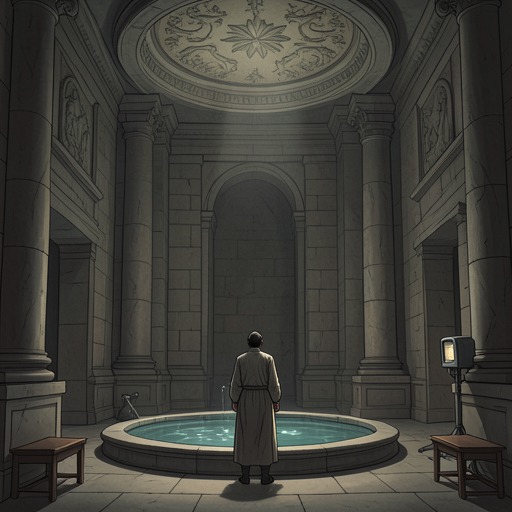
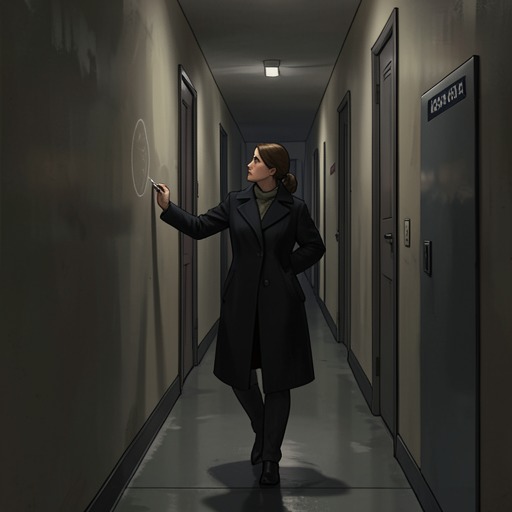
Piranesi estimates The Other to be between fifty and sixty, about 1.88 metres tall, slender, strong, and fit. He describes pale olive skin, short dark-brown hair, and a neatly trimmed beard that is greying almost white and slightly pointed. High cheekbones and a tall forehead give The Other an aristocratic appearance, while his general manner seems friendly but austere, devoted to intellectual life. This portrait belongs to Piranesi’s understanding of a person whose name and history remain unknown to him; the later exchange about Ketterley supplies the missing identity.
The relationship begins with an asymmetry of knowledge. The Other calls Piranesi by that name, and Piranesi reports that it is what his companion calls him. The name becomes his ordinary designation within their encounters, even though it is not the identity he had before entering the House. Piranesi, by contrast, calls his companion The Other, or the Not-Me: a relational label for the person opposite him, rather than a personal name. Their vocabulary presents the pair as two distinct people while leaving the biographical difference between them unspoken.
Intellectual Partnership and the Search
Piranesi believes that The Other is a scientist like himself and, as far as he knows, the only other living human being. On that understanding, he values the friendship highly. Their work together is organized with unusual precision: they meet on Tuesdays and Fridays to discuss their research, and The Other manages his schedule so carefully that he never allows a meeting to exceed an hour. If he wants Piranesi at another time, he calls out his name until Piranesi comes. The companionship is therefore both regular and bounded, governed by The Other’s timetable and summons.
Their shared project is the search for a Great and Secret Knowledge somewhere in the World, a discovery that The Other believes would grant enormous powers. The precise content remains uncertain even to him; Piranesi records possibilities rather than a settled doctrine. The proposals include defeating death and becoming immortal, learning what other people think by telepathy, extinguishing and reigniting the Sun and stars, and dominating supposedly lesser intellects by bending them to their will. The list ranges from overcoming human limits to controlling other minds and cosmic forces. The breadth of the ambitions gives their research a scale that exceeds ordinary scientific inquiry, while its speculative, shifting form leaves the promised Knowledge undefined.
The Names and the Unequal Relationship
The scene in which Piranesi learns the name Val Ketterley turns the earlier vocabulary into a clue. His visitor describes Ketterley as taller than Piranesi, dark-haired and dark-eyed, bearded, and dark-complexioned, adding that Ketterley’s mother was Spanish. Piranesi recognizes this description as referring to The Other. When he asks about the name, the visitor does not understand at first; Piranesi explains that he means The Other, the Not-Me. The difference between the two men’s knowledge is plain: Piranesi has a meaningful designation for his companion, but not the personal identity by which people in the outside world know him.
The visitor responds that The Other is an excellent name, then reads it as an involuntary description of Ketterley’s position. In the visitor’s account, Ketterley is always second to someone else, a subordinate who knows his position and resents it. He says that Ketterley had been his student and dismisses him as a charlatan whose imposing intellectual manner and penetrating stare conceal a lack of original thought. The visitor claims that Ketterley’s ideas are his own, presenting himself as the scholar from whom they were derived. These are the visitor’s accusations, not an account independently established by Piranesi’s earlier observations. They nevertheless overturn the apparent equality of two scientists searching together: the friendship Piranesi values is reframed through a history of teacher and student, intellectual dependence, and rivalry.
Significance in the Plot
The Other’s two names mark the divide between Piranesi’s life inside the House and the concealed history that the outside world can disclose. Within the House, The Other is familiar enough to meet twice a week, direct Piranesi’s attendance, and share an ambitious intellectual undertaking. Outside that relationship, Val Ketterley is a named person with a teacher, a reputation, and a disputed claim to originality. The delayed connection between those designations makes the identity reveal consequential: Piranesi’s trusted companion is not merely an abstract counterpart but someone embedded in relationships and conflicts he has not been told about.
The naming also complicates the apparent intimacy of their partnership. Piranesi calls the man opposite him The Other because he understands him in relation to himself; the visitor interprets that same label as evidence of Ketterley’s habit of being eclipsed by another person. Thus the term carries both Piranesi’s limited knowledge and the visitor’s hostile judgment. The available account leaves the competing descriptions in tension: Piranesi’s portrait of a fit, austere scientist valued as a friend stands beside the visitor’s charge that Ketterley’s intellectual authority is borrowed. That tension makes The Other’s role significant not only as a companion in the search, but as the point where Piranesi’s trust encounters an unshared past.