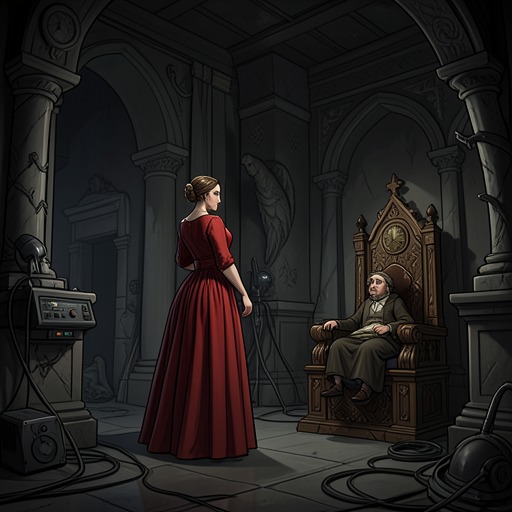
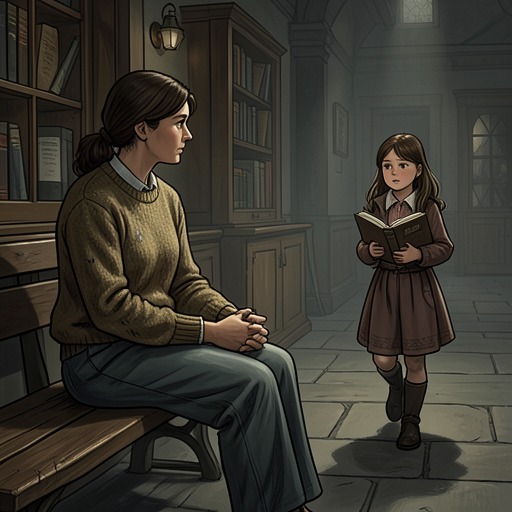
Julia
REJulia is the defining lost friend in Tabitha Moore’s first life: the only person with whom Tabitha formed a genuine close friendship, despite their age difference, and a brilliant, talented writer whose suicide became the most painful fact Tabitha carried into the past. Julia’s death gives Tabitha’s second chance its most intimate objective. Tabitha does not merely want to improve her own body, career, or social position; she wants to prevent the suffering that made Julia unable to continue living. Yet the story repeatedly complicates that rescue fantasy, asking whether saving Julia would also mean producing a different woman whom Tabitha could no longer recognize.
Identity and Background
Julia is remembered by Tabitha as a woman fifteen years younger than herself, but the friendship is presented as unusually profound rather than socially conventional. Tabitha recalls having only one truly close friend in her entire former life: a brilliant and talented woman who eventually took her own life. That memory stands beside Tabitha’s own account of an unsatisfying adulthood. She abandoned her attempt to become a teacher, tried to establish herself as a fantasy writer, published two books of a trilogy before her contract was terminated, and eventually gave up writing. After working at the Safety plant to repay her school debt, she became a county clerk at Springton Town Hall. Julia’s suicide is the emotional punctuation of that history, turning an already disappointing life into one Tabitha experiences as hollow.
The remembered Julia is not reduced to a victim. Tabitha associates her with cool stories, motorcycle riding, and dark fantasy writing, while also knowing the damage beneath that striking persona. Julia had spoken about what her father did to her during childhood and about the destructive relationships she entered afterward. In Tabitha’s recollection, Julia moved from one bad decision to the next, carrying a hatred of herself that was more decisive than any romanticized image of her rebelliousness. Her character therefore exists in tension between the friend Tabitha admired and the person Julia herself could no longer bear to be.
Julia in Tabitha’s Second Life
When Tabitha returns to 1998 in a thirteen-year-old body, Julia becomes one of the first people she imagines rescuing. Tabitha hopes to rewrite her fantasy novels, using the structural and pacing techniques learned during her later life, and to publish Goblina and Goblin Princess before the market becomes oversaturated. In the same surge of possibility, she decides that she can save Julia and make the circumstances leading to suicide never occur. The promise to protect Julia is linked to Tabitha’s larger determination to save her parents from themselves, but it is more psychologically charged: Julia is the future loss Tabitha knows personally and cannot dismiss as an abstract tragedy.
That ambition soon becomes a moral and identity crisis. Tabitha tells Alicia Brooks that the Julia from her previous life would understand why Tabitha cannot save everyone, yet Tabitha remains unwilling to allow the experiences that shaped Julia to happen again. She recognizes that a Julia who survives would not be the Julia she knew. The altered woman might never understand Tabitha’s writing or the friendship in the same way, and Tabitha worries that intervention would not simply save Julia but erase the existence that had defined her. The problem is not only whether the past can be changed; it is whether a person remains the same person after the causes of her suffering have been removed.
Julia’s return to the narrative is mediated through communication and memory. When Tabitha’s father gives her a letter from Julia, the message reaches her as greenish-blue holographic text projected from the bracelet computer. Tabitha is delighted that Julia has found a way to contact her and is filled with joy by the long, dense message. The futuristic form of the letter intensifies the temporal dislocation: Julia belongs to the life Tabitha has lost, yet her words cross the altered chronology and briefly restore their intimacy.
The Dream Encounter and Suicide
Julia appears most directly during a dreamlike sequence in which the kitchen of the Moore family’s mobile home shifts into a booth at the Perkins restaurant near Interstate 265. Julia sits across from Tabitha with a mug of coffee, in the setting where Tabitha remembers meeting her for the last time. Julia’s appearance is therefore both reunion and memorial. Tabitha knows the scene is probably not real, but its emotional force comes from the fact that the restaurant preserves a specific final meeting rather than offering a vague symbolic visitation.
Tabitha tells Julia that she wanted to save her, but the dream-Julia answers that Tabitha did save her. Julia still took her own life, yet she frames that decision as her own responsibility and claims that Tabitha’s support gave her the freedom to make it. The explanation horrifies Tabitha because it seems to convert friendship into complicity. She wants reassurance that this is only a nightmare and that the real Julia would not say such a thing, but the scene refuses to provide a clean distinction between memory, dream, and truth.
Julia then explains the self-contempt that Tabitha had never been able to overcome on her behalf. She says that Tabitha admired her as a tough woman with compelling stories, a motorcycle, and a talent for dark fantasy, while Julia herself did not like who she was. Her childhood abuse, damaging relationships, and repeated bad choices had made continued life appear to her as an unbearable repetition. She understood the alternatives as enduring more of the same or opting out, and she chose suicide. This account does not make the death acceptable to Tabitha, but it shifts the event away from a simple failure of rescue: Julia’s despair belongs to her own accumulated experience, even though that experience remains inseparable from the wounds Tabitha wished to prevent.
Relationship and Narrative Significance
Julia’s importance lies in the way she transforms Tabitha’s time travel from wish fulfillment into an argument about responsibility. Tabitha initially treats the past as a field of correction: she can become healthier, publish the books she abandoned, repair her family, and prevent Julia’s death. Julia exposes the limit of that logic. A life cannot be restored like a damaged manuscript without changing the identity, choices, and relationships that made it what it was.
The friendship also explains why Tabitha’s future knowledge is a burden rather than a simple advantage. She remembers Julia’s death, but she does not possess a complete blueprint for preventing it. She knows the outcome and some of the suffering behind it, yet knowledge cannot guarantee control over another person’s will. The dream encounter makes that uncertainty personal: Julia remains Tabitha’s best friend even when Tabitha is furious at her, rejects the explanation she hears, and complains that Julia’s sense of humor is unbearable. After Julia disappears, Tabitha remembers repeatedly stopping at the same Perkins whenever she traveled along I-275, sometimes sitting in the same booth and crying over a dinner special. The repeated visit turns an ordinary restaurant into a ritual site of grief.
Julia is thus both an absent character and a continuing presence. Her suicide motivates Tabitha’s determination to create a different future, while her remembered self resists being treated as a problem that can be solved by a better timeline. The story’s self-reflexive interest in writing is especially visible here: Tabitha wants to rewrite her own novels and her own life, but Julia’s fate demonstrates that human beings are not drafts whose painful passages can simply be removed. The friendship survives as memory, guilt, affection, and disagreement, and its unresolved tension gives Tabitha’s second life its deepest ethical question: whether changing someone’s suffering can be called salvation if the resulting person is no longer the one who was loved.