Karen Williams
REKaren Williams is introduced as the formidable, socially connected mother of Matthew Williams and Hannah Williams, but her importance grows through the way she converts sympathy into protection. She recognizes Tabitha Moore as the teenager who helped Sandra MacIntire, welcomes her without reservation, confronts the school’s harassment of her, and ultimately becomes the adult Tabitha calls when home is no longer safe. Karen’s decisive function is not merely to comfort Tabitha: she offers an alternative family structure in which care is active, public, and backed by institutional pressure.
Identity and Introduction
Karen first appears when she introduces herself to Alan Moore as “Karen Williams,” immediately identifying the visitors as the Moore family and extending the encounter beyond formal politeness. Her response to Tabitha is more intimate: rather than offering the girl a handshake, she wraps her in a hug and thanks her for what she did for Sandra MacIntire. Karen explains that Sandra has been emotionally devastated, establishing her as a mother who notices the effects of crisis on her family and is willing to acknowledge a child’s courage directly.
Her social position is also conveyed through the setting and objects around her. She drives a brand-new 1998 dark blue Ford Taurus, conspicuously polished against the shabby trailer-park surroundings, and brings Tabitha into contact with a household that is more stable and socially integrated than the Moore home. Hannah watches the neighborhood from the back seat, while Karen talks energetically about the Williams family’s large Halloween party at their lake house. The event is presented as a carefully organized teenage gathering involving neighborhood families, Matthew’s youth group from the First Methodist church, and his school friends. Karen therefore enters the narrative as both a protective parent and an organizer of communal life.
Protection During Tabitha’s School Crisis
Karen’s protective role becomes explicit after Tabitha is harmed and subjected to damaging gossip at Springton High School. When she enters the Williams living room and asks how Tabitha is, her angry stride makes clear that concern has already become action. She does not treat the harassment as ordinary teenage conflict or ask Tabitha to endure it quietly. Instead, she orders Matthew to make sure that nothing else happens to Tabitha, regardless of who is spreading the gossip or how he became involved.
The command is backed by institutional knowledge and immediate escalation. Karen tells Matthew that she will contact Pamela Cribb from the school board that night, placing the harassment within an adult system of accountability rather than leaving Tabitha to negotiate it alone. Her intervention is significant because Tabitha’s vulnerability is social as well as physical: the school rumor campaign isolates her, while her family cannot reliably provide protection. Karen supplies an adult witness who is prepared to use family authority, school governance, and community connections together.
Karen’s care also resists the class stigma directed at the Moore family. While visiting Tabitha at Springton General Hospital, she tells her that the Moore family is not “trailer trash,” that Tabitha is not “trailer trash,” and that she is not an imposter. The reassurance addresses more than wounded pride. It rejects the idea that poverty, a trailer-park home, or social embarrassment determines a child’s worth, and it gives Tabitha language with which to resist the contempt surrounding her.
Hospital Visits and Emotional Labor
Karen repeatedly turns hospital visits into acts of social reintegration. She greets Tabitha cheerfully, asks whether she is accepting visitors, and later takes her on a slow stroll through the hospital, using the movement to relieve the confinement of recovery. Even the building’s unremarkable sights become preferable to the suffocating cabin fever of Tabitha’s room. Karen refuses to let the encounter collapse into silence, not because she dismisses Tabitha’s trauma, but because she understands that recovery requires companionship as well as medical treatment.
Her emotional labor is deliberately nonjudgmental. Karen tells Tabitha to get everything off her chest whenever necessary and offers herself as someone who will listen, while recognizing that some matters may be difficult to discuss with Tabitha’s parents. This places Karen between private suffering and public support: she does not claim to replace Tabitha’s parents, but she makes herself available where the parental relationship has become unsafe or inadequate. Her manner combines warmth with direction, creating a relationship in which reassurance is accompanied by the expectation that adults must act.
Karen also welcomes Tabitha into the Williams religious and social network. She speaks enthusiastically about Tabitha to the women in the choir and invites her family to participate, asking whether Tabitha’s parents are Methodist. The invitation is not merely a church membership inquiry; it offers Tabitha access to a community that can see her as a whole person rather than as a rumor, a victim, or a poor child from the trailer park.
From Hostess to Substitute Mother
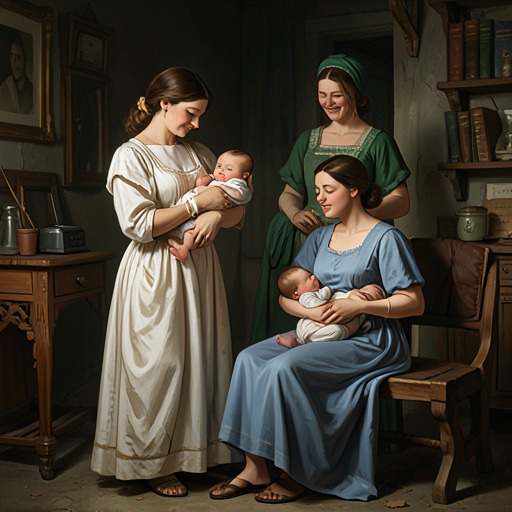
Karen’s relationship with Tabitha deepens through repeated domestic gestures. At the Williams home, she greets Tabitha with evident pleasure and calls for Sandra MacIntire and Hannah to see their guest. Later, after Tabitha has fled the Moore household, Karen gives her practical instructions about coffee, a new toothbrush, breakfast, and lunch. She has already arranged for the MacIntire family to join the Williams family for Thanksgiving, turning an emergency refuge into a shared household gathering.
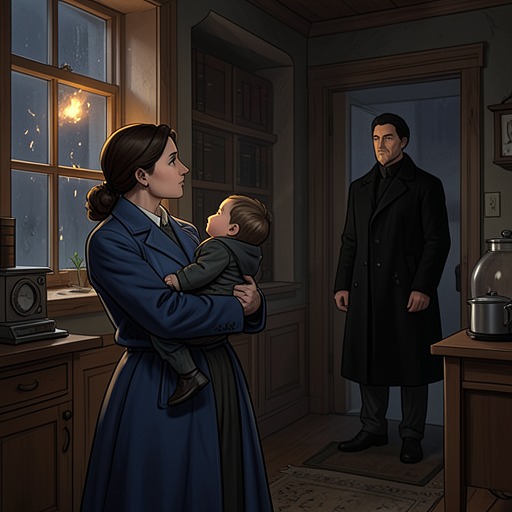
This care becomes most visible during the crisis involving Lisa Moore. When Karen receives the telephone call, she immediately imagines an emergency and asks whether Tabitha is safe. After driving to collect her, she is furious enough to have the horn of her Ford Taurus used to drown out Lisa’s screaming. Once Tabitha is in the car, Karen shifts from alarm to physical reassurance, pats her shoulder, and tells her that everything will be sorted out. She explicitly affirms that Tabitha did the right thing by calling her and says that she is proud of her.
The relationship reaches its clearest emotional definition when Karen tells Tabitha not to call her Mrs. Williams. If Tabitha trusts her enough to call when help is needed, Karen insists that Tabitha may call her “Momma Williams.” The title marks a chosen maternal bond rather than a claim of biological replacement. Karen offers the authority, shelter, and emotional availability of a mother precisely when Tabitha’s birth family has failed to provide them.
Conflict with the Moore Household and Ending
Karen does not romanticize the family emergency. She criticizes the police response for moving too slowly, complains that Darren MacIntire is not yet home to examine the drug evidence taken from Lisa’s purse, and identifies Lisa as the relative who abandoned her children and disappeared. Her anger is directed at both institutional delay and family betrayal. At the same time, she keeps the immediate priority clear: Tabitha is safe, and the adults must determine what happened to the evidence and the household.
The contrast with the Moore family is especially sharp at Thanksgiving. Lisa threatens Aiden and the other children over uneaten food, using deprivation of dessert as discipline, while Karen’s later hospitality emphasizes choice and provision: Tabitha may have coffee, breakfast, or lunch, and the adults will make room for her. The juxtaposition shows two competing family systems. Lisa’s household turns food into an instrument of control; Karen’s household uses food, rooms, transportation, and a holiday gathering to communicate safety.
Karen’s final role in the supplied events is to make refuge concrete. When Tabitha tells Alan that she is going to stay somewhere else for a while, Karen’s home and the combined Thanksgiving gathering with the MacIntire family stand behind that decision. Karen cannot erase the abuse, the school harassment, or the legal consequences of Lisa’s actions, but she can interrupt Tabitha’s isolation and provide a place where adults accept responsibility for her welfare.
Narrative Role and Significance
Karen Williams represents chosen family as a practical system rather than a sentimental idea. She hugs Tabitha, organizes social spaces, visits her in the hospital, challenges school gossip, rejects class-based shame, answers an emergency call, drives into a hostile situation, and offers shelter afterward. Each gesture enlarges the same principle: a child’s safety depends on adults who are willing to recognize harm and spend their authority on stopping it.
Her characterization also exposes the unequal distribution of emotional and protective labor. Tabitha has been forced to carry adult knowledge and adult fear, yet Karen does not praise that burden as maturity or leave it with her. She absorbs part of the crisis herself, contacts the school board, demands action from Matthew, coordinates families, and confronts the consequences of Lisa’s drug evidence. In this sense, Karen’s maternal identity is defined less by biological connection than by her willingness to respond.
Karen’s importance lies in the movement from public host to private refuge. The woman who first invites Tabitha to a lake-house Halloween party eventually becomes the woman Tabitha calls from danger. The social world Karen organizes is therefore not decorative background. It becomes the infrastructure of rescue, allowing Tabitha to move from stigma and abandonment toward witness, protection, and the possibility of belonging.