Lisa Moore
RELisa Moore is a mother of four sons, Alan Moore’s sister, and a figure whose return converts a damaged family history into an immediate domestic emergency. She has abandoned her children, struggles with heroin use, and treats reunion as if it were a restoration of authority rather than an opportunity to repair trust. Through Tabitha Moore’s hostile but increasingly concrete observations, Lisa is presented not simply as an absent relative but as the source of a recurring family danger: she reappears when her sons are vulnerable, claims them loudly, disciplines them violently, and leaves others to manage the consequences.
Identity and Family Background
Lisa’s place in the family is defined by absence before she is physically present. After Alan Moore bought a 1988 Oldsmobile Cutlass Supreme Classic to help Lisa financially while Danny Moore faced jail, Lisa took the money and disappeared instead of returning to her four sons. Grandma Laurie became responsible for the boys, while Alan Moore, Shannon Moore, and Tabitha Moore avoided discussing the abandonment because it remained painful for the adults and destabilizing for the children. Tabitha therefore rejects the assumption that blood makes Lisa trustworthy: in her judgment, Lisa is not family in the meaningful sense, because she abandoned the children who depended on her.
Lisa’s return is also connected to the social crisis surrounding her family. Uncle Danny’s criminal case and impending incarceration have already forced Alan Moore to help Lisa, and that help produces no reciprocal responsibility. The family’s poverty, strained loyalties, and dependence on Grandma Laurie create the conditions in which Lisa can leave, return, and still expect access to her sons. Her reappearance thus tests the difference between biological kinship and chosen or protective family bonds.
Return to Springton and the Performance of Reunion
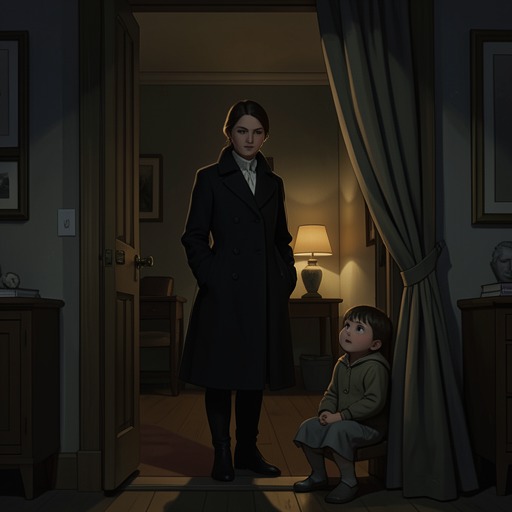
Lisa arrives at the Moore residence near midnight, complaining that the family had locked the door and that she nearly broke a window to get inside. Her entrance is noisy, presumptuous, and physically intrusive. She explains that she has returned because she no longer works at Wild Wings in Shelbyville, but offers no account of why she abandoned her children or why she has come first to Alan Moore’s home rather than directly to Grandma Laurie’s house.
She immediately casts herself as a protective relative, calling herself Auntie Lisa and promising that no one will harm Tabitha Moore while she is present. The performance is undercut by the details Tabitha notices: acne, unhealthy skin, an unusually loud voice, twitching possessiveness toward her handbag, and puncture marks on her arm, accompanied by another scab on her hand. Lisa’s appearance and manner reveal heroin use before she openly admits it. Her exaggerated cosmetics and caricatured presentation further suggest someone attempting to project a role—glamorous, maternal, or formidable—without demonstrating the conduct that would make that role credible.
Tabitha Moore asks Lisa why she came back, and Lisa gives a practical explanation about losing her job rather than an emotional or moral one. The evasiveness sharpens Tabitha’s suspicion that Lisa may be motivated by access to the family rather than by concern for her sons. Because Tabitha has received a substantial settlement, she wonders whether Lisa has returned to a household where money is available, not to rebuild a relationship with the children she left behind.
Reclaiming Authority Through Abuse
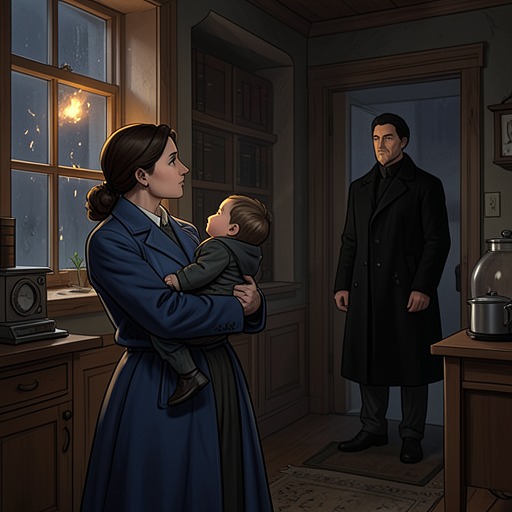
Lisa is reunited with her sons at Grandma Laurie’s home in a scene that resembles a triumphant homecoming only from Lisa’s perspective. She shouts greetings, whistles at the boys from the moving vehicle, and rises in the truck bed as though she were returning in a parade. Aiden Moore runs toward her in tears and nearly knocks her over when they embrace. The boys’ excitement makes the reunion emotionally real for them, but Tabitha Moore experiences it as an alarming restoration of access to children who have been safer without Lisa.
At Thanksgiving, Lisa turns ordinary food into a test of obedience. She orders Aiden Moore to eat ham that he had politely refused and threatens all four boys with the loss of dessert unless their plates are clean. Her method combines humiliation, arbitrary control, and an accusation that the children are disrespecting Grandma Laurie. Tabitha is especially angered because Alan Moore had merely offered the ham and the boys had shown good manners; Lisa imposes the food on them and then treats their resistance as disobedience.
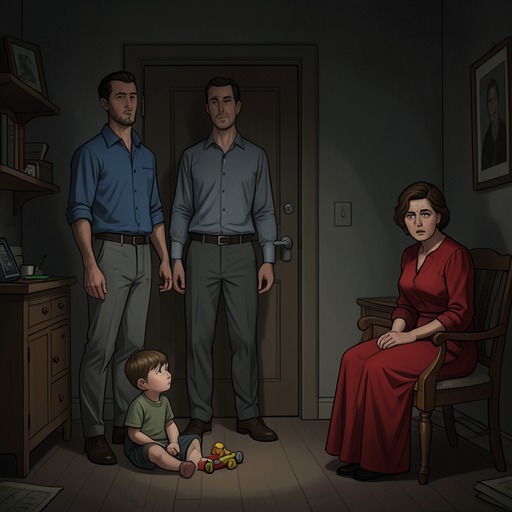
The conflict escalates when Lisa threatens to put Tabitha Moore “in her place.” When Joshua Moore reaches for Lisa’s arm, Lisa calls him a degrading name and backhands him across the cheek with enough force to rock him in his chair. The slap transforms Tabitha’s suspicion into immediate action. She rises and moves around the table before she has consciously decided whether she is checking on Joshua or attacking Lisa. Her rage is partly protective and partly rooted in the recognition of an old pattern: the Taylor sisters had abused Tabitha and Ashlee Taylor, and Lisa now reproduces the same structure of adult power directed against children.
Lisa’s violence also exposes the collapse of her claimed maternal identity. She returns presenting herself as the person who will protect the family, yet the first sustained exercise of her authority is an assault on one of her sons. Her reunion therefore becomes a repetition of abandonment’s underlying logic: the children’s needs are subordinated to the adult’s appetite, anger, and demand to be obeyed.
Heroin, Evidence, and Arrest
Tabitha Moore discovers the clearest material proof of Lisa’s condition in the bathroom. Lisa’s purse lies open beside a worn Batman thermos, a disposable lighter, a blackened spoon, and a syringe. When Lisa pulls back the shower curtain, Tabitha quickly takes the syringe and places it in the open purse. She then leaves the house with the evidence, believing that removing it is necessary to protect the boys and force the adults to acknowledge what Lisa is doing.
Tabitha tells Karen Williams that Lisa had been injecting heroin in the bathroom and that she has the evidence. Karen is so shocked that she brakes the car in the deserted streets of Springton. The discovery changes Lisa from a troubling, abusive relative into a person whose drug use creates a criminal and child-protection emergency. It also shows Tabitha assuming an adult investigative and protective role: rather than waiting for a responsible parent or institution to intervene, she enters the bathroom, identifies the syringe, preserves it, and carries it to someone she trusts.
The police confirm that Tabitha was correct: the contents are heroin. Officer Williams nevertheless explains that Tabitha’s removal of the evidence creates a legal complication. If Lisa had been caught with the drugs by the officer, possession charges would be straightforward; because Tabitha moved the evidence, proving possession may require additional legal maneuvering. The scene gives the object itself a decisive role. The syringe, spoon, lighter, purse, and Batman thermos are not merely background details; arranged on the table, they become the material record of a concealed life and the imperfect basis for institutional action.
Lisa is eventually arrested after officers pick her up late at night. She does not even make it out of Springton in the Oldsmobile Cutlass Supreme Classic before passing out in the police cruiser and urinating on herself. She wakes to Miranda rights and handcuffs, tests positive for opiates, and is already entangled in possession and misdemeanor-theft matters from Shelbyville. The authorities also arrange for Child Protective Services to determine custody of the four boys. Her arrest therefore has consequences beyond punishment: it interrupts her access to the children and begins transferring responsibility away from Lisa and toward formal protective systems.
Narrative Role and Consequences
Lisa Moore functions as the most concentrated embodiment of the family’s cycle of abandonment and abuse. Her return forces Tabitha Moore to distinguish between sympathy and trust, between family membership and family responsibility, and between a child’s longing for a parent and that parent’s capacity to provide safety. Aiden Moore’s tearful embrace and Joshua Moore’s flinch at the table show both sides of Lisa’s effect: the boys still want their mother, yet her presence immediately places them at risk.
Her behavior also pushes Tabitha into an unstable substitute-parent role. Tabitha tries to protect the boys, monitors Lisa’s physical signs of addiction, investigates the bathroom, gathers evidence, and seeks help from Karen Williams and Officer Williams. The burden is morally understandable but structurally dangerous: an adolescent is compelled to perform the work of a parent, investigator, and advocate because the adults around Lisa have repeatedly failed to establish reliable boundaries.
The confrontation ends not with reconciliation but with separation. Lisa’s arrest removes her from the household, while the custody process offers the boys a chance to remain under safer care. At the same time, Tabitha leaves the Moore home after the wider family conflict, telling Alan Moore that she will stay somewhere else for a while. Lisa’s crisis therefore becomes one of the immediate causes of a second rupture: her return damages not only her relationship with her sons but also the fragile household that has been trying to protect them.
Lisa’s significance lies in this refusal of the sentimental family-reunion pattern. Her homecoming does not heal the past. It dramatizes how biological ties can be invoked as permission for renewed harm, and how protection sometimes requires treating a relative as an outsider. The final movement of her storyline replaces family forgiveness with evidence, arrest, custody intervention, and distance—the painful but necessary recognition that Lisa’s children deserve care more than they deserve access to an unsafe mother.