Event 1
Execution of Jean-Marie Bastien-Thiry
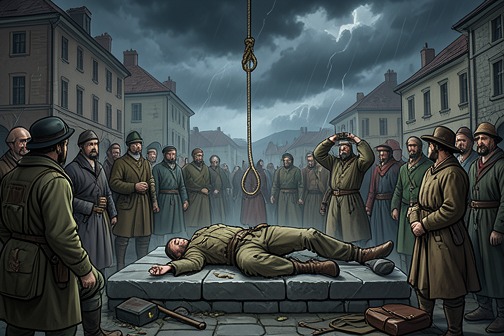
The [Execution of Jean-Marie Bastien-Thiry](entity:event-recall-event-execution-of-jean-marie-dbc6790350fc) is the novel’s opening execution and its first major reversal: the death of a man held responsible for an attempt on [Charles de Gaulle](entity:character-recall-character-charles-de-gaulle-979aaa393a51)’s life appears to close the danger, but instead helps initiate the plot that brings the President closer to another assassination. On [March 11, 1963](entity:time-recall-time-march-11-1963-d068cb14f328), Bastien-Thiry was shot in the courtyard of [Fort d'Ivry](entity:location-recall-location-fort-d-ivry-f3e357887dc6). The scene gives the execution the weight of a public reckoning while making its political consequences unsettlingly immediate: the condemned man dies, but the movement against de Gaulle does not.
## Verdict and Refused Clemency
The execution followed the Supreme Military Court’s verdict of March 4. Bastien-Thiry and two others were sentenced to death; three more men who were still at large, including [Georges Watin](entity:character-recall-character-georges-watin-2d9dfe1295f0), also received death sentences. On March 8, de Gaulle listened in silence for three hours as the condemned men’s lawyers appealed for clemency. He commuted two death sentences to life imprisonment, but Bastien-Thiry’s sentence stood. The distinction makes the execution the result of a considered decision rather than a sudden act: the appeal was heard, some sentences were changed, and Bastien-Thiry remained condemned.
That night, Bastien-Thiry’s lawyer told him the execution had been fixed for March 11 and explained plainly that he was going to be shot. Bastien-Thiry continued to smile and shook his head. He told the lawyer that no French firing squad would raise its rifles against him. The scene places confidence and impending death in the same gesture: his refusal to believe the sentence does not alter the decision, and the execution that follows makes his prediction tragically wrong. The novel gives this exchange a particular force because the lawyer’s announcement is both practical information and the last warning before the state carries out its sentence.
## The Execution at Fort d'Ivry
At 6:40 in the morning, in the main courtyard of the military prison outside [Paris](entity:location-recall-location-paris-c02b439ce220), Bastien-Thiry stood bound to a stake driven into the gravel. A [French Air Force](entity:organization-recall-organization-51e4d925744a) colonel, he faced the soldiers from a distance of twenty metres. The narrative attends to the small physical actions that make the procedure irreversible: a foot scuffs the grit, a blindfold is wrapped over his eyes, and the priest’s murmuring is set against the crackle of twenty rifle bolts as the squad charges and cocks its carbines.
The surrounding city continues its ordinary morning. Beyond the prison walls, a Berliet truck sounds its horn as another vehicle crosses its path toward the city centre. Its noise masks the officer’s order to aim. The rifle fire produces no visible disturbance in the waking city beyond a brief flutter of pigeons; seconds later, the single sound of the coup de grâce is lost in the growing traffic. By setting the execution’s decisive sounds against vehicles, birds, and the city’s rising din, the passage makes the event both exact and strangely unregistered. A man is killed inside the prison, while everyday life outside gives no sign that anything has changed.
## A Death That Begins Another Plot
The novel explicitly rejects the expectation that Bastien-Thiry’s death will end attempts on de Gaulle’s life. His execution was supposed to put a stop to them, but by a quirk of fate it marks a beginning. That reversal shapes the book’s opening: the narrative first shows the outcome of the earlier campaign against the President, then turns back to explain how the events of August 22, 1962, created the conditions for a new threat. The execution therefore acts as both conclusion and prologue, fixing the cost of the earlier attack before tracing the chain of decisions that follows.
The immediate link is the radio report. Bastien-Thiry’s execution was announced on the 8 a.m. news of Radio Europe Number One in French, a broadcast heard across much of Western Europe by listeners who tuned in. In a small hotel room in Austria, the report reached [Marc Rodin](entity:character-recall-character-marc-rodin-89cc10c0a89a), the new operations chief of the [Secret Army Organisation](entity:organization-recall-organization-71f79b1312e2). The novel identifies his room as the point from which a train of thoughts and actions began, bringing de Gaulle nearer to death than at any earlier time in his career. Rodin switched off his transistor radio and rose from a nearly untouched breakfast tray. The contrast is stark: the execution is over, yet its news becomes the stimulus for the next phase of the conspiracy.
## Political and Narrative Significance
Bastien-Thiry’s death joins judicial punishment to the continuing underground conflict over de Gaulle. The court proceedings, the appeal for clemency, and the firing squad establish the state’s formal response to the attempt on the President. Yet the broadcast’s effect demonstrates the limits of treating that response as a definitive ending. Rodin’s succession to operational leadership turns the execution into a point of transmission: the removal of one leader does not dissolve the organization or its objective, and news of the punishment helps redirect the action toward a new plot.
The opening also establishes the novel’s method of suspense. It reveals the death and its date at once, then withholds the explanation of why that apparent ending marks a beginning. Rather than asking whether Bastien-Thiry will survive, the narrative makes the reader follow the consequences of his death: from the courtyard, to the radio audience, to Rodin’s room in Austria, and back through the preceding events. The execution is decisive not because it ends the threat to de Gaulle, but because the story makes its failure to end that threat the premise of what follows.
Event 2
École Militaire assassination plot
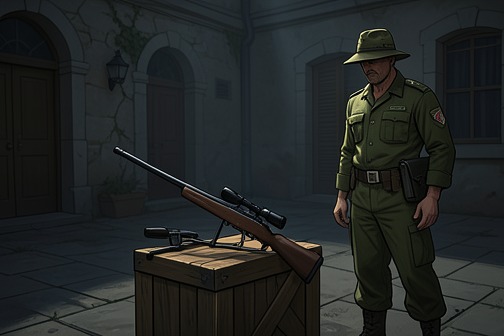
The [École Militaire assassination plot](entity:event-recall-event-cole-militaire-assassin-e1a3dc11adbb) was a thwarted attempt to kill [Charles de Gaulle](entity:character-recall-character-charles-de-gaulle-979aaa393a51) as he arrived for a military ceremony in [Paris](entity:location-recall-location-paris-c02b439ce220). Discovered on February 14, the plan called for a sniper to shoot him in the back as he entered the hall the next day. Three alleged participants were arrested and a scoped rifle was found, but the proposed trigger-man, [Georges Watin](entity:character-recall-character-georges-watin-2d9dfe1295f0), escaped. The plot’s exposure sharpened the political pressure for a forceful response to the OAS and its repeated threats against the President.
## Causes and Setting
The plot emerged amid a widening OAS campaign against Gaullist [France](entity:location-recall-location-france-f5cafc8a8ad4). Its methods reached beyond violence: [Antoine Argoud](entity:character-recall-character-antoine-argoud-0594da9a86c1) had arranged a series of interviews for Georges Bidault, head of the [National Resistance Council](entity:organization-recall-organization-424dbca5a4b5), the OAS’s political wing, so that the organization’s opposition to Charles de Gaulle could be presented in more respectable terms across Western Europe. At the same time, plastic bombs were exploding in cinemas and cafés around France. The [French Government](entity:organization-recall-organization-bc2c97077232) was alarmed both by these attacks and by the propaganda operation’s success.
Against that backdrop, another assassination plan was uncovered on February 14. Charles de Gaulle was due to lecture at the École Militaire on the Champ de Mars the following day. The choice of a public, scheduled appearance gave the plot a precise opportunity: the attack was to take place as he entered the hall, before the military ceremony began.
## The Plan and Its Exposure
The proposed shooter was to be concealed among the eaves of a neighboring block and fire at Charles de Gaulle from behind as he entered. The intended position turned the approach to the hall into the moment of greatest danger. The plan was disrupted before the scheduled appearance, and a rifle fitted with a sniper scope was discovered at Robert Poinard’s flat.
Those later tried in connection with the plot were Jean Bichon, artillery captain Robert Poinard, and Madame Paule Rousselet de Lilac, an English-language teacher at the Military Academy. Georges Watin was supposed to act as the trigger-man, but he escaped once again. At the later trial, it was stated that the conspirators had consulted Warrant Officer Marius Tho about getting Watin and his weapon into the Academy; Tho went directly to the police. The arrests and recovered rifle exposed a concrete plan, while Watin’s escape left its intended gunman beyond their grasp.
## The Ceremony and the Government’s Response
Charles de Gaulle went ahead with the military ceremony at the appointed time on February 15. He did so in an armored car, a concession to the threat that he accepted with marked reluctance. The decision preserved his public schedule while making the danger visible in the altered arrangements around his appearance.
The plot was described as strikingly amateurish, but its failure did not make it inconsequential. It angered Charles de Gaulle. The following day he summoned Interior Minister [Roger Frey](entity:character-recall-character-roger-frey-e98876c1c73e), struck the table, and insisted that the assassination campaign had gone far enough. The episode thus moved beyond an intercepted conspiracy: it reinforced the demand for a deterrent response and placed further pressure on the authorities to act against senior OAS figures.
## Significance in the Assassination Campaign
The École Militaire plot was one of several threats that made the danger to Charles de Gaulle seem immediate rather than abstract. Its exposed preparations—a specific public engagement, a concealed firing position, and a scoped rifle—showed how the President’s routine appearances could be turned into opportunities for attack. Yet the plan’s failure also demonstrated how information reaching the police could break an operation before the target entered its danger zone.
In the wider narrative, the incident belongs to the escalating conflict between the OAS and the Gaullist state, not to the later Jackal operation itself. The authorities’ response to this failed attempt helps explain the severe political atmosphere in which subsequent threats were assessed: another plot against Charles de Gaulle could provoke demands for extraordinary action, even when its perpetrators and methods differed.
Event 3
Kidnapping of Antoine Argoud
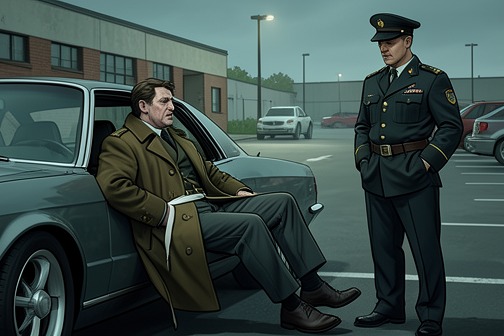
The kidnapping of [Antoine Argoud](entity:character-recall-character-antoine-argoud-0594da9a86c1) turned a covert French operation in [Munich](entity:location-recall-location-munich-a2858688fbfd) into a public shock in [Paris](entity:location-recall-location-paris-c02b439ce220)—and, by removing a senior OAS leader, helped elevate the deputy whose command would sharpen the threat against [Charles de Gaulle](entity:character-recall-character-charles-de-gaulle-979aaa393a51). Its method was as striking as its result: after German security organisations refused a formal request, the [SDECE Action Service](entity:organization-recall-organization-sdece-action-ser-d977116c48aa) seized Argoud abroad and left him in the parking area of the very police headquarters that would receive him.
## Background and Target
On February 22, a memorandum from the director of Service Two of the French external intelligence and counter-espionage service reached the head of the Action Service. It reported that Antoine Argoud, a former [French Army](entity:organization-recall-organization-french-army-34d1db7d3e17) colonel and one of the main leaders of the subversive movement, had fled to Germany. Intelligence indicated that he intended to remain there for several days. The memorandum proposed that he might be seized, but recorded that the request made to the competent German security organisations had been refused. Since those organisations now expected French agents to be pursuing Argoud and other OAS leaders, the memorandum urged maximum speed and discretion. The job was handed to the Action Service.
The operation thus arose from a gap between information and official cooperation: French intelligence had located Argoud, but its overt request for German assistance had failed. The response was not to abandon the pursuit. Instead, the service assigned to the task would act quickly and covertly against a political exile on German territory. That decision supplies the episode’s central tension: the intended secrecy of the operation would be broken by the conspicuous manner in which its captive was eventually delivered.
## Seizure in Munich
In the middle of the afternoon on February 25, Argoud returned to Munich from Rome, where he had been meeting other OAS leaders. Rather than go directly to Unerdstrasse, he took a taxi to the [Hotel Eden-Wolff](entity:location-recall-location-hotel-eden-wolff-66507a784c3c), where he had booked a room, apparently for a meeting. He never reached it. In the hotel hall, two men addressed him in faultless German. Taking them for German police, he reached into his breast pocket for his passport.
The apparent routine of an official encounter lasted only an instant. The men seized both his arms, lifted him off his feet and carried him outside to a waiting laundry van. When Argoud fought back, they struck him: a hand chopped across his nose, another blow landed in his stomach, and a finger pressed the nerve below his ear until he lost consciousness. The sequence made deception and force complementary parts of the seizure. Their German was convincing enough to prompt him to produce his passport; the sudden assault then prevented him from resisting or identifying what was happening.
## Delivery in Paris
Twenty-four hours later, a hoarse caller telephoned the [Brigade Criminelle](entity:organization-recall-organization-brigade-criminel-c5ce89186412) at the Paris Judicial Police headquarters at 36 [Quai des Orfèvres](entity:location-recall-location-quai-des-orf-vres-4dd9ff9cd7ab). Speaking for the OAS, the caller said Argoud was tied up in a van parked behind the building. A few minutes later, officers opened the van and saw him stumble into their midst. His eyes had been bandaged for the journey; they would not focus, and he needed help to stand. Dried blood covered his face, his nose had bled, and the police removed the gag from his mouth. Asked whether he was Colonel Antoine Argoud, he managed to answer yes.
The choice of destination transformed a clandestine abduction into an audacious piece of theatre. The Action Service had spirited Argoud across the frontier during the previous night, then placed him outside the French police’s own building. The anonymous call presented him as a parcel waiting in the police parking lot; the narrator identifies this as the agents’ private sense of humour. That joke depended on the contrast between the victim’s helpless, injured condition and the captors’ control of the entire route—from hotel hall to van, across the border and into the police compound. Argoud remained imprisoned until June 1968.
## Political Consequences
The operation inflicted enormous demoralisation on the OAS by removing one of its principal leaders. But it also produced an unintended succession. Argoud’s shadowy deputy, the little-known but equally astute Lieutenant-Colonel [Marc Rodin](entity:character-recall-character-marc-rodin-89cc10c0a89a), was able to assume command of operations aimed at assassinating Charles de Gaulle. The account therefore presents the seizure as a bad bargain: a tactical success against the organisation’s existing leadership helped make room for a new commander and did not extinguish the assassination threat.
That reversal gives the episode a consequence beyond the fate of its captive. The operation was commissioned to act against the OAS leadership, yet its success altered who directed the campaign rather than ending it. Argoud’s forced removal and Rodin’s rise are joined as cause and consequence: the same intervention that weakened the organisation in the short term opened the way for the plot that would dominate the ensuing manhunt.
Event 4
1961 Algiers putsch
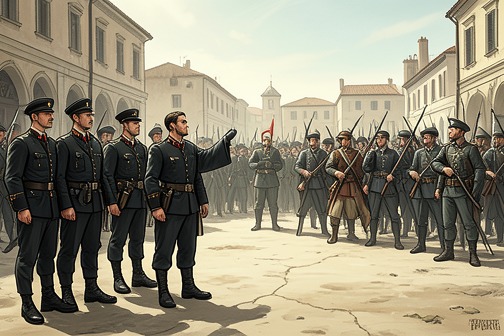
The [1961 Algiers putsch](entity:event-recall-event-1961-algiers-putsch-d49d34374357) was a failed revolt by French military officers who sought to prevent [Charles de Gaulle](entity:character-recall-character-charles-de-gaulle-979aaa393a51) from abandoning French rule in [Algeria](entity:location-recall-location-algeria-cca81da0e8e4). Its decisive reversal came not through a conventional battle but through a radio broadcast: when the army’s loyalty was tested, De Gaulle’s appeal reached conscripts across the territory and helped break the mutiny. The defeat scattered the conspirators’ hopes of winning the army as a whole, while Rodin’s surviving followers became part of the underground movement that continued the struggle.
## Causes and political setting
Rodin’s path to the putsch had been shaped by years of combat and by his belief that politicians had betrayed the soldiers who fought in the [Indochina](entity:location-recall-location-indochina-b669267e7f87) theater where Rodin served. The French withdrawal from that conflict deepened his loathing of politicians and Communists, whom he regarded as one and the same. Having seen men die in combat, he revered soldiers as people who sacrificed themselves for civilians; he interpreted civilian criticism of the military, including criticism of torture, as further evidence that the army was unsupported by the society it defended.
When Rodin was sent to Algeria in 1956, he treated the conflict as a chance for the army to redeem that earlier defeat. He believed that the army could still prevail if the authorities and the public backed it. As the rebellion spread, he discounted its growing costs and the demoralization of conscripts. In the cities, his campaign against bombers earned him the name “Butcher” in the Casbah. His military convictions had become inseparable from a political program: he expected the French state to preserve Algeria as French territory and regarded retreat as another betrayal.
De Gaulle’s return to power in 1958 initially seemed to confirm Rodin’s hopes. The founding of the Fifth Republic established by de Gaulle and the general’s use of the words “Algérie Française” led Rodin to expect full support for the army and the settlers. But De Gaulle’s actual policies, and the eventual evidence that his vision for [France](entity:location-recall-location-france-f5cafc8a8ad4) did not include a French Algeria, shattered that expectation. Rodin’s response was not to reconsider his faith in military rule but to turn his anger against De Gaulle and the political system.
## The revolt and its defeat
Rodin led almost his entire battalion into the [April 1961](entity:time-recall-time-april-1961-6a6b093234d9) putsch, with only a few young officers refusing to join. The revolt depended on military loyalties that its leaders assumed they could command. De Gaulle’s government, however, had already placed a simple means of communication in the hands of the troops: thousands of transistor radios had been distributed in the weeks before the announcement that talks with the FLN would begin. Many officers and senior noncommissioned officers considered the sets harmless, useful chiefly for bringing music from France to soldiers enduring heat, flies, and boredom.
The radios became decisive when the army’s allegiance was put to the test. Tens of thousands of conscripts in barracks across Algeria turned them on for the news and then heard De Gaulle speak directly to them: “You are faced with a choice of loyalties. [I am France, the instrument of her destiny. Follow me. Obey me.](entity:expression-recall-expression-i-am-france-the-in-5702892507a5)” The broadcast invoked the same voice Rodin had heard in June 1940, but now it was directed at troops whose loyalty the putschists needed. Some battalion commanders awoke to find that only a handful of their officers and most of their sergeants remained with them. The mutiny was broken before it could establish itself as a successful seizure of power.
## The remaining force and the [Secret Army Organisation](entity:organization-recall-organization-71f79b1312e2)
Rodin was less isolated than many commanders. One hundred and twenty of his officers, noncommissioned officers, and rankers remained with him, in part because his unit contained a higher proportion of experienced soldiers from the Indochina theater and the Algerian countryside. That surviving group did not reverse the putsch’s defeat, but it gave Rodin a body of committed followers after the wider army had failed to rally behind the revolt.
Together with other putschists, Rodin and his remaining men formed the Secret Army Organisation. The new organization’s members were bound by opposition to De Gaulle, whom they regarded as a traitor, and by the hope of overturning his government. The transformation mattered: the failure of an attempt to mobilize the army did not end the conflict. It shifted part of the struggle from an open military revolt toward an underground organization operating beyond the reach of ordinary command structures.
## Aftermath and significance
The putsch’s defeat helped set the course of Rodin’s subsequent career in exile. In the winter of 1961 he became deputy to [Antoine Argoud](entity:character-recall-character-antoine-argoud-0594da9a86c1), the OAS operations chief whose role included directing the organization’s campaign against Gaullist France. Argoud’s capture later left Rodin to assume command of operations aimed at assassinating De Gaulle. The succession illustrates how the movement adapted after losing its chance to act through a substantial part of the army: its surviving military personnel and organizers turned toward clandestine action.
The episode also exposes the opposing forms of authority at the center of the conflict. Rodin believed that the army, formed by combat and sacrifice, should determine the state’s course; De Gaulle appealed over the heads of rebellious officers to the conscripts themselves. The transistor radios, initially accepted as a modest comfort for troops, became instruments through which that appeal could reach them. The putsch failed not because Rodin’s followers had vanished, but because their loyalty was not enough to carry the army with them. Their survival gave the rebellion another form, while the broadcast made plain that the army’s allegiance could not simply be assumed by its commanders.
Event 5
Formation of the OAS
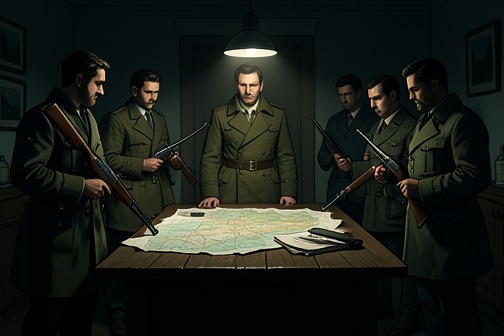
The formation of the [Secret Army Organisation](entity:organization-recall-organization-71f79b1312e2) (OAS) followed the failure of the [April 1961](entity:time-recall-time-april-1961-6a6b093234d9) military putsch against [Charles de Gaulle](entity:character-recall-character-charles-de-gaulle-979aaa393a51). As the revolt collapsed, [Marc Rodin](entity:character-recall-character-marc-rodin-89cc10c0a89a) retained the loyalty of 120 officers, non-commissioned officers, and enlisted men; together with other putschists, they formed a secret organization pledged to overthrow the President. The OAS was therefore born not from a successful seizure of power but from the surviving personnel and convictions of a defeated military rebellion, carrying its conflict into clandestine action.
## From military defeat to underground organization
Rodin’s commitment to the revolt grew out of his belief that the Army had been betrayed by civilian politicians. The French withdrawal from the colonial war in Asia had hardened his conviction that politicians and Communists were alike in their hostility to the military. He regarded soldiers as the people who sacrificed themselves in combat while civilians remained protected from its costs. To him, the abandonment of that war was a betrayal of the men who had died, and he resolved that there must be no repetition of such a surrender in [Algeria](entity:location-recall-location-algeria-cca81da0e8e4).
When Charles de Gaulle returned to power in 1958, Rodin initially believed that the new leader would give the Army the support it needed. De Gaulle’s public identification with French Algeria seemed to promise the political backing Rodin had long wanted. The President’s subsequent policies, including moves toward negotiations with the [National Liberation Front](entity:organization-recall-organization-1dd550d7bdcb), overturned that expectation. When Rodin became convinced that de Gaulle’s vision of [France](entity:location-recall-location-france-f5cafc8a8ad4) did not include a French Algeria, his former hope gave way to hatred of the political system and of the President himself. He led nearly his entire battalion into the putsch of April 1961.
## The radio that broke the revolt
The putsch failed before its commanders could secure the Army’s loyalty. In the weeks before negotiations with the National Liberation Front were announced, thousands of inexpensive transistor radios had been distributed to troops across Algeria. Officers and senior non-commissioned officers generally treated them as a harmless comfort: they brought music to barracks marked by heat, flies, and boredom. But when the Army’s allegiance was tested, the radios also carried Charles de Gaulle’s appeal directly to conscripts stationed throughout the territory.
That broadcast confronted soldiers with a competing claim to loyalty. Many battalion commanders found that officers and sergeants had left their units; in some cases only a handful remained. The account presents the revolt as broken by the same radios that had seemed merely recreational. The distribution of a commonplace object had created a communications channel through which the President could reach the troops over the heads of the officers attempting to mobilize them. For Rodin, whose own convictions remained unshaken, the outcome was a military defeat and the destruction of the expectation that the Army would rise as one behind the putsch.
## The OAS takes shape
Rodin’s unit did not dissolve with the failed revolt. Its 120 remaining officers, non-commissioned officers, and enlisted men joined other putschists to form the Secret Army Organisation, committing themselves to overthrow Charles de Gaulle. Their formation marked a change in the struggle’s means: the failed effort to turn the Army into an instrument of revolt gave way to an organization able to continue the fight outside the ordinary military chain of command.
The organization took shape amid the violent aftermath of the putsch and the impending end of French rule in Algeria. During the final seven weeks, as French settlers sold their property and fled the war-torn coast, the Secret Army carried out what the narrative describes as a last, destructive revenge on what its members were leaving behind. Once that period ended, the leaders whose identities were known to the Gaullist authorities faced exile. The OAS thus began with a core of surviving soldiers but developed within a wider crisis of defeat, flight, and underground resistance.
## Leadership and the widening campaign
In the winter of 1961, Rodin became deputy to [Antoine Argoud](entity:character-recall-character-antoine-argoud-0594da9a86c1), the OAS operations chief in exile. Argoud, a former Free French officer who had fought for the liberation of France and later commanded cavalry in Algeria, supplied the organization’s initiative and strategic imagination. Rodin contributed organization, cunning, and practical judgment. Their division of roles joined a political-military campaign to the practical work of keeping an underground organization active after its defeat and dispersal.
Argoud’s removal later exposed how much the OAS depended on this command structure. The Action Service secretly transported him across a frontier and delivered him, bound and blinded, to police outside their own building. Although his capture demoralized the OAS, his little-known deputy Rodin was positioned to take command of operations aimed at assassinating Charles de Gaulle. The change demonstrated both the vulnerability created by the capture of a senior leader and the consequence of having a successor able to assume operational control.
Under Argoud, the campaign against Gaullist France was conceived as more than armed action. He understood it as a struggle involving terror, diplomacy, and public relations, and arranged for Georges Bidault, head of the [National Resistance Council](entity:organization-recall-organization-424dbca5a4b5), to present the OAS’s opposition in newspaper and television interviews across Western Europe. This effort placed a respectable political argument beside the organization’s violence. The OAS’s formation had begun with a remnant of a failed putsch; its later campaign sought to make that remnant a continuing political and operational force, even as capture, exile, and declining support narrowed its prospects.
Event 6
Charles de Gaulle's return to power in 1958

[Charles de Gaulle](entity:character-recall-character-charles-de-gaulle-979aaa393a51)’s return to power in 1958 was both a change of government and a turning point in [Marc Rodin](entity:character-recall-character-marc-rodin-89cc10c0a89a)’s political life. De Gaulle displaced the failing Fourth Republic and founded a new republic; Rodin, a career officer shaped by colonial war, initially understood the change as a guarantee that the military would receive the backing it needed to retain French [Algeria](entity:location-recall-location-algeria-cca81da0e8e4). When de Gaulle’s policy moved toward negotiations and the territory’s separation, that confidence gave way to hatred and armed opposition. The episode connects the novel’s political history to the OAS campaign against de Gaulle and, ultimately, the plot to assassinate him.
## Political Return and a New Republic
In June 1958, de Gaulle returned to power as Prime Minister. He efficiently disposed of the corrupt and tottering Fourth Republic and founded the Fifth Republic. For Rodin, the change seemed to offer a decisive break with the civilian politicians he blamed for [France](entity:location-recall-location-france-f5cafc8a8ad4)’s failures. He had left [Marseille](entity:location-recall-location-marseille-feeb80613de6) for French Algeria in 1956 believing that the military campaign there could fulfill his life’s work and restore the Army’s standing. The new government appeared to give that belief a political future.
De Gaulle’s declaration of support for French Algeria was the signal Rodin had been waiting for. When de Gaulle visited the territory, Rodin experienced his presence as confirmation that the country’s leader would now act on behalf of the Army and the French settlers. Rodin expected political opponents to be swept aside, the trade unions subdued, and the military given the wholehearted support he believed necessary to defeat the insurgency. These were Rodin’s expectations, not policies that the novel presents as de Gaulle’s settled programme.
## Rodin’s Expectations and Their Collapse
Rodin’s reading of de Gaulle drew on years of resentment. He believed that the French withdrawal from the [Indochina](entity:location-recall-location-indochina-b669267e7f87) theater where Rodin served had betrayed soldiers who had died there, and he resolved that there would be no comparable betrayal in French Algeria. He had fought in the countryside and later in the cities, where his measures against bombers brought him the name Butcher in the Casbah. The widening war and its costs did not shake his conviction that more support from the mainland could secure victory.
At first, de Gaulle’s actions did not immediately dislodge that faith. Rodin treated the first reports of preliminary talks with Ben Bella and the [National Liberation Front](entity:organization-recall-organization-1dd550d7bdcb) as a possible tactical manoeuvre. He had sympathised with the 1960 settlers’ revolt but still believed de Gaulle knew what he was doing. The decisive break came when it became clear that de Gaulle’s vision of a restored France did not include French Algeria. Rodin’s faith and hope collapsed into hatred directed at the political system and, above all, de Gaulle himself. The return to power that he had welcomed thus became the precondition for his revolt against the new regime.
## From Disillusionment to the Putsch
Rodin led almost his entire battalion into the [April 1961 Algiers putsch](entity:action-recall-action-april-1961-algiers-put-941603ec2a6a). De Gaulle defeated the challenge before it could gain momentum, using radio to reach troops across the territory. In the weeks before the crisis, simple transistor radios had been distributed to soldiers and treated by many officers as harmless entertainment. When the Army’s loyalty was tested, conscripts heard de Gaulle’s appeal over those same sets. The radios that had seemed a comfort in the barracks became a means of breaking the mutiny.
Rodin retained 120 officers, non-commissioned officers, and enlisted men, in part because his unit contained more veterans of Indochina and the Algerian countryside than most. With other putschists, they formed the [Secret Army Organisation](entity:organization-recall-organization-71f79b1312e2), pledged to overthrow de Gaulle. The political transition of 1958 therefore did not simply replace one republic with another in the novel’s account: it generated competing claims to national loyalty, and Rodin’s military allegiance hardened into an underground campaign against the head of state.
## Consequences in the Assassination Plot
After the putsch failed, Rodin became deputy to [Antoine Argoud](entity:character-recall-character-antoine-argoud-0594da9a86c1), the OAS operations chief in exile. Argoud supplied the initiative behind the organisation’s offensive against metropolitan France; Rodin brought organisational skill and strategic caution. When the Action Service removed Argoud, Rodin assumed command of operations aimed at assassinating de Gaulle. The shift from political disappointment to attempted assassination is presented as a consequence of the conflict opened by de Gaulle’s return, but it is not treated as inevitable: it follows from Rodin’s particular conviction that the military had been betrayed.
The novel later places this history in the shadow of a public commemoration of liberation. De Gaulle refuses to alter his published itinerary, and the ceremony proceeds amid extensive policing and protective arrangements. The contrast is sharp: the leader whose return had once seemed to Rodin a promise of military triumph is now the target of an OAS operation, while the public rituals of national memory proceed under threat. The return of 1958 matters, then, not only as the establishment of a republic but as the political reversal that gives Rodin’s radicalisation and the later assassination conspiracy their historical logic.
Event 7
Algerian independence and the end of French rule
[Algerian independence and the end of French rule](entity:event-recall-event-algerian-independence-a-0ee920e0a5ce) mark the political rupture at the heart of the novel’s account of [Marc Rodin](entity:character-recall-character-marc-rodin-89cc10c0a89a) and the [Secret Army Organisation](entity:organization-recall-organization-71f79b1312e2). The transition is shown less as a single decision or battlefield outcome than through its consequences: a colonial war that Rodin believes could still be won, [Charles de Gaulle](entity:character-recall-character-charles-de-gaulle-979aaa393a51)’s turn toward negotiations, the collapse of a military putsch, and the flight of French settlers. For Rodin, withdrawal is not merely the loss of territory. It destroys his faith in the army’s political purpose and redirects his allegiance toward an underground campaign against the government he believes has betrayed it.
## The colonial war and Rodin’s expectations
Rodin’s understanding of the conflict takes shape through years of military service and accumulated disappointment. After serving in a colonial regiment and becoming a company commander during the campaign in Indo-China, he is promoted to major. The French withdrawal from that war, followed by an unhappy year at home, deepens his contempt for politicians and Communists, whom he regards as interchangeable. He comes to believe that only rule by a soldier can rescue the country from civilian politicians and what he sees as their disloyalty to the army.
The novel links that political conviction to Rodin’s experience of combat. He reveres soldiers as men who endure and die so that civilians can live in comfort. The criticism of military conduct he encounters after returning home, including criticism of the torture of prisoners for information, sharpens his sense that civilians neither understand nor value the army’s sacrifices. He sees the French withdrawal from Indo-China as a betrayal of the men who died there and resolves that there must be no repetition. When he is sent to [Algeria](entity:location-recall-location-algeria-cca81da0e8e4) in 1956, he believes the campaign will vindicate the army and restore its standing.
His early confidence is not shaken by the widening rebellion. Rodin and his men shoot insurgents, villages are razed, and prisoners are tortured, yet the revolt spreads through the countryside and into the cities. His answer is that the military needs more support from the government at home. He regards the territory as an integral part of the nation, inhabited by three million Frenchmen, and expects it to be defended like a region of metropolitan [France](entity:location-recall-location-france-f5cafc8a8ad4). After becoming a lieutenant-colonel, he moves from the countryside to the cities, first [Bone](entity:location-recall-location-bone-ca7750a3f563) and then [Constantine](entity:location-recall-location-constantine-adaa7a4742a8). There, the conflict changes in his eyes: bombs planted in cafes, supermarkets, and play areas turn the urban struggle into a war against civilians as well as insurgents. The measures he takes in Constantine earn him the name Butcher in the Casbah.
## De Gaulle’s reversal and the failed putsch
When Charles de Gaulle returns to power in 1958 and establishes the [French Fifth Republic](entity:time-recall-time-french-fifth-republic-747c95824124), Rodin initially believes that a soldier at the head of government will supply the support he has long demanded. He interprets de Gaulle’s declaration of French sovereignty over the territory as a promise of decisive action. The novel emphasizes the distance between that expectation and the policy that follows: Rodin imagines an assault on Communists, intellectuals, and trade unions, and a military victory; de Gaulle instead begins measures that lead toward talks with the [National Liberation Front](entity:organization-recall-organization-1dd550d7bdcb).
Rodin first treats rumors of negotiations as something temporary, a tactical choice by a leader who must know what he is doing. Proof that de Gaulle’s vision of national renewal does not include continued French rule shatters that trust. The betrayal Rodin perceives is political rather than personal: he has lost nothing directly through withdrawal, but believes the government has abandoned the army, the settlers, and the cause for which soldiers died. His response is hatred of the political system and, above all, of the president whose authority he had once welcomed.
Rodin leads almost his entire battalion into the [April 1961](entity:time-recall-time-april-1961-6a6b093234d9) putsch. The attempt fails before it can gain momentum, in part because de Gaulle’s government has prepared the ground among the troops. Radios distributed to soldiers as an apparently harmless diversion become a means for the president to address them directly. Across barracks, conscripts hear the same appeal to loyalty; commanders wake to find that many officers and sergeants have left them. The radios, initially treated as a comfort in the heat and boredom of military life, thus become instruments of political authority and help break the mutiny.
## From mutineers to an organisation in exile
Rodin retains 120 officers, non-commissioned officers, and enlisted men. His unit contains a larger proportion of experienced soldiers from Indo-China and the Algerian countryside than many other units, and those veterans remain with him when the wider army fractures. Together with other putsch participants, they form the Secret Army Organisation, pledged to overthrow the president. Independence and the end of French rule therefore do not conclude the novel’s conflict: they help transform a failed attempt to preserve colonial authority into an underground campaign against the government.
The final retreat is presented as both political defeat and material dislocation. As the National Liberation Front triumphs, French settlers sell the work of their lives for little and flee the war-torn coast. In the last seven weeks, Rodin’s organisation exacts what the narrative calls a final revenge on what the settlers are leaving behind. The account does not treat that violence as an alternative route to retaining the territory; it shows the destruction accompanying withdrawal and the narrowing choices left to a defeated movement. For the leaders known to the government, exile follows.
## The legacy of withdrawal
The event’s consequences persist in the structure and aims of the opposition. In the winter of 1961, Rodin becomes deputy to [Antoine Argoud](entity:character-recall-character-antoine-argoud-0594da9a86c1), the operations chief of the Secret Army Organisation in exile. Argoud supplies flair and inspiration for the campaign against metropolitan targets; Rodin contributes organisation, cunning, and practical judgment. Their partnership connects the collapse of the putsch to the later assassination plans: the military defeat does not dissolve the cause, but relocates its surviving leadership and changes its methods.
The novel also makes clear that Rodin’s interpretation is not a neutral account of independence. He understands the territory as inseparable from the nation, discounts the economic costs of the war and the demoralisation of conscripts, and treats further force as the obvious solution. His conviction that more support could have defeated the National Liberation Front shields him from evidence that the war is becoming unwinnable. By placing that certainty beside the army’s fracture, the settlers’ flight, and the formation of an exile organisation, the narrative shows how a political ending can be experienced by its opponents as both a national decision and a private collapse of faith. The end of French rule becomes the decisive break that carries Rodin from serving a state to trying to destroy its government.
Event 8
Mission C killings of seven barbouzes

The [Mission C killings of seven barbouzes](entity:event-recall-event-mission-c-killings-of-s-53c195be5a20) marked a brutal turning point in the covert conflict between the [Secret Army Organisation](entity:organization-recall-organization-71f79b1312e2) and [Charles de Gaulle](entity:character-recall-character-charles-de-gaulle-979aaa393a51)’s authorities in [Algiers](entity:location-recall-location-algiers-badef4fe514b). The deaths exposed the reciprocal violence of an underground war in which infiltration, intelligence, and retaliation blurred the boundary between state security work and clandestine killing.
## Background and killings
The [SDECE Action Service](entity:organization-recall-organization-sdece-action-ser-d977116c48aa) formed the core of the campaign against the Secret Army Organisation. Its men operated undercover, including by entering the organisation’s ranks and passing information that enabled arrests of its emissaries. As the organisation’s violence intensified, the Service was unleashed against it; wanted men who could not be drawn into [France](entity:location-recall-location-france-f5cafc8a8ad4) were sometimes killed abroad. The agents became known as barbouzes, or Bearded Ones, and the Secret Army Organisation hated them more than it hated the police.
In the final days of the struggle for power in Algiers, the Secret Army Organisation captured seven barbouzes alive. Their bodies were later found hanging from balconies and lampposts, with their ears and noses removed. The account leaves the wider record of the underground war unresolved: who died under torture, and at whose hands in which cellar, would never be fully known.
## Vendetta and its wider meaning
The killings triggered a vendetta against the Secret Army Organisation, drawing the Action Service’s Corsican connections into a conflict that already fed on reprisals. Corsicans dominated both the [Paris](entity:location-recall-location-paris-c02b439ce220) and [Marseille](entity:location-recall-location-marseille-feeb80613de6) underworld and the Service; the book links this history to an earlier bargain, when Corsican underworld figures helped the Allies during the 1944 landings in southern France and later gained control of much of the Côte d’Azur vice trade. In the early 1960s, Corsicans again fought for France, this time against the Secret Army Organisation. The conflict could become almost fratricidal: many members of the organisation were pieds-noirs, French people born in [Algeria](entity:location-recall-location-algeria-cca81da0e8e4), and the account stresses that they shared characteristics with the Corsicans who opposed them. The killings thus mark not only an episode of covert violence but the point after which the struggle was understood as a vendetta between groups with overlapping origins and underworld ties.
## The Service behind the reprisals
The killings took place against the operations of a force built for clandestine violence. The SDECE Action Service, headquartered in a complex of nondescript buildings off [Boulevard Mortier](entity:location-recall-location-boulevard-mortier-5c7b2545f243) near Porte des Lilas in north-east Paris, sent out roughly a hundred men, many of them Corsicans. After intensive physical training, recruits went to [Satory Camp](entity:location-recall-location-satory-camp-7c4dda4441af), where a special section taught them destruction, small-arms and unarmed combat, karate and judo, radio communication, demolition, sabotage, interrogation with or without torture, kidnapping, arson, and assassination. Some spoke only French; others were fluent in several languages and at home in foreign capitals. They were authorized to kill in the course of duty, and often did. The contrast between this institutional apparatus and the mutilated bodies found in Algiers sharpens the episode’s significance: the Mission C killings were a reprisal within a conflict where both sides used violence beyond ordinary policing, and where the full record of what happened in the clandestine war remained unknowable.
## The disputed boundary of state action
The aftermath also sharpened uncertainty about who acted for the state and under what authority. Some barbouzes remained outside the OAS and at the SDECE’s disposal; a number had worked as professional thugs before recruitment and retained underworld contacts, sometimes enlisting former associates for particularly dirty government jobs. Such practices gave rise to talk of a parallel police supposedly directed by one of Charles de Gaulle’s closest aides. The account rejects the existence of a separate force: the activities attributed to it were carried out by the SDECE Action Service or by gang bosses temporarily brought in from the milieu. Against that distinction, the seven killings stand in a landscape where formal state service, undercover operations, and underworld networks could converge, while the hidden war’s full chain of responsibility remained impossible to establish.
Event 9
OAS bank and jeweller robbery wave of 1963
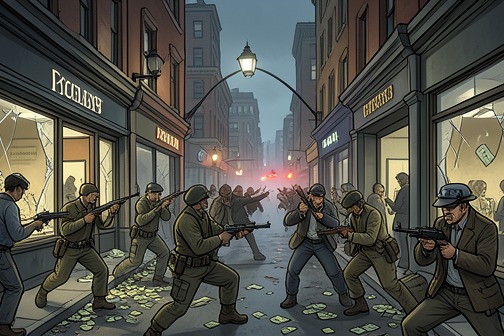
The [OAS bank and jeweller robbery wave of 1963](entity:event-recall-event-oas-bank-and-jeweller-r-94affd696e2b) was a coordinated-looking outbreak of violent crime across [France](entity:location-recall-location-france-f5cafc8a8ad4) that turned routine daylight business into a national security crisis. In the second half of June and throughout July, armed gangs repeatedly targeted banks, jewellers’ shops, and post offices; the authorities eventually recognized the OAS behind the robberies and concluded that the organization urgently needed money, though the purpose of the campaign remained unclear to the robbers themselves.
## Outbreak and Methods
The scale and pace of the attacks made the wave exceptional. Banks were held up almost daily, with pistols, sawn-off shotguns, and submachine guns. Smash-and-grab raids became so frequent that local police could be called away to a new case before they had finished taking statements from shaken, sometimes bleeding jewellers and assistants at the previous one. The threat was not confined to property: two bank clerks were shot in separate towns as they tried to resist.
The robberies were blunt assaults rather than technically sophisticated burglaries. Although bankers and jewellers pressed the Government to strengthen protection, more frequent night-time police checks did little to address the danger. The assailants were not skilled safe-breakers working after closing; they were masked, armed men who appeared during business hours, when customers and staff were present, and demanded that everyone raise their hands. Their readiness to shoot made the ordinary opening hours of a bank or shop the most dangerous time.
## Police Response and the Unexplained Proceeds
The response escalated as the robberies spread. By the end of July, three robbers had been wounded in separate attacks and taken into custody. The crisis had grown serious enough for the [Compagnies Républicaines de Sécurité](entity:organization-recall-organization-compagnies-r-pub-6e25bd2817a5), known as the [CRS](entity:organization-recall-organization-crs-c2fd9b61ed77), to be called in; for the first time, these anti-riot units were armed with submachine guns. It became routine for people entering a bank to pass one or two blue-uniformed CRS guards carrying loaded submachine carbines. The visible guard posts answered public alarm, but they could not remove the danger that came with an armed gang arriving in the middle of business.
Interrogations did little at first to explain the pattern. The three captured men proved to be either petty criminals exploiting the OAS’s existence as cover for general lawlessness or deserters from former colonial regiments who admitted OAS connections. None could explain why the robberies had begun so suddenly. Each said only that a gang boss had contacted him and assigned a bank or jeweller’s shop as a target. Investigators came to believe that these low-ranking participants had been promised a share of the proceeds and had carried out orders without knowing the campaign’s larger purpose.
In the latter half of June, the investigation was assigned to Commissioner [Maurice Bouvier](entity:character-recall-character-maurice-bouvier-7e69b9093f3d), chief of the [Brigade Criminelle](entity:organization-recall-organization-brigade-criminel-c5ce89186412). At his small, crowded office at the [Quai des Orfèvres](entity:location-recall-location-quai-des-orf-vres-4dd9ff9cd7ab), a chart tracked the cash stolen and the approximate resale value of the jewels. By the latter half of July, the total exceeded two million new francs, or four hundred thousand dollars. After subtracting the cost of organizing the robberies and paying the gunmen, Bouvier still found a substantial sum unaccounted for. The discrepancy suggested that the robberies were financing something beyond the immediate gangs’ rewards.
The authorities soon concluded that the OAS was behind the wave and urgently needed money, but the explanation for that urgency remained unknown. The robberies were thus both a public crime spree and a concealed financial operation: the men arrested at the scene could identify their instructions and targets, but not the end to which the accumulating funds were being put. The authorities discovered why only in the first fortnight of August, and by then the campaign’s apparent purpose had become part of a larger investigation.
## The OAS Leadership and the Unspent Balance
In the last week of June, as the robberies were spreading, [General Guibaud](entity:character-recall-character-general-guibaud-d949910f2fda) received a report from the SDECE’s permanent office in Rome: [Marc Rodin](entity:character-recall-character-marc-rodin-89cc10c0a89a), René [Montclair](entity:character-recall-character-montclair-a212e222565b), and André [Casson](entity:character-recall-character-casson-7eb69d719ac0), the three leading figures of the [Secret Army Organisation](entity:organization-recall-organization-71f79b1312e2) (OAS), had taken the top floor of a hotel near the Via Condotti and the floor below it for their bodyguards. Eight former Foreign Legion members guarded them day and night, and the leaders did not venture out. The report first suggested a conference, but the authorities came to suspect that the men were sheltering from the risk of abduction and interrogation after [Antoine Argoud](entity:character-recall-character-antoine-argoud-0594da9a86c1)’s kidnapping. Guibaud took grim satisfaction in seeing the leaders of a clandestine organization reduced to such precautions, yet filed the report routinely; it did not explain the large sum missing from the robbery accounts.
That gap gave the crime wave its larger significance without immediately solving its mystery. The authorities connected the Secret Army Organisation to the sudden need for money, while the arrested gunmen knew only their assigned targets and promised shares. The leadership’s guarded refuge offered a contemporaneous sign of the organization’s vulnerability, not an answer about how the stolen funds would be used. The reason for the urgent demand for cash emerged only in the first fortnight of August, turning the robbery investigation into one thread of a wider inquiry.
## From the Money Trail to the Hidden Secret
The first clear break in the mystery came not from the captured robbers but from the dying [Viktor Kowalski](entity:character-recall-character-viktor-kowalski-25c5e86af627). [Colonel Rolland](entity:character-recall-character-colonel-rolland-ed0c9b655c9f) revisited the tortured man’s confused final words, checking the transcript against the recording. A garbled place-name resolved into Pension Kleist, an address in Vienna; another correction changed a supposed reference to a good foreigner into a blond one, and clarified that Kowalski had described him as a killer. The money trail had pointed toward a purpose beyond the gangs’ shares, but the recovered words pointed toward the person at the center of the secret.
The distinction mattered: the men arrested during the robberies had known their targets, not the campaign’s larger design. Only later did a tapped call to the OAS leaders’ hotel in Rome report that Kowalski had talked before dying and that the Jackal was exposed. The sudden need for funds thus led into a different kind of investigation, one driven by fragmentary intelligence and the prospect of a professional assassin rather than by the testimony of the street-level gunmen. The robbery wave’s unresolved balance became an early sign that the visible crimes were financing or serving a concealed operation whose true stakes would emerge through the pursuit of the killer.
Event 10
OAS plot to assassinate Charles de Gaulle with the Jackal
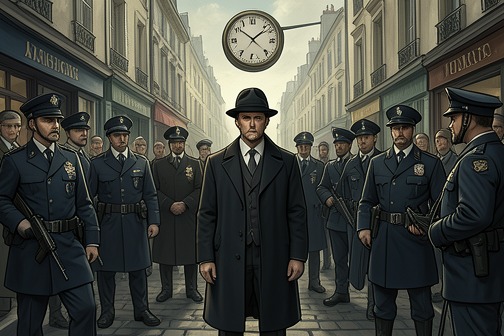
The [OAS plot to assassinate Charles de Gaulle with the Jackal](entity:event-recall-event-oas-plot-to-assassinate-80fcf74269c0) began as [Marc Rodin](entity:character-recall-character-marc-rodin-89cc10c0a89a)’s answer to a security problem: after failed attempts and police penetration of OAS networks, the familiar pool of French conspirators could no longer reach the President. Rodin’s solution was to hire an unknown foreign professional, a man outside the organization’s files and [France](entity:location-recall-location-france-f5cafc8a8ad4)’s police records. The plan gave the assassin a new identity and a path into France, but its exposure transformed the contract into a race between a concealed timetable and an international investigation.
## Origins and the security problem
Rodin approached the assassination as a practical problem rather than a matter of finding another willing gunman. The failures at [Petit-Clamart](entity:location-recall-location-petit-clamart-08bcb9b238c0) and the Ecole Militaire had made the task harder, while security around [Charles de Gaulle](entity:character-recall-character-charles-de-gaulle-979aaa393a51) had tightened into concentric rings. Rodin spent two hours working through possible plans, testing each against its obstacles; security remained the decisive difficulty. The danger was not simply that an assassin might be caught, but that a familiar plot or familiar participant would be recognized before he could get close.
The surrounding conditions had worsened sharply for the OAS. Following the interrogation of prisoners after Petit-Clamart, three networks inside France had been shut down. Police raids uncovered weapons and supplies, and two further plots were overwhelmed while their conspirators met. The Action Service had penetrated the organization, and the kidnapping of [Antoine Argoud](entity:character-recall-character-antoine-argoud-0594da9a86c1) showed how far it was prepared to go to seize and interrogate OAS leaders. With Argoud under interrogation, OAS leaders scattered abroad; the organization faced a loss of funds, support, members, and credibility. The execution of [Jean-Marie Bastien-Thiry](entity:character-recall-character-jean-marie-bastien-f7bb795c34d0) deepened the morale problem. A large, coordinated operation would risk being exposed long before its assassin reached Charles de Gaulle.
Rodin concluded that the candidate pool itself was compromised: men known to be both willing and capable were also known to French police. His alternative was an outsider, specifically a foreigner with no OAS or CNR membership and no place in French police files. The assassin would enter on a foreign passport, carry out the killing, and return to his own country. In Rodin’s calculation, escape from France mattered less than getting in undetected; he even imagined the OAS freeing the assassin after taking power. The political hope behind the violence was that the French public would rise against what the conspirators regarded as Charles de Gaulle’s regime.
## Finding and hiring the assassin
Rodin began searching for a professional mercenary assassin after hearing of Jean-Marie Bastien-Thiry’s execution. By the time he presented the idea to André [Casson](entity:character-recall-character-casson-7eb69d719ac0) and René [Montclair](entity:character-recall-character-montclair-a212e222565b), he had spent months looking for candidates and assembled three dossiers. He ranked them in order in case his first choice refused or could not take the job. The limited choice reflected the difficulty of finding credible information on professional killers: the most effective men, Rodin observed, might not appear in intelligence files at all.
The dossiers identified the candidates by nationality rather than name: a German, a South African, and an Englishman. Casson judged the Englishman far ahead on the record presented, and the other men ultimately accepted Rodin’s choice. During the meeting, Rodin asked the Englishman whether he would assassinate Charles de Gaulle. The man agreed, but treated the contract as a once-in-a-lifetime undertaking: success would end his career, while discovery could bring capture and revenge by the Gaullists. He demanded enough money both to live comfortably afterward and to secure protection. The discussion included a half-million-pound balance and an explicit warning that, if the OAS withheld payment, the assassin could turn against Rodin and his associates.
Rodin asked the Englishman to choose a codename. Since their discussion had turned to hunting, the man proposed [The Jackal](entity:character-recall-character-the-jackal-80dad21f2887), a name Rodin accepted. Before leaving, the assassin agreed to begin general planning while the OAS arranged further contact. He departed quietly, stayed the night at an airport hotel, and flew back to [London](entity:location-recall-location-london-420923d4a60a) the next morning. Rodin’s recruitment thus created an operational separation between the OAS leadership and the killer: the organization supplied the contract, while the foreign outsider supplied the anonymity it believed its own ranks had lost.
## Exposure and the investigation
The plot’s central premise—that an unknown assassin might evade the security system—also made the investigation unusually difficult. When [Claude Lebel](entity:character-recall-character-claude-lebel-dba6e7d3d3d3) began seeking international police assistance, he could offer neither a name nor more than a poor description. He initially presented the request as preliminary rather than as a formal inter-police investigation, because officials could not yet be certain that an offence had moved beyond intention or preparation. The defining clue was not an appearance or known identity but a professional profile: the suspect would have to be a political contract killer with successful assassinations behind him, not merely a gangland gunman.
The investigation later faced a further uncertainty: the killer knew that the existence of an assassination plot had been uncovered, but the police did not know where he stood in his own timetable. Lebel argued that this imbalance might help the authorities. The assassin could not know how much progress they had made, and, once identified under his assumed name and located, might still be apprehended unaware. The possibility that the killer was already in France, perhaps even in central [Paris](entity:location-recall-location-paris-c02b439ce220), made that uncertainty a source of acute alarm among the officials responsible for Charles de Gaulle’s security.
The police also inferred that information was reaching the assassin. From the suspected purchase of paint in [Gap](entity:location-recall-location-gap-2d60d692da31), and the possibility that the car had already been transformed on the drive from Gap to [Ussel](entity:location-recall-location-ussel-2f714473bfe9), Lebel reasoned that someone had warned him his identity as Alexander Duggan had been discovered. Investigators considered whether the warning had come through an OAS agent among the officials who passed orders, or through the known contact [Valmy](entity:character-recall-character-valmy-44a5a71eb562). The evidence did not establish the route of the leak, but it strengthened the conclusion that the assassin had been tipped off and had chosen to continue regardless.
## The timetable and the continuing danger
A week of apparent delay after entering France had initially puzzled Lebel. The assassin had left Gap without immediately becoming Pastor Jensen or taking an express train from [Valence](entity:location-recall-location-valence-15ae248120b4) to Paris. Lebel eventually understood the interval not as aimless waiting but as evidence that the killer had chosen a specific day. The assassin possessed his own timetable; the police needed to discover the intended date by comparing that inference with Charles de Gaulle’s public engagements.
The planned disguise and the police perimeter brought the plot’s anonymity into sharp focus. At a checkpoint, an officer reported letting through only one person: an old, visibly ill cripple with an identification card and a disabled veteran’s card, whose address was 154 [Rue de Rennes](entity:location-recall-location-rue-de-rennes-55568cec6a95). The passage had seemed unremarkable because the man appeared exhausted and sick in the cold. In the context of the investigation, that apparently ordinary exception showed how a disguise could exploit the human judgments built into a security cordon. The plot’s decisive contest was therefore not only between the OAS and the state, but between a killer’s carefully chosen identity and the authorities’ ability to recognize him before his privately selected moment arrived.
Event 11
Appeal of 18 June
The [Appeal of 18 June](entity:event-recall-event-appeal-of-18-june-3ac1ee8a79e9) is presented as both a wartime call to continue the struggle and a political force that returns decades later. In the novel, [Charles de Gaulle](entity:character-recall-character-charles-de-gaulle-979aaa393a51)’s words reach soldiers by radio during the 1961 putsch, helping to break the revolt; later, the appeal’s date and message surface in [The Jackal](entity:character-recall-character-the-jackal-80dad21f2887)’s reconnaissance of a [Paris](entity:location-recall-location-paris-c02b439ce220) square renamed in de Gaulle’s honor.
## The appeal and the putsch
On [18 June 1940](entity:time-recall-time-18-june-1940-b25eb34d46e2), Charles de Gaulle, speaking from exile in [London](entity:location-recall-location-london-420923d4a60a), addressed the French after their defeat in a battle. The message recalled in the novel turns that defeat into a demand for continued allegiance: “You are faced with a choice of loyalties. [I am France, the instrument of her destiny. Follow me. Obey me.](entity:expression-recall-expression-i-am-france-the-in-5702892507a5)” Its force rests on the contrast between a lost battle and an unfinished war, and on de Gaulle’s claim to embody [France](entity:location-recall-location-france-f5cafc8a8ad4)’s destiny.
That earlier appeal acquires immediate practical significance during the [April 1961](entity:time-recall-time-april-1961-6a6b093234d9) military putsch. In the weeks before the revolt, thousands of transistor radios had been issued to troops across [Algeria](entity:location-recall-location-algeria-cca81da0e8e4). Officers regarded them as harmless comforts, useful for carrying French pop music into barracks marked by heat, flies, and boredom. But when the Army’s loyalty was tested, conscripts turned on those same radios and heard de Gaulle’s voice after the news. The appeal thus returned not as distant history but as a direct choice of loyalty.
## The revolt’s defeat and aftermath
The radio broadcasts helped deprive the putsch of the support its commanders expected. Some battalion commanders awoke to find that only a handful of officers and most of their sergeants remained with them. The revolt was broken through a medium its leaders had treated as an amusement; the broadcast overturned their confidence in the Army’s allegiance.
[Marc Rodin](entity:character-recall-character-marc-rodin-89cc10c0a89a) retained 120 officers, non-commissioned officers, and enlisted men. His unit had a higher proportion than most of experienced veterans from [Indochina](entity:location-recall-location-indochina-b669267e7f87) and the Algerian fighting. Along with the other putschists, Rodin’s surviving force formed the [Secret Army Organisation](entity:organization-recall-organization-71f79b1312e2), pledged to overthrow de Gaulle. The appeal’s later role in the novel is therefore bound to both the failure of the putsch and the emergence of a clandestine movement against the president.
## A remembered date in Paris
The appeal returns in a different register when The Jackal surveys the square at the southern end of the [Rue de Rennes](entity:location-recall-location-rue-de-rennes-55568cec6a95) on July 28. Once called the Place de Rennes, it had been renamed [Place du 18 Juin 1940](entity:location-recall-location-place-du-18-juin-194-0d5ad773cd00) after the Gaullists took power in the City Hall. The Jackal’s gaze settles on the new nameplate, prompting recollection of what he had read the previous month about the lonely exile in London and the appeal that declared that France had lost a battle, not the war.
The surrounding square carries the same history in its setting: [Gare Montparnasse](entity:location-recall-location-gare-montparnasse-3f9c7cbd0ca1) stands on its southern side, while traffic streams in from the Boulevard du Montparnasse, Rue d’Odessa, and Rue de Rennes. For Parisians of the war generation, the place is laden with memories; for The Jackal, its commemorative name briefly interrupts the practical work of choosing a site. The appeal links public memory to the present-day plot, making the square’s name a reminder of de Gaulle’s wartime authority even as the assassin examines the ground around it.
Event 12
Assassination of John F. Kennedy
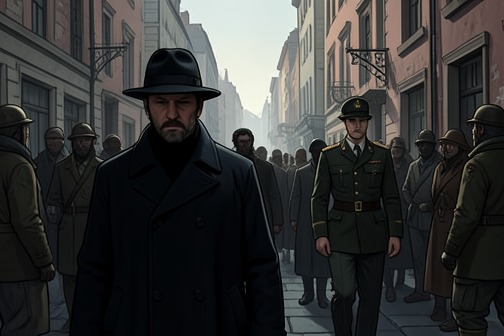
The [Assassination of John F. Kennedy](entity:event-recall-event-assassination-of-john-f-257d6ca663c6) is invoked in the novel as a real-world contrast to the threat against [Charles de Gaulle](entity:character-recall-character-charles-de-gaulle-979aaa393a51): Kennedy was killed in Dallas in [November 1963](entity:time-recall-time-november-1963-84633348837c), while de Gaulle survived, later retired in peace, and died at home. Rather than depicting the killing as a scene, the narrative uses it retrospectively to frame the stakes of the Jackal’s planned attack and the French security establishment’s confidence in its methods.
## Context and Comparison
The event appears as the Jackal considers the difficulty of killing de Gaulle. He understands that the French President is among the most closely and skilfully guarded figures in the Western world, and the narration says that assassinating him proved considerably more difficult than killing Kennedy. The comparison makes de Gaulle’s protection a practical obstacle in the Jackal’s calculations, not merely a measure of political importance.
## Security Judgments
The passage supplies an irony the Jackal himself does not know: French security experts had been allowed, through American courtesy, to study the precautions used to protect Kennedy. They returned disdainful of the American Secret Service’s methods. The assassination in Dallas is then presented as justifying that judgment: the narrative characterizes Kennedy’s killer as a half-crazed, security-slack amateur, in contrast to the formidable protection around de Gaulle.
## Narrative Significance
The killing functions as retrospective evidence within the novel’s account of security rather than as a developed episode with its own participants or sequence of actions. By setting Kennedy’s death against de Gaulle’s eventual peaceful retirement and death at home, the passage turns the contrast into a measure of the French system’s perceived effectiveness. It also sharpens the Jackal’s predicament: he faces skilled, forewarned security personnel, yet believes he can exploit his own anonymity and de Gaulle’s refusal to cooperate with his protectors.
Event 13
OAS plot to hire the Jackal to assassinate de Gaulle
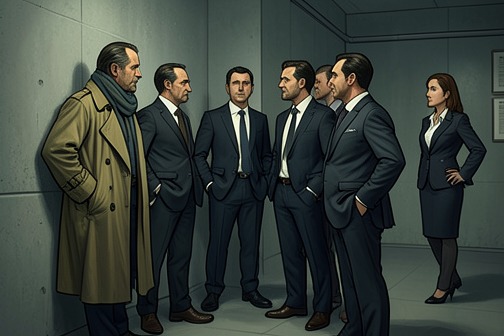
The [OAS plot to hire the Jackal to assassinate de Gaulle](entity:event-recall-event-oas-ebaa5db621aa) was an attempt to bypass the French security network by entrusting the killing of [Charles de Gaulle](entity:character-recall-character-charles-de-gaulle-979aaa393a51) to a foreign professional assassin. [Marc Rodin](entity:character-recall-character-marc-rodin-89cc10c0a89a) conceived the arrangement because the organization’s known attackers were already hunted and vulnerable to informers; its secrecy, payment, and operational terms gave the Jackal unusual independence, while leaving his employers with little ability to supervise him. Once investigators reconstructed the scheme from [Viktor Kowalski](entity:character-recall-character-viktor-kowalski-25c5e86af627)’s confession and other clues, the plot became a national emergency—but the Jackal still had his own timetable and chose to proceed.
## Why the OAS turned to an outsider
Rodin argued that the OAS’s available men, however capable and willing, were already known to the Secret Police. They could not move inside [France](entity:location-recall-location-france-f5cafc8a8ad4) without facing conventional police pursuit and the danger of betrayal by informers. He proposed an outsider as the remaining means of striking at [Grand Zohra](entity:expression-recall-expression-grand-zohra-3eafd060e597) while bypassing the intelligence network and confronting the authorities with an attack they might not be able to prevent even if they learned of it.
The choice also followed from Rodin’s view that secrecy itself had become scarce. Infiltrators had attained responsible positions within the OAS and reported its plans to French authorities; among [National Resistance Council](entity:organization-recall-organization-424dbca5a4b5) politicians, he believed, some were unwilling to grasp the full implications of the cause. Rodin accordingly restricted knowledge of the hiring plan to himself, René [Montclair](entity:character-recall-character-montclair-a212e222565b), and André [Casson](entity:character-recall-character-casson-7eb69d719ac0). Montclair’s role as treasurer and paymaster was to meet the fee; Casson was to arrange a small, carefully selected group inside France who could assist if the assassin asked for help. Rodin presented their loyalty and discretion as essential safeguards, not as a reason to widen the circle.
## Terms of the hiring arrangement
The Englishman agreed to kill de Gaulle but made clear that the job would cost a great deal. He described it as a once-in-a-lifetime undertaking: its risks made future employment unlikely, and the fee had to support him afterward and protect him against Gaullist revenge. The proposed transaction thus joined the OAS’s political objective to the assassin’s demand for financial security, without giving the employers control over how he would carry it out.
The Englishman made secrecy and autonomy conditions of the agreement. He asked how many people knew of the proposal and insisted that the answer remain three. Records of meetings, files, and dossiers were to be destroyed; if any of the three were captured, he reserved the right to call off the operation. He would do the planning himself and disclose its details to no one, including his employers. After leaving his [London](entity:location-recall-location-london-420923d4a60a) telephone number and address, he intended to abandon both and disappear. Contact would be limited to emergencies, and he would act only when the first $250,000 had reached his Swiss account or when he was fully ready, whichever came later. Rodin’s offer of intelligence from highly placed OAS men in France did not displace that division of control: the assassin, not his employers, would decide the plan and its timing.
Rodin arranged for the combined OAS accounts in [Switzerland](entity:location-recall-location-switzerland-0000fd9db54c) to transfer the first $250,000 to the hired assassin. He expected the remaining $250,000 to follow de Gaulle’s death, when industrialists and bankers of the extreme right who had previously refused further advances would, he believed, compete to support the soldiers expected to rule a reborn France. Casson objected to notifying the assassin of the transfer too soon. The promised value of a contact in [Paris](entity:location-recall-location-paris-c02b439ce220), he argued, lay in supplying current information about the President’s movements and any changes in security; an early payment notice might prompt the assassin to act before that intelligence could help him.
## Discovery and identification
The plot came into view after Rolland reconsidered the words recorded from Kowalski. What had been transcribed as a reference to a blond foreigner and a killer, alongside the repeatedly crossed-out word jackal, resolved into a description of the assassin and his code name. Rolland connected that description to a meeting of three OAS chiefs with a foreigner at the Pension Kleist in Vienna, shortly before the chiefs went into hiding in Rome. He also interpreted the preceding wave of bank and jewellery robberies as fundraising for the contract: the amount required, he reasoned, pointed to an attempt on de Gaulle rather than an ordinary criminal dispute.
Rolland treated the conclusion as urgent but not yet proven. His restricted report described the account as conditional on corroboration and warned that, if accurate, the foreign-born assassin known only by the code name [The Jackal](entity:character-recall-character-the-jackal-80dad21f2887) posed the most dangerous threat to the President’s life and constituted a national emergency. He had Vienna operatives investigate the Pension Kleist. The desk clerk recognized at least two of the men and recalled Marc Rodin registering as Schulz on June 15, holding a business conference, and leaving the next day. He also described an evening visitor with long, swept-back blond hair, fluent French, and wraparound dark glasses. The clerk could not see the visitor’s face clearly enough to provide a secure identification, leaving investigators with a description rather than a name.
[Claude Lebel](entity:character-recall-character-claude-lebel-dba6e7d3d3d3)’s search faced a related problem: the police knew neither the suspected assassin’s real name nor the stage his preparations had reached. In calls to police colleagues abroad, Lebel described the man as a political contract killer with successful assassinations behind him, distinguishing him from a gangland gunman. The uncertainty mattered. The authorities knew a plot existed, but, as Lebel explained to officials, the killer alone knew his timetable. Investigators could therefore hope to catch him unaware once they identified the name he was using and located him under it; they could not know how close he was to acting.
## An exposed plot, an independent assassin
The Jackal’s isolation was part of the arrangement from the beginning. After Kowalski’s death, nobody—not even Rodin and his associates—knew where he was. The scheme had given him freedom from routine contact, but that freedom also meant the OAS could not reliably recall him or monitor his preparations. With the plot exposed in principle, the Jackal faced a guarded target; turning back, meanwhile, risked a dispute with Rodin’s men over the $250,000 in his Zurich account. He anticipated that they might track him down, torture him to obtain the signed authority to release the money, and kill him if he refused to return most of it. Continuing would consume money and bring further danger, but retreat had its own cost.
The police later inferred that someone had warned him as investigators closed in on his Alexander Duggan identity. Lebel reasoned that if the car had been transformed with paint bought in [Gap](entity:location-recall-location-gap-2d60d692da31), the timing would suggest that the Jackal had been tipped off and fled quickly. He could not establish whether the leak came from the conference room or from an intermediary carrying orders, but suspected the clandestine contact known as [Valmy](entity:character-recall-character-valmy-44a5a71eb562). His further deduction was that the Jackal had not spent a week in France merely by chance: he had selected a day for the attempt and was waiting for it. The plot’s defining imbalance had therefore survived exposure. The OAS could hire the assassin and provide money and possible information; it could not set his timetable, and the police, though alert to the threat, had to infer that timetable from his movements.
Event 14
Operation “Find the Jackal”
[Operation “Find the Jackal”](entity:event-recall-event-55f9c5769327) is the covert French inquiry launched after authorities learn that a professional foreign assassin may be preparing to kill [Charles de Gaulle](entity:character-recall-character-charles-de-gaulle-979aaa393a51). Its defining problem is that the threat is grave but the target of the investigation has no known name: the OAS itself cannot identify the hired killer, while the President forbids a public search or visible retreat from his engagements. The operation therefore becomes both a race to build an identity from scattered records and a test of whether a large security apparatus can act effectively while concealing that it is acting at all.
## The threat and the limits of public security
The danger had been made harder by the previous failures of those seeking to kill de Gaulle. At a meeting with the OAS leadership, the English professional assassin explained that earlier attacks, including the Pont-de-Seine and [Petit-Clamart](entity:location-recall-location-petit-clamart-08bcb9b238c0) attempts, had made the target more difficult: the authorities were already forewarned of the general intention, even if they did not know the details of a new attempt. Routine security could no longer be expected to relax, and an attacker could not count on the panic and confusion that might help him escape after a shot. The Englishman judged the task possible but exceptionally difficult, and argued that the OAS needed a professional rather than a volunteer prepared to die in the attempt.
The warning later confronts the French government as an operational dilemma. [Alexandre Sanguinetti](entity:character-recall-character-alexandre-sanguinet-570e54c465e0) protests that the authorities must protect de Gaulle even though he will not accept restrictions on his movements. [Roger Frey](entity:character-recall-character-roger-frey-e98876c1c73e) explains that the Rolland report is not yet fully verified: it rests on [Colonel Rolland](entity:character-recall-character-colonel-rolland-ed0c9b655c9f)’s analysis of [Viktor Kowalski](entity:character-recall-character-viktor-kowalski-25c5e86af627)’s statements, and Kowalski has since died. Investigations in Vienna are still under way. But uncertainty does not remove the danger. Frey recounts the President’s formal orders: no publicity, no nationwide search, and no indication outside a small circle that anything is wrong. De Gaulle fears that disclosure would invite ridicule abroad and make it appear that the President of [France](entity:location-recall-location-france-f5cafc8a8ad4) is hiding from a single foreigner. He will not tolerate that appearance, and Frey warns that those responsible will face consequences if even the general impression of the affair becomes public.
The prohibition is not, Frey stresses, a prohibition on action. The response must be secret: identify the assassin, trace him wherever he is, and destroy him without hesitation. Yet the government’s existing resources cannot simply be set in motion. The OAS agents cannot name a man unknown to the organization’s own leaders; the SDECE cannot direct its Action Service against an unidentified person; the [DST](entity:organization-recall-organization-dst-a7caf41ae9f3) cannot know whom to intercept at the border; and documentary searches by the [Renseignements généraux](entity:organization-recall-organization-renseignements-g-7b63be051757) have no name to guide them. The police cannot arrest, and the [CRS](entity:organization-recall-organization-crs-c2fd9b61ed77) cannot pursue, a man they cannot recognize. The first task, Frey’s meeting concludes, is not to mobilize every force at once but to give the assassin a name.
## Lebel takes command
[Maurice Bouvier](entity:character-recall-character-maurice-bouvier-7e69b9093f3d) identifies the solution as detective work and names his deputy, Commissaire [Claude Lebel](entity:character-recall-character-claude-lebel-dba6e7d3d3d3), as the best detective in France. The Interior Minister summons Lebel and gives him a directive rather than asking for advice. For fifty minutes, Lebel listens to a briefing and reads the Rolland report under the scrutiny of the fourteen men assembled in the conference room. He emerges dazed: the scope of the task is immense, but its central instruction is precise. He is to establish his own office, draw on the information and resources of the organizations represented at the meeting, and incur whatever costs are necessary.
Lebel keeps his existing office and makes it the headquarters of Operation Find-the-Jackal. He asks for Caron, a younger inspector who had worked with him in Homicide and followed him to the [Criminal Investigation Brigade](entity:organization-recall-organization-d6018e6ac84d). The choice of a familiar assistant becomes the foundation of a deliberately compact command post within a much larger state response. Lebel orders the office made into a sealed working base: his regular secretary is to be removed from the matter, Caron is to act as both assistant and secretary, a camp bed and washing equipment are to be brought in, and coffee supplies installed. Ten outside telephone lines and a permanently assigned operator are required. A memorandum is to give Caron authority to request from department heads whatever Lebel himself could request. These details register the operation’s two governing needs at once: speed and strict control over who knows what.
## Building a name from incomplete records
Because no single agency can begin with a known suspect, Lebel turns the inquiry outward. He and Caron spend three hours in the basement communications room contacting senior crime investigators across several continents over secure, scrambled lines. Lebel presents the approach as a preliminary tip-off rather than a formal request between police forces: the French authorities are not yet certain that a crime has entered either the intention or preparation stage. He can offer little identifying information, only a poor description. The crucial lead is a qualification rather than a name: the unknown man must be one of the world’s leading professional political assassins, with several successful killings behind him. The silence that follows this description conveys how unusual and consequential the inquiry is, although Lebel still cannot give his foreign colleagues a suspect to check.
The records search eventually produces a more concrete line of inquiry. Throughout the night, archives are checked again for Alexander James Quentin Duggan. A card shows Duggan entering France from [Brussels](entity:location-recall-location-brussels-4d1364f23b86) on the Brabant Express on July 22; a second report records a passenger of that name travelling from [Paris](entity:location-recall-location-paris-c02b439ce220) to Brussels on the Etoile du Nord Express on July 31. A hotel registration from a small hotel near the Place de la Madeleine gives the same passport number as the information received from [London](entity:location-recall-location-london-420923d4a60a) and places Duggan there from July 22 through July 30. Caron favours raiding the hotel, but Lebel chooses a quiet visit to the proprietor in the early hours. He learns that the man he seeks had left by August 15, without waking the other guests or turning a discreet check into a conspicuous police action. The records provide a traceable identity and movements, but not a current location.
## From identification to field searches
As the inquiry develops, Lebel’s instructions convert sparse leads into local searches without relaxing the operation’s secrecy. After a car is found, he orders [Commissaire Valentin](entity:character-recall-character-commissaire-valenti-6516c2c8f0d4) to send the strongest available team to [Ussel](entity:location-recall-location-ussel-2f714473bfe9) and begin a square search centred on the discovery site. Officers are to ask at farmhouses, speak with farmers who regularly travel the road, and check village shops, cafés, hotels, and woodcutters’ shelters. Lebel gives them a description of a tall, blond man, English by birth but fluent in French, carrying three suitcases and a handgrip. The man is well dressed, has substantial cash, and may look as though he has slept rough. The search is designed to reconstruct where he went and what he tried to buy, not merely to locate a conspicuous stranger.
Valentin is also told to keep the Press away. If local reporters ask questions, the police are to describe the search as a mission of mercy for a possible survivor of a car crash who may be wandering in a dazed state. Lebel instructs Valentin that, if the suspect is found sheltered somewhere, his men must surround the place and hold him there rather than approach him. The order reflects the danger already identified: a lone confrontation with an armed professional could turn a search into an avoidable attack. Later, Lebel receives another report from Valentin at [Tulle](entity:location-recall-location-tulle-94f50e6e4ec6) and asks whether the car and the room at the château have been fingerprinted. Valentin confirms that both have been checked and that hundreds of prints match. The exchange shows the investigation testing physical traces alongside travel records and witness enquiries, though the report alone does not resolve the assassin’s whereabouts.
## A hidden pursuit against a visible target
The operation’s secrecy is especially strained by the President’s insistence on continuing public appearances. Preparations for the ceremonies include steel crowd barriers erected hours in advance, searches of the enclosed areas and sewers, searches of nearby houses and flats, and armed watchers on rooftops looking toward opposite roofs and windows. At [Notre-Dame de Paris](entity:location-recall-location-notre-dame-de-paris-2ccfd0d9cd8f), police are to be placed on the cornices, roof, and among the spires; priests, acolytes, and choirboys taking part in Mass are to be searched for concealed weapons. Special lapel badges are prepared for police and CRS officers in case the assassin tries to pass as a security man. Bullet-proof windows are secretly fitted to the President’s Citroën, its driver is told to move faster than usual, and unusually tall officers and officials are brought in to surround de Gaulle without attracting his notice. Even this intensive protection must remain concealed: the Minister says the President must not be told about the reinforced windows because he would be furious.
Lebel offers no last-minute device that can guarantee the assassin will be stopped. He tells the Minister that the man has reached France with a gun despite being betrayed and pursued by two of the world’s best police forces; he may be hiding behind yet another face and identity card. The security arrangements may be extensive, but Lebel cannot know how the assassin intends to penetrate them. He is certain only that the man must emerge the next day and that someone must recognize him. With no further protective measure to propose, Lebel asks to move among the ceremonies and watch. The operation thus reaches its immediate test not through a final deduction that identifies the killer, but through the ordinary discipline of observation: the police must keep their eyes open while the President continues to appear in public and the threat remains hidden.
Event 15
Petit-Clamart assassination incident
The [Petit-Clamart assassination incident](entity:event-recall-event-c110dd6d9aac) enters the novel through its consequences for [Jacqueline](entity:character-recall-character-jacqueline-7f3dd975e9d4) rather than through a description of the attack itself. In its aftermath, one of the would-be killers stayed at her flat for three nights while on the run. His brief refuge links the failed attempt to the private network of OAS sympathizers and couriers in which Jacqueline was becoming active.
## Jacqueline and the Underground
Jacqueline’s commitment to the [Secret Army Organisation](entity:organization-recall-organization-71f79b1312e2) grew from personal loss. François, who had not known about their baby, returned to [Algeria](entity:location-recall-location-algeria-cca81da0e8e4) in March 1961. After units of the [French Army](entity:organization-recall-organization-french-army-34d1db7d3e17) mutinied on April 21, fighting broke out between mutineers and loyal regiments; François was shot in a skirmish with a loyalist unit in early May. Jacqueline learned of his death in July, attempted suicide, and lost the baby. By December she was working actively for the OAS, driven by a desire to avenge François and Jean-Claude.
Her work initially consisted of errands and message-carrying, sometimes including plastic explosive concealed in a loaf in her shopping bag. She resented the limits placed on her role and believed she could do more. The three-night refuge after [Petit-Clamart](entity:location-recall-location-petit-clamart-08bcb9b238c0) gave her a more direct connection to a fugitive from the attempted assassination, but the novel does not say that she took part in the attack itself.
## The Fugitive’s Refuge and Its Cost
The would-be killer’s stay was a significant risk for Jacqueline: a month later he was caught, yet he said nothing about having lodged with her. The account leaves open whether he had forgotten the stay; it does not establish why he kept silent. To reduce the danger of the connection being discovered, Jacqueline’s cell leader told her to suspend OAS activity for a few months while the immediate pressure subsided.
The pause was temporary. Jacqueline began carrying messages again in January 1963. The episode thus shows both the practical vulnerability of the underground network—one fugitive’s arrest could expose a safe address—and the way its members managed that risk through enforced inactivity.
## What the Episode Establishes
The narrative does not recount the planning, execution, or immediate political aftermath of the Petit-Clamart assassination incident in this passage. Instead, it registers the event indirectly, through a fugitive’s brief presence in Jacqueline’s home and the pause imposed on her clandestine work. That narrow focus makes the incident part of her personal trajectory: the failed attempt is not presented as an isolated action, but as a point of contact between the OAS’s violence and the everyday risks borne by its couriers and sympathizers.
Event 16
Argoud kidnapping
The [Argoud kidnapping](entity:event-recall-event-0c0621d23f23)—identified in the novel’s reference as the abduction of [Antoine Argoud](entity:character-recall-character-antoine-argoud-0594da9a86c1) in [Munich](entity:location-recall-location-munich-a2858688fbfd)—serves as a cautionary precedent in the government’s response to the threat against [Charles de Gaulle](entity:character-recall-character-charles-de-gaulle-979aaa393a51). The conference does not recount the kidnapping itself; instead, officials invoke its notoriety while deciding how far they can go to identify and reach the people behind the plot.
## A precedent raised in conference
The head of the [DST](entity:organization-recall-organization-dst-a7caf41ae9f3) contrasts the seriousness of the threat with the possibility of handling the disappearance of a desk clerk more discreetly than the Argoud affair. The comparison makes the earlier kidnapping a measure of the exposure and political sensitivity surrounding covert action. At this point, the officials are not discussing Argoud’s fate in detail; they are using the affair to frame the risks of repeating a conspicuous abduction.
## The proposed target and the ban on kidnapping
Commissaire Ducret observes that, apart from the dead [Viktor Kowalski](entity:character-recall-character-viktor-kowalski-25c5e86af627), who had disclosed little, only four men know the Jackal’s identity: the Jackal himself and three men in a hotel in Rome. He proposes bringing one of the three back to [France](entity:location-recall-location-france-f5cafc8a8ad4). The Minister rejects that course under a formal instruction: kidnappings are prohibited, and an operation close to the Via Condotti would provoke the Italian Government.
The reference to the Argoud affair therefore sits beside a clear limit on the present investigation. The authorities want information from the men in Rome, but the Minister will not authorize an abduction to obtain it. The political cost is not treated as an incidental inconvenience; it is part of the decision about what methods the [French Government](entity:organization-recall-organization-bc2c97077232) can use.
## Operational obstacles and significance
[General Guibaud](entity:character-recall-character-general-guibaud-d949910f2fda) adds that the men are protected by a substantial security screen. Eight highly capable former Legion gunmen—or seven if Kowalski has not been replaced—guard the lifts, stairs, fire escape, and roof. Seizing one of the men alive would likely require a major armed assault, perhaps involving gas grenades and submachine guns, followed by an almost impossible escape from Italy and journey north to France. Specialists consider success unlikely without a commando-style military operation.
The episode’s account of the Argoud kidnapping is thus limited but consequential: it is a precedent that helps make covert abduction politically unthinkable, while the Rome security arrangements make it practically prohibitive as well. The conference must pursue the Jackal’s identity without simply removing a source from foreign territory, and the earlier affair helps define that boundary.
Event 17
Assassination plot at the École Militaire
The [Assassination plot at the École Militaire](entity:event-recall-event-d27d464c1369) was dismantled in February, with the plotters arrested; its immediate significance is less in any operational details, which the narrative does not provide, than in the false reassurance its suppression gave the authorities. When a new threat to [Charles de Gaulle](entity:character-recall-character-charles-de-gaulle-979aaa393a51) emerged, the earlier success became a point of comparison: the OAS might be weakening, yet a foreign assassin could evade the networks and dossiers that had made its members legible to the state.
## Background and dismantling
The available account identifies the plot as an earlier attempt against de Gaulle and dates its dismantling to February. The plotters were arrested, ending that particular danger. It does not describe their plan, intended method, or the circumstances of the arrests, so the episode enters the narrative as a completed operation rather than a dramatized scene.
For [Alexandre Sanguinetti](entity:character-recall-character-alexandre-sanguinet-570e54c465e0), the arrests marked a boundary between one security crisis and the next. In the two months that followed, he had been dealing with a wave of bank robberies and smash-and-grab raids. As the OAS apparatus came under pressure from the Action Service within and the police and [CRS](entity:organization-recall-organization-crs-c2fd9b61ed77) outside, he interpreted the robberies as the dying violence of an organization trying to finance exile. The École Militaire plot’s suppression helped make that interpretation seem plausible.
## The reassurance proves fragile
The new report overturns that sense of progress. Sanguinetti sees the threat as a return to the point from which the February arrests had seemed to move him forward: the president’s life must be protected, but the suspected killer is still unidentified. The earlier operation had produced arrests; this one presents the authorities with an attacker known only by a codename and possibly not yet identified as a criminal suspect in any ordinary sense.
That difference changes what the police can do. [Claude Lebel](entity:character-recall-character-claude-lebel-dba6e7d3d3d3) initially approaches foreign police chiefs through informal, preliminary inquiries, explaining that the authorities do not yet know whether an offense has been formulated or preparations begun. He gives them little more than a poor description, then asks whether their files—or their professional judgment—suggest a political contract killer with successful assassinations behind him. The search therefore begins not with a known network of plotters but with a category of person who may have operated outside the countries being asked to help.
## From arrests to an unknown adversary
The earlier dismantling had encouraged confidence in files built from OAS connections and informants. The later investigation exposes their limit: the suspected assassin is a foreigner, and anonymity has carried him beyond a system designed to recognize domestic associates. As the police try to identify him, they must work from changing indications rather than from an arrested group whose membership and purpose are already established.
Lebel’s reasoning also shows why the new threat cannot be treated as safely ended once the plot is exposed. The assassin has his own timetable, and the police do not know where they have interrupted it. Even after learning that the authorities know of a plan against the president, he may not know how much they have discovered. Later, evidence that someone tipped him off about the exposure of his Alexander Duggan identity helps explain why he abandoned his route from [Gap](entity:location-recall-location-gap-2d60d692da31) and moved quickly; it does not establish that the earlier École Militaire plot had the same leak or methods.
## Consequences for the manhunt
The distinction between the arrested plotters and an unidentified professional shapes the secrecy and scale of the response. The government forbids publicity and a nationwide search while the threat remains unconfirmed, and Charles de Gaulle refuses to alter his public engagements. At the same time, preparations for the Liberation Day ceremonies include steel crowd barriers, searches of surrounding buildings and sewers, armed observers on nearby roofs, and searches of people who might otherwise pass as officials or clergy.
Even such precautions cannot settle the central question. Lebel believes the attacker remains in [France](entity:location-recall-location-france-f5cafc8a8ad4), armed and concealed under another identity, and insists that he must be recognized when he emerges. A report that only an apparent disabled veteran has passed through a guarded gap illustrates the vulnerability of security procedures to an ordinary-looking identity and a plausible credential. In retrospect, the February arrests are not proof that the danger has passed; they are the contrast that makes the new danger visible—a plot contained through arrests followed by a pursuit in which the decisive adversary remains unidentified.
Event 18
OAS plot to assassinate Charles de Gaulle
The [OAS plot to assassinate Charles de Gaulle](entity:event-recall-event-oas-plot-to-assassinate-eb9f2f7804d6) turns on a failed conspiracy becoming more dangerous once it is exposed. The OAS hires [The Jackal](entity:character-recall-character-the-jackal-80dad21f2887), a foreign professional assassin, after earlier attempts against de Gaulle have failed; when the capture and death of [Viktor Kowalski](entity:character-recall-character-viktor-kowalski-25c5e86af627) reveal the plot’s existence, the French authorities must protect the President without publicly admitting the threat. The Jackal, meanwhile, learns that the operation is compromised but chooses to continue. The contest becomes one of inference and adaptation: police try to identify a concealed man and anticipate his timing, while the assassin relies on identities and preparations they do not yet know.
## The Contract and Its Risks
The OAS leaders present the assassination as a political necessity. They believe de Gaulle’s rule has disgraced [France](entity:location-recall-location-france-f5cafc8a8ad4) and that his death is required to restore the country to French control. Their supporters have already made six attempts: three were exposed during planning, one was betrayed the day before it could be carried out, and two reached execution but missed. The organization is considering a professional because its own efforts have failed to kill the President.
The Englishman advising the OAS explains why this commission is unusually difficult. De Gaulle is already forewarned of the general intention to kill him, even if he does not know the specific plan. Earlier attempts have ensured that his security will not lapse into routine; guards are likely to remain alert, and an attack would bring not merely panic but an immediate effort to seize the assassin. The adviser argues that a professional is necessary, but also stresses that the OAS’s previous failures have made the task harder for any successor. The arrangement therefore begins with a contradiction: the client wants a successful operation, yet its history of failed attempts has strengthened the target’s protection.
## Exposure and the Police Response
The plot’s secrecy breaks when Kowalski is captured and, before dying, gives information under pressure. A message from [Valmy](entity:character-recall-character-valmy-44a5a71eb562) to Poitiers reports that The Jackal is exposed and that Kowalski has talked. The message reaches the OAS leadership and is also intercepted by French security officials, who have been monitoring calls to the Rome hotel where the three OAS chiefs are staying. Its wording confirms both the capture and the danger that the assassin’s identity or purpose may be reconstructed.
Rodin recognizes how the authorities could have learned The Jackal’s codename. At their parting, he had addressed the Englishman as Mr Jackal within Kowalski’s hearing. The authorities may not know the killer’s real name, but they can connect the meeting in Vienna, its hotel, the description of a tall blond foreigner, and the codename. Rodin concludes that the operation is blown and that de Gaulle’s security will tighten; he resolves to warn The Jackal to stop, believing success has become impossible.
The French investigation is constrained by uncertainty and secrecy. [Claude Lebel](entity:character-recall-character-claude-lebel-dba6e7d3d3d3) cannot yet present the matter as a fully established official inquiry between police forces: the authorities have a tip, a poor description, and no name. He nevertheless arranges private, person-to-person calls through Interpol with homicide chiefs in seven countries—the United States, Britain, [Belgium](entity:location-recall-location-3c9126bcb552), Holland, Italy, West Germany, and South Africa. The calls are scheduled at twenty-minute intervals between seven and ten in the morning, with a list due by six. Lebel asks whether their files identify a political contract assassin with several successful killings, emphasizing that the suspected figure is not merely a gangland gunman.
The French government faces a parallel problem. It has not yet verified the report and refuses a public search or any outward sign that the President is hiding from a foreign assassin. De Gaulle’s formal instructions prohibit publicity and a nationwide hunt, partly because revealing the threat would invite press attention and foreign ridicule. The government must therefore prepare for danger while concealing the reason for its precautions—a policy that limits open action even as the investigation expands behind closed doors.
## The Jackal Chooses to Continue
Valmy’s warning reaches The Jackal, but it does not give him direct authority from Rodin to cancel the job. The assassin assesses what has changed: the police know of the plot, but he believes they do not know his current identity or location. He is travelling on a legitimate passport under an assumed name and carries three additional sets of false papers, including two foreign passports, with matching disguises. He also understands that the police are searching for a man using the passport of [Charles Calthrop](entity:character-recall-character-charles-calthrop-f6621203fb4f), whereas he can identify himself as Alexander Duggan.
The exposure nonetheless changes the operation’s terms. The Jackal recognizes that he will be attacking a guarded target whose security has been alerted; success now requires his plan to defeat a prepared screen. He weighs returning against continuing. Returning could bring a dispute with Rodin over the quarter-million dollars in a Swiss account: if he refused to return most of it, Rodin’s men might track him, torture him for the document needed to release the funds, and kill him. Going on would consume his money and bring increasing danger as the chosen day approached. He decides that the plan remains viable and proceeds independently, even though Rodin believes it must be called off.
## Inference, Timing, and Security
Lebel’s difficulty is that the assassin controls the timetable. The French have investigated for seventy-two hours but cannot know how far along The Jackal’s preparations have advanced. Lebel reasons that the killer knows the plot has been discovered but cannot know how much the police have learned. That uncertainty gives the authorities a chance to catch him unaware once they identify his new name and locate him, but it also means they cannot assume he has withdrawn.
A later clue sharpens the question of whether The Jackal has been tipped off again. Lebel reasons that if the assassin bought paint in [Gap](entity:location-recall-location-gap-2d60d692da31) to transform his car, and had already altered it before driving overnight toward [Ussel](entity:location-recall-location-ussel-2f714473bfe9), he may have learned that the Duggan identity had been discovered. Someone may have contacted him in France or [London](entity:location-recall-location-london-420923d4a60a). Lebel cannot prove an internal leak, but suspects the contact called Valmy, whose message to Rome showed access to the conspiracy’s information. The chain of deductions remains provisional: paint, travel, and a changed vehicle suggest warning, but do not identify who delivered it.
Lebel eventually interprets The Jackal’s week of delay after leaving Gap as evidence that the assassin has chosen a particular day, rather than simply trying to escape the country. He asks whether de Gaulle has engagements outside the palace over the next several days. The preparations for the Liberation Day ceremonies then reveal the scale of the defensive response: crowds will be held behind steel barriers; the enclosed areas, including sewers, will be searched; nearby houses and flats will be checked; and armed observers will watch rooftops and windows. Police will infiltrate even the roof and spires of Notre-Dame, while clergy, choirboys, police, and [CRS](entity:organization-recall-organization-crs-c2fd9b61ed77) officers will be checked or specially identified to thwart disguises. Bulletproof windows are secretly fitted to the President’s Citroën, and its driver is instructed to move faster than usual.
Yet the precautions cannot tell Lebel how The Jackal will get close. The detective believes the assassin is still in France, armed and perhaps using another face and identity card, despite being tracked by two leading police forces. At the barriers, a guard reports allowing through an apparently ill, elderly cripple who had an identity card and a war-invalid card and gave an address on [Rue de Rennes](entity:location-recall-location-rue-de-rennes-55568cec6a95). That exception shows how a legitimate credential and the appearance of helplessness might pass through a system designed to exclude strangers. The plot’s central danger persists to the last: extraordinary security narrows the assassin’s options, but the authorities still have to recognize him when he emerges.
Event 19
Assassination of Rafael Trujillo
The assassination of Rafael Trujillo is presented not as a directly witnessed scene but as a remembered, second-hand account: a dictator’s armoured car is stopped by a single marksman’s shot, while the shooter’s identity remains uncertain. That uncertainty gives the killing a second life in the novel—as a possible precedent for [The Jackal](entity:character-recall-character-the-jackal-80dad21f2887)’s method, and as a lead that an investigation into [Charles Calthrop](entity:character-recall-character-charles-calthrop-f6621203fb4f) cannot conclusively settle.
## The Ambush and the Uncertain Shooter
[Barrie Lloyd](entity:character-recall-character-barrie-lloyd-af513fc1b078) recalls the assassination during a conversation with [Bryn Thomas](entity:character-recall-character-bryn-thomas-c350a316d85d) about an Englishman rumoured to have carried out an extraordinary long-range shot. Trujillo, dictator of the [Dominican Republic](entity:location-recall-location-dominican-republic-f24af5465e0b), was killed on a lonely road outside [Ciudad Trujillo](entity:location-recall-location-ciudad-trujillo-0672421d5b9c). The account Lloyd remembers describes the dictator’s car travelling at about seventy miles an hour when a marksman fired from roughly one hundred and fifty yards. The bullet passed through the small triangular window on the driver’s side, the one part of the otherwise armoured car that was not bullet-proof. It struck the driver in the throat; the car crashed, and partisans closed in to kill Trujillo with pistols.
The precision of the reported shot is striking, but the story reaches Thomas as office rumour, not established evidence. Lloyd cannot supply the alleged shooter’s name and does not claim to know whether the Englishman was involved. As the two men pause over the account, the narrative evokes the arid roadside, the speeding car veering off the bitumen, and Trujillo being dragged from the wreck. The vividness of that image does not resolve the central uncertainty: the assassination is certain, while the marksman’s identity remains hearsay.
## Calthrop’s Dominican Republic Connection
The rumor acquired investigative weight when Bryn Thomas traced Charles Calthrop’s employment history. Calthrop had been unemployed for the previous year and abroad for a year before that, but for most of the 1960–61 financial year he had worked for a major British manufacturer and exporter of small arms. The company’s managing director, Patrick Monson, confirmed that Calthrop had been sent to Ciudad Trujillo in December 1960 and January 1961 to try to sell British Army surplus submachine guns to Rafael Trujillo’s police chief. The assignment placed Calthrop in the country around the period of the assassination, but it did not establish that he had taken part in it.
Monson described Calthrop as being in the police chief’s office, discussing the proposed arms sale, when news arrived that Rafael Trujillo had been killed in an ambush outside the city. The chief went pale and left for his private estate, where his aircraft and pilot were kept ready. Within hours, mobs were searching for supporters of the fallen regime. Calthrop, exposed as a salesman for the old government, had to bribe a fisherman to get off the island. The account gives his departure a practical explanation: after the regime collapsed, remaining there had become dangerous.
That explanation weakened rather than confirmed the rumor recalled by Lloyd. Calthrop’s presence in the Dominican Republic coincided with the assassination, and his arms-dealing work made the connection worth investigating; yet Monson’s account placed him in a meeting when the news broke and explained his hurried escape through the immediate political upheaval. Thomas recognized that the explanation made sense, but it could not identify the marksman or prove where Calthrop had been at the moment of the shot. The assassination therefore remained a suggestive but unresolved lead in the search for a possible English sniper.
## The Rumour as an Investigative Test
The assassination enters the manhunt through an intelligence officer’s recollection, not through a verified report of the shooter’s identity. Thomas asks whether the Englishman in the rumour had a name; Lloyd can offer none, remembering only that the story circulated in his office. The lead thus has an arresting technical detail but no identifying fact: it suggests what a marksman might have done, without establishing who did it.
The novel places the conversation above the Thames at the same time that The Jackal is finishing dessert at a rooftop restaurant in [Milan](entity:location-recall-location-milan-15a5d3d0bc36). That cross-cut makes the old report resonate with the present search for a nameless professional killer, while keeping resemblance distinct from proof. The assassination’s importance to the investigation lies precisely in this tension: a remembered shot seems to offer a precedent, but the uncertain source and missing name leave Thomas with an analogy rather than a solution.
## Trujillo’s Rule and the Event’s Aftermath
The remembered account frames the killing against the length and character of Rafael Trujillo’s rule: for thirty years, he had governed the Dominican Republic with an iron hand. The partisan ambush did not end with the rifle shot. Once the car had crashed and Trujillo was dragged from it, the attackers finished the killing with pistols; within hours, according to the later account of Charles Calthrop’s employer, the regime had fallen and crowds were seeking its adherents. The narrative therefore gives the assassination two linked consequences: the death of a long-ruling dictator and the rapid collapse of the political order that had protected his arms buyers. Yet it does not turn that upheaval into proof about the marksman. The shooter remains unnamed, and the scene’s historical force—an isolated road, an exposed point in an armoured car, and a regime overturned—coexists with the evidentiary gap that keeps the killing from identifying the professional killer sought by Bryn Thomas.
Event 20
Liberation of Paris
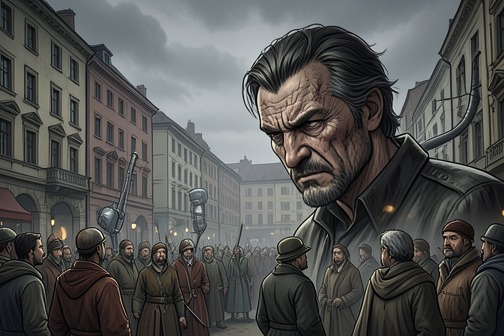
The [Liberation of Paris](entity:event-recall-event-4f5d47f01d20) was the 1944 liberation of the city from German occupation, remembered in the novel through its anniversary and its association with [Charles de Gaulle](entity:character-recall-character-charles-de-gaulle-979aaa393a51). Nineteen years later, that memory gives [The Jackal](entity:character-recall-character-the-jackal-80dad21f2887) a crucial piece of information: de Gaulle will not spend the anniversary elsewhere, making the commemorations a foreseeable opportunity for an assassination attempt.
## The 1944 Liberation and Its Memory
The novel invokes the liberation as a shared point of reference rather than staging the event itself. During a conference about the assassination threat, the minister recognizes August 25 as Liberation Day and recalls that he and many of those present had been with de Gaulle on the day [Paris](entity:location-recall-location-paris-c02b439ce220) was liberated in 1944. The brief recollection places the current crisis against a defining national event and connects the President personally to its anniversary.
The date also carries a political history that predates the liberation. In 1940, de Gaulle had spoken to the Army over the radio, calling on it to follow him; in 1961, his address again helped defeat a military putsch. The novel thus presents the 1944 anniversary as part of a longer public memory of de Gaulle’s wartime leadership and authority, not simply as a ceremonial date on the calendar.
## From Anniversary to Assassination Timetable
The Jackal’s choice of day emerges only when [Claude Lebel](entity:character-recall-character-claude-lebel-dba6e7d3d3d3) reconsiders the assassin’s movements. The Jackal had spent a week in [France](entity:location-recall-location-france-f5cafc8a8ad4) rather than immediately adopting another identity and travelling to Paris. Lebel concludes that this delay is purposeful: the assassin has chosen his day and has been waiting for it.
Once the conference identifies August 25 as Liberation Day, Lebel explains the calculation. De Gaulle would never be away from Paris on the anniversary, which the President regarded as his great day. A national commemoration therefore supplies the assassin with a dependable occasion and turns the President’s public attachment to the date into a vulnerability. The historical event does not itself cause the plot, but its continuing significance makes the target’s movements unusually predictable.
## The 1963 Commemoration and Its Irony
On Sunday, [August 25, 1963](entity:time-recall-time-august-25-1963-101509bfbf08), Paris celebrates its liberation from the Germans nineteen years earlier. The ceremonies draw a vast crowd, while 75,000 officers and officials work to keep order in the summer heat. Most spectators can barely glimpse de Gaulle as he moves through dense ranks of guards and police to officiate. Tall officials also form an accidental human screen around him, and all four of his bodyguards are present.
The contrast is sharp: the anniversary that makes the President’s appearance predictable also brings extraordinary security and puts the city’s crowds under close control. The Liberation of Paris is remembered publicly as a victory and a moment of national unity, yet in the present action its date becomes part of an assassin’s timetable. That collision between civic commemoration and private violence gives the event its decisive significance in the novel.
Event 21
Bastien-Thiry’s Petit-Clamart attempt on de Gaulle
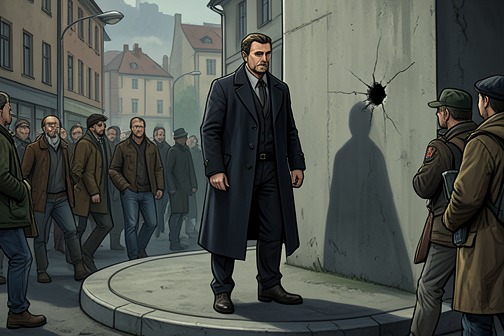
[Bastien-Thiry’s Petit-Clamart attempt on de Gaulle](entity:event-recall-event-73dd88e599db) was an unsuccessful attempt to shoot [Charles de Gaulle](entity:character-recall-character-charles-de-gaulle-979aaa393a51) at the [Petit-Clamart](entity:location-recall-location-petit-clamart-08bcb9b238c0) roundabout on August 22, 1962. The novel returns to it as both a failed attack and a turning point in the threat surrounding the President: its failure did not end the danger, and the history of attempts helped make ordinary security routines less dependable.
## Background and Stakes
The attempt belongs to the wider campaign against de Gaulle described by [Marc Rodin](entity:character-recall-character-marc-rodin-89cc10c0a89a). Speaking to a prospective professional assassin, Rodin says that supporters had made six attempts to eliminate the President: three were exposed during planning, one was betrayed the day before it was to happen, and two were carried out but misfired. The account places Petit-Clamart among the attacks that reached execution but failed, though it does not supply a detailed chronology of the other attempts.
The stakes were political as well as personal. Rodin presents the organization’s view that [France](entity:location-recall-location-france-f5cafc8a8ad4) was ruled by a dictator and that the country could be restored only if de Gaulle died. The Englishman assessing the proposed contract challenges the gap between that rhetoric and the attackers’ willingness to risk their own lives. In his judgment, both Pont-de-Seine and Petit-Clamart failed because no one had been prepared to make the attempt at the cost of certain personal danger. This is his assessment of why the attacks failed, rather than a detailed account of the events at the roundabout.
## The Attempt
The novel’s clearest retrospective description places the attempt on August 22, 1962, at the roundabout at Petit-Clamart. Lieutenant-Colonel [Jean-Marie Bastien-Thiry](entity:character-recall-character-jean-marie-bastien-f7bb795c34d0) and his men tried to shoot de Gaulle there. The attack did not kill him. The available account gives no further operational detail about the men’s positions, weapons, or the course of the shooting, keeping the event’s emphasis on its failure and subsequent consequences rather than reconstructing its mechanics.
## Failure and Security Legacy
The attempt’s failure did not restore a sense of safety. In assessing a future attack, the Englishman argues that de Gaulle was forewarned of the general intention to kill him. Security checks, he says, would therefore not lapse into the mechanical routines that might allow an assassin to exploit surprise and escape amid the panic after a shot. He treats the earlier attempts as having made any later operation more difficult: their history had alerted those guarding the President, even though the threat had not been removed.
The novel’s account of the later manhunt shows the practical weight of that legacy. The authorities debate how to protect de Gaulle while he continues to make public appearances, and the eventual security arrangements include steel crowd barriers, searches of ceremony areas and nearby buildings, and armed watchers on rooftops. These measures belong to the later plot, not to the immediate aftermath of Petit-Clamart; they illustrate how the continuing threat and the history of failed attempts shape the state’s response.
## Place in the Narrative
The event is recalled on [August 25, 1963](entity:time-recall-time-august-25-1963-101509bfbf08), one year and three days after the attempt, as the [Paris Liberation Day](entity:time-recall-time-04cdf0210ebb) ceremonies unfold. The narration links the attack at Petit-Clamart to a chain of events that reaches its crisis on that later summer day. This retrospective placement makes the earlier failure more than background: it marks the beginning of a continuing sequence of attempted violence, investigation, and heightened protection around de Gaulle.
Petit-Clamart also sharpens the contrast between a failed attack and an unresolved danger. The attackers did not kill the President, but the attempt helped establish that he remained exposed to political assassination. In the novel’s wider conflict, failure is not closure; it is part of the accumulating history that makes the next threat harder to detect and harder to contain.
Event 22
The Jackal’s assassination attempt on de Gaulle
[The Jackal’s assassination attempt on de Gaulle](entity:event-recall-event-83ae17fa5d25) is the climax of the manhunt: a contract killer chooses a nationally resonant public ceremony, penetrates its heavily controlled perimeter, and comes within a fraction of an inch of killing [Charles de Gaulle](entity:character-recall-character-charles-de-gaulle-979aaa393a51). The shot misses because de Gaulle bends to kiss a veteran; when the Jackal prepares to fire again, [Claude Lebel](entity:character-recall-character-claude-lebel-dba6e7d3d3d3) kills him inside the building from which he had taken aim.
## Background and the chosen setting
[The Jackal](entity:character-recall-character-the-jackal-80dad21f2887)’s target was not simply a public figure but a leader whose political importance was bound to [France](entity:location-recall-location-france-f5cafc8a8ad4)’s recent history. His reconnaissance brought him to the square at the southern end of [Rue de Rennes](entity:location-recall-location-rue-de-rennes-55568cec6a95) on July 28. The place, formerly called Place de Rennes, had been renamed [Place du 18 Juin 1940](entity:location-recall-location-place-du-18-juin-194-0d5ad773cd00) after the Gaullists took control of City Hall. The new name recalled the date Charles de Gaulle had addressed the French from [London](entity:location-recall-location-london-420923d4a60a), urging them to continue the war after France’s defeat. The Jackal paused before the nameplate, linking the square’s public meaning to the man he intended to kill.
The square also offered a view of the old [Gare Montparnasse](entity:location-recall-location-gare-montparnasse-3f9c7cbd0ca1) and its forecourt. The Jackal studied the surrounding buildings and the traffic crossing the broad space. The station was due to be demolished, and construction had begun for a replacement set farther back; the existing facade might therefore be present for one last Liberation Day. The place joined a practical line of sight to a charged landscape of memory. For Charles de Gaulle, the day commemorated the liberation of [Paris](entity:location-recall-location-paris-c02b439ce220); for the Jackal, it offered a predictable occasion on which his target would appear in public.
Claude Lebel later reasoned that the Jackal had planned the operation during his reconnaissance in the last eight days of July. The assassin understood that Charles de Gaulle would not stay away from Liberation Day, a ceremony that Lebel described as his great day. Lebel also judged that the Jackal had considered both the danger and his chances of escape: if he had believed the operation too risky, he would already have turned back. His continued presence suggested that he had prepared some means of overcoming the security measures.
## The investigation and the security problem
The threat reached Lebel as an extraordinary state assignment. After listening to the Minister of the Interior’s briefing, he was ordered to establish his own office and given access to the resources of the agencies represented at the meeting, without a limit on costs. He made Caron his sole assistant, arranged for a camp bed and basic supplies, and secured ten outside telephone lines with a permanent operator. The practical details mattered: the investigation had to be powerful enough to mobilize the state, yet secret enough that no one outside the team learned what it was pursuing.
Lebel’s initial enquiries abroad had to remain deliberately incomplete. He asked foreign police forces to consider a political contract killer with successful assassinations behind him, while explaining that the French authorities did not yet know whether an offence had been planned or prepared. The request exposed the difficulty of the case: the police had neither a name nor a strong description, only the inference that the intended killer would be an elite professional. Once the investigation identified Alexander James Quentin Duggan in frontier and hotel records, however, it could connect a July 22 arrival from [Brussels](entity:location-recall-location-brussels-4d1364f23b86) with a hotel stay near Place de la Madeleine through July 30 and a separate report listing Duggan on a July 31 train from Paris to Brussels. Lebel chose a discreet conversation with the hotel proprietor over a conspicuous raid.
As the search shifted to the countryside, Lebel directed police teams to begin at the place where the car had been found near [Ussel](entity:location-recall-location-ussel-2f714473bfe9) and to make a square search. They were to question farms, regular drivers, village shops, cafes, hotels, and woodcutters’ shelters, while keeping the press away by disguising the enquiry as a search for someone dazed after a car accident. When a report from [Tulle](entity:location-recall-location-tulle-94f50e6e4ec6) reached Lebel, he asked about fingerprints from both the car and the room at the chateau; the prints from the two locations matched. These accumulated records and field enquiries did not remove the danger, but they narrowed the search while the assassin continued towards the ceremony.
## The ceremony and the shot
Charles de Gaulle refused to change his published itinerary. On August 25, he was scheduled to rekindle the Eternal Flame at the [Arc de Triomphe](entity:location-recall-location-arc-de-triomphe-266566b52992), attend High Mass at [Notre-Dame de Paris](entity:location-recall-location-notre-dame-de-paris-2ccfd0d9cd8f), visit the shrine at [Mont-Valérien](entity:location-recall-location-mont-val-rien-9018586722ec), and later present Medals of the Liberation to ten Resistance veterans. The afternoon ceremony was to take place at four o’clock in the square in front of Gare Montparnasse. Security was intensified: people within two hundred metres were to be searched, press and diplomatic passes were to be replaced at dawn, and anyone carrying a package or a long object was to be removed. The precautions made the public occasion more difficult to enter, but did not persuade Charles de Gaulle to abandon it.
The ceremony drew a vast crowd, while seventy-five thousand people in uniform and civilian suits worked to keep order. Most spectators could scarcely see the Head of State behind the guards and police. Officials and palace staff also formed a human screen around him, alongside his four bodyguards. In the forecourt, the ten medal recipients stood opposite the parked cars; officials and diplomats occupied one side, while the Garde Republicaine and its band occupied the other. The Jackal was positioned above this ordered public space, with his rifle trained on the veterans’ line.
He selected the first veteran to receive a medal: a short, stocky man standing erect, whose head appeared in near-profile through the sight. Charles de Gaulle would approach him, listen to the account of his wartime valour, pin on the medal, and salute him. As the band played, Charles de Gaulle performed those acts and then bent to kiss the veteran on both cheeks, as custom required. From six floors up and about 130 metres away, the Jackal fired at the exposed temple he had been watching. The movement of the kiss carried Charles de Gaulle’s head out of the bullet’s path. The shot passed a fraction of an inch behind him and struck the sun-softened tarmac, where the bullet disintegrated harmlessly. The ceremony continued without an obvious interruption; the music played on as Charles de Gaulle moved to the next veteran.
## The second attempt and its aftermath
The Jackal had never missed a stationary target at 150 yards, but the failed shot did not end the attempt. He opened the rifle’s breech, ejected the cartridge case, and loaded a second round. Lebel reached the building and confronted him as he was preparing the weapon. Seeing a fallen [CRS](entity:organization-recall-organization-crs-c2fd9b61ed77) man and the man’s [MAT 49 submachine gun](entity:object-recall-object-mat-49-bd06f5557778) at his feet, Lebel dropped to his knees, seized it, and fired.
Half a magazine of nine-millimetre ammunition struck the Jackal in the chest, threw him back into the room, and killed him. His fall brought down a standard lamp. Outside, the band began another march; below, the ceremony continued under an invented explanation for the gunfire, which officials attributed to a faulty motorcycle silencer. That concealment echoed the secrecy that had governed the investigation, but the outcome was no longer in doubt. The assassination failed not because the public ceremony had been cancelled, but because its ritual included an unplanned movement at the decisive instant—and because Lebel arrived before the Jackal could take a second shot.
Event 23
French police manhunt for the Jackal
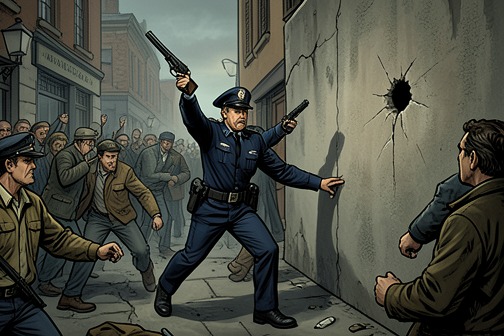
The [French police manhunt for the Jackal](entity:event-recall-event-c7e873a37093) is an institutional race against an assassin whose identity, timetable, and whereabouts remain uncertain. Led by [Claude Lebel](entity:character-recall-character-claude-lebel-dba6e7d3d3d3), it expands from a secret assignment into a nationwide search drawing on archives, border records, local police, security services, and an unprecedented street-level sweep of [Paris](entity:location-recall-location-paris-c02b439ce220). Its decisive end comes not through a single record or inference, but when Lebel reaches the Jackal’s position during the ceremony and kills him in a close-range gunfight.
## A secret mandate and a problem of identification
An hour after the Interior Minister’s briefing, Lebel emerged from the conference room dazed by the scale of the task. He had spent fifty minutes absorbing the report and the directive: he was to establish his own office, receive unrestricted access to necessary information, and command the resources of the agencies represented around the table, without limits on cost. The assignment was not a request for advice. It made Lebel the operational centre of an investigation whose target was not yet identified.
Lebel immediately converted that authority into working arrangements. He made [Lucien Caron](entity:character-recall-character-lucien-caron-785173014f43) his sole assistant, combining secretarial and investigative support, and ordered the ordinary secretary removed from the confidential operation. A camp bed, washing and shaving supplies, and a coffee percolator turned the office into a place where the two men could work continuously. Ten outside telephone lines and a permanent operator were to be reserved for them; Caron was empowered to request facilities from department chiefs in Lebel’s name. The practical details mattered: secrecy and speed depended on ensuring that routine administrative delays did not block the investigation.
The first international appeals exposed the central difficulty. For three hours, Lebel and Caron contacted leading police officials abroad over secure high-frequency links. Lebel could not describe the approach as a formal enquiry between police forces, because the available information did not establish whether the intended offence had reached the preparation stage. He had no name and only a poor description. What he could offer was a profile: the unknown man would have to be a leading professional political assassin, with successful killings behind him, rather than an ordinary gangland gunman. That distinction gave foreign investigators a useful category, but not yet a face or a location.
## Records, borders, and the Duggan trail
The search relied on an extensive system of records, especially the archives maintained by the central records office. Its Pantheon headquarters held four and a half million personal dossiers, cross-indexed along five and a half miles of shelving. The files could include not only convicted people but suspects, witnesses, and people acquitted in court. Separate fingerprint records included every set taken in [France](entity:location-recall-location-france-f5cafc8a8ad4), even unidentified prints; a further ten and a half million cards recorded, among other things, arrivals at border crossings and guests at hotels outside Paris. The scale promised reach, but it also meant that investigators had to find the right identity and record among enormous stores of information.
The counter-espionage service screened incoming travellers at ports, airports, and borders before disembarkation cards entered the archival system. Paris hotel records, however, went to the Prefecture of Police rather than to the central records office. The manhunt therefore depended on information divided across agencies and repositories. When Lebel had the archives searched again for the name Alexander Duggan, investigators found that Alexander James Quentin Duggan had entered France aboard the Brabant Express from [Brussels](entity:location-recall-location-brussels-4d1364f23b86) on July 22 and appeared on a passenger report for the Etoile du Nord Express travelling from Paris to Brussels on July 31. A Paris hotel card, bearing a passport number that matched information supplied from [London](entity:location-recall-location-london-420923d4a60a), showed a stay near the Place de la Madeleine from July 22 through July 30.
Caron favoured raiding the hotel, but Lebel chose a discreet visit to the proprietor in the early hours. The owner was able to establish that Duggan had left by August 15; Lebel avoided waking the other guests and gained the information without turning the enquiry into a conspicuous police action. Yet the record trail did not mean that the man was still at the address, or that Duggan remained the identity under which he could be found. Lebel warned the conference that the killer alone knew his timetable. The police had been investigating for seventy-two hours and could not tell where in that schedule they had intervened. They could hope to arrest him only after identifying and locating him under his assumed name, while the killer might know that the plot had been exposed without knowing how far the investigation had advanced.
## From the abandoned car to a search around [Ussel](entity:location-recall-location-ussel-2f714473bfe9)
When a car associated with the fugitive was found, Lebel instructed the Regional Headquarters of the [French Judicial Police](entity:organization-recall-organization-1b547965ecf6) at [Clermont-Ferrand](entity:location-recall-location-clermont-ferrand-2b741c64834b) to send as many capable men as possible to Ussel. He ordered a square search centred on the discovery site, with enquiries at farmhouses, village shops and cafés, hotels, and woodcutters’ shacks. The search description was specific enough to guide interviews: a tall, blond man, English by birth but speaking good French, carrying three suitcases and a handgrip, well dressed and carrying substantial cash, though likely to look as if he had slept rough.
Lebel also treated publicity as a danger to the search. Local reporters were to be diverted with a cover story about a car crash and a possibly dazed occupant, presented as a mission of mercy rather than a hunt for an assassin. If officers found the fugitive, they were not to approach him; they were to surround the location and hold him there until Lebel arrived. The instruction reflected the disparity between a large search party and a man believed to be armed and dangerous: locating him was not the same as safely arresting him.
At sunset, police vans from Clermont-Ferrand and Ussel established a headquarters in the village square nearest the car. Regional Headquarters directed squad cars outward from a five-mile radius and planned to work through the night, when residents would be more likely to be at home. The terrain made the plan hazardous in a practical sense: twisting valleys and hillsides could cause officers to lose their way or miss an isolated shelter. The search was therefore both extensive and vulnerable to small omissions, especially when witnesses, routes, and scattered buildings had to be checked in darkness.
Lebel’s reconstruction of the car’s transformation produced a further, more troubling inference. He reasoned that the fugitive must have bought paint to alter it; if enquiries confirmed that the car had been driven from [Gap](entity:location-recall-location-gap-2d60d692da31) to Ussel overnight already transformed, he had probably obtained the paint in Gap. That would mean somebody had warned him that the Duggan identity had been uncovered and that the police were closing in on his car. Lebel could not prove the source of the warning. He considered the possibility of an agent in the chain of telephone, telex, or departmental communications, and suspected that [Valmy](entity:character-recall-character-valmy-44a5a71eb562), whose message to Rome had been intercepted by the counter-espionage service, might be the killer’s sole contact. He also concluded that the Jackal had learned the overall assassination plan was exposed and had chosen to continue regardless.
## The search contracts around a changing identity
The inquiry followed the fugitive’s trail through the chateau, the taxi evidence, and the route to [Tulle](entity:location-recall-location-tulle-94f50e6e4ec6). At nine one evening, Lebel received a message from [Commissaire Valentin](entity:character-recall-character-commissaire-valenti-6516c2c8f0d4) at the Tulle headquarters and learned that the car and the chateau room had both been fingerprinted, producing hundreds of matching sets. In the reconstruction later given to the Interior Ministry, the trail ran from the forest clearing to [Egletons](entity:location-recall-location-egletons-4886ab57edfe), included the absence of a crucial taxi driver and a murder at the chateau, and ended with a tall, grey-haired Dane boarding the Paris express at Tulle. By the time the account reached the conference, the killer was believed to be in Paris under a new name and with a new appearance.
That conclusion prompted a fresh administrative surge. Lebel asked for [Superintendent Thomas](entity:character-recall-character-superintendent-thom-38f40bc8b54b) and the Danish Consul General to be reached, and the Prefecture of Police delivered more than 980 hotel registration cards for Danes staying in Paris. At four in the morning the cards were already being sorted into probable, possible, and other categories. Meanwhile, engineers at the counter-espionage service had prepared a recording that Lebel and Caron listened to in a basement communications laboratory. The investigation had moved from tracing paper identities and travel to testing communications, but each new lead still had to be interpreted before it could identify the man in the city.
As the Paris search intensified, the Interior Minister set out a public and operational plan. Once a name was available, every policeman and member of the [Compagnies Républicaines de Sécurité](entity:organization-recall-organization-compagnies-r-pub-6e25bd2817a5) in Paris was to stop people and inspect their papers. The counter-espionage service would check known OAS sympathisers with help from the central records office. [The Jackal](entity:character-recall-character-the-jackal-80dad21f2887)’s use of successive identities made that instruction both powerful and limited: it could turn an identified name into a citywide alert, but the police first had to determine which name and appearance belonged to the fugitive at that moment.
## Paris searched, and the hunt ends in gunfire
For two days, Paris was searched on a scale the city had not experienced before. Police checked hotels from the most expensive establishments to the roughest lodgings, as well as pensions, hostels, rooming houses, and other places where a traveller might sleep. Plainclothes officers visited bars, restaurants, night-clubs, cabarets, and cafés, showing the wanted man’s photograph to staff. Police raided the homes and flats of known OAS sympathisers. More than seventy young men who bore some resemblance to the killer were taken for questioning and released; hundreds of thousands of people in streets, taxis, and buses had their papers examined, while road-blocks were set up on major routes into Paris.
The effort extended beyond formal police institutions. Corsicans moved through underworld haunts warning that anyone withholding information would face the Union’s wrath. State employees from senior detectives to soldiers and gendarmes joined the search, while the underworld and its associated trades were also pressed to scrutinise passing faces. People working in tourism were briefed, youthful-looking detectives entered student cafés and social groups, and agencies placing foreign-exchange students with French families were warned. The sweep turned the city’s ordinary spaces and networks into points of observation, but its breadth also produced a flood of mistaken resemblances and routine checks.
On the evening of August 24, Lebel was summoned from home to meet the Interior Minister. The next day, during the public ceremony, the Jackal fired at the President and missed by a fraction of an inch. Lebel reached the sixth floor, where [Pierre Valremy](entity:character-recall-character-pierre-valremy-cc90076ef170) and a member of the Compagnies Républicaines de Sécurité joined him. Hearing a soft report behind one of the doors, Lebel directed the officer to shoot the lock. Valremy entered first. The Jackal, still disguised, fired from the hip and hit him in the chest with an explosive bullet, killing him.
Lebel then faced the gunman at close range. As the Jackal prepared to fire again, Lebel seized the fallen officer’s [MAT 49 submachine gun](entity:object-recall-object-mat-49-bd06f5557778) and fired. Half a magazine struck the Jackal in the chest, killing him and ending the pursuit. The sound was publicly explained as a faulty motor-cycle silencer, concealing the gunfight from the crowd below. That evening, Superintendent Thomas was told by telephone that the Jackal had been caught in Paris. The operation’s final success came at the point where the elaborate machinery of records, searches, and surveillance had to meet the fugitive directly—and where its cost included Valremy’s death.
Event 24
Murder of the Baroness de la Chalonnière
The [Murder of the Baroness de la Chalonnière](entity:event-recall-event-803e3d8e313b) is the point at which [The Jackal](entity:character-recall-character-the-jackal-80dad21f2887)’s concealed assassination preparations become visible to someone close to him. When Colette discovers the disassembled rifle in his luggage and recognizes his purpose, he kills her rather than allow her to expose him. Her death sends the police investigation into a new phase: the search is no longer only for a political assassin, but also a nationwide hunt for the man who has murdered the owner of the château.
## Causes and Discovery
The murder takes place at the [Château de la Haute Chalonnière](entity:location-recall-location-ch-teau-de-la-haute-885e6587ee84), where The Jackal has been staying with Colette. He had hoped to remain for two more days, but a telephone call forced him to leave sooner. After hanging up, he recalled hearing a soft click on the line, unlike anything he had noticed during the previous three days. He suspected that someone might have been listening, and went upstairs to investigate.
In the bedroom, the wardrobe stood open and all three suitcases had been emptied onto the floor. The keys to the cases lay nearby. Colette was among the scattered contents, holding the barrel and breech of the rifle. Slim steel tubes lay around her; one exposed the telescopic sight and another the silencer. The weapon, which The Jackal had hidden as separate components, was no longer an abstract suspicion but an assembled set of clues in the hands of a witness.
Colette recognized what the parts meant. She understood that The Jackal intended to kill de Gaulle and identified him with the OAS. His silence confirmed her conclusion. The murder follows directly from that discovery: she tried to run for the door, and he seized her before she could escape.
## The Killing and Escape
The Jackal threw Colette onto the bed and struck her at the side of the neck, choking off her scream. He then dragged her down over the edge of the bed and struck the back of her neck. The doctor who examined her later confirmed that her neck had been broken. The scene’s abrupt reversal is decisive: a private discovery of the weapon becomes a killing, and the woman who had shared the château with The Jackal is left dead while he prepares to disappear.
He paused to listen for anyone downstairs. Ernestine was in the kitchen preparing the morning rolls and coffee, while Louison was expected to go to market; both were hard of hearing. The Jackal then repacked the rifle components into their tubes and returned them to the third suitcase, among the army greatcoat and soiled clothes associated with André Martin. He checked that the papers in the lining had not been disturbed. The second case, containing the clothes of Per Jensen, had not been searched.
His departure depended on transforming himself as well as removing the weapon. After washing and shaving, he cut two inches from his long blond hair, dyed it iron-grey, and brushed it into the style shown in Per Jensen’s passport. Blue-tinted contact lenses completed the change. He cleaned away the traces of the hair dye and washing preparations, collected his shaving things, and left Colette’s naked body on the floor. Then he dressed as a Danish pastor, adding the black bib and dog collar, and packed the passport and money he needed. The murder had given him a narrow interval in which to conceal the evidence and resume his journey under another identity.
## Discovery and Police Response
Louison eventually found Dr Mathieu, who had tended to people in the area for more than forty years. The doctor arrived at the château after half past four; fifteen minutes later, he told the two retainers that Colette was dead and that her neck had been broken. The local constable took statements from Ernestine, Louison, and the doctor around the kitchen table. He concluded that a murder had been committed and identified the missing blond Englishman, who had left in the Baroness’s car, as the first suspect. He reported the case to headquarters in [Egletons](entity:location-recall-location-egletons-4886ab57edfe).
The news reached [Claude Lebel](entity:character-recall-character-claude-lebel-dba6e7d3d3d3) through [Commissaire Valentin](entity:character-recall-character-commissaire-valenti-6516c2c8f0d4). When Valentin confirmed that the dead woman was the owner of the château, the Baroness de la Chalonnière, Lebel immediately recognized the connection to the fugitive he was pursuing. He ordered a general alert and explicitly ended the secrecy surrounding the investigation: it was now a straightforward murder hunt. He also directed the police to follow the trail from the château and determine the fugitive’s direction of flight. The discovery of Colette’s body thus changed the public and procedural character of the search, giving the authorities a local crime scene and a missing car to pursue.
## Significance in the Manhunt
Before the murder, Lebel’s investigation had proceeded under exceptional secrecy. He had been told that the assassin might still be in [France](entity:location-recall-location-france-f5cafc8a8ad4), but the police did not know under which new identity to locate him or how far along his private timetable he had progressed. Evidence from records and enquiries had begun to connect the fugitive with the name Alexander Duggan; Lebel also suspected that a warning had reached The Jackal after police uncovered that identity. The murder at the château confirmed that the assassin was still moving and willing to continue despite the investigation closing in.
The authorities now had to combine the murder inquiry with the effort to prevent an attack on de Gaulle. Lebel later recognized that The Jackal’s apparent delay after leaving [Gap](entity:location-recall-location-gap-2d60d692da31) was not evidence that he had abandoned his plan: he had chosen a particular day to strike. Meanwhile, the fugitive’s disguises continued to complicate the search. At a checkpoint, a guard reported allowing an apparently ill, older cripple through a gap in the street closure after the man showed identification and a war-disabled veteran’s card. The murder did not end The Jackal’s preparations; it marked the moment when his violence became legible to the police, while his disguise still allowed him to pass through the very security measures meant to stop him.