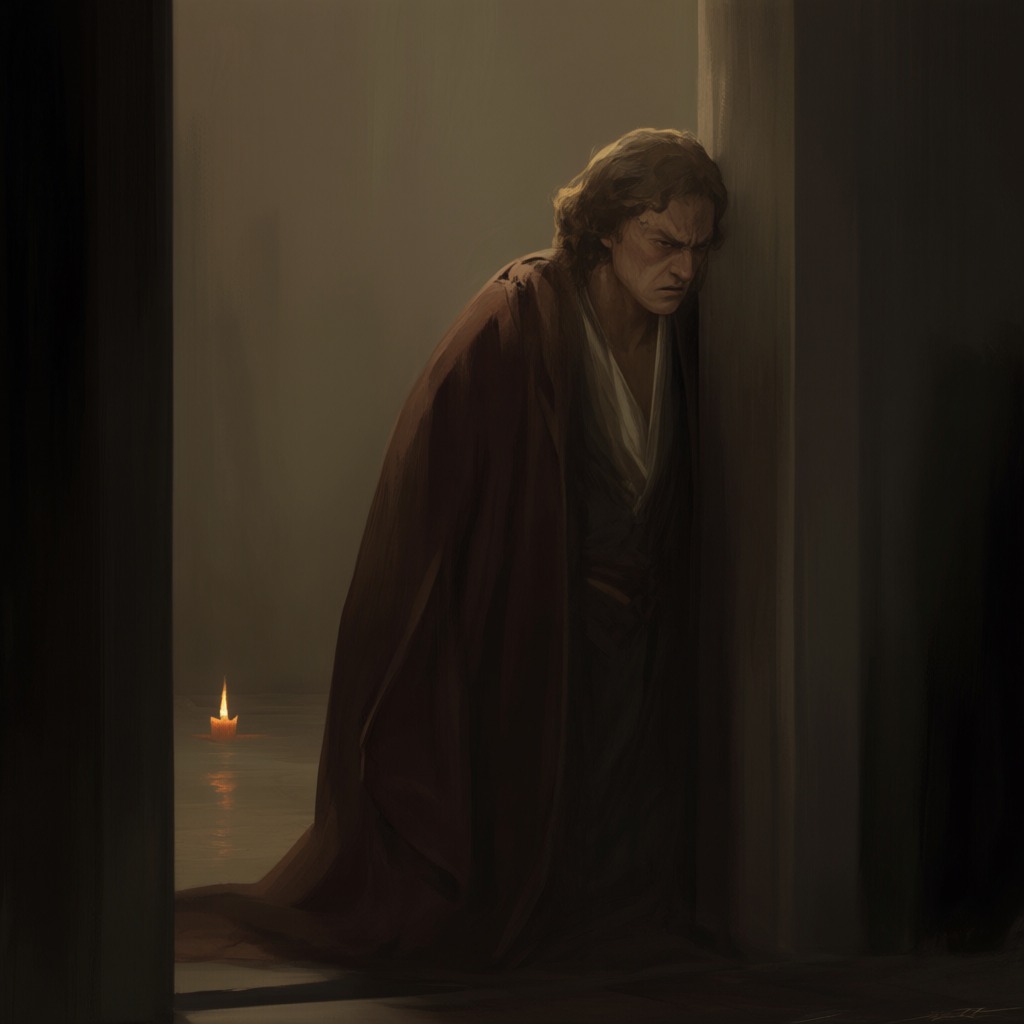
Benno of Uppsala
Benno of Uppsala is a young Scandinavian monk devoted to the study of rhetoric, whose presence in the scriptorium marks him as a figure of intellectual ambition. He is first encountered among the scholars at work, and his eagerness to engage in learned debate is immediately apparent. During the famous discussion about laughter and the licitness of marginal images, Benno takes part, defending the value of pagan poets and witty riddles, and he is present when Berengar of Arundel makes the first, veiled reference to the "finis Africae." This moment ignites his curiosity, and he becomes a crucial, if unreliable, informant for William of Baskerville.
Role in the Investigation
Benno is the first to reveal the substance of the debate that preceded Adelmo of Otranto's death, recounting how Venantius of Salvemec cited Aristotle on laughter and how Jorge of Burgos reacted with fury. He also provides the key detail that both Venantius and Adelmo later approached Berengar separately, seeking information. More significantly, Benno confesses to having spied on Berengar and Adelmo on the night of Adelmo's suicide, witnessing their tryst and Adelmo's subsequent flight to Jorge's cell for confession. This information allows William to reconstruct the chain of events leading to Adelmo's despair. Benno's motives, however, are not purely altruistic; he admits he would be willing to commit shameful acts to get his hands on a rare book, revealing a powerful "lust for knowledge" that drives his actions.
Ambition and Betrayal
As the investigation deepens, Benno's ambition becomes his defining trait. After the death of Malachi of Hildesheim, the librarian, Benno is offered the position of assistant librarian by Malachi himself, a move that William recognizes as a bribe to secure Benno's silence and loyalty. Benno accepts, and in doing so, he betrays the very principles of open inquiry he had earlier championed. He admits to William that he had taken the mysterious Greek book from Severinus of Sankt Wendel's laboratory but then handed it over to Malachi, effectively choosing power and access over the pursuit of truth. William observes that Benno has "joined the other side," becoming a guardian of the secrets he once sought to expose.
The Lust for Books
William reflects on Benno's transformation, identifying it as a form of lust—not of the flesh, but of the intellect. Benno's "insatiable curiosity" and "intellectual pride" are sterile, akin to the lust for power that drives Bernard Gui or the greed of Pope John XXII. His desire for knowledge is not for the betterment of others, as Roger Bacon's was, but for its own sake. This analysis frames Benno's actions as a moral failure, a corruption of the scholarly ideal. His final appearance is during the fire, where he heroically but futilely rushes into the burning library with a vessel of water, a last, desperate act of devotion to the books he loved and betrayed.