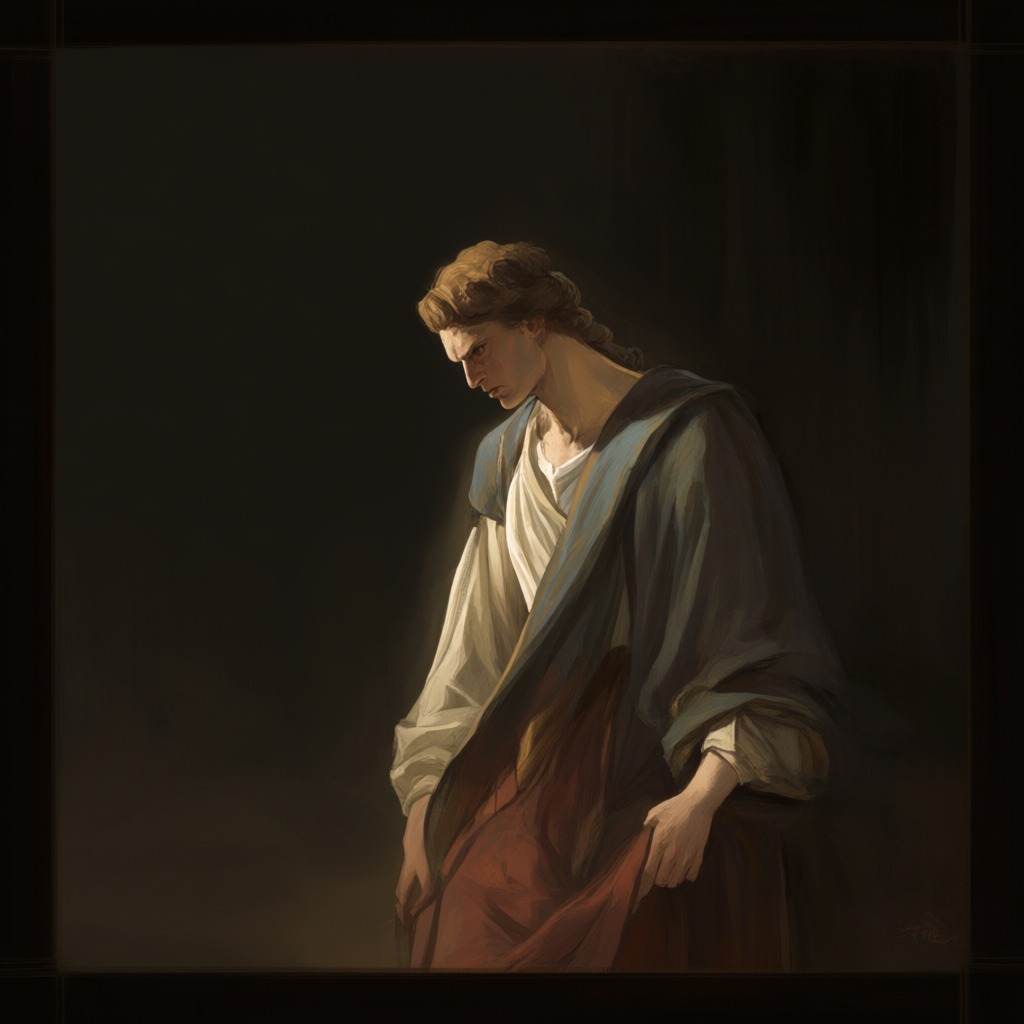
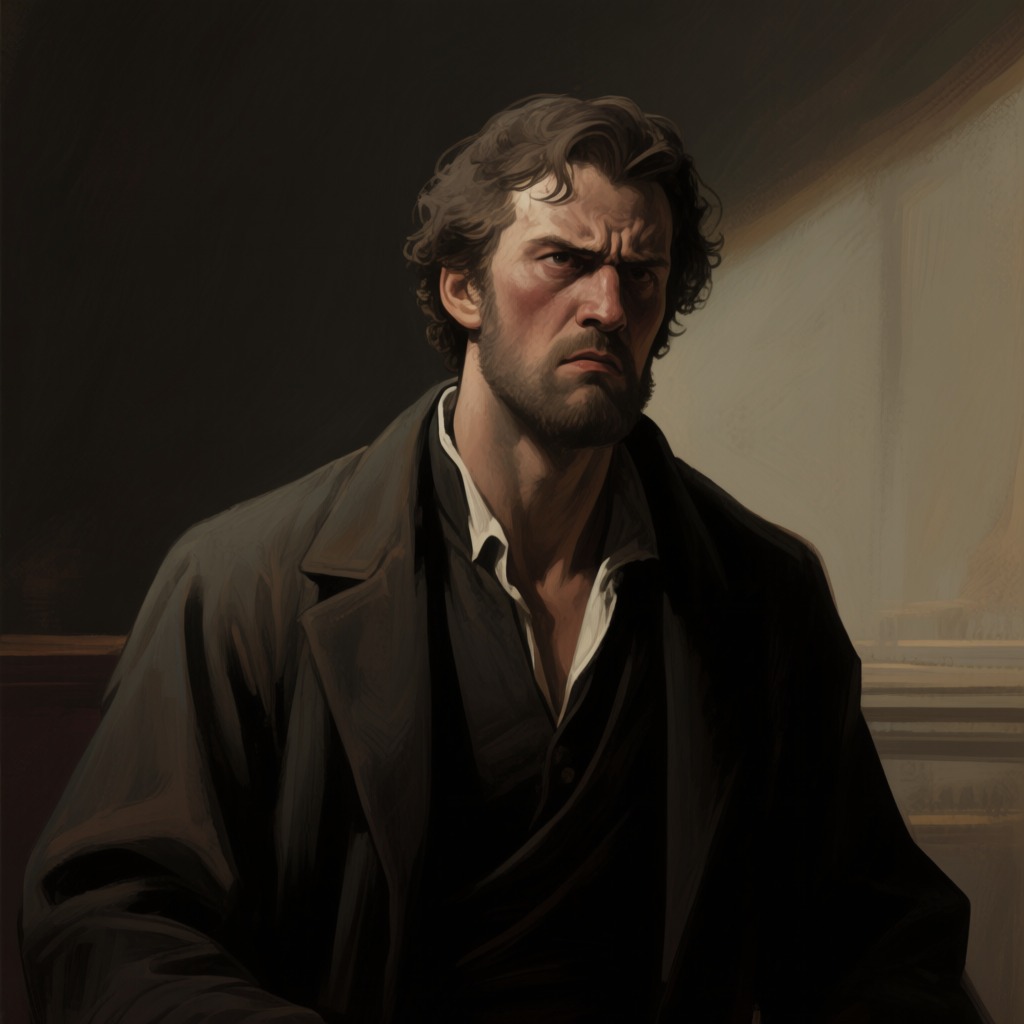
Ubertino of Casale
Ubertino of Casale, a legendary figure among the Franciscan Spirituals, arrives at the abbey as a fugitive, hidden by the abbot after barely escaping assassination. A disciple of Joachim of Fiore and a champion of the absolute poverty of Christ, he has spent decades at the center of the church's most violent controversies, moving between the papal court in Avignon and the protection of powerful cardinals. His presence in the abbey, where he spends most of his time prostrate in prayer before a statue of the Virgin, marks him as both a living relic of a lost cause and a dangerous liability in the coming negotiations between the Franciscan order and the Pope.
Identity and Background
Ubertino was born into a world of intense religious ferment. As a young man studying in Paris, he withdrew from theological speculation to embrace a life of mystic contemplation, imagining himself transformed into the penitent Magdalen. His intense association with Saint Angela of Foligno initiated him into the riches of the mystic life and the adoration of the cross. He became the most respected leader of the Spiritual Franciscans, who believed that the order had betrayed Saint Francis's original vision of absolute poverty. His great work, Arbor vitae crucifixae, was so influential that the poet Dante Alighieri was said to have paraphrased passages from it in his own poem. When Pope John XXII condemned the Spirituals, Ubertino was protected by Cardinal Orsini, under whose banner he remained in Avignon to defend the Franciscan cause. He was eventually forced to flee for his life, pursued as a heretic who "per mundum discurrit vagabundus."
Life and Plot Trajectory
Ubertino's role in the abbey is that of a hidden oracle and a living warning. He is the first to tell William of Baskerville that the abbey is a place of concealed sin, urging him to "look with a lynx's eye in both directions: lust and pride." He identifies the dead illuminator Adelmo of Otranto as having "the eyes of a maiden seeking commerce with an incubus" and warns that the sickness of the abbey lies not with the ignorant but with those "who know too much." His apocalyptic preaching, in which he identifies Pope Boniface VIII as the mystic Antichrist and Pope Benedict XI as the Antichrist proper, fills the young novice Adso of Melk with terror. Ubertino's own past as an inquisitor haunts him: he was instrumental in sending the heretics Bentivenga, Jacomo, and Giovannuccio to the stake, a deed that caused William of Baskerville to abandon his own career as an inquisitor.
Key Actions and Objectives
Ubertino's primary objective is to defend the doctrine of Christ's absolute poverty, which he believes is the foundation of the Franciscan order and the key to the renewal of the church. He has written a memorial on poverty for the Pope and has fought for the institution of a separate order based on principles of maximum strictness. He is also a key figure in the political negotiations between the Franciscan general Michael of Cesena and the papal legation, though his presence is a source of tension. When Bernard Gui, the ruthless inquisitor, arrives, Ubertino's life is in immediate danger. William of Baskerville, recognizing the threat, arranges for Ubertino's escape from the abbey under cover of fog and darkness, a flight that saves his life for a time but ultimately leads to his mysterious murder two years later in a German city.
Relationships and Conflict
Ubertino's relationship with William of Baskerville is one of deep affection and profound intellectual disagreement. William respects Ubertino's fervor but is horrified by his willingness to burn heretics, arguing that "there is little difference between the ardor of the seraphim and the ardor of Lucifer." Ubertino, in turn, accuses William of being a man "without fervor, all head, no heart," and urges him to "mortify your intelligence, learn to weep over the wounds of the Lord, throw away your books." Their debate over the nature of love, mysticism, and the proper response to heresy forms one of the novel's central philosophical dialogues. Ubertino's relationship with the cellarer Remigio of Varagine and the grotesque Salvatore is also significant: he helped them enter the Benedictine order after their past as followers of the heretical Fra Dolcino, a connection that later becomes a weapon in Bernard Gui's hands.
Change and Ending
Ubertino's arc in the novel is one of tragic diminishment. The once-mighty champion of the Spirituals, who defied popes and commanded the attention of cardinals, is reduced to a fugitive hiding in a rich abbey, dependent on the protection of others. His apocalyptic prophecies, which once seemed to promise a new age, now sound like the ravings of a man haunted by his own past. He is forced to flee again, and his death—mysterious, violent, and far from the centers of power—is a grim fulfillment of his own warnings about the coming of the Antichrist. William's final judgment on him is that he "could have become one of the heretics he helped burn, or a cardinal of the holy Roman church. He came very close to both perversions."
Narrative Role and Evaluation
Ubertino serves as a living embodiment of the novel's central theme: the dangerous proximity between sanctity and fanaticism. He is a man of genuine spiritual depth and love for God, yet his absolute certainty in his own truth leads him to condemn others to death. He is both a victim of the church's corruption and an agent of its most brutal inquisitorial practices. His presence in the abbey provides a crucial link between the political conflict over poverty and the personal crimes of lust and murder, suggesting that the same passionate intensity that drives a man to seek God can also drive him to destroy his enemies. His story is a cautionary tale about the perils of a faith that has lost its capacity for doubt and laughter.