William of Baskerville
William of Baskerville is the central figure of Umberto Eco's novel, a Franciscan friar of extraordinary intellect and a former inquisitor, whose mission to mediate a theological dispute between the Papacy and the Franciscan order becomes entangled with a series of murders in a wealthy Benedictine abbey. His character embodies the tension between medieval scholasticism and the nascent spirit of empirical inquiry, and his investigation serves as the novel's primary engine, driving the plot through a labyrinth of clues, symbols, and philosophical debates. William's ultimate failure to prevent the destruction of the abbey's library, despite his brilliant deductions, underscores the novel's meditation on the limits of reason and the destructive power of absolute certainty.
Identity and Background
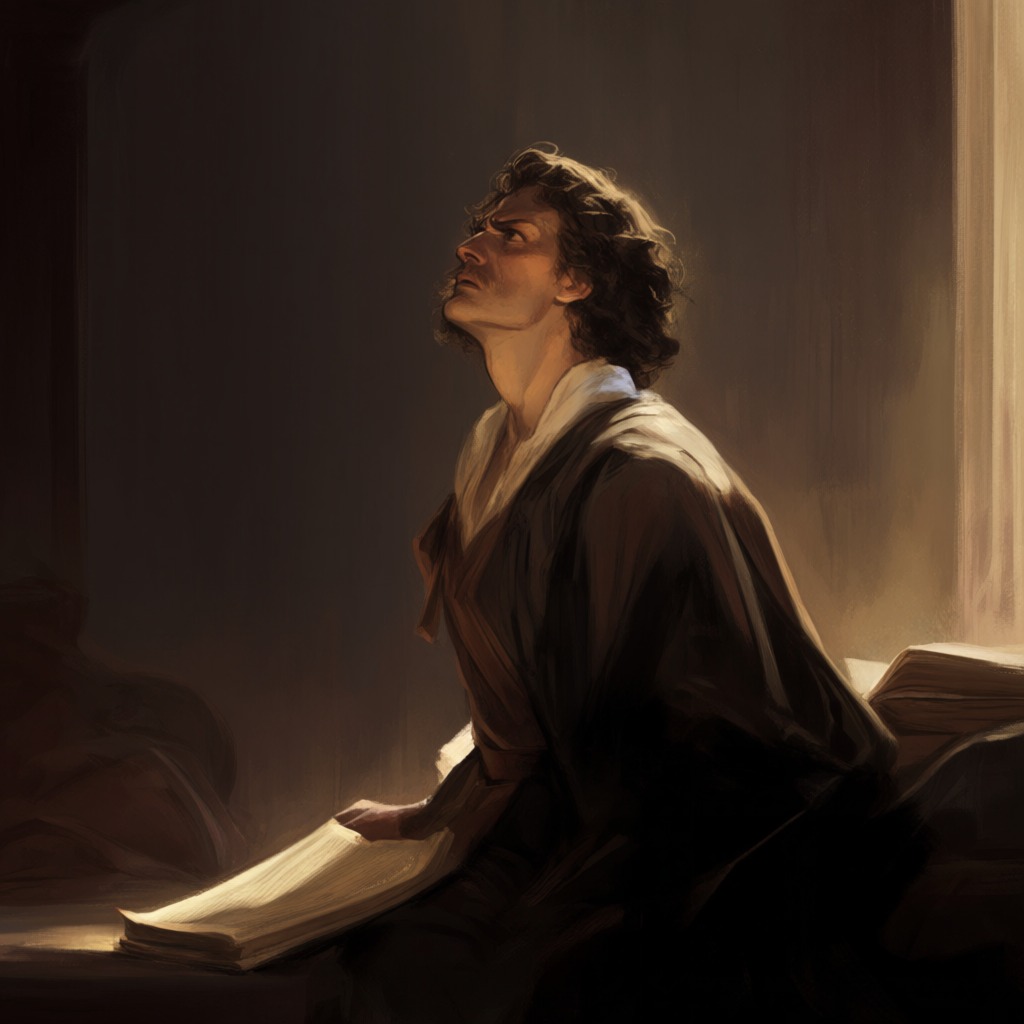
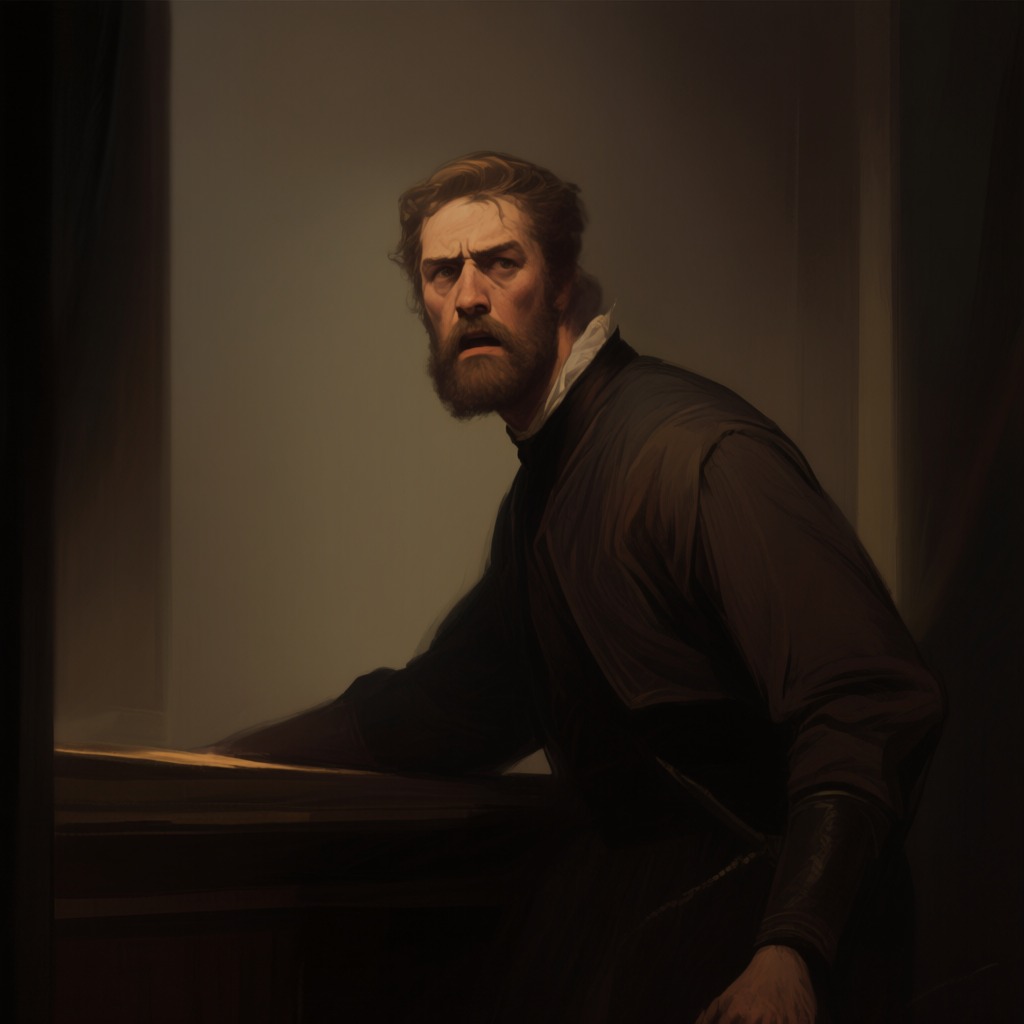
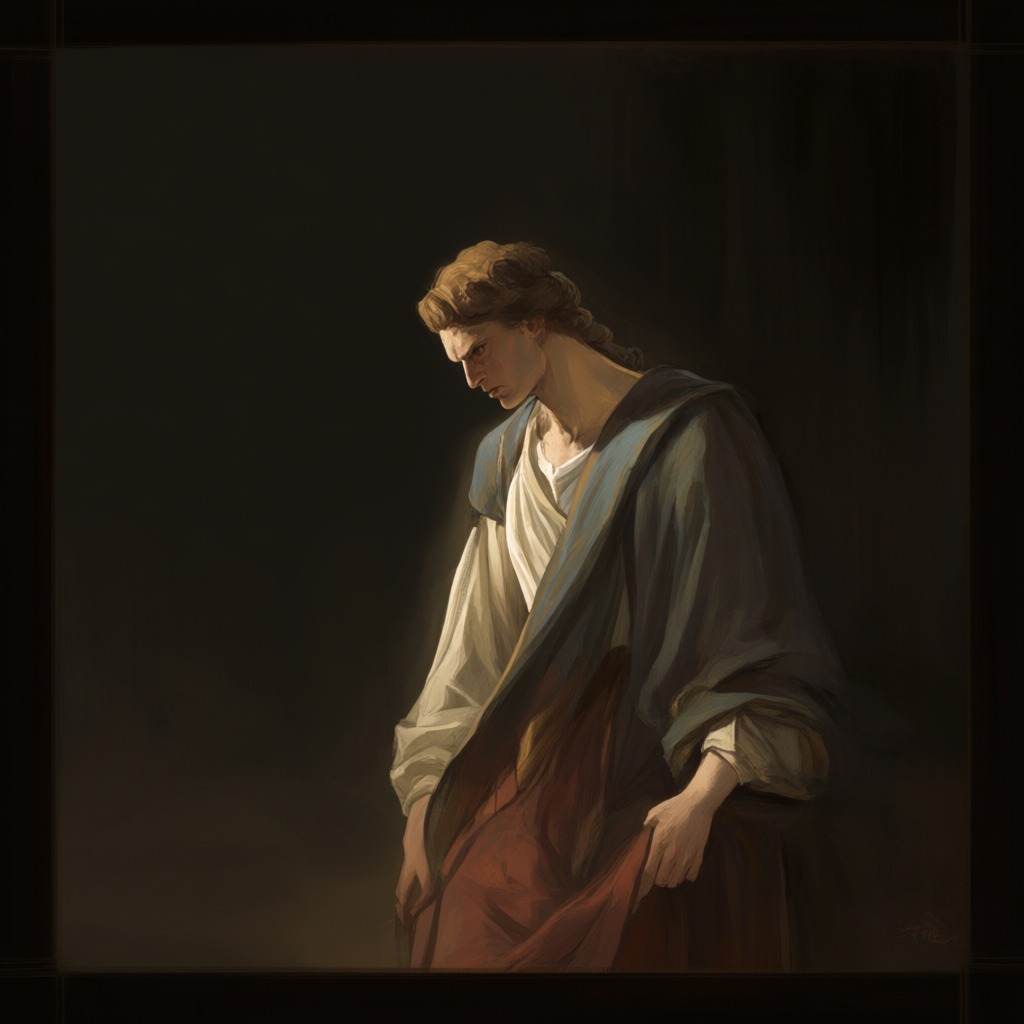
William of Baskerville is a Franciscan friar, a member of an order known for its vow of poverty, yet he is a man of vast learning, a stark contrast to the illiterate friars Adso of Melk had known. He venerates Roger Bacon as his master and is deeply influenced by the empirical and scientific traditions of Oxford, where he studied. His physical appearance is striking: he is exceptionally tall and thin, with sharp, penetrating eyes, a thin, beaky nose, and a face covered in freckles, which gives him the expression of a man on the lookout. He is also a former inquisitor, a role he abandoned because he found he could no longer distinguish between the weaknesses of the wicked and the weaknesses of the saintly, and because he was troubled by the use of torture to extract confessions. He carries with him a pair of reading lenses, a novel invention he calls his "wondrous machines," which he uses to decipher fine manuscripts, and he is also known to chew a particular herb during moments of great tension, a habit he learned from infidels.
Life and Plot Trajectory
William arrives at the abbey in late November 1327, ostensibly as an envoy of Emperor Louis the Bavarian to arrange a meeting between the Franciscan order and the papal legation. Almost immediately, he is drawn into the investigation of the death of Adelmo of Otranto, a young illuminator who has fallen from a cliff. The abbot, Abo, impressed by William's reputation for acumen, charges him with uncovering the truth. As more monks die—Venantius of Salvemec, Berengar of Arundel, Severinus of Sankt Wendel, and Malachi of Hildesheim—William's investigation deepens, leading him to the abbey's forbidden library. He deciphers a secret code left by Venantius, maps the labyrinthine structure of the library, and ultimately deduces that the murders are connected to a single, hidden book: the lost second book of Aristotle's Poetics, which deals with comedy and laughter. His pursuit of the truth brings him into direct conflict with the blind, ancient librarian Jorge of Burgos, who has been guarding the book for decades. The climax occurs in the secret room of the library, the finis Africae, where Jorge, having poisoned the book's pages, devours them to prevent William from reading them, then accidentally starts a fire that destroys the entire library.
Key Actions and Objectives
William's primary objective is to solve the murders, but his method is what defines him. He is a master of semiotics, reading the "great book of nature" for clues. His first demonstration of this skill is his deduction of the abbot's lost horse, Brunellus, from hoofprints, broken twigs, and horsehairs in the snow, a feat that immediately establishes his reputation. He systematically interrogates the monks, using psychological pressure to extract confessions from the weak, such as Berengar and Benno of Uppsala. He deciphers Venantius's zodiacal code, revealing the message "Secretum finis Africae manus supra idolum primum et septimum de quatuor." He also reconstructs the plan of the library from the outside, using mathematical principles to understand its labyrinthine interior. His ultimate objective, however, shifts from catching a murderer to understanding the nature of the forbidden book and confronting the ideology that sought to suppress it. He seeks not just to solve a crime, but to understand the truth about laughter and its place in human knowledge.
Relationships and Conflict
William's relationship with his young scribe and disciple, Adso of Melk, is central to the narrative. Adso serves as the narrator and a foil to William's intellect, often asking the questions that prompt William's explanations. William is a mentor, but also a figure of profound doubt, which he shares with Adso. His relationship with the abbot, Abo, is one of formal cooperation but underlying tension, as Abo is more concerned with the abbey's reputation than with the truth. His most significant conflict is with Jorge of Burgos, who represents the dogmatic, authoritarian tradition of the church that fears laughter and doubt. Their confrontation in the finis Africae is a philosophical duel between reason and faith, inquiry and prohibition. William also has a fraught history with Ubertino of Casale, a former friend and fellow Franciscan, whose mystical fervor and willingness to burn heretics William finds disturbing. His antagonistic relationship with the inquisitor Bernard Gui, who arrives with the papal legation, highlights the difference between William's search for truth and Bernard's desire for conviction.
Change and Ending
William's journey is one of intellectual triumph and existential disillusionment. He successfully solves the mystery, identifying Jorge as the mastermind behind the plot to protect the book. However, his victory is hollow. He fails to save the book, which is destroyed along with the entire library in the fire. More profoundly, he comes to doubt the very foundations of his own method. In the novel's final philosophical exchange with Adso, William admits that he arrived at the truth through a series of errors, pursuing a false pattern of the Apocalypse that Jorge himself had inadvertently reinforced. He concludes that there is no inherent order in the universe, and that the order the mind imagines is merely a useful tool to be discarded once it has served its purpose. He leaves the burning abbey with Adso, a man whose faith in reason has been shaken, and whose future is uncertain. He dies years later during the great plague, and Adso, now an old monk, is left to ponder the meaning of the story he has recorded, unsure if it contains any hidden design at all.
Narrative Role and Evaluation
William of Baskerville is a deliberate literary homage to Sherlock Holmes, a master detective whose methods of observation and deduction are central to the plot. However, Eco subverts the detective genre by making William's final revelation one of uncertainty rather than triumphant clarity. He is a character of immense intellectual vanity, which he himself acknowledges, but also of genuine humility in the face of the unknowable. His role is to guide the reader through the labyrinth of the abbey and the labyrinth of medieval thought, embodying the conflict between the old world of faith and the emerging world of reason. His ultimate failure to preserve the library or to find a stable truth makes him a tragic figure, a symbol of the limits of human knowledge in a world governed by chance and the destructive passions of men. He is the novel's conscience, its philosopher, and its flawed hero, whose story is a cautionary tale about the dangers of both blind faith and unbridled intellectual pride.
William of Baskerville was portrayed by John Turturro in the 2019 eight-part television miniseries adaptation of The Name of the Rose, directed by Giacomo Battiato and premiering on Italy's Rai 1 on March 4, 2019. The series also featured Rupert Everett as Gui and Damian Hardung as Adso, and later aired on BBC 2 in the United Kingdom on October 11, 2019. This adaptation brought the character to a new generation of viewers, emphasizing his role as a rational investigator in a medieval setting.