Venantius of Salvemec
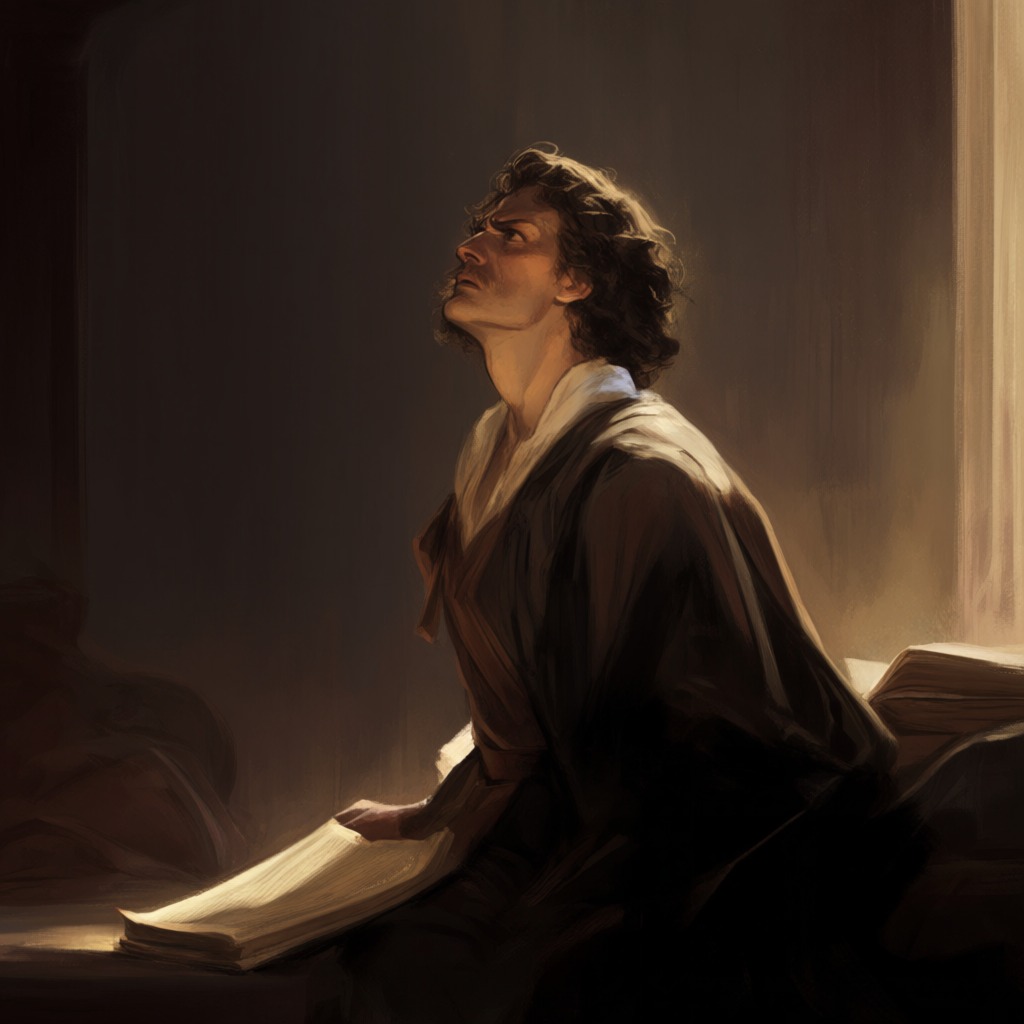
Venantius of Salvemec was a monk and scholar at the abbey, distinguished by his mastery of Greek and Arabic and his role as a translator of ancient texts. He was deeply devoted to the works of Aristotle, whom he considered the wisest of all men, and his intellectual curiosity placed him at the center of the scriptorium's debates on the nature of truth, laughter, and the limits of knowledge. His death, the second in the abbey's sequence of mysterious murders, transformed a suspected suicide into a clear case of homicide and set William of Baskerville on the trail of a hidden book that someone was willing to kill to protect.
Identity and Intellectual Role
Venantius was introduced to William and Adso by Malachi of Hildesheim, the librarian, as a translator from Greek and the Arabic, devoted to Aristotle. He worked at a desk in the scriptorium, where he consulted manuscripts on loan to the abbey and made copies. Among his papers were books in Greek, including a work by Lucian about a man turned into an ass, which he was translating for the lord of Milan in exchange for a preferential right to wine production from nearby farms. His learning placed him among the most erudite monks in the abbey, and he was a key participant in the intellectual life of the community.
The Debate on Laughter and the Forbidden Book
Venantius was a central figure in the scriptorium debate about laughter that took place shortly before Adelmo of Otranto's death. When Jorge of Burgos condemned the use of ridiculous images in sacred books, Venantius countered by citing Aristotle's Poetics, arguing that witticisms and plays on words could serve as instruments to reveal the truth. He pressed the point that Aristotle had dedicated a whole book to laughter, and when Jorge dismissed this as a lost or unwritten work, Venantius insisted that the Philosopher had spoken of laughter as something good. This argument drew the attention of Berengar of Arundel, who hinted at a secret connected to the "finis Africae" in the library. Venantius, along with Adelmo, later approached Berengar to learn more, and it was this pursuit of forbidden knowledge that led him to the hidden book—the second book of Aristotle's Poetics—and ultimately to his death.
Murder and Discovery
Venantius was killed by poison that had been smeared on the pages of the forbidden book. He had stolen the volume from the finis Africae and, in his eagerness to read it, touched the poisoned pages and then put his fingers to his mouth. The poison left his tongue black and stained the tips of two fingers on his right hand. He died in the kitchen, near the sink, where a broken cup and traces of water suggested he had tried to drink something to soothe the burning. Remigio of Varagine, the cellarer, discovered the body that night and, fearing his own nocturnal activities would be exposed, left it where it lay. The murderer, however, moved the corpse to a jar of pig's blood, where it was found the next morning by the swineherds, creating the false impression that Venantius had drowned.
Consequences and Significance
Venantius's death was the first clear murder in the abbey, confirming that the earlier death of Adelmo was not an isolated suicide but part of a larger pattern. The discovery of his body in the blood jar, along with the blackened fingers and tongue, provided William with the first concrete evidence of a poisoner at work. The search of Venantius's desk yielded a parchment with a coded message in a zodiacal alphabet, which William deciphered to read "Secretum finis Africae manus supra idolum primum et septimum de quatuor." This clue, combined with the missing Greek book from his desk, pointed directly to the library's most secret chamber and to the forbidden text that Jorge of Burgos was determined to protect at any cost. Venantius's intellectual ambition and his fatal curiosity thus became the engine that drove the investigation forward, revealing the deadly stakes of the abbey's hidden knowledge.