Salvatore
Salvatore is one of the most physically and linguistically grotesque figures in the abbey, a lay brother whose monstrous appearance, broken speech, and shadowy past as a follower of the heretic Fra Dolcino make him a living emblem of the chaos and heresy that the monastery's order is meant to suppress. His capture by the inquisitor Bernard Gui, caught with a black cat and a village girl, provides the catalyst for the trial that destroys the cellarer Remigio of Varagine and exposes the abbey's hidden corruption, linking the present murders to the violent history of the Apostolic Brethren.
Identity and Appearance
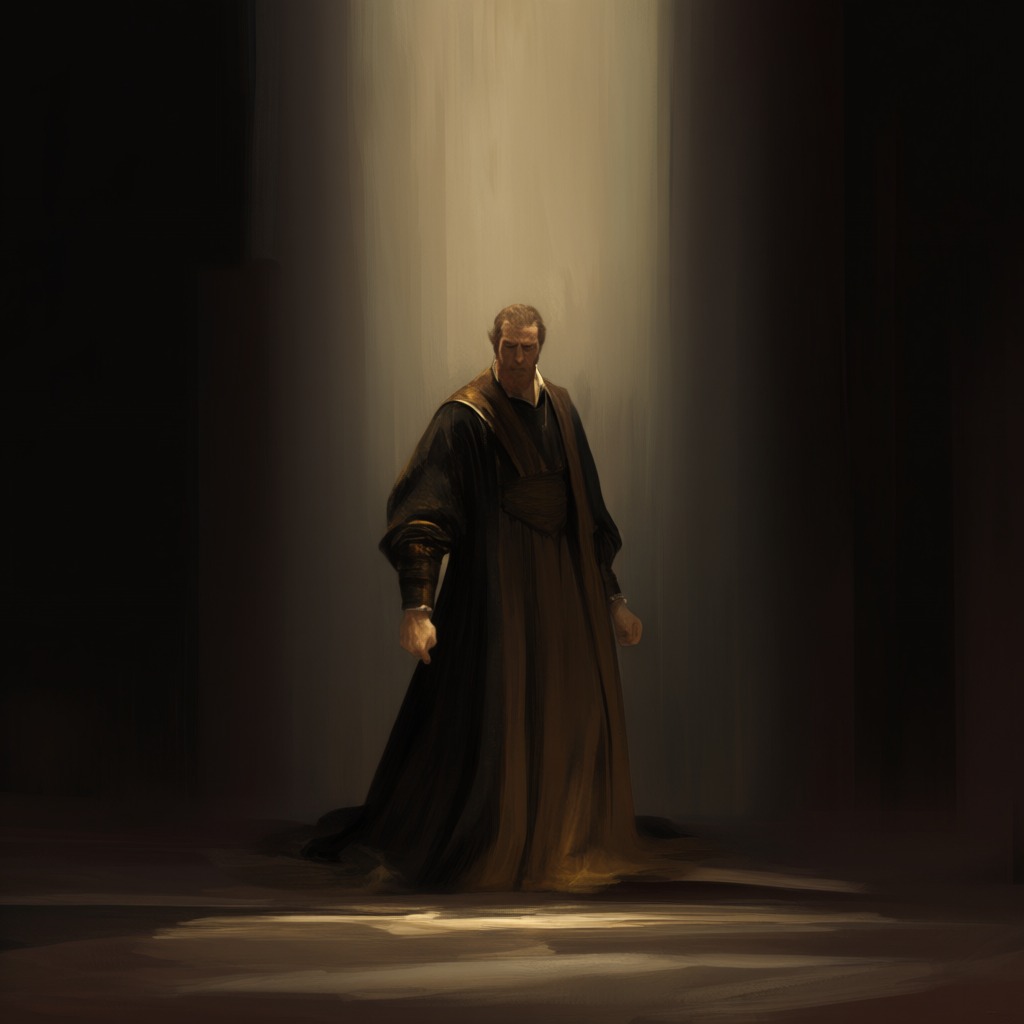
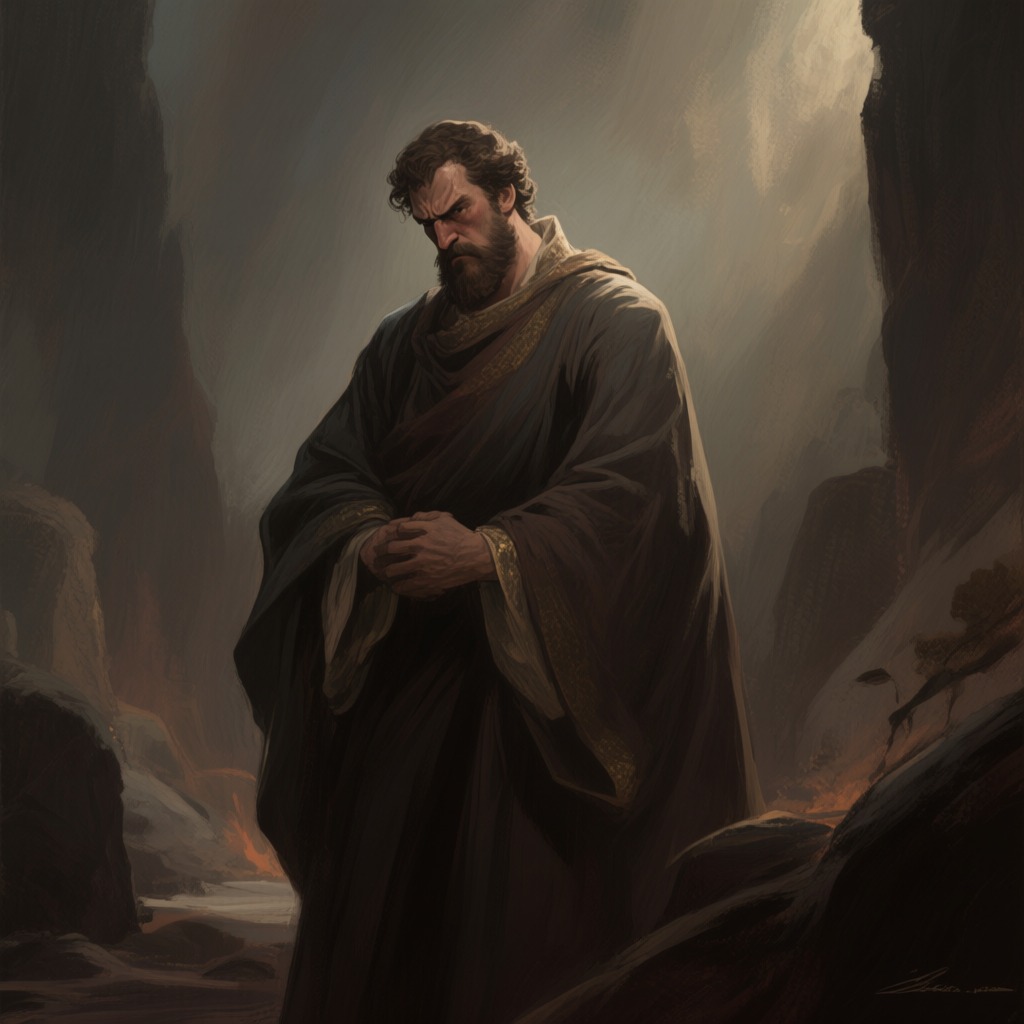
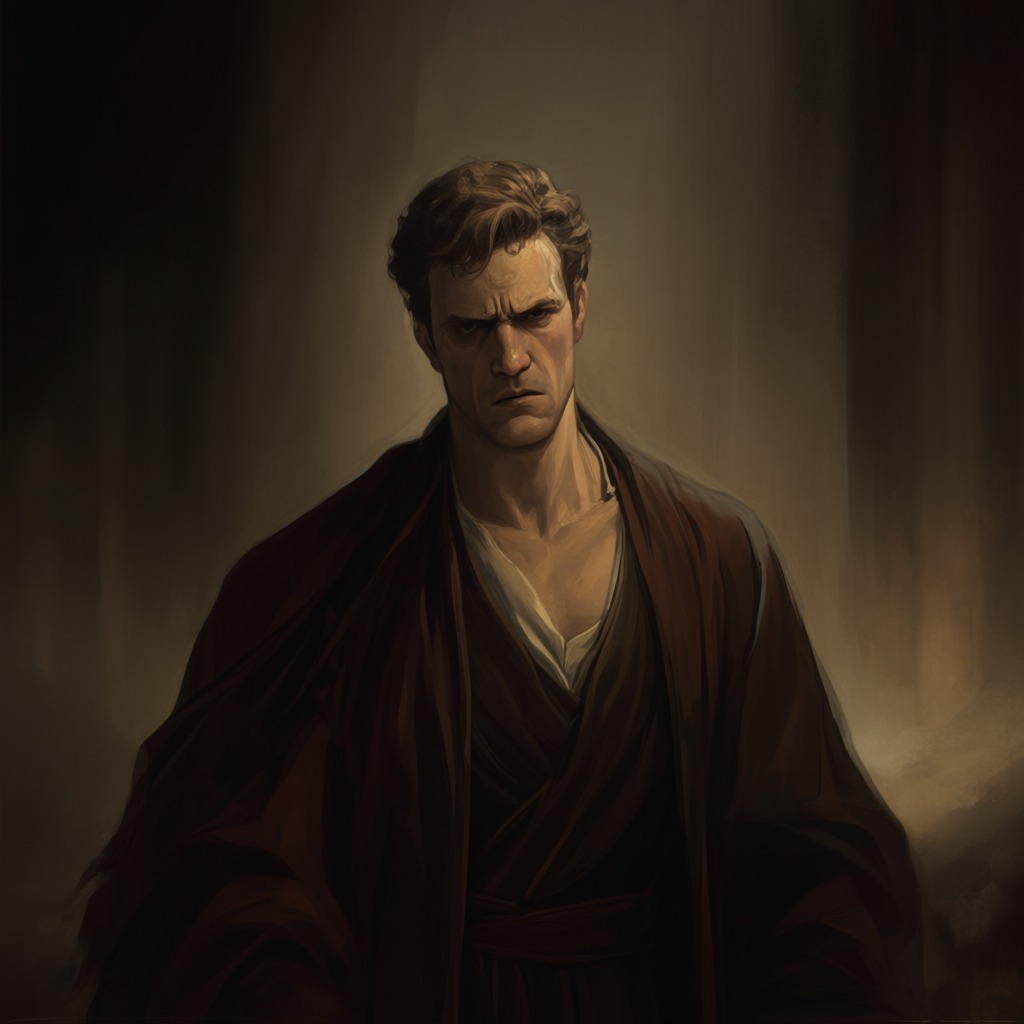
Salvatore's face is a patchwork of deformities: his head is hairless, scarred by eczema; his brow is so low that it merges with thick, shaggy eyebrows; his nose is a sunken bone with broad, hairy nostrils; and his mouth, wide and ill-made, reveals black, dog-like teeth. His eyes are round with tiny, mobile pupils, and his gaze can seem both innocent and malign in flashes. Adso of Melk, upon first seeing him, believes that if the Devil were to appear in human form, he would have Salvatore's features. His speech is equally monstrous: he speaks all languages and no language, inventing a Babelish tongue from the disiecta membra of sentences heard in his wanderings. He uses words from Latin, Provençal, and various Italian dialects, stringing them together without grammar, so that his utterances are like a reliquary made from the shards of other holy objects. William of Baskerville immediately recognizes the word "Penitenziagite"—a corruption of Poenitentiam agite—as a sign of Salvatore's connection to the heretical movements of the Fraticelli and the followers of Gherardo Segarelli.
Life and Plot Trajectory
Salvatore's life is a chronicle of wandering among the outcasts and heretics of the age. He tells Adso of a childhood of famine in a village where the poor dug up the dead for food. Driven by a vision of the land of Cockaigne, he roamed through Montferrat, Liguria, and Provence, begging, stealing, and joining bands of vagrants. He encountered Patarines, Waldensians, and Catharists, eventually joining a convent of Minorites in Tuscany. There, he and the other monks, enraged by a corrupt canon, invaded his house and killed him, after which Salvatore was dispersed. He later joined the Pastoureaux, the Shepherds, a horde of peasants who marched through France killing Jews and looting, before being annihilated by the King's army. He then fled to the Novara region, where he met Remigio of Varagine among the followers of Fra Dolcino on Bald Mountain. After Dolcino's defeat and horrific execution, Salvatore and Remigio escaped together, eventually entering the Cluniac order at Casale through the intercession of Ubertino of Casale, and finally arriving at the abbey.
Key Actions and Objectives
At the abbey, Salvatore serves as the cellarer's personal assistant, using his knowledge of the grounds to procure village girls for Remigio's pleasure. He is a creature of base appetites, stealing scraps of food and practicing folk magic. He is caught by Bernard Gui's archers with a black cat and two eggs, which he intended to use in a spell to make a woman love him. Under torture, he betrays Remigio, revealing their shared past as Dolcinians and the existence of letters from Fra Dolcino that Remigio had hidden in the library. This confession provides Bernard Gui with the evidence he needs to destroy Remigio and to link the Franciscan ideal of poverty to the violent heresy of the Dolcinians, thereby sabotaging the peace negotiations between the Pope and the Emperor.
Relationships and Conflict
Salvatore's primary relationship is with Remigio of Varagine, whom he serves as a procurer and whom he ultimately betrays to save himself. He is also a figure of fascination and repulsion for Adso, who is both horrified by his appearance and drawn to his stories of a world of suffering and rebellion. William of Baskerville sees Salvatore as a key to understanding the heretical undercurrents of the abbey, questioning him about his past and his knowledge of the Dolcinians. His capture by Bernard Gui places him at the center of the conflict between the inquisitor and the abbey, as his confession is used to condemn Remigio and to cast suspicion on the entire Franciscan delegation.
Change and Ending
Salvatore's fate is sealed by his own cowardice. After being tortured, he is broken and willing to say anything to save himself. He is taken away by Bernard Gui along with Remigio and the village girl, destined to be a witness at Remigio's trial in Avignon. William speculates that Bernard may let him go, as a man like Salvatore is of no interest to him, but his ultimate fate is unknown. He vanishes from the story, a pathetic figure whose life of wandering and survival has finally run its course, consumed by the very forces of order he spent his life evading.
Narrative Role and Evaluation
Salvatore serves as a living embodiment of the "simple" people whose suffering and rebellion fuel the heretical movements that the church seeks to destroy. His grotesque appearance and broken speech make him a symbol of the chaos and confusion that lies beneath the ordered surface of the abbey. He is a key piece of evidence in William's investigation, linking the present crimes to the past heresies of Fra Dolcino. His capture and confession provide the dramatic climax of the trial scene, demonstrating the ruthless efficiency of Bernard Gui's inquisitorial methods and the vulnerability of the powerless. He is a tragic figure, a victim of both the oppressive social order and his own base instincts, whose story underscores the novel's themes of poverty, heresy, and the corruption of the human spirit.