Lars's conversation precipitates Emma's suicidal crisis and plea for help
UpLars's conversation with Emma turns a difficult return to therapy into a suicidal crisis, but it does not end with her death: after reaching a bridge, she turns back and asks her mother for help. The episode links a clinician's fear-driven confrontation to Emma's sense of abandonment, while making her decision to call someone a concrete alternative to the isolation that has repeatedly shaped her crises.
Background and the therapy meeting
Emma has been readmitted to the PAAZ after collecting pills with the intention of taking them all. She had not wanted to be hospitalized, but says matters had become unmanageable. Before her admission, her depression and thoughts of death had prompted extra appointments with Lars and Doctor Visser. Doctor Visser was absent after her husband's death, and Emma understood that her accumulated medication had become a reason for hospital care. The admission also brought a new bipolar diagnosis and further medication decisions, leaving Emma in a situation that even she struggles to explain.
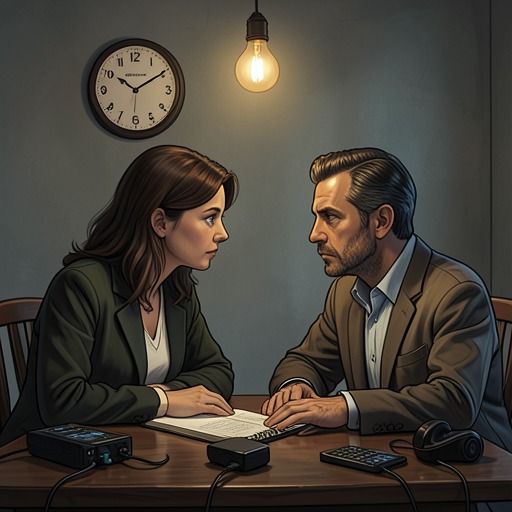
When Lars appears, his entrance is awkward: he steps out of the room, returns without greeting her, and then leaves again to offer coffee or tea. Their relationship has usually worked through an unusual division of labor: he speaks plainly, while Emma considers what he says. This time, however, he asks why she has allowed herself to be admitted again. She tries to describe the crisis and the pills, but his impatience quickly changes the meeting's tone.
Lars calls the concern about the pills excessive and argues that someone determined to die could do so without them. He then presses Emma about how long she plans to stay and how often she can expect to be admitted. He describes the PAAZ as a service for acute crises, not an unlimited refuge, and warns that repeated admissions could lead managers to conclude that Emma belongs in a long-stay ward. His language turns a question about her immediate safety into a warning about whether the institution will continue to accept her.
The confrontation and its effect
Emma tries to answer his questions by referring to her new diagnosis, medication, and the need to wait and see how treatment works. Lars rejects that response as a discussion of her present illness rather than her future. He invokes the five months she had previously spent in hospital, her day treatment, the Asperger's diagnostic process, and her meetings with him and her psychiatrist. In his account, those interventions have already been substantial; if they have not been enough, he asks what further help she expects from him.
The confrontation collapses Emma's ability to imagine a future. She does not cry at first; the shock is too great for her to organize a response. When she says, hoarsely, that she wants simply to exist, she is not asking for an elaborate plan but for continued presence. Lars's warning instead confirms her fear that the help she relies on is about to disappear. She thinks that being readmitted means she has failed to recover, and that if the PAAZ is no longer an option, no one can help her. As Lars continues speaking more gently, that reassurance does not undo the despair his earlier words have set in motion.
The bridge and the decision to seek help
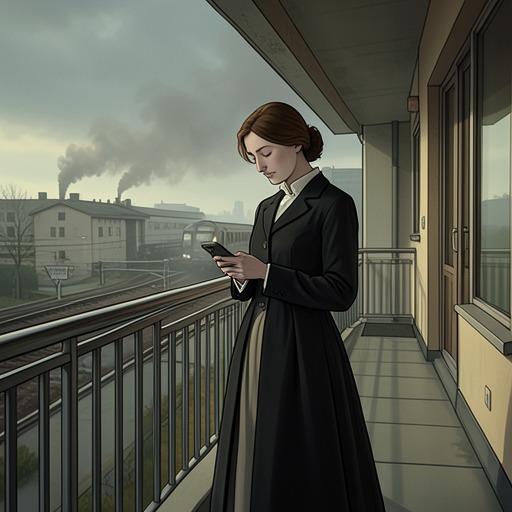
After the meeting, Emma goes to a bridge and grips its cold metal railing. The section of road beneath it is closed, with no motorists or spectators who might be caught in her fall. She judges the height sufficient to end her life and connects the decision directly to Lars's warning: the PAAZ has been her refuge and last resort, and she cannot see what will stop her fall if that refuge is taken away. The bridge brings back the memory of an earlier childhood crisis at a balcony, when she had been overwhelmed by grief and no one knew what was happening except a small figure in a distant field.
Emma also thinks about the damage her death could leave with other people. She remembers that a therapist should not be left to wonder whether a conversation caused a patient's suicide, and imagines the lasting questions Gwen might carry if she had been the last person to speak with her. These thoughts do not instantly dissolve the crisis: Emma remains by the railing, convinced that the same despair keeps bringing her back to the same point. The decisive change is her recognition that she is not exactly as she was before. She can use what she has learned during her time in treatment and need not act alone.
Emma pushes away from the railing and takes out her phone. She first calls Sergei, but reaches voicemail; then she calls the number she has known all her life and asks to speak to her father. He is out, so her mother offers to talk. Emma begins to tell her, incoherently but directly, what Lars said and how the conversation has overturned what had been built over the previous two years. Her mother reacts with anger on Emma's behalf, condemning the way Lars treated a patient and recognizing that his words could deepen rather than relieve despair. The response surprises Emma, who has understood their relationship through distance and through the attention her family gave to David's difficulties. In this moment, her mother listens and takes her side.
Aftermath and significance
The call opens a path to further contact without requiring Emma to pretend that the crisis is resolved. Her mother offers to visit, including at the PAAZ, and Emma later declines the offer of company for a follow-up conversation with Lars. When Gwen calls to say she has arranged that conversation, Emma starts to refuse and then corrects herself: she decides to do it herself, recognizing that she feels briefly less alone even while choosing to face him independently.
In the later discussion, Lars apologizes. He explains that hearing of Emma's readmission shocked him, but acknowledges that his reaction was his responsibility and not something he should have placed on her. Their disagreement also exposes a gap in what he knows: Emma has not told him about her hallucinations because she feared his response. When he questions whether he has seen evidence of her new diagnosis, she explains that symptoms inside her cannot necessarily be observed from outside. She describes the distress not merely as seeing a snake instead of a branch, but as the shock, fear, and anger of finding the world changed and being unable to trust what has shifted. A misplaced television guide becomes her image for that disorientation. The event therefore concerns not only the consequences of Lars's words but also Emma's struggle to make an unshared inner experience intelligible to a therapist who had not known about it.
The crisis ends neither in a cure nor in a settled therapeutic relationship. Its important reversal is smaller and more immediate: after feeling that help has run out, Emma chooses to turn back, call her mother, and later meet Lars again. The episode makes help-seeking an action she can take while still in danger, rather than proof that she has already recovered.