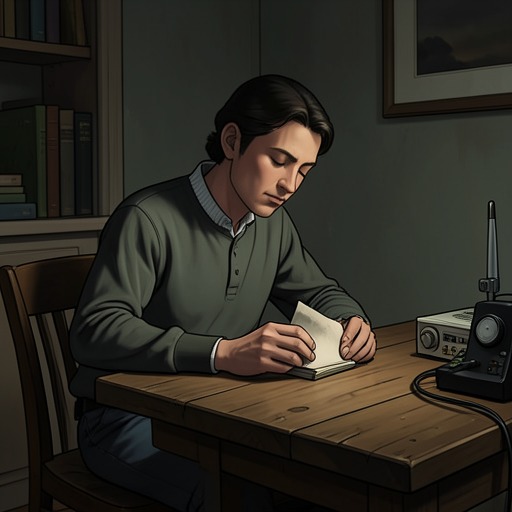
To affect the quality of the day, that is the highest of arts
Walden“To affect the quality of the day, that is the highest of arts” describes a practice of conscious living in which the day itself becomes the work of art. In Walden, this idea joins morning’s renewal to moral wakefulness: time is not merely measured by clocks or consumed in labor, but shaped by attention, simplicity, and deliberate effort.
The Day as an Art
The expression appears in an argument that making a few beautiful objects is less glorious than shaping the very atmosphere through which people perceive the world. That larger art is moral rather than merely decorative: a person can affect the medium of experience by the way life is lived. The claim then narrows to daily conduct. Each person is tasked with making life, down to its details, worthy of contemplation at the most elevated and critical hour. The day’s quality is therefore neither a matter of circumstance alone nor an aesthetic finish applied from outside; it is formed through choices that give ordinary hours moral substance.
The surrounding image of painting and carving makes this standard unusually demanding. An artwork can be bounded and set apart, but the atmosphere of life cannot be separated from the life that produces it. The expression shifts artistic achievement from a finished object to an ongoing practice, in which the shaping material is conduct itself.
Morning and Wakefulness
The daily art begins with morning. Each morning is described as a cheerful invitation to bring one’s life into simplicity and innocence with Nature. The narrator presents himself as a sincere worshipper of Aurora, rising to meet the day rather than treating its arrival as a signal to fall into habitual labor. Morning is at once a natural recurrence and an ethical opportunity: its invitation asks for a corresponding renewal in the person who receives it.
That renewal is inward as well as seasonal. Morning is defined as the time when a person is awake and there is a dawn within; the clock’s pronouncement and the attitudes and labors of other people do not settle the matter. Moral reform, in this account, is an effort to throw off sleep. The expression’s art is thus inseparable from wakefulness: to improve the day is first to resist living through it unconsciously.
Time, Labor, and the Margin of Life
The narrator’s account of time gives this ideal a practical contrast. There are occasions when he cannot afford to sacrifice the bloom of the present moment to work of either head or hands. He values a broad margin in life, and describes a summer morning spent, after his accustomed bath, sitting in a sunny doorway from sunrise until noon, absorbed in reverie. The episode makes deliberate attention visible as a use of time in its own right, rather than as an interval justified only by productive results.
The expression does not simply reject all labor. Instead, it contests the assumption that work and socially measured hours automatically determine what a day is worth. Its standard is the quality of lived experience: the day must be consciously made, not merely passed through. The broad margin protects room for that making, while the sunny doorway and the stretch from sunrise to noon give the principle a concrete duration and setting.
A Moral and Natural Measure
The idea also connects personal attention with generosity. Bread may fail to nourish in the expected way, yet still make people supple and buoyant; in such moments, they may recognize generosity in humanity or Nature and share an unmixed, heroic joy. The point is not that every day guarantees happiness, but that receptivity can alter how its circumstances are experienced. The day’s quality depends partly on the capacity to notice what is generous and to participate in its joy.
A pond offers a natural analogue for this daily renewal. The phenomena of the year occur there on a small scale each day, as shallow water generally warms faster than deep water in the morning. Nature’s recurring processes make the day legible as more than a unit on a clock: it contains changes, differences, and rhythms that attentive observation can reveal. Together, these images ground the expression in both ethical practice and close attention to the living world. To affect the day is to become answerable for one’s manner of living while remaining awake to the forms of renewal already present around one.