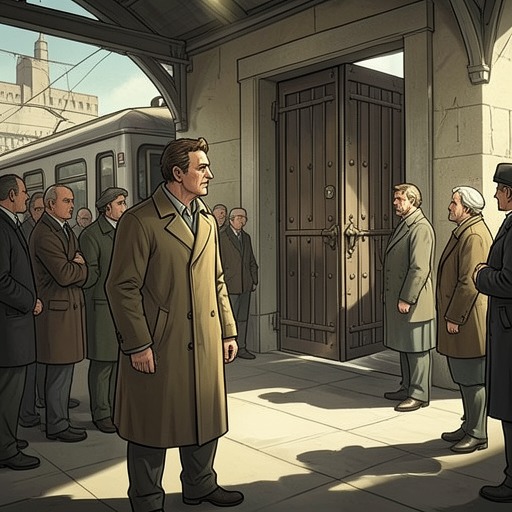
Men have become the tools of their tools
Walden“Men have become the tools of their tools” is Henry David Thoreau’s diagnosis of a reversal in which human beings, having made instruments for their use, become subordinate to the labor and habits those instruments impose. In Walden, the sentence is not an isolated complaint about machinery: it condenses a larger critique of settled life, domestic work, debt, technological progress, and railroads, measuring each by whether it serves life or consumes it.
The Reversal of Human Independence
The phrase arrives after a contrast between an earlier, mobile way of living and modern settlement. The human figure once plucked fruit when hungry, took shelter under a tree, and moved through valleys, plains, and mountain heights. The later figure becomes a farmer and housekeeper, no longer camping as if for a night but settling on earth and forgetting heaven. The tool-made world changes not only what people do but the scale and direction of their lives: temporary shelter becomes a household, movement gives way to maintenance, and means of survival become permanent occupations.
The sentence’s force lies in its inversion. Tools are ordinarily understood as extensions of human purpose; here, their makers are recast as their servants. The surrounding passage enlarges the reversal into a spiritual criticism: Christianity itself, the narrator argues, has been adopted as an improved method of agriculture, while people build a family mansion for this world and a family tomb for the next. The criticism is not simply that material conveniences exist, but that settled arrangements can crowd out the mobility, independence, and larger aspiration they were meant to support.
Domestic Life and the Work of Maintenance
The same argument extends from conspicuous technology to the ordinary labor that keeps a household going. Clothing, for example, introduces sewing, described as a kind of work that never ends; a woman’s dress, in particular, is never finished. Domestic convenience therefore has a labor history. An item that appears as a finished possession carries behind it repeated work, and the seemingly complete household perpetuates the tasks required to maintain it.
The narrator tests the possibility of reducing dependence through his own arrangements. He says he could avoid trade and barter for food, having shelter already, leaving clothing and fuel as remaining necessities. His furniture is similarly limited and accounted for: he made part of it himself, and the rest cost him nothing for which he had not rendered an account. The inventory includes a bed, table, desk, three chairs, and a small looking-glass. Such details give the critique a material measure: independence is not an abstract rejection of tools, but an effort to distinguish essential provision from possessions and work that multiply obligations.
That ideal, however, sits beside the labor of other households. At John Field’s home, the narrator observes a hard-working but shiftless man and a wife who has cooked successive dinners by a lofty stove. In another account of domestic arrangements, washing, tending the fire, cooking, and the equipment of the kitchen appear as the household’s chief ornaments. These scenes make visible the work concealed by the finished home. The phrase’s broad claim about people becoming servants to their tools thus touches not only machinery but also the repeated domestic labor that tools, clothing, and household life require, often distributed unevenly between people.
Improvements, Debt, and the Railroad
Thoreau extends the same suspicion to institutions and inventions advertised as progress. He compares colleges with a hundred “modern improvements” and warns that they carry an illusion: improvement does not always amount to positive advance. His image of compound interest makes the cost cumulative. The devil, as he puts it, continues collecting interest for an early share and for the many investments that follow. An apparent benefit can become a growing obligation, with the original promise obscured by the costs of sustaining it.
In this account, inventions are “pretty toys” that distract attention from serious things: they improve the means while leaving the end unimproved. That distinction explains why the passage does not treat novelty as proof of human betterment. A tool may become more efficient at helping people reach an unchanged or inadequate goal; its refinement can strengthen the machinery of distraction rather than alter what life is for. The warning applies especially to projects whose claims of progress are sustained by debt and continuing investment.
The railroad makes the reversal bodily and collective. Its speed may reach thirty miles an hour, the narrator concedes, but that achievement does not settle whether people should live like baboons or like men. The construction of the line requires sleepers to be laid and rails forged; if people devote days and nights to that work rather than turning their attention to improving their lives, the question of who will build the railroads exposes the system’s demand for human labor. The infrastructure is not an independent miracle: it is built and maintained by people whose time and effort become part of its operation.
The maintenance itself offers a small image of possible reversal. A gang of men is needed for every five miles to keep the sleepers down and level in their beds, and the narrator takes this as a sign that they may someday get up again. The sleepers are at once physical supports for the railway and a figure for workers held in position by it. Against the railroad’s speed stands the question of hurry and wasted life; people, he says, are determined to be starved before they are hungry. The contrast makes the line a test of priorities: acceleration can coexist with deprivation when people serve the system that promises to serve them.
The Measure of Progress
Across these examples, the saying is a standard for judging arrangements rather than a claim that every implement is harmful. The narrator asks what is being sacrificed to produce a supposed improvement: time, independence, attention, or the chance to reshape one’s life. His own limited furniture and proposed escape from trade supply concrete counterpoints to an economy of accumulation, while sewing, cooking, railroad construction, and maintenance reveal the work embedded in ordinary comforts and public infrastructure.
The phrase therefore binds the book’s practical and moral arguments together. It links the settled household to the railroad, the unfinished garment to the modern improvement, and the tool’s usefulness to the question of who must labor for it. Its decisive distinction is between instruments that remain answerable to human purposes and systems that make people answerable to their upkeep. Where tools dictate the ends, the apparent mastery of nature and technology turns into a quieter dependence on what people themselves have made.