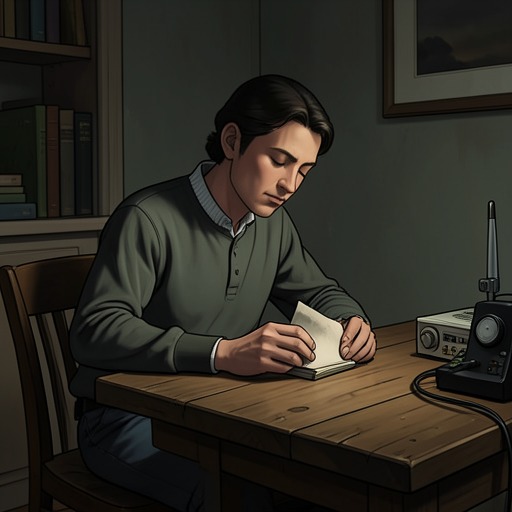
Only that day dawns to which we are awake
Walden“Only that day dawns to which we are awake” is Walden’s culminating expression of spiritual and perceptual wakefulness: time alone cannot bring a new day into lived reality; a person must be alert to it. The closing image turns dawn into both a condition of attention and an opening toward a future that remains to be realized.
Meaning and Context
The sentence appears near the end of Walden, after the narrator considers a morrow that mere lapse of time can never make to dawn. Its claim is not that the clock or the sun stops, but that chronological succession is insufficient: a day becomes available to human life only through wakeful attention. The image therefore extends the book’s recurring distinction between merely passing through time and living deliberately.
The neighboring lines sharpen the paradox. Light can seem like darkness to those whose eyes it puts out; perception is not guaranteed by the presence of illumination. The expression makes inward readiness decisive: what appears to be a new beginning may remain unseen by someone unprepared to receive it.
Life, Cost, and Value
Earlier, Walden defines the cost of a thing as the amount of life that must be exchanged for it, immediately or in the long run. That measure gives the final appeal to wakefulness practical weight. Time and life are not valuable simply because they pass; their significance depends on how they are attended to and spent. The expression thus resonates with the book’s criticism of arrangements that consume life without making its possessor more fully alive.
The narrator’s treatment of landscape offers a related contrast. Concord’s spring is called a gem in its coronet, while Flint’s Pond is described as burdened by a poor name and by a farmer who treats the shore and landscape as material for use and sale. Against that market valuation, the waking image implies a different kind of recognition: seeing beauty and possibility requires attention that cannot be reduced to ownership or price.
The Image of the New Day
The sentence is immediately followed by the declaration that there is more day to dawn and that the sun is only a morning star. These images keep the ending open. Dawn is not a completed arrival but the beginning of further light; the sun itself is recast as a sign of what is still coming. The aliases “There is more day to dawn” and “The sun is but a morning star” make explicit the movement from wakefulness to expectation.
That forward motion is also grounded in particular scenes from the book. In October, the narrator goes to the river meadows for grapes, valuing the clusters more for their beauty and fragrance than for food. The moment places attentive perception beside subsistence use: the land offers more than what can be gathered or consumed. Elsewhere, a gentleman farmer is said to want to double an already substantial fortune by farming; the episode puts monetary ambition beside the book’s insistence that a life’s value cannot be measured by accumulation alone.
Closing Significance
Placed at the threshold of the concluding essay, “On the Duty of Civil Disobedience,” the expression also carries the book’s language of awakening into a different register. Its immediate context is not a political program but a challenge to accept the present as already sufficient or the future as guaranteed by time. Read alongside the later turn to government and conscience, its emphasis on wakefulness resonates with the demand to recognize conditions clearly rather than submit unexamined to them.
The phrase closes Walden without sealing its meaning into a finished conclusion. Its final light is still approaching, and the reader’s attention remains part of the image: the day may be there to dawn, but it is not fully present to those who are asleep to it.