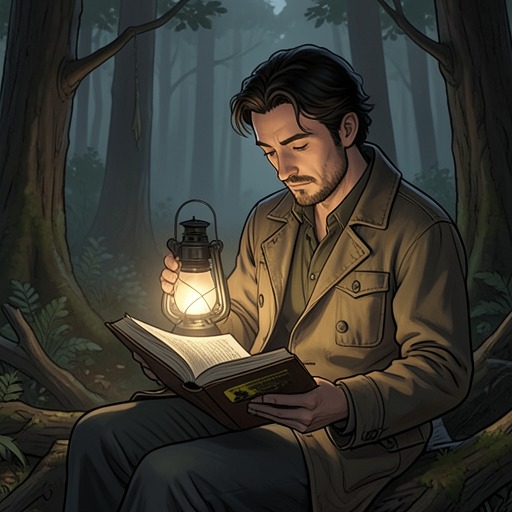
“Books are the treasured wealth of the world”
WaldenThe expression “Books are the treasured wealth of the world” defines books as a common inheritance whose value outlasts individual lives and the corrosion of time. In Walden, that claim joins the material language of wealth to a wider standard of value: what matters is not simply what people own, but what can preserve and enlarge human life.
Inheritance Across Generations
The sentence appears within a reflection on books that have carried a serene, almost celestial atmosphere into different lands and through time. Thoreau calls them the world’s treasured wealth and the fit inheritance of generations and nations. The paired terms widen the claim: books belong neither to one owner nor to one era, but form a cultural wealth that can be received and passed on.
That inheritance is not restricted to the wealthy or formally educated. The next thought places the oldest and best books naturally on the shelves of every cottage. The contrast between a cottage and the vast inheritance of nations makes the claim concrete: a modest home, too, can contain works whose reach exceeds its material circumstances.
Wealth Measured Beyond Price
The expression’s use of “wealth” resonates with the book’s effort to measure cost in human life rather than money alone. Thoreau defines the cost of a thing as the amount of life exchanged for it, immediately or over the long run. Read beside that definition, books’ wealth is not reducible to their purchase price: their significance lies in the durable inheritance and experience they make available.
This emphasis also sharpens the expression’s social reach. Thoreau considers the farmers of Concord, many of whom have labored for twenty, thirty, or forty years, and asks how the benefits of civilization are distributed. He turns attention to poor people living in shanties along the railroads, warning that outward progress can coexist with degradation. Against such measures of prosperity, the claim about books offers a different account of wealth—one grounded in a shared inheritance rather than in comfort or property alone.
The Book’s Material and Living World
Elsewhere, the narrative gives its own surroundings a similarly patient value. The scenery of Walden is beautiful but humble in scale, and its significance, the narrator observes, may be clearest to someone who has long lived by the shore. The claim about books belongs to this larger habit of attention: value does not depend on grandeur, and what is worth knowing may disclose itself through sustained acquaintance.
That attention is also practical and embodied. The shore is described as a steep belt of smooth, rounded white stones, with only one or two short sand beaches; elsewhere, a compass, chain, and sounding line are used to survey the long-lost bottom of the pond. Thoreau records thawing sand and clay flowing down a railroad cut, then interprets the sandy overflow as something like the earth’s living interior. These episodes do not define the expression directly, but they clarify the book’s broader sense of inheritance: knowledge is gathered through close observation, and the world’s riches include forms of understanding that cannot be captured by price.
An Ideal Tested by Human Lives
The book’s descriptions of local poverty prevent the language of shared wealth from becoming an easy claim that everyone enjoys equal conditions. At Baker Farm, John Field, an Irishman, lives with his wife and several children in a small cabin; the account places their domestic circumstances beside the narrator’s reflections on poverty and the cost of obtaining necessities. In another part of the landscape, Cato Ingraham is identified as enslaved to Duncan Ingraham, who built him a house and permitted him to live there. On Brister’s Hill, Brister Freeman is recalled as formerly enslaved to Squire Cummings, while the apple trees he planted remain as traces of his labor.
Together, these lives complicate any simple equation between cultural inheritance and material freedom. The expression asserts that books are a wealth held in common across generations and nations; the surrounding social observations show that access to comfort, security, and autonomy is sharply unequal. Its force therefore rests not on declaring poverty overcome, but on insisting that enduring human inheritance cannot be measured by property alone.